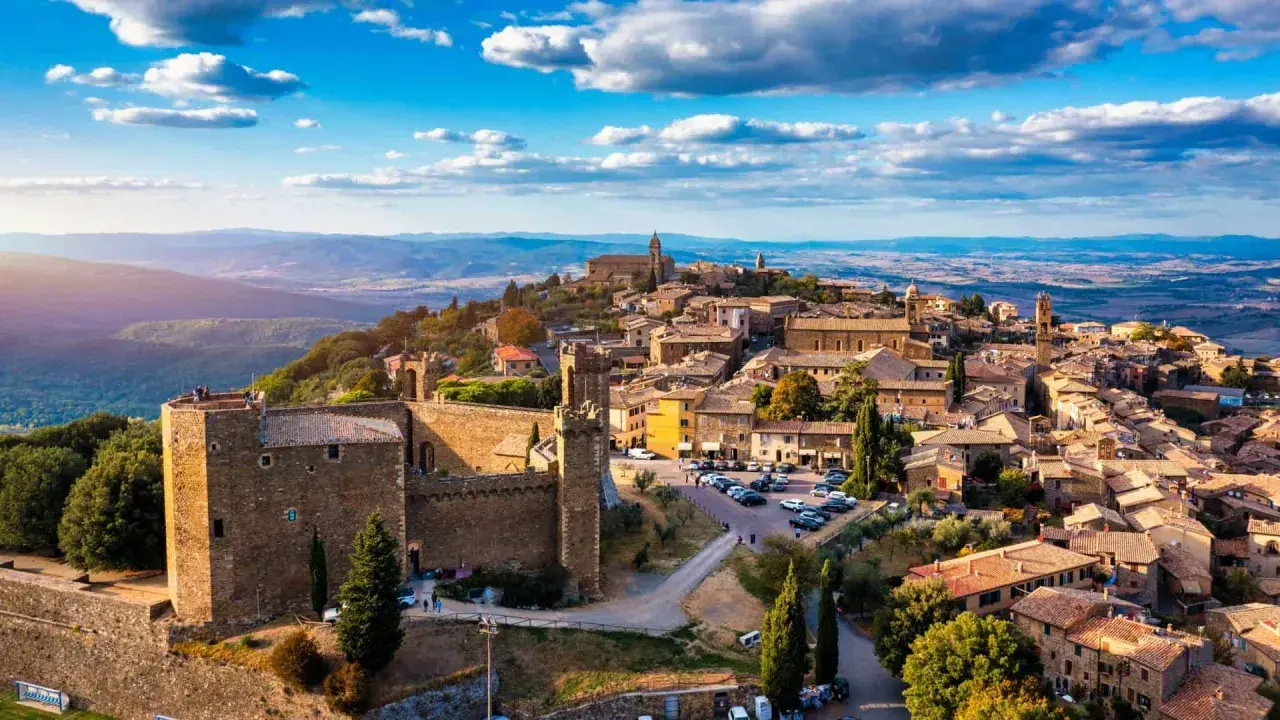
The best picks combine intact walls, compact streets, and a historic center you can still walk end to end
- Siena and San Gimignano are the easiest first choices if you want the classic Italian medieval look.
- Lucca stands out because its walls are not just decorative history, they are part of the visit.
- Orvieto and Montagnana feel more defensive and dramatic, with strong skyline and fortification character.
- Spring and early autumn usually give the best balance of weather, light, and crowd levels.
- A car helps once you move beyond the main rail-linked towns, but a train-based loop still works well in Tuscany and Umbria.
- The best trips are usually built around one famous town and one quieter one, not a long checklist of similar stops.
What makes a town feel genuinely medieval
I do not judge these places by age alone. A town can be historically old and still feel visually disconnected from that history if the center has been overbuilt, widened, or stripped of its original structure. What I look for is a compact core, a clear defensive outline, and the sense that the town still moves along the same streets and squares that shaped it centuries ago.
The strongest medieval fabric usually shows up in a few recurring features: city walls, gates, towers, hilltop or cliff-top positions, narrow lanes, and a central piazza that still works as the town's social anchor. In practice, that means the experience is not just about seeing old stones. It is about moving through a layout that was designed for defense, trade, and foot traffic long before cars changed everything.
- Walls and gates tell you the town was built to control access, not just to look pretty.
- Compact street plans create the feeling that you are walking through a preserved urban system rather than a themed district.
- Towers and bell towers often signal medieval rivalry, wealth, or religious power.
- Hilltop or cliff-top siting usually explains the views, but it also explains the shape of the town itself.
- Stone squares and civic buildings are where the historic center still feels inhabited instead of staged.
That distinction matters, because it changes which places deserve a detour and which are better folded into a broader route.
The towns I would start with
If I had to narrow the list quickly, I would start with places that deliver the clearest medieval atmosphere without asking too much of the traveler. Some are famous for a reason, while others earn their place by being less crowded, easier to move through, or more visually coherent than the big-name stops people assume they need to see.
| Town | Region | Why it stands out | Best for |
|---|---|---|---|
| Siena | Tuscany | Intact medieval historic center, Piazza del Campo, strong civic atmosphere, UNESCO status | First-time visitors, history lovers, travelers who want the classic grand-city feel |
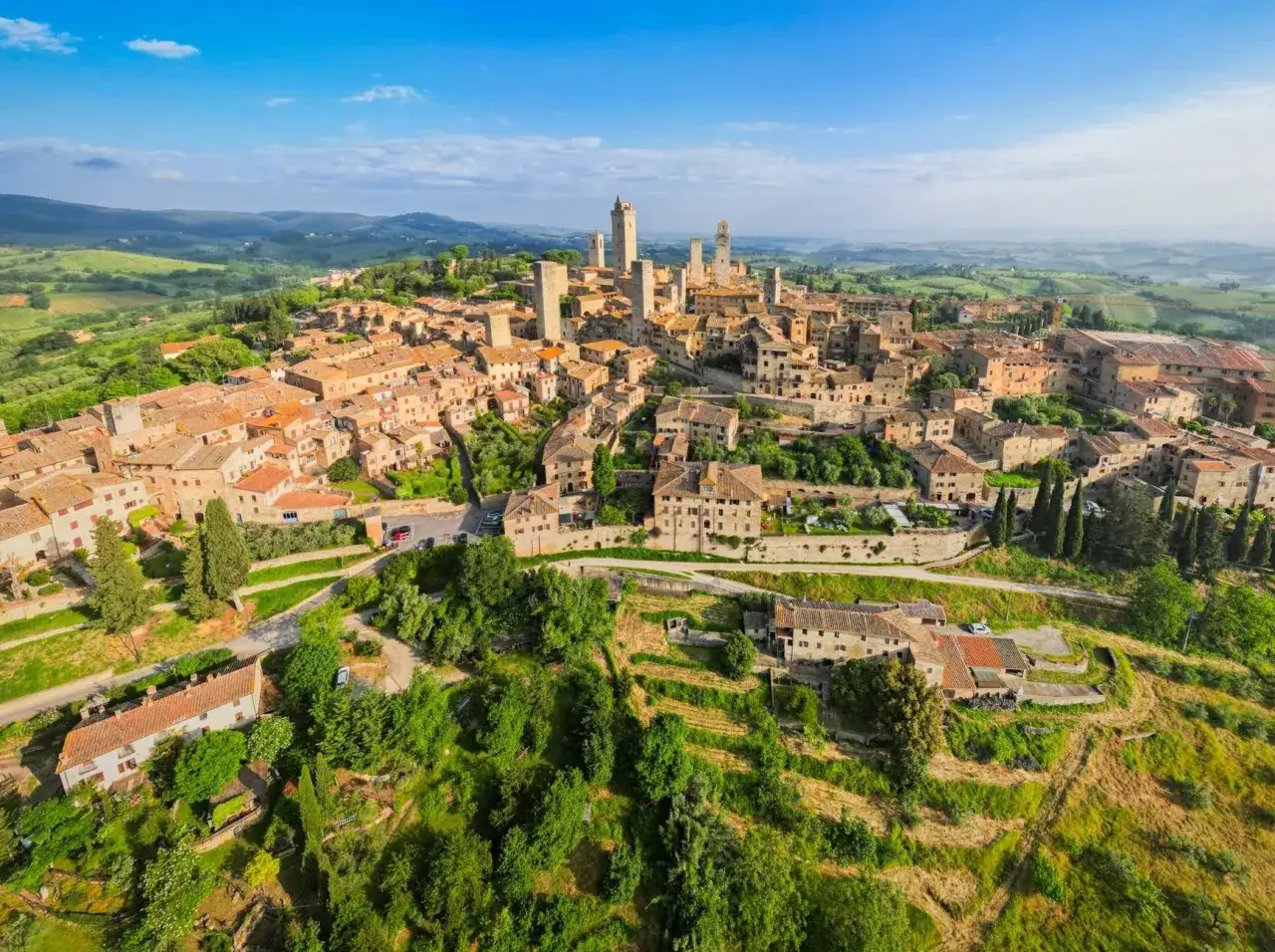
| San Gimignano | Tuscany | Famous tower skyline, compact center, one of the clearest medieval silhouettes in Italy | Short visits, photography, travelers who want an instantly recognizable look |
| Lucca | Tuscany | Walkable walls, relaxed rhythm, strong historic core without feeling overrun | Slow exploration, cycling, travelers who want a practical base |
| Orvieto | Umbria | Cliff-top setting, dramatic views, medieval tower, underground spaces | Architecture, scenery, travelers who like a town with a strong sense of place |
| Montagnana | Veneto | Exceptional defensive walls, 24 towers, four gates, very intact urban ring | Fortifications, quieter visits, people who want structure and less noise |
| Altomonte | Calabria | Hilltop medieval character, slower pace, strong local identity | Southern Italy detours, food-focused travel, lower crowds |
Siena gives you the most complete urban story. San Gimignano is the easiest visual shorthand for the whole idea of a medieval hill town. Lucca is the one I would choose when I want the history without feeling trapped inside a museum. Montagnana is different again, because its walls are the main event and that makes the town feel unusually coherent. Altomonte, by contrast, is a better fit if you want a quieter southern stop that still carries a strong historic atmosphere.
If you want one big-name stop and one less obvious one, pair Siena with Montagnana or Altomonte. That contrast usually makes the trip feel richer, because you stop treating all old towns as interchangeable.
How I choose between a famous stop and a quieter one
I usually separate these places into three trip styles. The first is the iconic stop, where you go because the town is famous and the visual payoff is immediate. The second is the slower stop, where the reward comes from walking, eating, and staying overnight. The third is the practical base, where the town is historic but also easy enough to use as a hub.
For a first trip
Start with Siena or San Gimignano if you want the clearest reward with the least interpretive effort. Siena feels grand and layered, with its intact center and the drama of Piazza del Campo. San Gimignano is more compact and more obviously medieval at a glance, which is why it works so well if your time is limited.
For a slower pace
Choose Lucca, Montagnana, or Altomonte if you want a visit that feels less scripted. These towns are easier to enjoy when you are not racing between landmarks. That matters more than people admit, because the best part of a medieval town is often the in-between time: the walk from gate to square, the side street that opens unexpectedly, the cafe you did not plan on.
For scenery and photography
Orvieto is the strongest pick here because its setting does so much of the work. A town on a cliff changes the whole visual rhythm of a visit. You are not just seeing buildings, you are seeing how the town relates to the land around it. San Gimignano also belongs in this group, but for a different reason: the tower line gives you a very clean, memorable silhouette.
Read Also: REI Magma 15 Weight - Is It Right For Your Pack?
For a practical base
Lucca is the one I would choose if I needed a town that is pleasant to return to at night. It has enough historic character to satisfy the theme, but it is also functional, walkable, and less exhausting than some of the denser hill towns. If your trip includes multiple day trips, that balance can make a real difference.
That choice becomes easier once you factor in timing and transport, because a beautiful town that is awkward to reach can quietly drain a short itinerary.
When to go and how to move around without wasting time
For a 2026 trip, I would still treat April to June and September to October as the sweet spot. Those months usually give you better walking weather, cleaner light for photos, and a more forgiving experience in towns that can feel crowded in peak season. Summer can still work, but central Italian inland towns can get hot, and mid-day crowds are often the least enjoyable part of the visit.
Winter has its own advantage. The streets are quieter, the light can be soft and sharp at the same time, and you are more likely to hear the town rather than just see it. The tradeoff is that some smaller places feel sleepy, and shorter days reduce how much time you get in the historic center before dusk.
- Train-friendly stops include Siena, Lucca, and Orvieto, which makes them useful for travelers who do not want to drive.
- Car-friendly stops include Montagnana and many of the quieter southern or hilltop borghi, where public transport is thinner.
- ZTL means limited traffic zone, and it matters because many historic centers restrict cars.
- Parking outside the walls is often the cleanest solution, especially in smaller fortified towns.
- Two major stops in one day is usually enough; more than that and you start spending your trip in transit instead of in the towns themselves.
If you are traveling from the U.S., I would be especially careful not to overpack the schedule. Long-haul travel makes recovery time more valuable, and these towns reward slow movement more than constant checking off of sights. Once the logistics are under control, the trip becomes much more enjoyable on the ground.
What to do once you arrive so the visit feels worthwhile
The mistake I see most often is treating every medieval town like a quick photo stop. That works for a few places, but it flattens the experience. The better approach is to give each town one clear angle, then let the rest of the visit breathe around it.
- Walk the perimeter first if the town has walls or a defensive outline. It gives you orientation before you dive into the lanes.
- Climb one tower, not three. One high viewpoint is enough to understand the layout, and it keeps the visit from turning into repetition.
- Visit the main square twice, once during the day and once near sunset. The atmosphere changes more than most travelers expect.
- Eat slightly off the main square if you want a better chance of a slower meal and fewer obvious tourist prices.
- Stay overnight when possible. Medieval towns are often at their best after day-trippers leave.
That last point matters more than people think. Siena feels different after dinner. Lucca becomes calmer once the walking crowd thins out. Orvieto and Montagnana, in particular, reward a night because their character is tied to light, silence, and the town's edge rather than just the main street.
In other words, the goal is not to see the most. It is to spend enough time in the right places that the town stops being a backdrop and starts feeling like part of the trip.
A route that balances the icons with quieter nights
If I were building a short itinerary, I would not try to cover half of Italy. I would keep the route tight and let each stop do a different kind of work. That is the easiest way to make these towns feel distinct instead of interchangeable.
For a three-day Tuscany loop, I would pair Siena with San Gimignano and either Lucca or a nearby smaller stop. Siena gives you the urban weight, San Gimignano gives you the tower silhouette, and Lucca gives you a calmer finish. If you have five or six days, I would add Orvieto so the trip includes a very different landscape and a stronger cliff-top feel.
For a northern route, Montagnana works beautifully as the quieter counterweight to the more famous central Italian names. For a southern detour, Altomonte or a similar hill town gives you the same medieval atmosphere with a different pace and a more local feel. If you want the cleanest possible decision rule, I would say this: choose one town that is famous, one that is easy to live in for a night, and one that feels a little off the usual route. That combination usually produces the most satisfying trip.
The places that stay with you are rarely the ones you rushed through. They are the ones where the walls, the streets, and the daily rhythm still work together, and that is exactly what makes these Italian towns worth planning around.