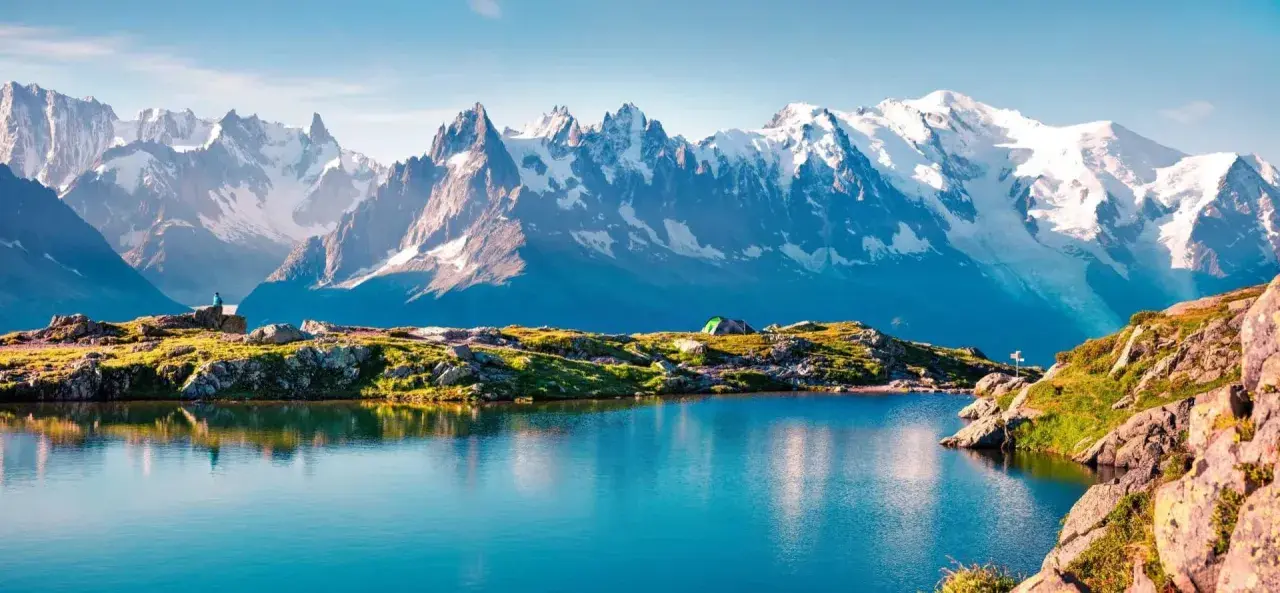
The main decisions are route length, season, and booking pace
- The classic circuit is about 170 km with roughly 10,000 m of cumulative ascent and descent.
- Most hikers need 7 to 12 days, depending on pace, fitness, and how many variants they add.
- Summer is the core season, but July and August are busiest; June can still bring snow at higher passes.
- For 2026, the official hut network opened summer reservations on October 15, 2025.
- The hardest part is usually repeated climbing and descending, not exposure or scrambling.
- Budget ranges vary sharply by comfort level, especially between camping, dorm huts, and private rooms.
What the route actually covers and why it feels so different
The Tour du Mont Blanc is one of those rare alpine walks that feels bigger than the numbers suggest. According to TMB Guide, the classic loop is about 170 km with roughly 10,000 m of total ascent, and the standard version is usually walked in 10 to 12 days. That means the trail is long enough to become a real expedition, but still compact enough that you are never far from a village, a refuge, or a transport escape hatch if the weather turns.
What makes it distinctive is the rhythm. You spend days moving through high passes, grassy balcony paths, glacial basins, and valley floors, then sleeping in huts or guesthouses before doing it again. The route is usually walked counterclockwise because the stage flow and pass order work well that way, and because it is the version most hikers plan around. I would describe the challenge as endurance with elevation: you need the ability to repeat uphill effort, not just survive one big climb.
| Route style | Typical time | What it feels like | Best for |
|---|---|---|---|
| Classic circuit | 10 to 12 days | Balanced pace, full experience, more recovery room | First-time TMB hikers and strong recreational hikers |
| Faster version | 7 to 9 days | Longer hiking days, fewer stops, less margin for weather | Very fit hikers with limited time |
| Comfort or guided version | 7 to 11 days | Less logistical friction, more support, usually higher cost | Travelers who want planning help and steadier comfort |
That basic shape is what most people are really after when they ask about the trek, and it leads straight into the next question: when to go if you want the best mix of conditions, availability, and trail atmosphere.
When to go and how bookings work in 2026
If I were planning this trip from the United States, I would treat summer as the default and shoulder season as a calculated trade-off. The main hut season generally runs from late June through September, and the trail is most straightforward in July, August, and early September because snow coverage at higher passes is usually less of a problem. The downside is obvious: this is also when the route is busiest, and booking becomes the real bottleneck.For 2026, the official hut network opened summer reservations on October 15, 2025, which tells you everything you need to know about demand. If you want specific refuges, especially the more popular ones near Courmayeur, Chamonix, or the classic pass crossings, early booking matters more than almost any gear decision. I would plan the route first, then reserve the hardest-to-replace nights before filling in the rest.
June can be excellent if you want quieter trails and are comfortable with lingering snow patches and more variable conditions at altitude. September often gives stable weather and better light, but shorter operating windows and a faster book-up cycle for the best huts. That seasonal trade-off matters because it affects everything else, from daily mileage to what you should pack.
How hard the trek feels in real life
This is not a technical climb, but I would not call it easy either. The difficulty comes from repetition: long ascents, equally serious descents, and several days in a row where your legs never fully reset. A fit hiker can absolutely do it, but the trip rewards honest preparation more than optimism.
A useful benchmark is the ability to hike for 6 to 8 hours on consecutive days while handling 800 to 1,200 m of ascent, plus the same amount of descent. Downhill fatigue is often underestimated; on the TMB, your knees and quads can feel more beaten up from descending than from climbing. Trekking poles help because they reduce some of that load and make the long downhills less punishing.If you want a simple training target, I would build toward this:
- One long hike each week with elevation gain, starting at 3 to 4 hours and building upward.
- Back-to-back hiking days at least a few times before departure.
- Leg strength work focused on steps, lunges, calves, and controlled descents.
- Cardio that lets you recover quickly after steep climbing, not just survive flat miles.
- Practice carrying the pack weight you will actually use, especially if you plan self-guided hut-to-hut travel.
I see the same planning mistake again and again: people train for distance but not for elevation, then get surprised by how much slower mountain miles are. Once you accept that the trail is built around climbing and recovery, choosing the right itinerary becomes much easier.
Choosing the itinerary that fits your legs and schedule
The best itinerary is the one that keeps the trip enjoyable instead of turning it into a race. Some hikers want the full classic circuit; others are better served by trimming the harder days or using a comfort-based arrangement with luggage transfers and private rooms. The right answer depends less on ego and more on how you handle repeated climbing, how much time you have, and how tightly you want to book every night.
| Plan type | What changes | Main advantage | Main trade-off |
|---|---|---|---|
| Classic hut-to-hut | About 10 to 12 days, usually in refuges or guesthouses | Best balance of pace, scenery, and immersion | Requires more booking coordination |
| Shortened route | Fewer days, often with longer daily stages | Fits tighter vacation schedules | Less room for bad weather or tired legs |
| Comfort-oriented version | More private rooms, sometimes baggage support | Easier recovery and better sleep | Costs more and can reduce the classic hut feel |
For most hikers, the classic route is the sweet spot because it preserves the Alpine rhythm without forcing monster days every morning. If you want a harder edge, the Fenêtre d’Arpette or Col de Tricot variants can add drama and difficulty, but I would only add them when the weather, fitness, and timing all line up. Some pass days around the French-Italian section are the ones people respect most, and that is not because they are technically complex, but because they ask for sustained effort at altitude.
What to pack for huts, weather, and long descents
Packing for the Mont Blanc massif is about controlling the small discomforts that become big problems after day three. I would keep the kit compact, but I would not go so light that you start improvising when the weather changes. Alpine conditions can switch quickly, and the safest approach is to dress in layers that you can adjust without stopping for long.
My practical packing list would look like this:
- Trail shoes or boots that you have already broken in well.
- Trekking poles for steep descents and long climbing days.
- Waterproof shell for wind and sudden rain.
- Warm mid-layer for cool mornings, passes, and hut evenings.
- Light gloves and hat because altitude can feel cold even in summer.
- Sleeping bag liner, which many refuges require or strongly expect.
- Small power bank because charging access can be limited in some huts.
- Cash in euros for places that do not love card payments at altitude.
- Blister care and basic first aid, especially if you have a history of hot spots.
One term worth knowing is demi-pension, which simply means half board: dinner, bed, and breakfast are included. That matters because many mountain huts are built around that model, so your real trail routine becomes hike, eat, sleep, repeat. If you understand that rhythm, budgeting gets easier too, because food and accommodation stop being separate surprises and start becoming part of the same system.
What the trek costs and where extra spending appears
Costs vary more than most hikers expect, mainly because the TMB can be done in a very lean style or in a much more comfortable one. Based on current 2026 planning ranges, a self-guided trip can land anywhere from about €400 to €600 per person for a budget setup with camping and self-catering, €700 to €900 per person for dorm-style huts with half board, and roughly €1,200 to €2,000 per person if you prefer private rooms or a comfort-focused arrangement. Flights to Europe, rail from your arrival airport, and gear are usually separate on top of that.
| Budget tier | Typical range | What it usually includes | Hidden pressure points |
|---|---|---|---|
| Budget | €400 to €600 | Camping or self-catering, minimal extras | Food shopping, transport links, shower fees, camp logistics |
| Mid-range | €700 to €900 | Dorm huts, half board, some flexibility | Supplements for private rooms or extra nights |
| Comfort | €1,200 to €2,000 | Private rooms, nicer lodging, less friction | Peak-season availability and higher per-night rates |
The hidden costs are usually small but cumulative: buses around closures, a coffee or pastry in town, showers in some huts, luggage transfers if you use them, and the occasional extra night when weather forces a delay. I would rather budget a buffer than spend the trip mentally counting every euro, because that kind of friction tends to matter more than the exact room rate. Once the financial side is clear, the last thing I focus on is the sequence of decisions that makes the whole trek feel calm instead of rushed.
The details I would lock in before I leave
If I were building this trip from scratch, I would lock three things first: the route direction, the hardest overnight stays, and the buffer days around arrival and departure. Those choices remove most of the stress because they shape the entire logistics chain. After that, the rest is mostly execution.
I would also plan for at least one flexible day in case weather closes a pass, especially if I wanted to add one of the more demanding variants. The Mont Blanc massif is beautiful partly because it is real mountain country, which means the best plan is always the one that still works when conditions are a little worse than expected. That is the difference between a polished itinerary and a resilient one.
For a first trip, I think the smartest move is to keep the core loop intact, avoid overpacking the schedule, and treat the mountain huts as part of the experience rather than just places to crash. That mindset gives the trek its proper shape: a demanding but very achievable alpine circuit, done with enough margin to actually enjoy the views, the food, and the long day-to-day rhythm of moving around Mont Blanc.