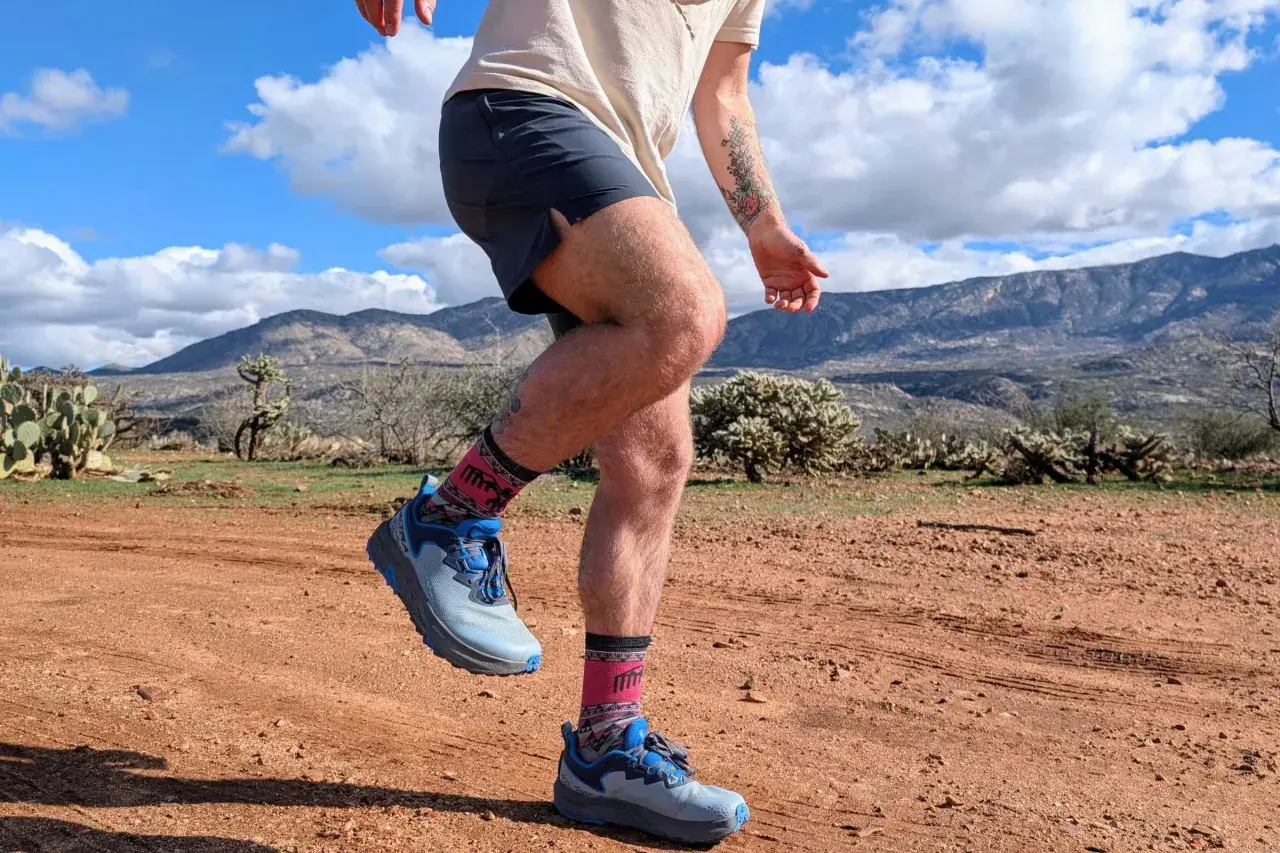
The sixth Timp keeps the familiar Altra formula: a roomy forefoot, zero drop, and enough cushioning to make long trail days feel smoother. For hiking, that matters because the shoe sits in the narrow space between a fast trail runner and a light hiking shoe, which is exactly where many hikers now shop. In this guide I break down where the Altra Timp 6 makes sense, where it falls short, and how I would judge it for day hikes, fastpacking, and mixed-terrain trips.
The Timp 6 is best for hikers who want trail-runner comfort with real trail traction
- 0 mm drop and a 30 mm stack create a stable, cushioned ride that feels natural once you are adapted to zero-drop footwear.
- The Vibram Megagrip outsole is the standout feature for wet rock, hardpack, and slick trail surfaces.
- It works best for day hikes, fastpacking, and all-day trail walking rather than heavy backpacking or scrambling.
- The Standard FootShape fit gives toe room, but it is not as generous as the roomiest Altra shapes.
- Recent U.S. review pricing has been around $165, so value depends heavily on whether the fit suits your foot.
What the Timp 6 is really built for
Altra positions the shoe for trail running, all-day trail running, and hiking, and that is the right way to think about it. This is not a leather hiking shoe trying to behave like a boot replacement; it is a cushioned trail shoe that happens to work well when you want more comfort and speed than a traditional hiker. I see it as a good fit for hikers who move fast, cover mixed terrain, and do not want a stiff, heavy platform underfoot.
| Spec | Why it matters on the trail |
|---|---|
| 0 mm heel-to-toe drop | Keeps heel and forefoot level, which can feel very natural once your calves and Achilles are used to it. |
| 30 mm stack height | Gives you a lot of foam between your foot and the ground, which helps on long hikes over hard surfaces. |
| Altra EGO MAX midsole | Softens rock impacts without feeling overly mushy or unstable on packed trail. |
| Vibram Megagrip outsole | One of the main reasons this shoe makes sense for hiking in the first place. |
| Standard FootShape fit | Leaves room for toe splay while keeping the midfoot more controlled than the widest Altra shapes. |
That profile puts it in a very specific category: not a boot, not an approach shoe, and not a minimalist runner. It is a cushioned, protective trail shoe that can handle hiking duties when the route is long, mixed, and not too technical. That distinction matters, because the outsole and upper only make sense once you look at how they behave in real terrain.
The features that matter on real hikes
Traction is the main reason to pay attention here. The redesigned Megagrip outsole gives the shoe real confidence on wet rock, damp grass, packed dirt, and sandy trail. One recent field test measured the lugs at about 3.5 mm, which is a useful middle ground: enough bite for most hikes, but not so aggressive that the shoe becomes awkward on harder ground. I would not choose it for deep clay or constant mud, but for the kind of mountain trail that shifts between rock, dirt, and a few slick patches, it performs like a serious tool.
The midsole is the second big story. Zero drop can sound like a gimmick until you spend a full day hiking in it. When the shoe is well matched to your body, the level platform can feel steady and efficient, especially on long, rolling trail. The 30 mm of cushioning is enough to dull sharp impacts on descents, which is useful if you spend long stretches on stony paths, limestone, or compacted gravel. The trade-off is simple: you gain comfort and lose some ground feel. That is a good trade for most hikers, but not for everyone.
The upper is more practical than flashy. The soft rolled mesh keeps the shoe breathable, and it dries faster than heavier hiking footwear after stream crossings or wet grass. The welded overlays and toe cap add basic protection without turning the shoe into a stiff shell. I also like the GaiterTrap system for dusty or sandy routes, because it helps keep debris out without resorting to a full boot. In other words, this is the kind of upper I would trust on warm-weather trail trips, shoulder-season hikes, and routes where quick drainage matters more than waterproof sealing.
That balance of grip, cushioning, and breathability sounds good on paper, but the real question is where it actually earns its place in a hiking rotation.
Where it works best and where it does not
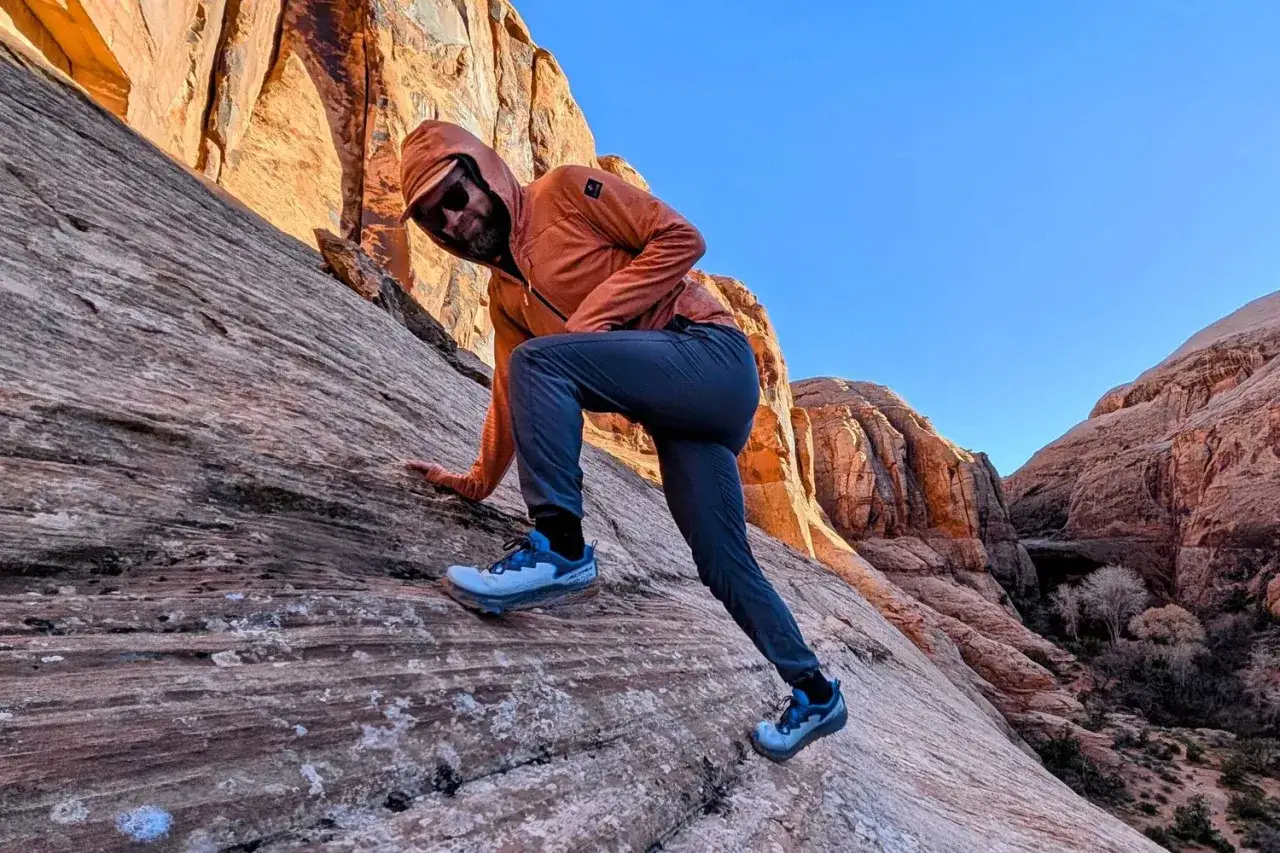
The Timp 6 is strongest when the hike feels more like a long trail run than a backpacking march. On maintained paths, alpine approach trails, and mixed European footpaths with hardpack and rock, it is an easy shoe to like. Where it starts to lose ground is in situations that demand more structure, more ground feedback, or more mud-clearing ability.
| Terrain or use case | My take | Why |
|---|---|---|
| Day hikes on maintained trail | Very good | Light enough to stay pleasant, cushioned enough to protect your feet late in the day. |
| Fastpacking and light loads | Very good | The shoe feels efficient when you are moving quickly and not carrying a heavy pack. |
| Wet rock and hardpack | Excellent for the category | Vibram Megagrip is where this shoe earns its reputation. |
| Loose scree or scrambling | Caution | The higher stack reduces ground feedback and makes precise foot placement harder. |
| Deep mud or heavy clay | Weak spot | The tread is not aggressive enough to stay clean and bite consistently in sticky mud. |
| Heavy backpacking loads | Not my first choice | I would want more structure and support if the pack gets genuinely heavy. |
If I were hiking somewhere like the limestone trails of northern Spain or the damp, rocky paths you often get in the Alps, I would see the Timp 6 as a strong option for moving quickly and staying comfortable. If the route turns rough, exposed, or heavily loaded, I would move toward a more supportive hiking shoe or boot. That leads directly to the comparison that matters most for buyers.
How it compares with a true hiking shoe
The cleanest way to judge this shoe is to compare it with a more traditional hiking shoe or boot. That comparison makes the Timp 6 look less like a universal answer and more like a specialist: faster, lighter, and more flexible, but also less structured and less protective than many hikers are used to.
| Factor | Timp 6 | Typical hiking shoe or boot | What I would choose |
|---|---|---|---|
| Weight | Lighter and more nimble | Usually heavier | Timp 6 for speed and comfort |
| Ground feel | Moderate, with a cushioned ride | Often firmer and more structured | Boot or hiking shoe for rough technical ground |
| Ankle coverage | Low-cut | Often higher, especially in boots | Boot if ankle support matters to you |
| Toe room | Roomy, but not extreme | Varies widely | Timp 6 if you want toe splay without a sloppy fit |
| Waterproofing | Standard version is not waterproof; GTX exists | Many hiking models are built around weather protection | Boot or GTX if you hike in wet, cold conditions often |
| Best job | Trail running and fast hiking | Supportive hiking and backpacking | Choose based on load, terrain, and pace |
There is also a brand-internal comparison worth making. If I wanted the roomiest Altra feel for hiking, I would look at the Lone Peak family first. If I wanted more underfoot plushness and did not care as much about trail speed, I would look higher up the cushion scale. The Timp 6 sits in the middle: more refined than a basic trail shoe, but less bulky than many hiking-first models. The fit is the deciding factor, and that is where people often misjudge it.
Fit, sizing, and the mistakes I would avoid
The Timp 6 is friendly to normal and medium-width feet, but I would not call it a universally spacious shoe. The toe box gives your toes room to spread, yet the midfoot is more controlled than the widest Altra options. If you have a very wide forefoot, sensitive ankles, or a low-volume heel, I would try it on before buying. On downhill sections, that matters more than most people expect.
- Use the socks you actually hike in. A thin running sock and a thick hiking sock can change the fit in a way that matters after hour three.
- Test heel lockdown on descents. If the heel slips, a runner’s loop lacing setup can help a lot.
- Do not confuse roomy toes with a wide chassis. The shoe gives you space up front, but it is not the widest Altra you can buy.
- Transition gradually if you are new to zero-drop. A 0 mm shoe can feel great, but calves and Achilles tendons need time to adapt.
- Choose the standard or GTX version for the weather you actually hike in. The mesh version drains quickly; the waterproof option makes more sense if you spend a lot of time in persistent rain or wet snow.
I also would not buy it purely on brand loyalty. At around $165 in recent U.S. coverage, it sits in a price band where the fit, ride, and traction need to earn their keep. If the shoe matches your foot and your hiking style, the price is fair. If it does not, there are plenty of alternatives at a similar or lower price point that may suit you better. That makes the final decision less about hype and more about use case.
The kind of hiker who will get the most out of it
For me, the Timp 6 makes the most sense for hikers who move quickly on maintained trails, want a cushioned ride without a big heel lift, and care about grip on wet rock or hardpack. It is also a strong choice for people who split time between running and hiking and do not want two separate pairs for every trip.
- Choose it if you want a light, cushioned shoe for day hikes and fastpacking.
- Choose it if you like zero-drop and a toe-friendly fit.
- Choose it if your routes include rock, packed dirt, and mixed trail.
- Skip it if you carry heavy packs or want ankle-height protection.
- Skip it if your hikes are dominated by deep mud, loose scree, or technical scrambling.
That is why I would treat the Altra Timp 6 as a specialist tool rather than a default hiking shoe. If your idea of hiking is fast, scenic, and mostly on trail, it is a very convincing option; if you want maximum support and weather protection, a more traditional hiking shoe or boot will serve you better.