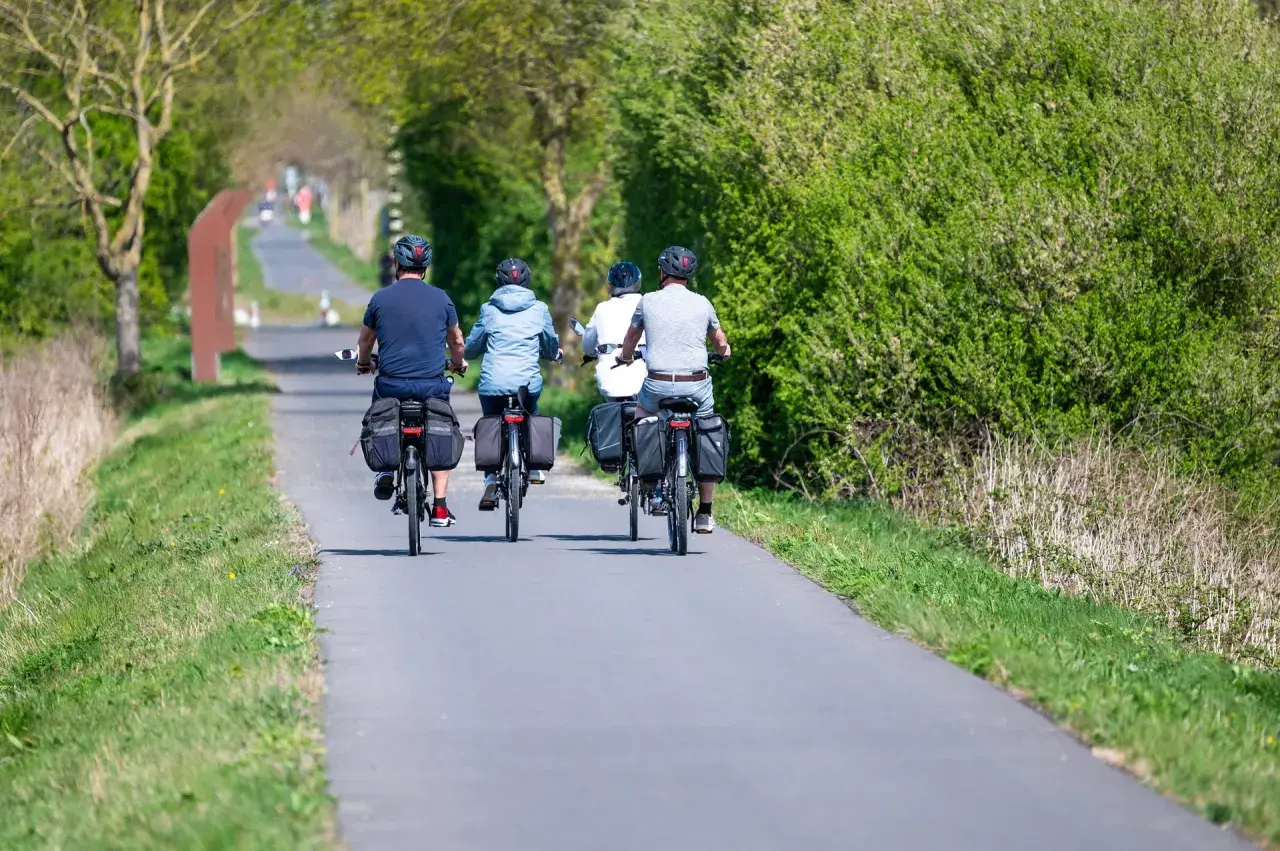
Well-planned Belgium cycling tours are less about ticking off mileage and more about linking canal paths, historic cities, brewery country, and quieter rural lanes into a trip that feels effortless. The best organized rides balance scenery with logistics, so you spend more time riding and less time solving transport, luggage, or navigation problems. In this guide I focus on the route styles, the main regions, what a solid package should include, and the budget realities that matter before you book.
At a glance, the best trip is the one that matches your pace, surfaces, and level of support
- Flanders has the deepest network of signed cycling routes and is the easiest place to build a point-to-point holiday.
- Wallonia suits riders who want quieter roads, more hills, and a stronger nature feel.
- Self-guided trips give the best mix of freedom and logistics; guided trips are easiest; bike-and-barge removes hotel hopping.
- Current live listings show self-guided eight-day trips starting around €1,480 per person, while premium guided trips can climb to roughly $5,599-$5,899 per person.
- Spring and early autumn are usually the most comfortable riding windows, especially for visitors arriving from the U.S.
Why Belgium works so well for a cycling holiday
Belgium is compact enough that a bike trip can cover a lot of ground without turning into a transfer marathon. Visit Flanders says the region alone offers roughly 15,000 kilometers of cycling fun, and the route system is built for regular bikes and e-bikes as much as for hard-training road riders. That matters because the country’s appeal is not just the scenery; it is the way the scenery, food, and culture stay close together.
What makes this especially good for organized travel is the structure. Many routes are fully signposted, several are designed to work in both directions, and public transport can often get you to the start point without drama. I also like Belgium for travelers who want a trip with rhythm: ride a manageable distance, stop well, sleep well, and repeat.
If you want a European cycling holiday that feels polished but not overbuilt, Belgium is a strong fit. The next question is not whether the country works, but which part of it matches the way you like to ride.
Which regions give you the best ride for your style
Different parts of the country create very different trips, and I would not treat them as interchangeable. If you choose the right region first, the rest of the itinerary becomes much easier to judge.
| Region | What it feels like | Best for | Typical fit |
|---|---|---|---|
| Flanders canal belt | Flat to gently rolling, with towpaths, heritage cities, and a dense route network | First-timers, mixed-ability groups, e-bikes, relaxed sightseeing trips | Good for moderate daily distances and easy route planning |
| Flanders Fields and the Westhoek | Open countryside, memorial sites, and a quiet, reflective atmosphere | History-focused riders and travelers who like long, steady days | Best when you want the landscape to carry part of the story |
| Wallonia and the Ardennes | Quieter, greener, hillier, and more varied in terrain | Stronger riders, gravel fans, and people who want more solitude | Better if you are comfortable with climbs and weather changes |
| Brussels and the green belt | Useful for arrival or departure days, with short urban-to-rural transitions | Short breaks and mixed itineraries | A practical base when you want one easy first or final ride |
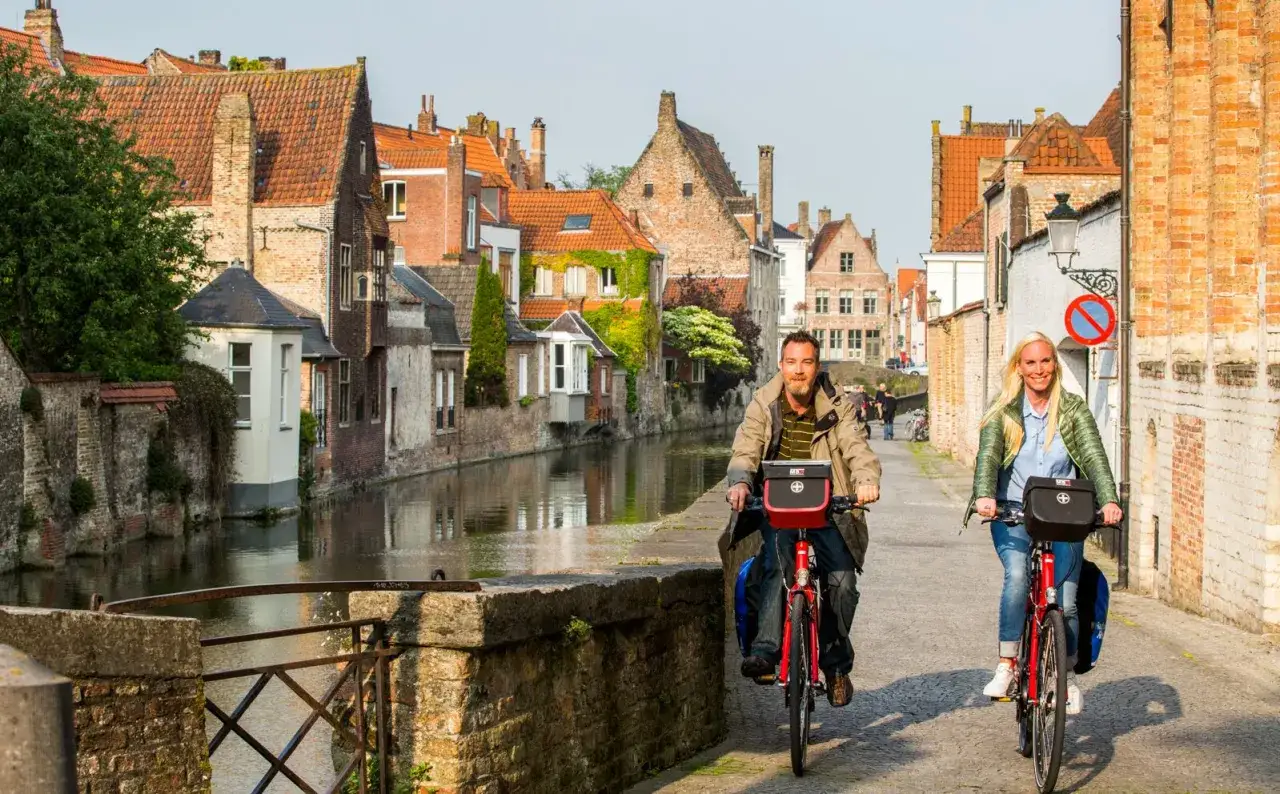
As a rule, I would point first-timers toward the flatter, better-signposted corridors around Bruges, Ghent, and the canal network. Riders who care more about solitude and terrain than postcard cities usually end up happier farther south. The best thing about Belgium is that you can build a themed trip around art cities, breweries, memorial sites, or river corridors without needing to leave the country.
What Belgium cycling tours usually include
The format matters almost as much as the route. A trip that looks similar on paper can feel completely different depending on whether the operator handles navigation, baggage, meals, and support along the way.
| Format | What you usually get | Why it works | Main trade-off |
|---|---|---|---|
| Self-guided hotel-based | Accommodation, route notes or GPX files, luggage transfers, and local emergency support | Best balance of freedom and structure for independent travelers | You still manage timing, navigation, and day-to-day pacing |
| Guided small-group | A tour leader, fixed departure dates, route support, and often more direct logistics help | Good for first-time bike tourists or anyone who wants less planning friction | Less flexibility and a group pace you have to match |
| Bike-and-barge | A floating hotel, meals, luggage that stays onboard, and daily riding stages | Easiest overall logistics if you do not want to repack every day | Fixed schedule, compact cabins, and less control over hotel style |
When I review a package, I look first for the boring details: daily mileage, luggage-transfer timing, route format, and whether the bike rental includes a repair kit. GPX files are digital route files that load into a bike computer or phone app, and they are useful even on well-marked routes because they reduce uncertainty when a sign is missing or a junction gets busy. A good package should also say clearly whether helmets, panniers, and city taxes are included.
That is the practical difference between a trip that feels smooth and one that keeps asking for decisions. Once those basics are clear, budget becomes the next real filter.
How much you should budget in 2026
Belgium is not a bargain-basement destination, but it is more flexible than many travelers expect. The price swing is wide because accommodation style, support level, and trip length matter more here than in many short-haul destinations.
| Trip style | Typical 2026 starting point | What pushes the price up |
|---|---|---|
| Self-guided hotel-based | About €1,480-€1,700 per person for 7-10 days | Single rooms, better hotels, peak-season dates, and airport transfers |
| Guided small-group | Roughly $1,390-$5,899 per person depending on duration and comfort level | Guide support, private departures, premium hotels, and more inclusive meals |
| Bike-and-barge | About $2,920-$3,199 per person for 8-15 days | Cabin class, route length, dining package, and shoulder-season availability |
One current Belgium Bike Tours listing starts at about €1,480 per person for a seven-day Brussels-to-Bruges itinerary, which is a useful anchor if you are comparing hotel-based trips. Beyond the base fare, I would budget for flights, bike rental if it is not included, lunches, dinners, helmet or pannier hire when needed, and the occasional city tax. On one current Ghent-Bruges package, for example, the local tax is listed at €4 per person per night, which is a good reminder that the headline price is rarely the final price.
If you are comparing offers, the key is not the cheapest sticker number. It is the total cost after the parts that matter to your trip style are added in. That brings us to timing, which changes the feel of the ride more than most people expect.
When to go and how hard the riding really is
For most travelers, the sweet spot is April to June or September to October. Those months usually give you milder temperatures, better light, and fewer crowds than peak summer, while still keeping the country green and rideable. Many organized rides run for most of the year, but I would be cautious about planning a first cycling holiday here in the coldest, wettest stretch unless you are comfortable with shorter days and more weather disruption.
In terms of effort, Belgium is not one thing. Canal and towpath routes can feel almost gentle, while Flanders’ race-country roads add cobbles, short climbs, and a very different kind of fatigue. A gravel bike is a hybrid setup that handles both pavement and rougher farm lanes without feeling twitchy, and an e-bike adds pedal assistance that can make a mixed-ability trip much easier to enjoy.
The main mistake I see is overestimating how much flat terrain guarantees an easy day. Wind, cobbles, and frequent stops can matter just as much as elevation.
How I would match the trip to your travel style
If I were choosing a tour for myself or for a U.S. traveler booking from afar, I would start with the reason for the trip rather than the route name. Belgium rewards that approach because the country can support several very different styles of cycling holiday.
- First-time visitors usually do best with a self-guided city-to-city route such as Brussels to Bruges or Ghent to Bruges, because the riding is manageable and the cultural payoff is immediate.
- Food and beer travelers should look at themed routes that pass breweries, hop fields, or geuze country, because the stops are part of the experience rather than an afterthought.
- History-focused riders get more out of Flanders Fields and the Peace Route, where the landscape and memorial sites carry the story.
- Stronger riders can lean toward cobbled classics terrain or hillier southern sections if they want more bite in the day.
- Mixed-ability couples or families should seriously consider e-bikes and shorter daily distances, because they keep the trip social instead of turning it into a test of patience.
That is the practical filter I use: if the route matches your travel mood, the rest of the logistics tend to fall into place. Once the style is right, a few booking details decide whether the trip feels easy from day one or slightly improvised.
The details I would not skip before booking
Belgium is easy to enjoy, but only if the package is built cleanly. Before I book, I always check four things: whether luggage transfer is included every riding day, whether the route comes as GPX files or paper notes, whether the bikes are fit for the surfaces on the itinerary, and whether the hotel start and finish points are well connected to rail or airport transfers.
- Confirm the exact daily distances and whether there is a shorter option on windy or wet days.
- Ask if the bike rental includes a pump, spare tube, lock, and panniers.
- Check whether city taxes, helmets, dinners, and airport transfers are extra.
- If you are flying from the U.S., build in one extra night at the start so the first ride does not collide with jet lag.
If those basics are covered, a cycling trip through Belgium is usually less about problem-solving and more about settling into a good daily rhythm. That is the standard I would aim for, because the best Belgian rides are the ones where the logistics disappear and the country does the work.