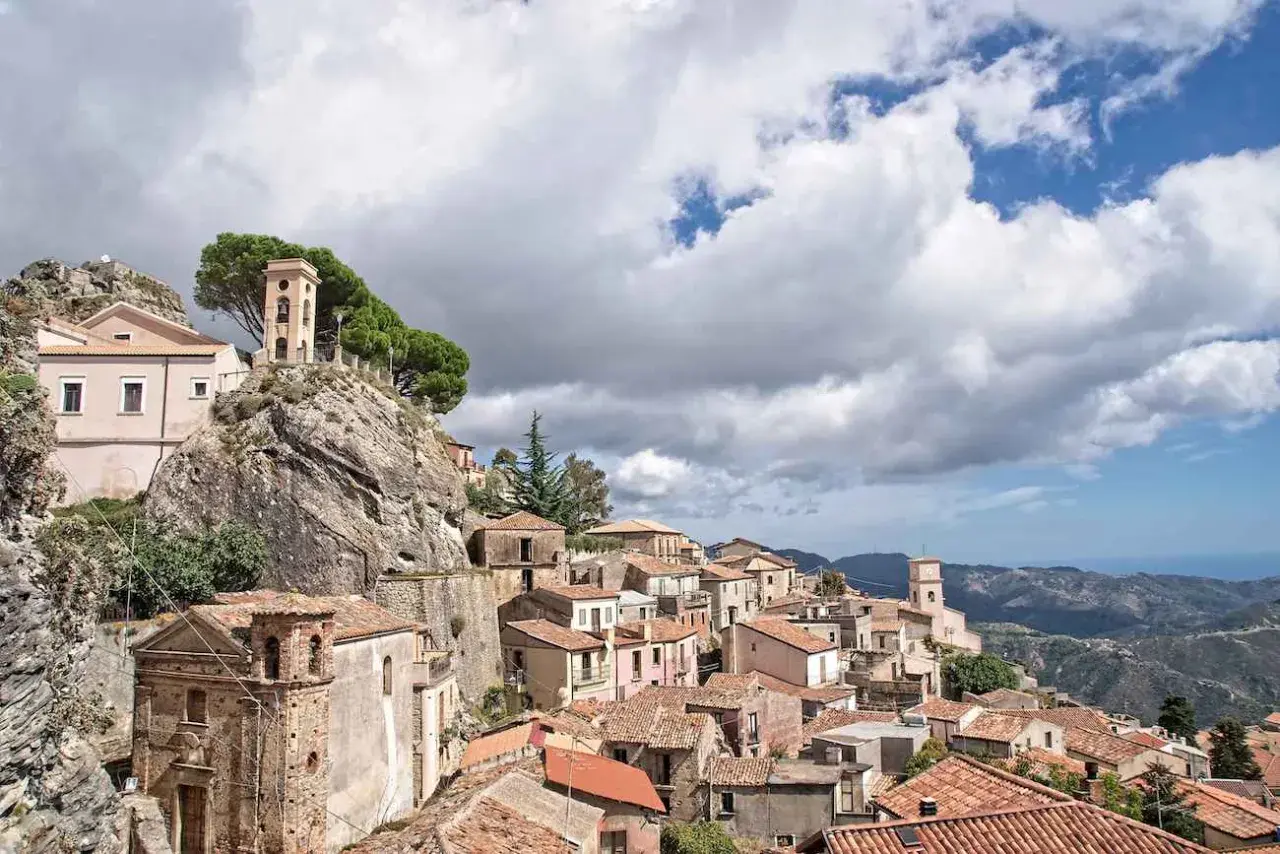
Calabria rewards travelers who like places with a strong sense of identity: cliff-top towns, medieval hill villages, working ports, and quiet fishing hamlets. The towns in Calabria, Italy, are best understood as a mix of coast, hills, and city bases, and that changes where you stay, how you move, and which places deserve a night rather than a quick stop.
The fastest way to read Calabria on a map
- Tropea, Scilla, and Pizzo are the easiest coastal trio for a first trip because they combine scenery, walkability, and a clear sense of place.
- Gerace, Stilo, Santa Severina, and Morano Calabro show the medieval and mountain side of the region far better than a coast-only itinerary.
- Reggio Calabria is the strongest all-round city base if you want museums, a long waterfront, and straightforward access to the Strait of Messina.
- In 2026, I would still treat Calabria as a region where a car helps a lot, especially once you leave the main coastal line.
- If your time is limited, build around one coast, one inland cluster, and one base city instead of trying to see everything.
How I separate Calabria into the routes that actually work
Calabria looks compact on a map, but it behaves like three different travel regions. The Tyrrhenian coast on the west gives you the classic scenic stops, the Ionian side is quieter and often more spread out, and the mountain spine produces the hill towns that feel most rooted in local life.
That is why I do not read the region as a single list of names. I read it as a set of municipal categories, because the right town for a beach trip is not the same as the right town for a medieval walk or a practical overnight base.
| Zone | Examples | What it gives you | What to expect |
|---|---|---|---|
| Tyrrhenian coast | Tropea, Pizzo, Scilla, Diamante | Cliff views, beaches, sunset walks, easier movement | More visitors in peak season, but the simplest first-time route |
| Ionian coast | Badolato, Roseto Capo Spulico, Isola Capo Rizzuto, Bova Marina | Quieter stops, long horizons, a slower rhythm | Less crowded, but transport is less forgiving |
| Hill-town belt | Gerace, Stilo, Santa Severina, Morano Calabro, Aieta, Bova | History, stone lanes, churches, views, atmosphere | Often best with a car and at least one overnight |
| Urban bases | Reggio Calabria, Cosenza, Catanzaro, Crotone | Museums, services, rail links, food, logistics | Less postcard-perfect, but useful when you want to move efficiently |
Once you see that split, the rest of the trip stops feeling random. The coastal towns become a scenic line, the hill towns become a separate experience, and the cities start to make sense as practical anchors rather than places you are supposed to "do" in the same way. That is the logic I use before I narrow the list further.
The coastal towns I would put first
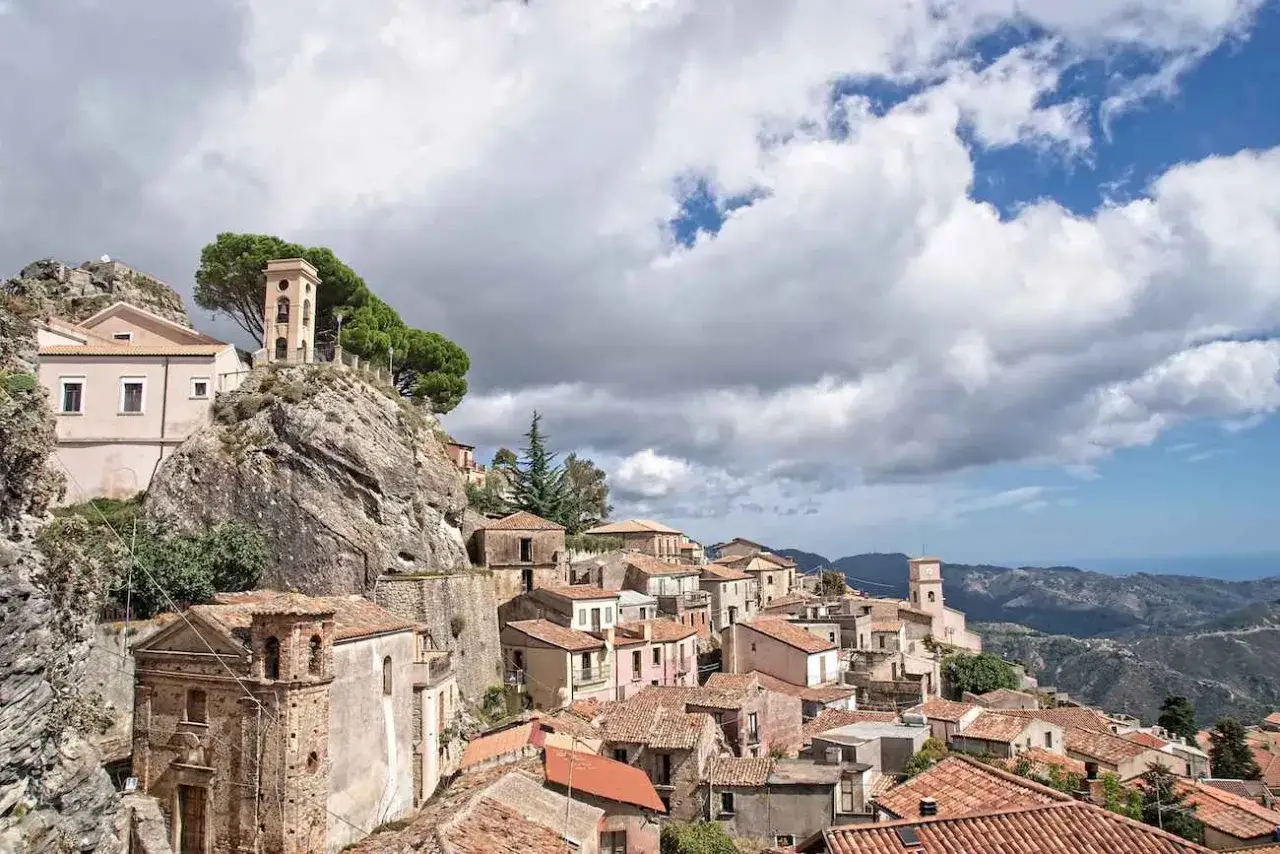
The coast is what most people picture first, and for good reason. Calabria has a string of seaside towns that feel genuinely different from one another, which is rare enough to make the region rewarding even if you only have a few days.
| Town | Why it matters | Best for | Main trade-off |
|---|---|---|---|
| Tropea | The most famous cliff-top town, with beaches below and a compact historic center above | First-time visitors who want the classic Calabria view | It gets busy, especially in peak summer |
| Scilla and Chianalea | A fishing quarter, narrow lanes, and one of the most atmospheric waterfront settings in the region | Photos, seafood, and slow evening walks | Parking and access can be awkward if you arrive without planning |
| Pizzo | Smaller and easier to absorb, with a strong food identity and a pleasant historic core | A half-day stop or a short overnight | Less dramatic than Tropea, so it works best as part of a route |
| Diamante | A more relaxed Tyrrhenian stop with a creative street feel and a long seaside profile | Travelers who want a looser, less polished atmosphere | It is more about mood than headline sights |
| Badolato | A quieter village with a seaside connection and a slower, more local rhythm | Slow travel and low-key wandering | It rewards patience more than impulse visits |
| Roseto Capo Spulico | An Ionian-side town with strong sea views and a castle setting | People who want the east coast without losing scenery | It is quieter, so you need to plan meals and timing a bit more carefully |
The coast is also where Calabria is easiest to move through. The rail corridor works reasonably well between the main stops, and that matters. Lamezia Terme to Tropea can be under 50 minutes by train, and Tropea to Scilla is about an hour by train, which is enough to make a coastal string of stops feel realistic even if you are not driving every day. That convenience fades quickly once you head inland, and that is exactly why the hill towns deserve their own section.
The inland borghi that show the region’s older side
The inland towns are where Calabria slows down and gets more layered. Here, borghi, the Italian word for small historic villages, tend to sit on hills, plateaus, or rocky ridges, and the effect is less "beach holiday" and more "place with a long memory."
| Town | Why I would go | What stands out | Main limitation |
|---|---|---|---|
| Gerace | The most complete first inland stop for many travelers | Medieval lanes, a strong cathedral presence, and a townscape that feels lived in | Better as an overnight than a rushed stop |
| Stilo | For a compact historic visit with a clear visual identity | The Byzantine-era Cattolica and a tightly held old center | Small enough that you can see the core quickly |
| Santa Severina | For castle-and-fortress energy | A strong defensive silhouette and wide views | Less convenient if you are relying on public transport |
| Morano Calabro | For mountain scenery and a more dramatic profile | A steep, photogenic setting near Pollino | It feels more remote, which is part of the appeal |
| Aieta | For a quieter hill village with an elegant historic feel | Stone streets and a calmer pace than the bigger-name towns | It rewards careful timing and a slower schedule |
| Bova | For a distinct Grecanica identity and a sense of cultural depth | A different side of Calabria, shaped by Greek-Calabrian history | It is niche, so it is best for travelers who like context as much as scenery |
If I only had room for one inland town, I would choose Gerace first. It gives the clearest blend of history, views, and walkability, and it still feels like a real place rather than a preserved stage set. After that, I would choose the others based on whether I wanted Byzantine detail, fortress drama, mountain scenery, or a quieter village with fewer distractions. From there, the cities become much easier to evaluate as bases rather than as destinations in themselves.
The cities that make the best bases
Calabria's cities are not always the most romantic stops, but they are often the smartest ones. This is where you get rail connections, better restaurants, museums, and the practical comforts that make a longer route easier to manage.
| City | Why stay here | What to pair it with | My take |
|---|---|---|---|
| Reggio Calabria | The strongest southern base, with the promenade, major museums, and easy access to the Strait of Messina | Scilla, Bova area, Locri, the Aspromonte side | If you want one city that actually earns a night, this is it |
| Cosenza | A more urban inland base with a stronger old-town feel than many travelers expect | Morano Calabro, the Sila side, Pollino routes | Useful if you want the northwest and the mountains in the same trip |
| Catanzaro | Administrative center with good regional reach | Stilo, the Ionian coast, and central Calabria stops | Not the most scenic, but efficient when logistics matter |
| Crotone | A good eastern anchor for history and sea access | Santa Severina, Isola Capo Rizzuto, the Ionian coastline | More practical than polished, which is exactly why it works |
| Lamezia Terme | The cleanest arrival and departure point for many trips | Tropea, Pizzo, the Tyrrhenian coast | Useful as a gateway, but not where I would linger unless the schedule forces it |
In practical terms, I think of Reggio Calabria as the only city here that can compete with the scenic towns for a proper stay, because it gives you culture and waterfront time in the same package. The others are better seen as functional anchors, especially if you are building a route that mixes coast and inland without wasting half the trip on transfers. That leads directly into how I would actually build the trip.
How I would build a first trip without overpacking it
The biggest mistake I see in Calabria planning is trying to cover both coasts and the deep interior in one short break. Calabria is better when you let each area breathe. In 2026, I would still plan it as a sequence of short legs rather than as one nonstop loop.
- 3 to 4 days - Focus on Tropea, Pizzo, and Scilla, then finish with one night in Reggio Calabria.
- 5 to 6 days - Add Gerace and either Stilo or Santa Severina for a proper inland contrast.
- 7 to 10 days - Add Morano Calabro or Aieta, plus one city base on each end of the trip if you want less stress.
The official tourism framing of Calabria as an eight-stage seaside route is actually useful here, because it confirms what the region already tells you on the ground: move, but do not rush. Short drives, short train hops, and one or two anchor towns work better than an overstuffed checklist.
I would also keep one rule in mind. If a town sits inland and looks especially old or steep, assume you will enjoy it more with a night on site or a very deliberate half-day, not a flying visit between other stops. That is how the region stops feeling fragmented and starts feeling coherent.
The towns where one overnight changes everything
Some Calabrian towns are fine as quick stops, but the best ones change character after the day-trippers leave. Tropea becomes calmer in the evening, Scilla feels more intimate once Chianalea is lit by low light, and Gerace has a better rhythm when you are not trying to do it in a rush.
Reggio Calabria fits the same pattern. By day, it is a practical city with museums and services. By dusk, the waterfront and the Strait give it a different mood entirely, and that is the version of the city I remember most clearly.
If I were choosing a small set of places for a reader who wants the strongest first impression, I would start with Tropea, Scilla, Gerace, and Reggio Calabria, then add Pizzo, Stilo, and one quieter hill village if time allows. That combination gives you coast, history, food, and a sense of how the region really works, which is more useful than trying to tick off every municipality on the map.