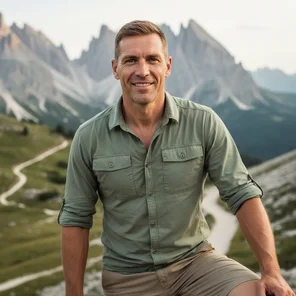
The Swiss Alps reward hikers in two very different ways: some trails deliver huge scenery for modest effort, while others ask for a full day and return the kind of mountain views that stay in your head for years. This guide is my practical shortlist for the best hikes in the Swiss Alps, with a focus on routes that are scenic, realistic to plan, and worth the travel time. I also cover how to choose between lake walks, ridge hikes, glacier trails, and longer point-to-point days.
Quick takeaways for planning a Swiss Alps hiking trip
- Best all-round icon: the 5-Lakes Trail in Zermatt is hard to beat when the weather is clear.
- Best close-up drama: the Eiger Trail gives you one of the strongest mountain-wall experiences in the region.
- Best easy scenic day: Oeschinensee is the simplest way to get a big alpine payoff without a huge ascent.
- Best wide panorama: Schynige Platte and Männlichen to Kleine Scheidegg both deliver classic Bernese views.
- Best bigger effort: Via Alpina stage 11 is the route I would choose for a proper full-day mountain crossing.
- Best planning rule: pick one base area, then build around one signature hike and one backup trail.
What makes a Swiss Alps hike worth your time
Before I choose a route, I decide what kind of alpine day I want. In the Swiss Alps, a good hike is rarely just about mileage; it is about access, exposure, weather, and how much of the scenery you get for the effort. I usually separate the options into four buckets: postcard lake walks, classic ridge hikes, glacier-side trails, and longer point-to-point routes that feel like a real mountain day.
That filter matters because two trails with similar distances can feel completely different once you add cable cars, steep ascents, or narrow mountain paths. Switzerland Tourism is useful here because its route pages make the spread obvious: the 5-Lakes Trail is 11 km and 3 h 15 min, the Eiger Trail is 6 km and 1 h 55 min, and Via Alpina stage 11 jumps to 20 km and 6 h 40 min. I read that as a reminder to rank hikes by the kind of day they create, not by fame alone.
One thing I would not ignore is the trail grading. Easy hikes are usually wide and straightforward, while mountain hiking trails can be steep, narrow, and exposed, sometimes with ropes or chains on the trickier sections. That distinction matters more than the number on the trail map, because a short exposed climb can feel harder than a longer mellow path. Once you think in those terms, the shortlist becomes much easier to build.

The trails I would shortlist first
If I were building a first trip around the Swiss Alps, I would start with a mix of iconic and practical routes. These are the hikes I would actually put on the list, not just the ones that look good in a photo.
| Trail | Stats | Difficulty | Why I like it |
|---|---|---|---|
| 5-Lakes Trail, Zermatt | 11 km, 3 h 15 min, +380 m | Moderate | On a clear day, the Matterhorn reflections make this one of the most photogenic alpine walks in Switzerland. |
| Eiger Trail, Grindelwald | 6 km, 1 h 55 min, +100 m | Moderate | It puts you close to the Eiger North Face without asking for a technical climb. |
| Männlichen to Kleine Scheidegg | About 2.5 hours | Easy to moderate | A high-altitude walk with huge views and relatively little effort once you are up on the ridge. |
| Oeschinensee circular walk, Kandersteg | 4 km, 1 h 20 min, +140 m | Easy | The quickest way to get a turquoise-lake payoff when you want a lower-stress alpine day. |
| Schynige Platte circular ridge route | 6 km, 1 h 55 min, +340 m | Moderate | I like it for the broad Bernese Oberland panorama more than for any single landmark. |
| Aletsch Panoramaweg, Riederalp to Fiescheralp | 12 km, 3 h 45 min, +510 m | Moderate | The glacier scale changes the whole mood of the hike and makes the effort feel bigger than the numbers suggest. |
| Via Alpina stage 11, Grindelwald to Lauterbrunnen | 20 km, 6 h 40 min, +1,150 m | Hard physically, easy technically | A full-day crossing that feels like moving through the mountains, not just visiting a viewpoint. |
If you want something a bit more adventurous, Trift Bridge is the route I would add next. It is 6 km, takes about 3 h 20 min, and climbs 695 m, so it sits in that sweet spot between scenic hike and genuine mountain day. If you want a steeper Jungfrau-region alternative, the Lauberhorn Trail is another strong pick at 6 km, 2 h 50 min, and 820 m of ascent.
How I would match each trail to the day you want
I do not choose these hikes by name alone. I choose them by the kind of day I actually want to have, because that is what determines whether the trail feels perfect or slightly annoying.
Low-effort days that still feel special
Oeschinensee and Männlichen to Kleine Scheidegg are the safest picks when you want easy logistics and immediate scenery. They are also the best choices for a first hiking day in the Alps, because you can enjoy the setting without spending half the day climbing. If the weather looks uncertain, these are the routes I would trust first.
The classic postcard routes
The 5-Lakes Trail, Eiger Trail, and Schynige Platte are the trio I would call the essentials. The first is the most photogenic, the second is the most dramatic, and the third gives you the broadest panorama. If you only do one Bernese Oberland hike, I would lean toward Schynige Platte for balance or the Eiger Trail for intensity.
Read Also: Hiking in Greece - Plan Your Perfect Trail Adventure
The bigger mountain days
Via Alpina stage 11 and Aletsch Panoramaweg are for hikers who want the day to feel bigger than a viewpoint stop. The Via Alpina stage is the more committing effort; Aletsch is the more visually grand one. Trift Bridge sits in between, with enough exposure and ascent to feel memorable without becoming a full expedition. That is also where I would look if I wanted a route that feels a little less polished and a little more earned.
The logistics that matter more than people think
The biggest difference between an enjoyable Swiss Alps hike and a stressful one is usually logistics, not fitness. The scenery is exceptional, but the day can unravel quickly if you ignore the season window, choose the wrong base village, or underestimate how much of the route depends on lifts and transport.- Use one base area. Zermatt, Grindelwald/Wengen, Kandersteg, and the Aletsch region all support multiple strong hikes, which means less transit and more time on the trail.
- Respect the season window. For the routes in this article, I would treat higher trails as late-spring-to-autumn hikes. Official route pages place the Eiger Trail in July to October, Schynige Platte and Trift Bridge in June to October, and Via Alpina stage 11 in May to September.
- Start early. Morning light is better for photos, the air is usually clearer, and the well-known cable-car routes are less crowded before midmorning.
- Pack for mountain weather, not just sunshine. I would not go into the Alps without a light shell, water, snacks, sun protection, and shoes with enough grip for steep or rocky sections.
- Do not treat lifts as cheating. In Switzerland, mountain railways are part of the hiking system, and they are often the smartest way to save energy for the best stretch of trail.
- Check the trail rating honestly. A route marked medium or difficult may be perfectly manageable, but it can still include exposure, long descents, or narrow sections that demand focus.
For a 2026 trip, I would verify lift and trail status a week before going, especially if I were planning one of the higher routes. That small check can save you from arriving in the right region on the wrong day.
If I had to choose only three trails for a first trip
For a short first visit, I would not try to cover every famous valley. I would build the trip around three different moods: one classic icon, one close-up mountain wall, and one trail that feels truly expansive.
- 5-Lakes Trail for the most balanced first impression of the Swiss Alps.
- Eiger Trail for the strongest sense of scale and drama in the Jungfrau region.
- Aletsch Panoramaweg for glacier scenery that feels bigger than the effort you put in.
If there is room for one more day, I would add Schynige Platte for a broader panorama or Oeschinensee for an easier, lower-stress outing. That mix gives you a better read on the Alps than chasing six famous hikes in six different corners of the country, and it is usually the difference between a busy itinerary and a genuinely memorable one.