The practical basics that matter before you step onto the trail
- Trail markings matter: yellow, white-red-white, and white-blue-white tell you what kind of terrain to expect.
- June to September is the safest planning window for higher routes, but snow can linger well into summer above altitude.
- Good shoes, layers, and a real backup plan prevent most trail-day problems.
- Hut-to-hut trips are the best way to cover more ground, but they require early reservations and a flexible mindset.
- For a first trip, I’d start with one moderate mountain hike and one easier backup route.
What the terrain asks of you
I usually think of the Swiss Alps as a place where the terrain decides the rhythm before you do. A trail that looks gentle on a map can turn narrow, steep, and surprisingly exposed once you are actually on it, and that is especially true above the tree line. The simplest mistake is treating mountain distance like lowland distance; in the Alps, elevation, footing, and weather matter just as much as mileage.
The official trail system is helpful because it tells you what kind of day you are signing up for. Yellow-marked hiking trails are the broadest category, while mountain trails and alpine trails demand more balance, more awareness, and more margin for error. The higher you go, the more the surface changes too: rock, scree, snow patches, steep grass, and sections where the route is obvious only if you are paying attention. That is why I never read a Swiss route description as a scenic promise alone; I read it as a terrain warning, too.
There is one more detail people underestimate: posted hiking times do not include breaks, and high routes can stay snowbound into summer. That means your pace is never just about fitness. It is about judgment, temperature, visibility, and how quickly you can adapt when the mountain changes its mind. Once the terrain is clear, the next question is which type of trail actually fits your first day out.
How to choose the right trail for your first trip
When I help someone plan a first alpine trip, I start with a simple rule: choose the trail class first, then choose the scenery. A famous view is not useful if the route is above your comfort level, and a modest path can still deliver classic mountain drama if it is well placed. The table below is the fastest way I know to sort the options without getting lost in romantic route names.
| Trail type | Typical marking | What it feels like | Best for | Main risk |
|---|---|---|---|---|
| Easy hiking trail | Yellow signs | Usually straightforward, but still mountain terrain if the trail climbs | First-time visitors, families, relaxed days | Underestimating time, sun, and elevation gain |
| Mountain hiking trail | White-red-white | Steeper, narrower, sometimes exposed, often the classic alpine experience | Fit hikers who want a true mountain day | Slippery footing, fatigue, weather shifts |
| Alpine hiking trail | White-blue-white | More rugged, route finding can be less obvious, terrain may be rough or snow-covered | Experienced, sure-footed hikers with strong mountain skills | Navigation errors, exposure, snow, scree, sudden weather |
| Hut-to-hut route | Mixed, often mountain-trail sections | Longer, more immersive, with logistics built around sleeping above the valley | Hikers who want a multi-day experience | Packing too much, booking too late, overreaching on stage length |
For a first trip, I usually steer people toward a white-red-white mountain trail with easy rail or cable-car access rather than an alpine trail. That gives you the atmosphere, the views, and the physical effort without forcing you into terrain that demands expedition-level confidence. If you want a simple decision rule, use this one: pick the route where the descent feels as manageable as the ascent. That choice usually saves more trips than any gear purchase ever will. Once you know what kind of trail you want, the calendar becomes the next big factor.
When to go and how the season changes the experience
The mountains are not the same in June, August, and October, even when the postcard looks identical. I treat the season as part of the route choice, not just part of the trip date. In practical terms, the best window for higher routes is usually from mid-June to mid-October, but the exact opening depends on snow, exposure, and how quickly the local trails have dried out.- June can be excellent for lower valleys, lakes, and meadow trails, but higher passes may still hold snow.
- July and August offer the broadest access to classic alpine routes, with the tradeoff of more people on popular lines.
- September is often the sweet spot in my view: cooler air, clearer views, and less pressure on huts and transport.
- October can be beautiful and calm, but the days are shorter and huts or lifts may already be closing or reducing service.
If you are planning a multi-day itinerary, remember that many mountain huts operate with a seasonal rhythm. A strong itinerary on paper can become a weak one if the huts along the way are still closed or already winding down for the season. I always check opening times before I commit, not after. The season decides how far you can go, and the gear you carry decides whether you enjoy it.
The gear and habits that keep a good day from turning messy
The biggest mistakes I see are rarely dramatic. They are ordinary: soft shoes on rough terrain, no rain layer because the sky looked clear at breakfast, not enough water, no map backup, and no turnaround plan. In the Alps, those small gaps stack up fast. I prefer to pack as if the weather may shift twice and the descent may take longer than the ascent.
These are the essentials I would not leave behind for a serious day hike:
- Sturdy hiking shoes with a proper tread, because slippery rock and loose ground punish casual footwear.
- Layers, including a windproof and waterproof shell, because conditions can change quickly even in midsummer.
- Sun protection, especially at altitude where the exposure is stronger than most visitors expect.
- Enough water and food, because fatigue starts long before most people notice it.
- A map or route app, ideally checked before departure and not only when you feel uncertain.
- A small emergency kit with basics like a first-aid item or two, plus a light emergency blanket.
- A charged phone and a clear plan for who knows where you are going.
I also use one rule that keeps me honest: I decide on a turnaround point before the hike becomes tiring. That sounds conservative, but it is the difference between a controlled day and a late descent under stress. I still cross-check the route on SwitzerlandMobility before I leave, because trail status, closures, and access can change with conditions. Once the safety habits are in place, the next question is where you sleep if you want to go beyond a single day.
Why hut-to-hut routes work so well in the Alps
Mountain huts are not just accommodation; they are part of the hiking experience. The Swiss Alpine Club alone has 153 huts with room for over 9,000 people, and during the summer season about 120 of them are staffed from roughly mid-June to mid-October. That network is one reason multi-day trekking works so well here: you can string together pass crossings, ridge sections, and remote valleys without constantly dropping back into town.
What makes hut life memorable is also what makes it different from hotel travel. Most huts are simple, often with mattress dorms rather than private rooms, showers may be rare or extra, and quiet hours usually start at 10 p.m. because everyone is up early. Wi-Fi and phone reception are often limited or absent. In other words, the hut is not the reward for a hike; it is part of the route’s logic.
That said, I would not romanticize hut-to-hut hiking into something automatically easy. Reservations matter, especially in high season and on weekends, and you should book early if you want a specific stage. A late cancellation or a weather change can disrupt the whole plan, so flexibility is essential. Switzerland offers seven national and more than 50 regional multi-day hikes, which gives you room to choose a style that fits your experience instead of forcing you into the hardest possible line. Once logistics are in order, the fun part is choosing the kind of alpine day that suits your taste.
Trail ideas that show the range of the Swiss Alps
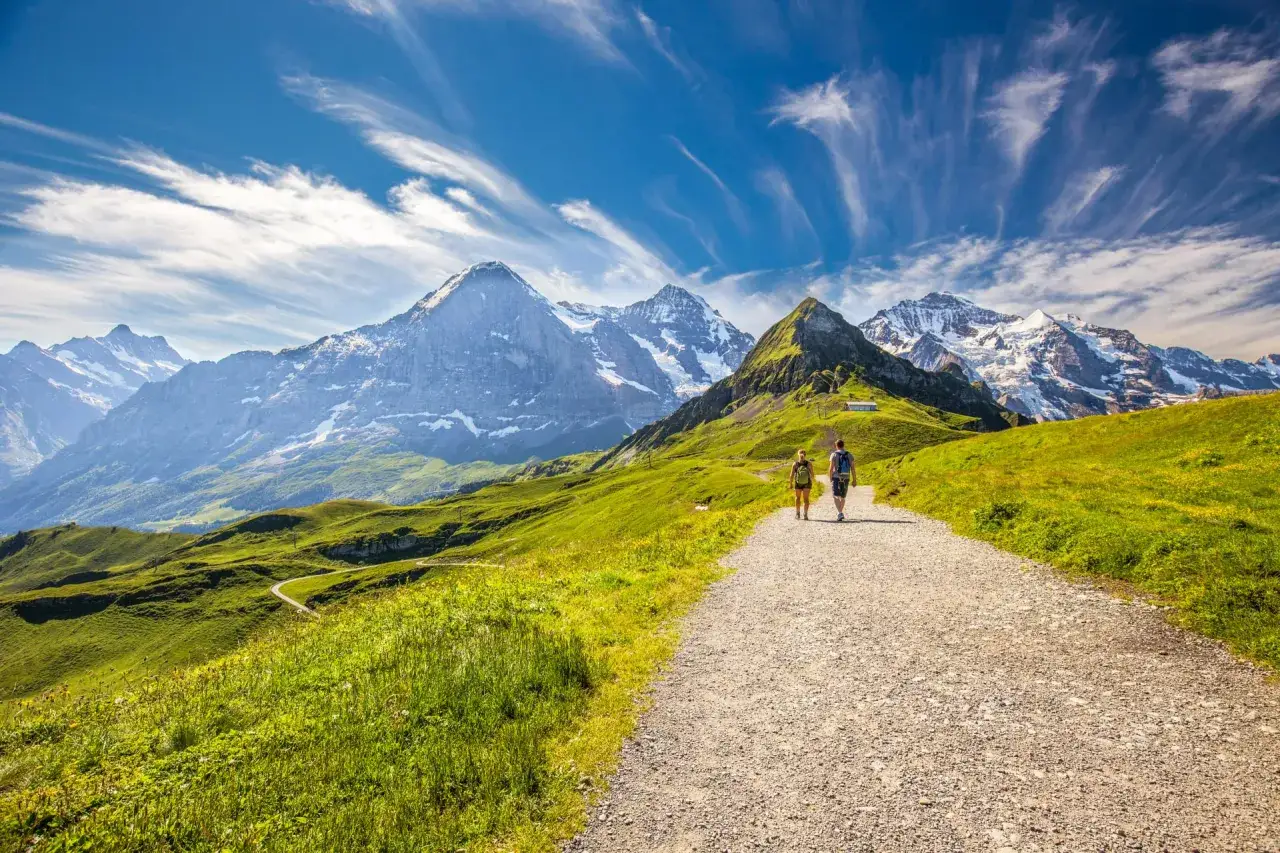
If you want a first trip that feels representative rather than random, I would build it around a route type instead of a single famous viewpoint. The Alps are broad enough to support very different kinds of days, and the best route depends on whether you want a test of endurance, a clean scenic hit, or a slower walk through classic mountain scenery.
- Via Alpina is one of the best introductions to long-distance alpine travel if you want structure without jumping straight into expedition territory. Its 20 stages and 14 passes make it a serious route, but the rhythm of staged walking is easy to understand.
- The Alpine Passes Trail is the more demanding version of that idea. At 39 days and more than 30 passes, it is the route I would point to if someone wants the wildest, most committed long-distance experience in Switzerland.
- Aletsch Glacier Trail is the kind of day route I like to recommend to people who want glacier-scale scenery without a huge logistical burden. It gives you the mountain feeling without requiring a full traverse.
- Pilatus via Ämsigen is a strong test route if you want to feel the climb in your legs and lungs. It is steep, direct, and memorable, which makes it useful when you want a shorter day with real effort in it.
What these examples have in common is that they are not just pretty walks. Each one teaches a different lesson: how to move over passes, how to handle exposure, how to balance effort with scenery, or how to use lift access intelligently. That is why I prefer thinking in route styles rather than bucket-list names. It gives you a better chance of picking something you will actually enjoy, and the final step is to plan the trip like a mountain person, not a spreadsheet.
How I would plan a first trip without wasting a day
My simplest approach is to keep the first alpine trip small enough that the mountains feel generous instead of aggressive. I would build the plan around one base valley, one moderate trail, and one backup option that is lower, shorter, or easier to bail out of if the weather turns. That keeps the trip flexible, and flexibility is worth more than trying to squeeze in a famous route at any cost.
- Choose one region with easy rail, bus, or cable-car access so the logistics stay simple.
- Pick one mountain hike that stretches you, but does not depend on perfect conditions.
- Add one easier trail for the first or last day in case cloud, rain, or snow changes the plan.
- If you want a hut overnight, reserve early and confirm opening times before you leave.
- Build in a weather buffer, because a day saved for clear skies is often better than a day forced through bad ones.
The best alpine trips are not the most dramatic ones; they are the ones that feel under control all the way through. When the trail class is right, the season is right, and the logistics are simple, the Swiss Alps stop feeling like a challenge to survive and start feeling like a place you can move through with confidence. That is the version of the mountains I try to aim for every time.