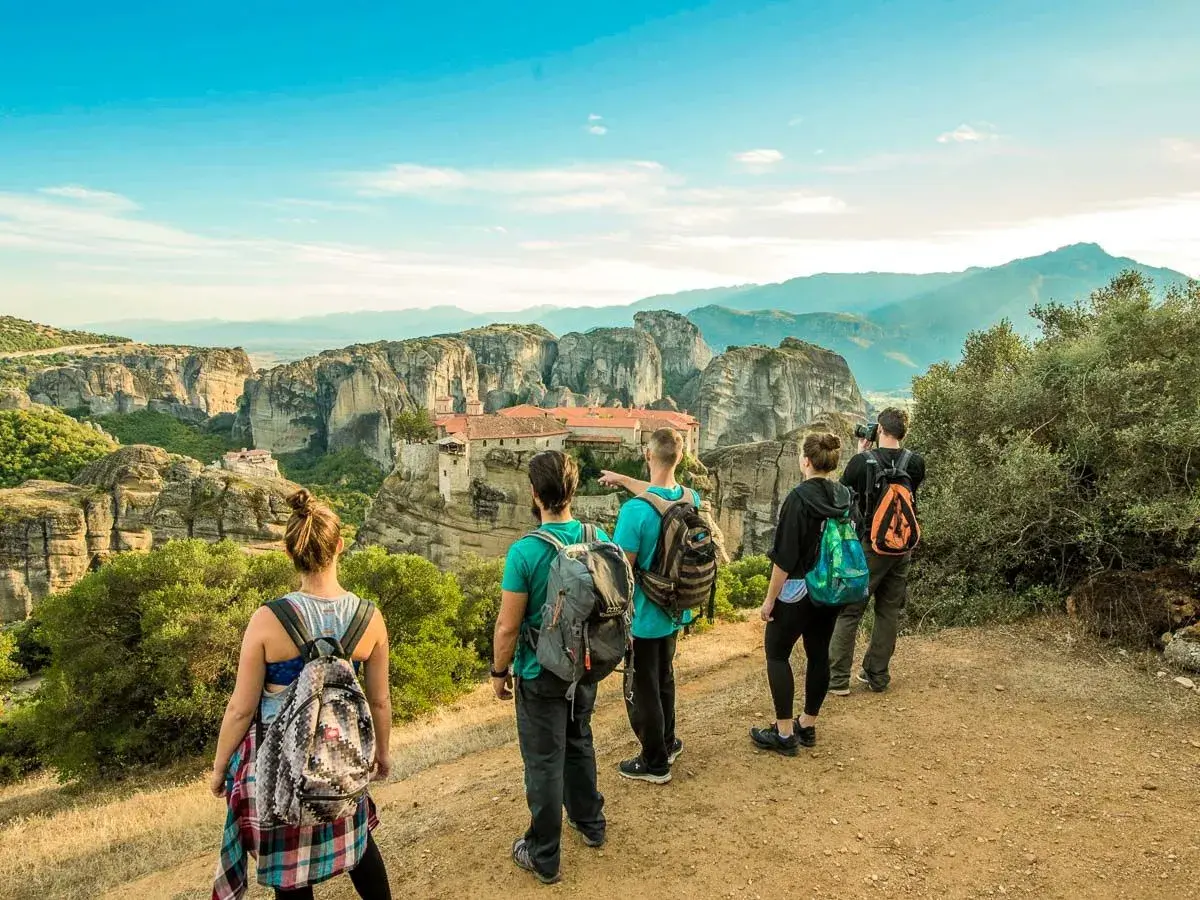
Greek trails reward travelers who plan for terrain, not just mileage. What makes hiking in Greece so satisfying is the range: limestone gorges in Crete, forested mountain paths in Arcadia, island footpaths with sea views, and old mule tracks that still connect villages. This guide focuses on the routes, timing, gear, and trip choices that actually help on the ground.
The most important things to know before you lace up
- Spring and autumn are the easiest seasons for most routes; summer usually demands an early start.
- Samaria Gorge is the classic long day hike, but Pelion, Parnassos, Mainalo, Sifnos, and Dirfys offer very different experiences.
- Greek trails can be rocky, exposed, or point-to-point, so route shape matters as much as distance.
- Good shoes, plenty of water, sun protection, and an offline map solve more problems than fancy gear.
- If a hike finishes in a different village or at the coast, plan your transport before you go.
Why Greece works so well for hikers
What keeps me coming back to Greek trails is the variety packed into short distances. In one trip, you can walk through fir forest above Arachova, cross a canyon in Crete, then spend the evening at a harbor taverna. Many routes also follow old paths between villages, so the walk feels tied to local life rather than built as a polished tourist product.
That matters because the best hikes here are not just scenic. They are layered with archaeology, farming landscapes, monasteries, shepherd routes, and coastlines. You are not choosing between nature and culture; the good routes give you both, and that is why the experience feels richer than a simple point A to point B exercise.
Once you understand the terrain, the next decision is which style of route fits your trip.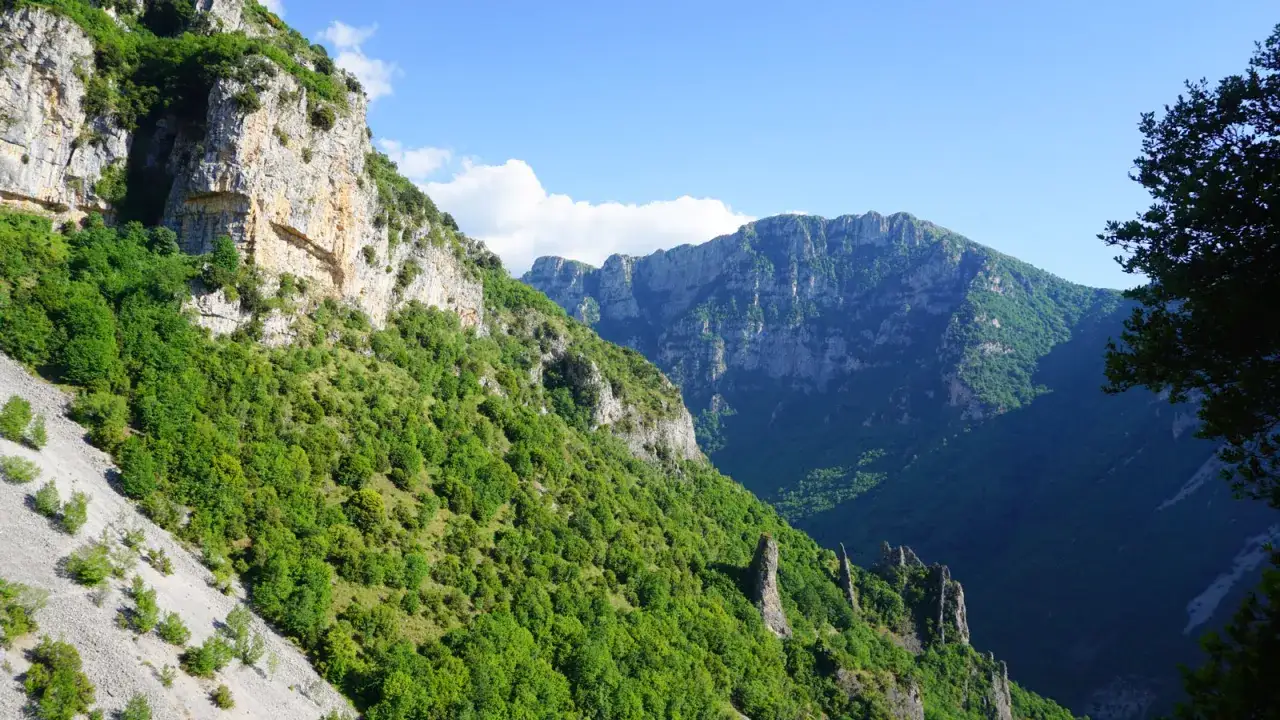
The trails I would put on a first shortlist
If I were narrowing Greece down to a few trail families, I would start here. These are not the only good hikes, but they are the ones that tell you most about the country’s outdoor character without wasting time on weak routes.
| Trail or area | What it feels like | Useful numbers | Why it stands out |
|---|---|---|---|
| Samaria Gorge, Crete | A long downhill gorge walk with big scenery and a strong finish by the sea | 16 km, about 10 miles, usually 6 to 8 hours | Visit Greece notes that it is the longest gorge in Europe, and it is still the benchmark hike for many visitors |
| Mainalo Trail, Arcadia | A long mountain route through valleys, cliffs, and historic villages | 75 km, about 47 miles | Best if you want a multi-day feel and a route with depth, not just a single viewpoint |
| Mt Pelion routes | Forest paths, cobbled descents, and beach finishes | Examples range from 3 km in 1 hour to 11 km in 3 hours | These are ideal when you want a scenic walk that still leaves room for swimming or village time |
| Sifnos trail network | Island walking with dry slopes, chapels, and open sea views | Over 100 km of marked paths | Good for travelers who want flexible day hikes and reliable trail marking |
| Mount Parnassos and Delphi area | Higher mountain air, springs, fir forest, and ancient context | Some routes are around 7 hours on foot | Works well if you want a hike that feels dramatic without being purely remote |
| Steni and Mount Dirfys, Evia | Rugged forest hiking with a stronger mountain feel | Three main trails, with the hardest route climbing toward the peak | Best for hikers who want something quieter and more physical |
The main lesson is simple: do not treat all Greek hikes as interchangeable. A short island path, a gorge descent, and a mountain route may look similar on a map, but they demand very different pacing, footwear, and logistics.
That is why the next filter I use is season and timing, because the weather changes the experience almost as much as the route itself.
How to plan around heat, season, and route shape
For most visitors, spring and autumn are the sweet spot. Temperatures are more forgiving, the light is better, and you are less likely to spend the entire day managing heat instead of enjoying the trail. Summer is still workable, but only if you start early, keep the pace honest, and accept that mid-day hikes in exposed terrain can become a bad idea very quickly.Visit Greece’s safety guidance is blunt about that point: avoid hiking during a heatwave when you can, start well hydrated, and tell someone where you are going and when you expect to return. That advice sounds basic until you are on a hot descent with no shade and too little water. Then it stops sounding basic.
When the calendar matters
Higher mountains can also shift character fast. In the shoulders of the season, a trail can move from pleasant to windy or chilly in an hour, especially above the tree line. On islands, the issue is usually not snow but sun, dryness, and wind, which means an easy-looking route can still feel draining if it is exposed.
Read Also: Nocelle Kiosk - Path of the Gods: Maximize Your Hike Stop
Point-to-point vs loop routes
This is the part many travelers underestimate. Some of Greece’s best walks are point-to-point routes, so the end of the hike is somewhere else entirely. Samaria Gorge finishes at the coast, several Pelion routes drop from village to beach, and long mountain paths like Mainalo are easier to enjoy when you have transport figured out before you set off. If I am self-driving, I usually prefer loops or short out-and-backs; if I am using transfers, I am happy to take a one-way classic.
Once timing and route shape are clear, the remaining question is what to carry so the day stays comfortable rather than merely survivable.
What to pack so the trail stays enjoyable
I keep the packing list tight, because extra gear only helps if it solves a real problem. Greek trails reward the basics done well.
- Proper hiking shoes or trail runners with grip for rocky ground, loose descents, and uneven cobbles.
- 2 to 3 liters of water per person for most day hikes, and more in summer or on exposed routes.
- Snacks with salt and carbs such as fruit, nuts, bars, or sandwiches, especially on long gorges.
- Hat, sunglasses, and sunscreen because shade is not guaranteed.
- Light long sleeves for sun protection on exposed terrain.
- Offline maps or a downloaded GPX track for routes where signage is inconsistent.
- Trekking poles if you know your knees dislike long descents.
- Small cash and a power bank so a village stop or a phone battery does not become a problem.
The single biggest mistake I see is treating a mountain or gorge route like a seaside promenade. The terrain can look inviting and still demand real effort, especially on the return, so match the gear to the ground rather than the scenery.
That brings me to the most useful filter of all, which is choosing a route that fits the kind of traveler you are.
How to match a route to your fitness and trip style
I would choose a Greek hike the same way I choose a restaurant in a new city: by mood, not by hype. The strongest route is the one you are actually set up to finish well.
| Trip style | Best match | Why it works |
|---|---|---|
| First time in Greece | Pelion or Sifnos | You get variety, scenery, and manageable distances without committing to a major expedition |
| One iconic challenge | Samaria Gorge | It is long, memorable, and feels like a real achievement without requiring technical climbing |
| History plus mountains | Mount Parnassos or Mainalo | These routes connect landscape with ancient sites, villages, and older movement corridors |
| Family or mixed-ability trip | Short Pelion walks or easier island paths | You can keep the pace flexible and still finish at a beach or village |
| Experienced hiker | Dirfys or longer Mainalo sections | These feel more rugged and reward stronger legs and better planning |
If you only have two or three active days, I would not try to cram in three big hikes. Pick one demanding walk and one gentler route, then leave space for food, swimming, or a village stop. That pacing usually gives a better trip than trying to “collect” hikes.
The last piece is how I would actually turn those choices into a Greece itinerary that feels realistic rather than rushed.
The hiking trip I would build from these trails
For a short Crete-based trip, I would pair Samaria with one easier coast day, because the gorge is rewarding but it also asks for recovery time. In Arcadia, I would build around Mainalo with a base in one of the mountain villages, then keep one extra day open for shorter walks and slow meals. On Pelion, I would use the shorter village-to-beach trails as the backbone of the trip, because they are perfect when you want hiking without sacrificing the rest of the holiday.
If I were planning from the islands side, Sifnos is the easiest place to balance scenery and logistics, since the trail network is broad and well marked. If I wanted a stronger mountain identity, I would look at Parnassos or Steni and treat the hike as the main event, not a side activity. Either way, the winning formula is the same: start early, keep expectations realistic, and let the landscape set the rhythm.
Greek trails are at their best when you respect the heat, the ground, and the transfers. Do that, and the day stops feeling like a generic walk and starts feeling like one of the reasons you came to Greece in the first place.