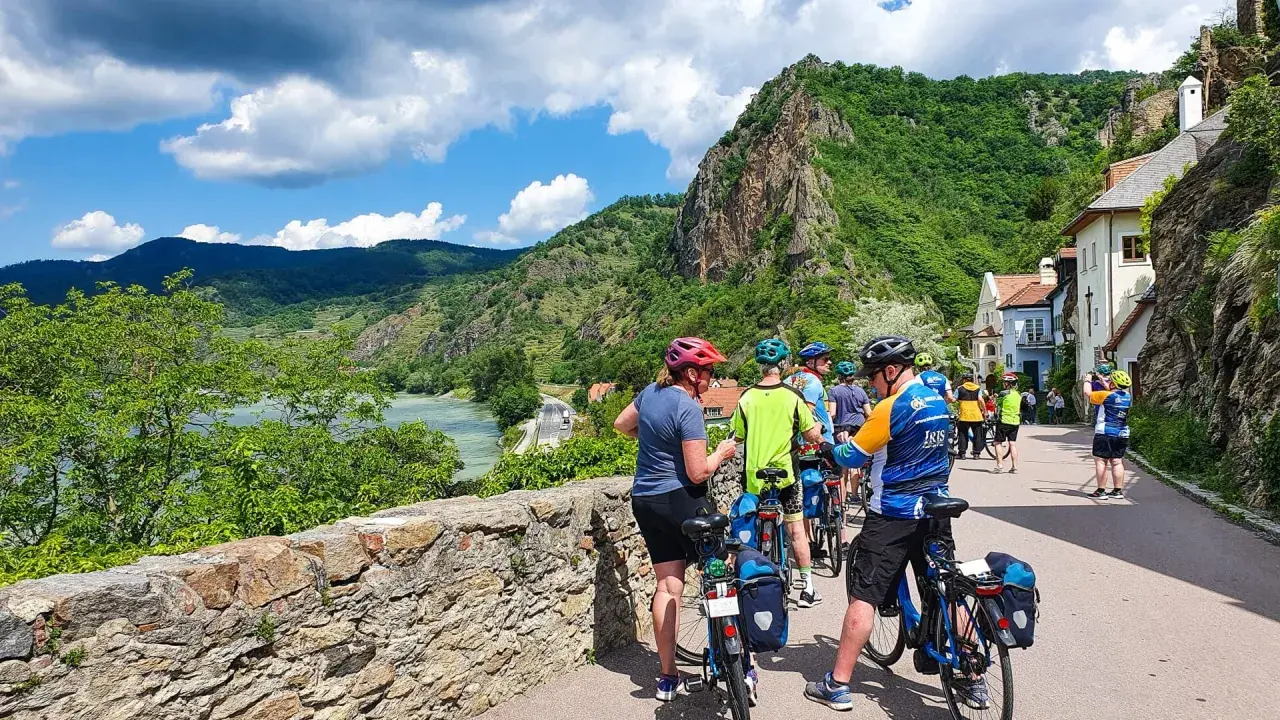
A Danube bike tour is one of those trips that rewards good planning more than brute fitness. The route is famously approachable, but the details still matter: which section to ride, when to go, how much to budget, and whether you want a self-guided holiday or a more supported setup. This article breaks down the route in practical terms so you can choose the right version of the trip without overcomplicating it.
The Danube works best when you match the section to your pace and budget
- The classic first-timer’s choice is the Passau-to-Vienna stretch, which is roughly 325 km / 203 miles.
- Most of the riding is flat, well marked, and comfortable enough for mixed fitness levels.
- Self-guided trips give the most freedom, while bike-and-boat tours remove the most logistics.
- The best riding window is usually April to October, with May, June, and September offering the most balanced conditions.
- Current 2026 listings show a wide budget spread, from budget-friendly hotel-to-hotel packages to premium cruise-and-ride trips.
What the classic Danube route really looks like
When people talk about cycling the Danube, they usually mean the most established stretch of the river trail, especially the section between Passau and Vienna. That is the version that has become the default for first-time river touring because it combines easy navigation, strong infrastructure, and enough scenery to keep each day interesting. The path follows the river closely, so you are not just “cycling near the Danube”; you are riding through the landscape the river shapes.
What makes it work so well is the balance. The route is generally flat, the signage is reliable, and the riding rarely feels technical. On a good day, it feels more like a moving scenic corridor than a demanding endurance project. That is why I think of it as a high-comfort long-distance ride rather than a hard tour. You still earn the miles, but you are not fighting the terrain every hour.
For most travelers, the appeal is not only the cycling itself. It is the rhythm of riverside towns, wine country, monasteries, and capital-city finishes that make the trip feel complete without needing a separate sightseeing itinerary. That mix is what turns the route from a simple bike path into a proper travel experience, and it also explains why choosing the right section matters so much.
Which section fits your time and fitness
The full Danube corridor is enormous, but the practical choices are much narrower. Most riders are deciding between a classic one-week ride, a longer extension eastward, or a shorter supported trip. I usually tell readers to start with the section that fits their vacation length first, then layer in ambition only if the route still makes sense on paper.
| Section | Approx. distance | Typical duration | Best for | Tradeoff |
|---|---|---|---|---|
| Passau to Vienna | About 325 km / 203 miles | 6 to 8 days | First-timers, families, mixed-ability groups | The classic choice can book up fastest in peak season |
| Passau to Budapest | About 600 km / 373 miles | 10 to 14 days | Riders who want a longer, more varied itinerary | More logistics, more time, more chances for weather to matter |
| Vienna to Budapest | About 300 km / 186 miles | 5 to 7 days | Travelers who want a shorter eastward extension | Less of the iconic Austrian river scenery at the start |
| Bike-and-boat on the Danube | Varies by itinerary | About 1 week | Comfort-first travelers who prefer fixed logistics | Higher cost and less spontaneity |
If you only have one week, Passau to Vienna is still the smart pick. It has enough variety to feel like a real journey, but it does not ask you to spend half your trip managing transfers, trains, or daily route decisions. If you have two weeks and want a more ambitious ride, the longer eastern extension becomes more attractive, though I would be more careful about stage planning and surface expectations.
The key question is not “How far can I bike?” It is “How much vacation do I want to spend in motion, and how much do I want left over for sightseeing, rest, and meals?” That question leads naturally into the next decision: how supported you want the trip to be.
How to choose between self-guided, guided, and bike-and-boat
This route works in several formats, and the best one depends on how much you want to handle yourself. The cycling is easy enough that many travelers do not need a guide every day, but the trip still has enough moving parts that a little support can make a big difference. Budget, independence, and comfort all pull in different directions here.
| Format | Best for | Strengths | Limitations |
|---|---|---|---|
| Self-guided hotel-to-hotel | Independent travelers and couples | Flexible pace, luggage transfer, strong value | You still manage timing, navigation, and daily readiness |
| Guided tour | First-time cycle tourists and groups | Local context, route support, less decision fatigue | Less freedom, usually a higher price |
| Bike-and-boat | Travelers who want the easiest logistics | Unpack once, ride lighter days, strong comfort level | Most expensive, more fixed schedule, less hotel variety |
Current 2026 listings show a wide spread. Budget-oriented packages can start in the high hundreds of euros, standard self-guided trips often land around the low thousands in U.S. dollars, and premium bike-and-boat departures can move well into four figures per person. The biggest price drivers are the same across most operators: hotel category, bike rental, single-room use, luggage transfer, and the length of the trip.
My practical rule is simple. If you want the most scenic mileage for the least friction, self-guided is hard to beat. If you want someone else to absorb the route decisions, choose guided. If you care more about comfort and less about daily logistics, bike-and-boat makes sense, even though it changes the budget dramatically. Once that is settled, timing becomes the next lever that shapes the trip.
When to go and how hard the riding feels
The Danube corridor is not a year-round destination in the way some warmer cycling regions are. The realistic window is usually April through October, with the most comfortable balance of daylight, temperatures, and services falling in late spring and early autumn. In my experience, May, June, and September are the sweet spots. You get long enough days to ride at an easy pace, but you are less likely to deal with peak-season heat and crowding.
July and August are the busiest months, especially on the popular Austrian sections. That does not make the route unusable, but it does change the mood. Hotels fill faster, riverside paths feel busier, and hot afternoons are more likely to shape your schedule. April and October can still work well if you are flexible, but shorter days and cooler conditions make them better for riders who prefer mild weather over guaranteed sunshine.
As for effort, this is where the route remains genuinely beginner-friendly. A typical daily stage is often in the 35 to 55 km range, which is comfortable for most recreational cyclists on a flat path. Some compressed itineraries push daily distances closer to 70 to 85 km, and that is still manageable, but only if you are already used to riding for several hours at a time. E-bikes are popular for a reason: they do not make the route necessary, but they do make it more relaxed when wind, heat, or a longer stage show up together.
- Go earlier in the season if you want cooler rides and quieter paths.
- Go in September if you want the best all-around balance of weather and availability.
- Choose shorter stages if this is your first multi-day cycle tour.
- Use an e-bike if you want to save energy for sightseeing instead of conserving it for the saddle.
Once you understand the timing, the route itself becomes easier to evaluate on its own merits, which is where the scenery starts doing real work for the trip.
Stops that make the ride worth the planning
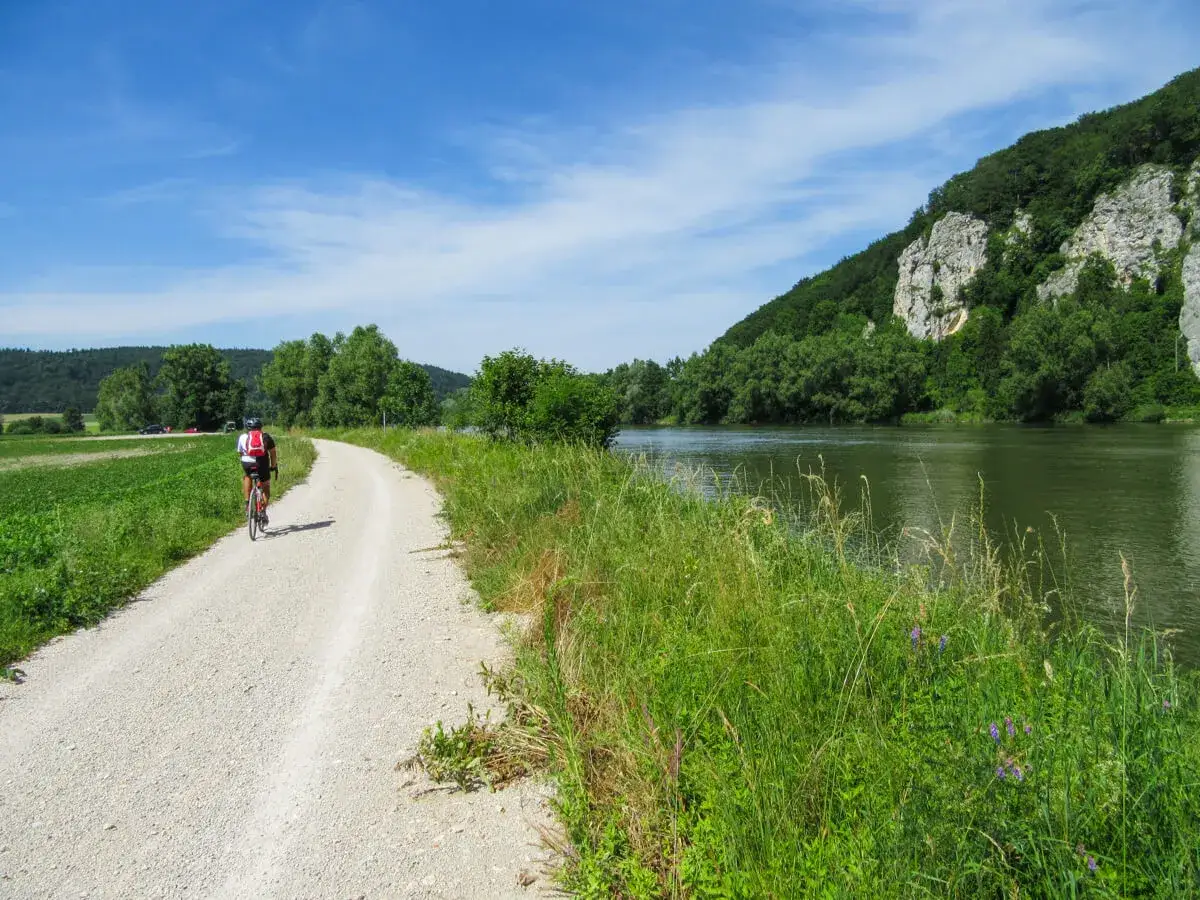
The route is not memorable because one landscape repeats for days. It is memorable because the character changes just enough to keep you engaged. Passau gives you the river-side start, the famous Schlögen bend delivers one of the route’s signature views, and the Wachau Valley adds a concentrated stretch of vineyards, orchards, and historic settlements that feels tailor-made for slow travel.
- Passau is the natural launch point because it is easy to stage from and immediately feels like a cycling town.
- The Schlögen bend is worth the hype; it is one of the places where the river’s shape actually changes the feel of the ride.
- Linz works well as an urban reset, especially if you want a museum stop or a stronger dinner scene.
- Melk adds a strong cultural anchor, and it is one of the easiest places to understand the route’s historical side.
- The Wachau Valley is where I would deliberately slow down, because the combination of landscape and food is part of the point.
- Vienna is a satisfying finish because the city rewards an extra night rather than feeling like a place to rush through.
If you extend farther east, Bratislava and Budapest add a different kind of payoff: more capital-city energy and a broader sense of the river’s scale. That can be excellent if you want a bigger story, but it also raises the cost and complexity. For many riders, the Austrian section is the right compromise because it delivers the strongest scenic return without asking for a much longer holiday.
That scenic sequence is the main reason the route has become such a reliable choice, but it still pays to book and pack with a little discipline.
How I would book and pack for a smooth trip
If I were planning this trip for 2026, I would book earlier than I think I need to, especially for June through September. The most common mistake is assuming a popular river route will always have room at the exact dates you want. Good hotels, bike rentals, and luggage-transfer slots are the first things to tighten up when demand rises.
- Reserve the route package early if you want a summer departure or a specific hotel standard.
- Confirm luggage transfer before you pay, because that one service changes the whole rhythm of the trip.
- Check bike fit carefully, especially if you are renting; a mediocre fit turns an easy ride into a distracting one.
- Pack layers rather than heavy clothing, since river weather can shift faster than the daily forecast suggests.
- Bring rain protection even in a good month; a light shell is worth the space.
- Leave room for one slower day so you are not trying to “win” the itinerary every morning.
For packing, I would keep it lean: padded shorts, cycling gloves, a compact repair kit, sunscreen, a water bottle you actually like using, charging cables, and one set of non-cycling clothes that feels decent enough for dinner. If you are doing a self-guided trip, also bring a paper backup of your route notes or at least an offline map. That sounds old-fashioned until a phone battery dies or signal drops at the wrong moment.
The right Danube trip is not the one with the longest route or the highest comfort score on paper. It is the one that matches your pace, your season, and the amount of planning you want to carry on your own shoulders.