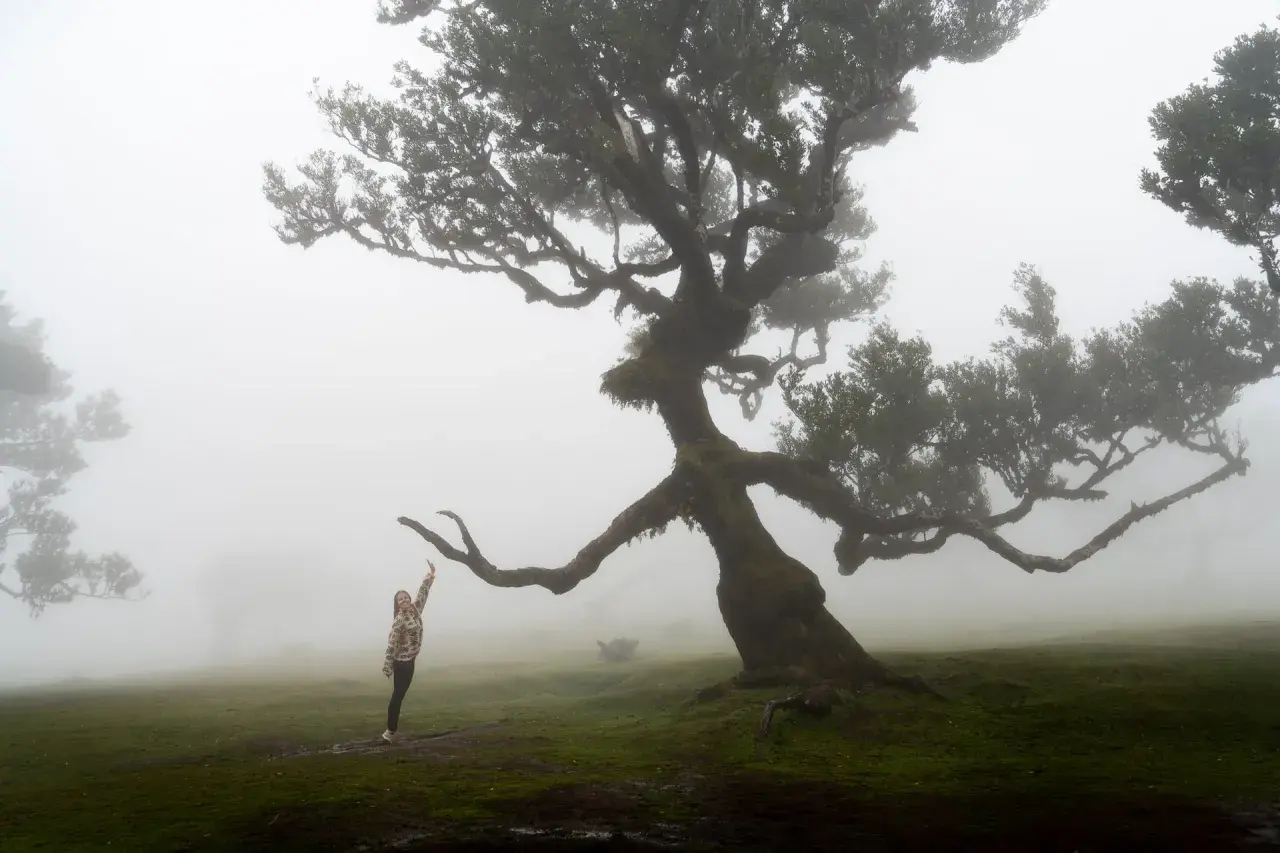
Madeira has plenty of scenic stops, but few feel as atmospheric as Fanal Forest: an old laurel woodland where twisted trees, open pasture, and fast-changing mist create a landscape that looks almost unreal. In this guide, I focus on what the place actually offers, when the mood is best, how much time to leave for it, and what to combine it with if you are planning a broader island itinerary.
What matters most before you go
- Fanal sits inside Madeira’s UNESCO-listed Laurissilva, a protected forest system known for ancient native trees.
- Morning is usually the best window for mist, but clear weather can still make the visit worthwhile.
- PR 13 is a 10.8 km, moderate hike that takes about 4 hours and ends in the Fanal area.
- Visit Madeira currently lists a €4.50 access fee for visitors over 12, handled through Madeira’s SIMplifica portal.
- Expect wind, damp ground, and shifting visibility even when the coast looks warm and sunny.
Why this protected woodland feels so distinctive
The wider Laurissilva is what gives this place its weight. UNESCO describes Madeira’s laurel forest as the largest surviving area of its kind and says it is about 90% primary forest, which is another way of saying this is not a decorative park built for visitors. It is a rare ecological remnant, and the atmosphere comes from that history as much as from the trees themselves.
What makes the Fanal area stand out is the shape of the landscape. The old til trees have a sculptural, weathered look, the ground opens into broad clearings, and the fog can drift in low enough to erase the horizon in minutes. I like it because the scenery is not trying to impress you in a polished way. It feels older, rougher, and more alive than a typical viewpoint.
That mix of age, ecology, and shifting weather is exactly why timing matters, which leads straight to the next question: when should you actually go?
When to go for mist, light, and space to breathe
If your main goal is the classic moody look, I would plan for early morning. That is usually the best window for low cloud and soft light, although there is never a guarantee. Madeira’s weather changes quickly, so the same day can move from clear skies to full fog without much warning.
| Visit goal | Best time to aim for | What to expect |
|---|---|---|
| Misty photos | Sunrise to mid-morning | Highest chance of fog and the strongest atmosphere |
| Clearer walking conditions | Late morning to early afternoon | Better visibility and less moisture on the ground |
| Quieter feel | Weekdays and earlier in the day | Fewer vehicles and a calmer pace |
My practical advice is to stop treating fog as the reason to go and start treating it as a bonus. The place still works when the sky is clear, because the trees and open plateaus do the visual heavy lifting on their own. Once you know your timing, the next step is deciding whether you want a short stop or a proper walk.
How to plan a visit to Fanal Forest without rushing
I usually think about three versions of the visit, and the right one depends on how much of the day you want to spend inland rather than on the coast.
| Visit style | Time needed | Best for | Tradeoff |
|---|---|---|---|
| Short scenic stop | 30 to 45 minutes | Quick photos and a brief walk | Can feel rushed if the light is poor |
| Trail visit | About 4 hours | Hikers who want the full landscape | Requires decent footwear and a moderate fitness level |
| West-coast day | Half a day or more | Travelers pairing forest, plateau, and coast | Needs a flexible itinerary |
The full PR 13 route starts on the Paúl da Serra plateau, is 10.8 km long, and is listed at about 4 hours with moderate difficulty. Visit Madeira also notes that the area is treated as a Rest and Quiet Reserve, which is a good clue about how to approach it: this is a place for slowing down, not checking a box. If you only have a tight schedule, a brief stop still makes sense, but the setting is much better when you give it room to breathe.
One detail I would not miss is the current access fee. Visit Madeira says visitors over 12 pay €4.50 through the SIMplifica portal, so I would check that again close to departure in case the rules change. It is a small cost, but it matters because it reminds you that you are entering a protected place, not just pulling over at a random scenic turnout.
Once the logistics are clear, the next question is comfort, because the plateau can feel very different from the coast in a single morning.
What to pack for the conditions on the plateau
I would keep the packing list simple, but not casual. The weather up there can turn damp, windy, and cool even when the rest of Madeira feels mild.
- Waterproof shoes or boots for muddy patches and uneven ground.
- A light rain shell because fog often feels like drizzle.
- A warm layer since the plateau can feel colder than expected.
- Water and a small snack, especially if you plan to hike PR 13.
- Offline maps in case visibility drops and the road feels less intuitive.
- A camera with a lens cloth because moisture builds quickly in mist.
If I had to choose only one rule, it would be this: dress for the interior, not for the coast. The landscape sits high enough that the weather can feel like a different season, and that catches a lot of first-time visitors out. Once you are packed correctly, the next question is how to build the rest of the day around it.
What I would combine with it on a Madeira road trip
This is one of those places that becomes better when it is part of a route rather than an isolated stop. If I were driving the northwest side of the island, I would shape the day around contrast.
| Nearby stop | Why it pairs well |
|---|---|
| Paúl da Serra | Open plateau scenery and the natural starting point for the walk |
| Seixal | A strong coastal contrast after the quiet inland atmosphere |
| Ribeira da Janela | Dramatic northwest shoreline and a sharper visual change of pace |
| Porto Moniz | An easy lunch stop or a relaxed finish with natural pools |
If I were planning the route for myself, I would do the inland part first, then follow the coast rather than backtracking. That sequence gives the day a cleaner rhythm: trees and mist first, ocean second, and a slower finish when the hardest driving is already behind you. It also makes the visit feel like part of a real Madeira day, not just a single photo stop.
The version of the day I would choose
The best version of this visit is not the one that depends on perfect fog. It is the one that gives you enough time to notice the trees, enough flexibility to enjoy the weather you actually get, and enough context to understand why this protected woodland matters in the first place.
- Start early if you want the best chance of mist.
- Allow at least 30 to 45 minutes for a short stop.
- Give yourself about 4 hours if you want the full trail experience.
- Bring layers and proper shoes, even in mild weather.
For me, that is what makes the place memorable: it is slightly unpredictable, deeply old, and far more rewarding when you stop trying to force it into a perfect postcard moment.