Italy biking is at its best when the route fits the rider: rolling vineyard roads, lakeside paths, Adriatic flatlands, and genuine mountain passes all belong to the same country. This guide breaks down the tour formats that actually make sense, the regions that deliver the strongest rides, what the terrain feels like in practice, and how much to budget if you are planning from the U.S. I also cover the logistics that save the most frustration, especially when bikes, trains, hotels, and luggage all need to work together.
What matters most before you book a cycling tour in Italy
- Tour format matters more than marketing. Self-guided, guided, supported, and bike-and-barge trips each solve a different problem.
- The best region depends on your legs. Tuscany and Umbria reward steady riders, Lake Garda is friendlier for mixed groups, the Dolomites are for climbers, and Puglia is ideal for smoother touring.
- Daily distances vary widely. Relaxed tours often sit around 30-60 km per day, while demanding mountain days can push well beyond 80 km with serious climbing.
- The best months are spring and fall. April to June and September to October usually give the best mix of temperatures, daylight, and road comfort.
- Budgets can move fast. A week-long bike tour in Italy often starts around €1,600 and can climb past €3,800 per person before flights and extras.
- Rail connections can simplify point-to-point routes. Trains help, but bike rules differ by service, so the transfer plan matters.
Choose the tour format that fits the way you travel
When I plan a cycling holiday, I start with the format, not the postcard view. A beautiful route can still feel wrong if you wanted independence and ended up in a tightly scheduled group, or if you wanted help with luggage and booked a do-it-yourself route that needs constant navigation.
| Tour format | Best for | Typical experience | Main trade-off |
|---|---|---|---|
| Self-guided | Independent travelers, couples, experienced bike tourists | Route notes, luggage transfers, hotels booked in advance, full flexibility on pace and stops | You still solve small problems yourself, including timing, navigation, and backup plans |
| Guided | First-time visitors, social riders, people who want zero planning friction | Group riding, a guide, often a support van, easier daily decisions | Less freedom to linger, and the pace is shared |
| Supported | Riders who want flexibility but also safety net | You ride mostly on your own, but vehicle backup is available if needed | Usually pricier than self-guided and less social than a guided trip |
| Bike-and-barge | Travelers who want variety without packing up every night | You ride by day and sleep on a boat, which reduces hotel changes and can simplify logistics | Less suitable if you want long, very athletic riding days |
For most visitors from the U.S., self-guided and guided tours are the two real decision points. If you want privacy, flexible coffee stops, and the freedom to turn a ride into a long lunch, self-guided is hard to beat. If you want less friction and better local handling of route changes, guided tours justify their premium quickly. Once that choice is clear, the terrain becomes the next big filter, because the feel of a ride changes completely from the Dolomites to Puglia.
The best regions for cycling tours in Italy
According to Italia.it, Italy’s cycling ideas range from short scenic loops to tougher routes that follow historic corridors and mountain stages. That spread is the point: the country does not have one bike experience, it has several. The smart move is to match the region to the kind of holiday you actually want.
Tuscany and Umbria for rolling scenery and steady effort
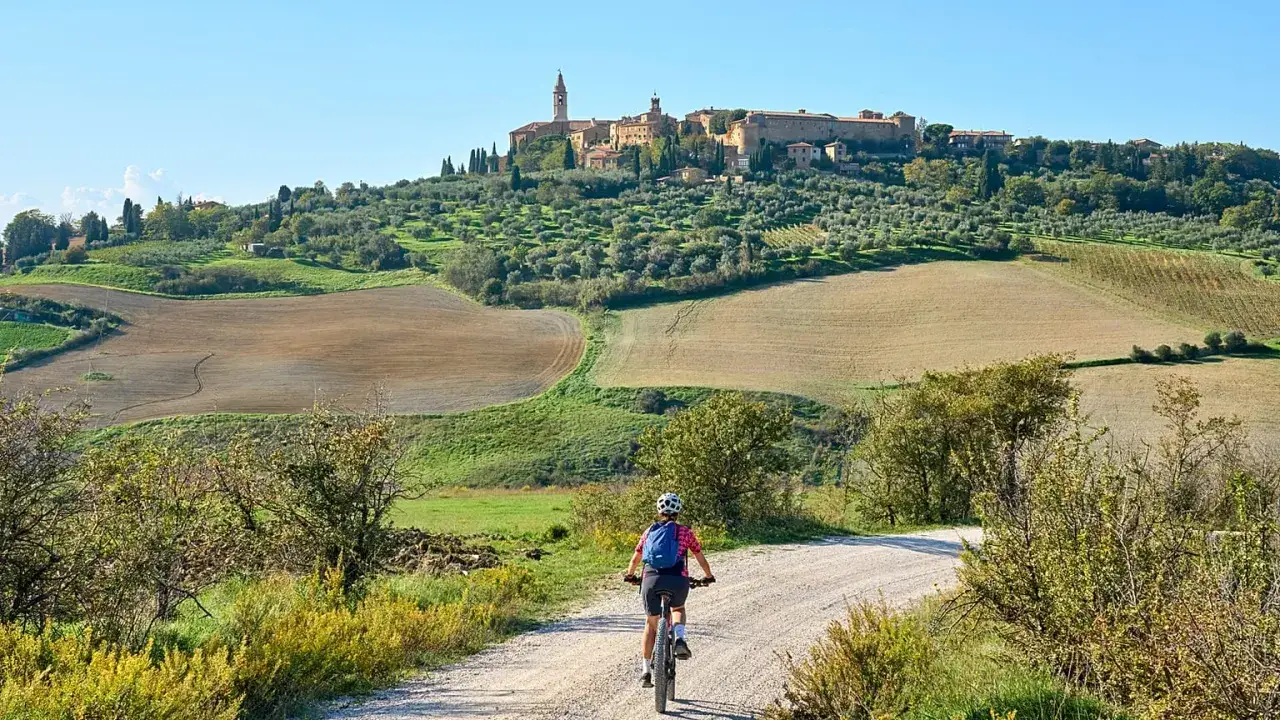
Tuscany is the default answer for a reason. The riding is scenic without being overwhelming, and the days often flow through vineyards, hill towns, and quiet back roads that reward a slower pace. I think it works especially well for riders who want moderate climbing, cultural stops, and strong food-and-wine payoff in the same trip.
Umbrian routes feel a little quieter and greener, with a softer rhythm than the best-known Tuscan loops. This is where you see why bike touring in central Italy is so popular: the road surfaces are often manageable, the scenery changes often enough to stay interesting, and there is a good balance between challenge and comfort.
Lake Garda and Veneto for easier mileage and smooth logistics
If your group has mixed fitness levels, this is one of the safest bets. Lake Garda gives you water views, good path infrastructure, and the kind of day rides that feel scenic rather than punishing. Veneto adds a mix of city access, villas, vineyards, and flatter or gently undulating routes that make daily planning easier.
This part of the country is a good fit for riders who want to stop often, eat well, and avoid constantly negotiating steep grades. It is also one of the better choices if you want a route with fewer “big mountain” decisions and more consistent pedaling.
The Dolomites for riders who want the climbs to matter
The Dolomites are magnificent, but they are not casual terrain. This is where mountain passes, longer descents, and weather shifts can turn a holiday into a real athletic challenge. If you want climbs that feel earned and scenery that justifies the effort, this is the most dramatic option in the country.
I would not send a beginner here unless the trip is fully support-heavy or the rider is happy on an e-bike and comfortable with sustained climbing. The payoff is huge, but the margin for error is smaller than in Tuscany or along the coast.
Read Also: Loire Valley Cycling Tours - Your Guide to an Easy Trip
Puglia and the south for warmer, flatter touring
Puglia is excellent when you want long days in the saddle without constant elevation changes. The landscape of olive groves, coastal towns, and dry stone walls creates a different mood from the north: less about climbing, more about rhythm. Salento and the Adriatic side are especially appealing for riders who want a touring holiday rather than a test of form.
There is one caveat: flatter does not mean effortless. Heat and wind matter here, especially in summer, so early starts become a real advantage. Still, for many visitors, this is the region where the riding feels most relaxed and the day-to-day logistics feel straightforward.
Once you choose the region, the next question is not just where to ride, but how hard each day should feel in real life.
How hard the riding feels in real life
A route that looks moderate on paper can feel very different once you add heat, road surface, luggage, and a few extra hills. I always tell readers to look at distance, elevation gain, and terrain type together, because distance alone is a bad proxy for effort.
| Effort level | Typical daily ride | What it usually feels like | Best fit |
|---|---|---|---|
| Easy | 25-45 km with light climbing | Plenty of time for stops, sightseeing, and long lunches | Families, beginners, and travelers who want a relaxed holiday rhythm |
| Moderate | 40-70 km with rolling hills | Real riding, but still manageable if you are reasonably fit | Most leisure cyclists and mixed-ability groups |
| Challenging | 70-110+ km with substantial climbing | Full riding days where pacing, fueling, and recovery matter | Experienced riders and people who specifically want a performance holiday |
E-bikes change the equation, but not completely. They flatten climbs and make mixed groups more realistic, yet they do not eliminate heat, headwinds, or long days. They also add weight, which matters more on steep roads and when you have to move the bike manually. In practice, an e-bike is most useful when you want to keep a scenic route comfortable rather than turning it into a race.
One term worth knowing is strade bianche, the white gravel roads that show up in parts of Tuscany and elsewhere. They can be beautiful and fun, but they are not the same as smooth pavement. If your route includes a lot of them, a gravel bike or a sturdier touring setup is usually a better call than a pure road bike.
After effort level, timing is the next piece that determines whether the trip feels polished or annoying.
When to go and how to move around with your bike
For most riders, the sweet spot is April to June and September to October. Spring gives you cooler temperatures, greener scenery, and a little more margin for climbs. Fall is often even better for comfort, with warm days and fewer summer crowds. July and August are fine in the right places, but they demand earlier starts and more caution in the south and inland valleys.| Season | What to expect | Best use case |
|---|---|---|
| April-May | Mild temperatures, bright scenery, occasional rain | Central Italy, lakes, and mixed-terrain tours |
| June | Long days, warmer air, more visitors | Most regions, especially if you start early |
| July-August | Heat, busier roads, higher water needs | Mountains, coastal routes, and very early starts |
| September-October | Excellent riding weather, good visibility, calmer pace | Probably the easiest all-around window for a first trip |
| November-March | More variable weather, shorter days, fewer tour options | Lowland or southern routes only, if you are comfortable with variability |
Logistics matter just as much. If your route starts and ends in different places, flying into one city and out of another can save time and backtracking. Milan, Venice, Verona, Bologna, Florence, Rome, Bari, and Naples are all useful gateways depending on the region you choose. I also like to plan the first and last days so they are not the hardest rides of the trip; airport stress and steep climbs are a poor combination.
Train travel can help a lot here. Trenitalia notes that you can bring a single bike free of charge on some services if it is disassembled and bagged or fully folded, while regional services have their own bike rules and service markings. That makes point-to-point touring much easier, but only if you check the exact train type before you commit to a same-day transfer.
Once weather and transport are under control, the budget starts to make more sense.
What a realistic budget looks like
On current tour listings, a week-long Italy bike tour often starts around €1,600 and can rise above €3,800 per person before flights, upgrades, and extras. That range is wide because the inclusions vary a lot: hotel class, luggage transfers, guide support, rental bikes, meals, and route notes all change the final price.
| Cost item | Typical range | What drives the price |
|---|---|---|
| Self-guided week | €1,600-€2,800+ | Hotel level, transfer support, breakfast inclusion, route complexity |
| Guided week | €2,400-€3,800+ | Guide presence, support vehicle, included meals, smaller group size |
| Bike rental | €150-€350 per week | Road bike vs touring bike, frame quality, setup, and brand |
| E-bike rental | €250-€500 per week | Battery size, local demand, and whether support or charging is included |
| Single supplement | €250-€700+ | Hotel category and how tightly the trip is priced |
The mistakes that make Italian bike trips harder than they need to be
Most planning errors are predictable, which is useful because it means they are easy to avoid. I see the same pattern over and over: people choose the most famous region instead of the most suitable one, then blame the trip when the fit was wrong from the start.
- Choosing mountain scenery without respecting mountain effort. A beautiful Dolomites itinerary can be the wrong choice if you wanted relaxed sightseeing rather than a climbing challenge.
- Ignoring road surface. Smooth pavement, rough country lanes, and gravel all feel different after 4-6 hours on the bike.
- Overestimating summer comfort. Heat, sun exposure, and tourist traffic can turn easy routes into tiring ones in July and August.
- Booking too many short transfers. A tour with constant hotel changes can feel more like a packing exercise than a cycling holiday.
- Assuming trains solve everything automatically. They help, but bike rules and space limits still need checking in advance.
- Skipping recovery time. One rest day in a week can improve the entire trip, especially if the route includes hills.
My blunt advice is this: do not let scenery fool you into choosing a level of riding that you will not enjoy for five or six straight days. The right tour should leave you wanting one more ride, not one less.
What I would choose first if I were booking a cycling tour in Italy again
If I were booking again, I would start with the kind of experience I want at dinner, not just the kind of ride I want at noon. Do I want quiet roads and long lunches? Then I would lean toward Tuscany, Umbria, or Puglia. Do I want a more athletic trip? Then the Dolomites become worth the extra effort. Do I want a route that works for different fitness levels in one group? Lake Garda and Veneto move to the top of the list.
That is the real trick with cycling tours in Italy: the best one is not the most famous one, it is the one that leaves enough energy for the parts of the country you came to enjoy off the saddle. Pick the format first, then the region, then the daily distance, and the trip becomes much easier to get right.
If you want the simplest all-around answer, choose a self-guided or lightly supported route in central Italy for spring or fall, keep the days moderate, and use train connections only where they clearly reduce friction.