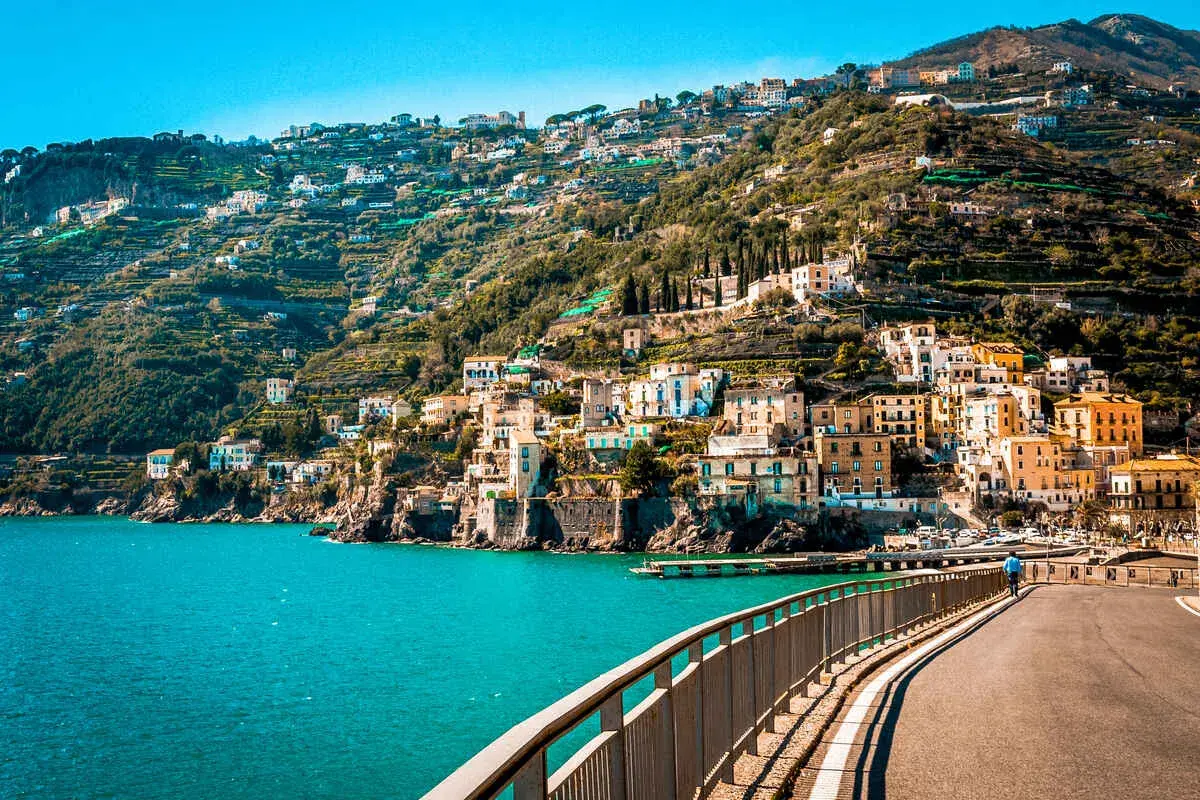
An Amalfi Coast road trip works best when you treat it as a logistics exercise, not just a scenic detour. The coast is beautiful, but the same roads that make the views memorable also create traffic, parking pressure, and seasonal access rules that can catch people out. In this guide, I focus on the practical side: how to plan the route, when to drive, where the bottlenecks are, and when I would leave the car behind.
What matters most before you set out
- The road is scenic but slow, so the shortest route on a map is rarely the best travel plan.
- Seasonal driving limits are real; in 2026, the Comune di Amalfi has already announced alternating-plate restrictions around Easter.
- Parking is the main stress point, especially in Amalfi and Positano.
- Ferries and buses often solve the hardest part of moving between towns.
- One good day beats three cramped ones, so I would keep the itinerary tight rather than trying to see everything by car.
When the coastal road is worth driving yourself
I would drive the Amalfi Coast only when I actually need the freedom that a car gives me. If I want to stop at viewpoints, detour inland, stay in a hill town, or split a stay between two bases, the car makes sense. If the goal is simply to hop from one famous seaside town to another, a ferry or a driver often works better and feels less exhausting.
The biggest mistake is assuming that a car automatically saves time. On this coast, it often saves flexibility instead. That is a real advantage, but it comes with narrow roads, traffic, and parking that can swallow the time you thought you were saving.
| Option | Best for | What it gives you | Where it hurts |
|---|---|---|---|
| Car | Detours, photo stops, hill towns | Full control over timing | Parking, traffic, and ZTL risk |
| Ferry | Town-to-town movement | Low stress and strong views | Seasonal schedules and pier transfers |
| Bus | Budget links between towns | Useful coverage of key routes | Crowding and slower boarding |
| Private driver | Short stays or special occasions | Door-to-door convenience | Highest cost |
My rule is simple: if I want the road itself to be part of the experience, I drive. If I want the coast to be the experience, I let something else handle the moving around. That decision shapes the route, which is the next thing I would lock in before I ever start the engine.
How I would structure the route
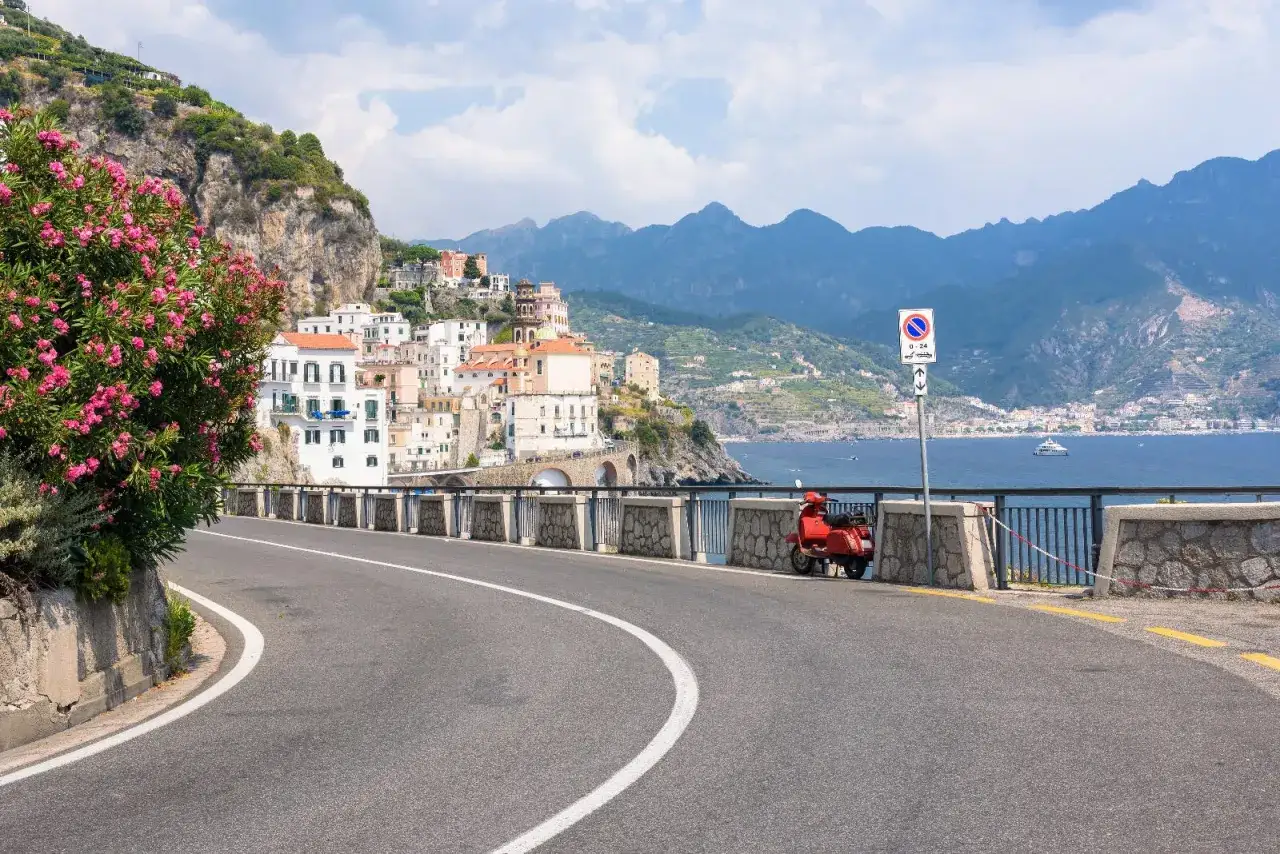
I would not try to “do” the whole coast in a single breath. The road feels better when you choose a direction, make a few deliberate stops, and accept that not every town deserves a car stop. The cleanest approach is a one-way-style day: enter from one end, spend time where you actually want to linger, and avoid doubling back unless you have a specific reason.
If I were starting from Salerno, I would think in this order: Vietri sul Mare, Cetara, Maiori or Minori, Amalfi, then maybe Praiano or Positano if the day is still calm enough. Starting from the Sorrento side pushes the sequence in the opposite direction, with Positano first and Amalfi later. In both cases, I would keep Ravello as an inland detour from Amalfi rather than another complicated car stop, because the hill setting is part of the appeal and not just a box to tick.
The key is restraint. Two real stops and one longer meal break are usually enough. Anything more, and the day starts to feel like a logistics drill instead of a trip. That becomes even more important once you look at traffic rules, because the road does not behave the same way all year.
Traffic, plate restrictions and the part most visitors miss
The coastal road looks open, but it is not a free-for-all. The Comune di Amalfi’s traffic pages show alternating-plate restrictions on the SS163 around Easter 2026, and the same official pages signal broader seasonal controls later in the year. In practice, that means you should never assume a spontaneous drive will be allowed just because the map says the road exists.
I also treat the historic centers as controlled zones, not normal street parking. Amalfi has a structured ZTL system, and the town has been updating how vehicle access is managed. If you are in a rental car, this matters more than the scenery does, because a wrong turn into a restricted area can become a fine that follows the plate back through the rental company.
What usually works best is to drive early, move deliberately, and avoid the worst pressure windows:
- before 9:00 a.m. if you want the best chance of a calmer road
- after 6:30 p.m. if you are making a short evening transfer
- midweek instead of a weekend when you have a choice
- outside peak summer whenever possible, especially if you are not staying overnight
In other words, I would plan the trip around the road’s rules, not around optimism. Once that is in place, parking becomes the next issue, and on this coast it is the issue that decides whether your day feels elegant or annoying.
Parking and access without wasting the day
Parking on the Amalfi Coast is not impossible, but it is rarely casual. Amalfi has public paid lots such as Luna Rossa, Flavio Gioia I and II, and Darsena, yet the number of spots is limited and the pressure rises fast in busy months. I would never assume I can just roll into the center, find a space, and wander off for lunch. That is wishful thinking, and this coast punishes wishful thinking.
If I were staying overnight, I would strongly favor a hotel with its own parking or a clearly reserved space. If I were only passing through, I would park once and move on foot or by ferry rather than trying to chase a closer space after every stop. The official InfoParking Amalfi tool was built for exactly this kind of problem, which tells you how serious the parking issue really is.
My practical parking rules are these:
- Reserve parking if you can, especially for an overnight stay.
- Do not circle endlessly; choose a lot and accept the walk.
- Carry a backup plan if the first lot is full.
- Keep your stop list short, because every extra town means another parking decision.
That is why I usually think of the car as a tool for access, not for hopping town to town. For the middle sections of the coast, the smarter move is often to switch to water or public transport.
When ferry or bus beats the car
If I want the coast to feel easy, I use the ferry whenever the timing works. Travelmar’s current schedule for the Amalfi Coast shows regular connections on key routes, and the company says tickets can be booked online in advance or bought at the pier around 20 minutes before departure. That flexibility makes the ferry a strong option for one-way movement between places like Salerno, Amalfi, and Positano.
Buses are less glamorous, but they are useful. SITA Sud keeps the main Amalfi Coast links in service, and the bus network is especially handy when I only need to bridge one section of the trip or reach a town from a base farther inland. The trade-off is crowding, especially in busy months, so I would use buses as a tactical tool rather than as the center of the plan.
My own rule is straightforward: car for access, ferry for views, bus for convenience. Once you accept that split, the route becomes much easier to build around a realistic day, which is the part most travelers actually need help with.
A realistic one-day plan that still feels relaxed
If I had just one day, I would not try to collect every postcard stop. I would choose a single direction, keep the drive to a manageable number of segments, and build in time for one proper meal and one long look over the water. The coast is not improved by rushing.
A day that works well in practice looks something like this:
- Leave early, before traffic has fully built.
- Make one short coastal stop on the way in, not three.
- Park once in Amalfi or another town where you actually want to walk around.
- Use lunch as a reset, not as a time-filler.
- Return by ferry or bus if that saves you from repeating the worst stretch of road.
If I had an overnight, I would slow the whole thing down and sleep in one of the central towns or in a quieter place like Praiano. That gives you the coast at better hours, before day-trippers fill the road, and it turns the drive into part of the trip instead of the whole trip. That choice is usually what separates a good Amalfi Coast plan from an overpacked one.
What I would lock in before leaving the rental desk
- Check the latest plate restrictions for the specific day you plan to drive.
- Decide in advance whether you are driving the full route or only one section.
- Reserve parking or choose a hotel with a confirmed space.
- Save ferry and bus options as a backup, even if you hope not to use them.
- Load offline maps and keep the itinerary compact.
If I were putting this trip together for myself, I would treat the coast as a sequence of smart choices, not a single road to conquer. That approach keeps the scenery front and center, which is the only reason to plan the drive in the first place.