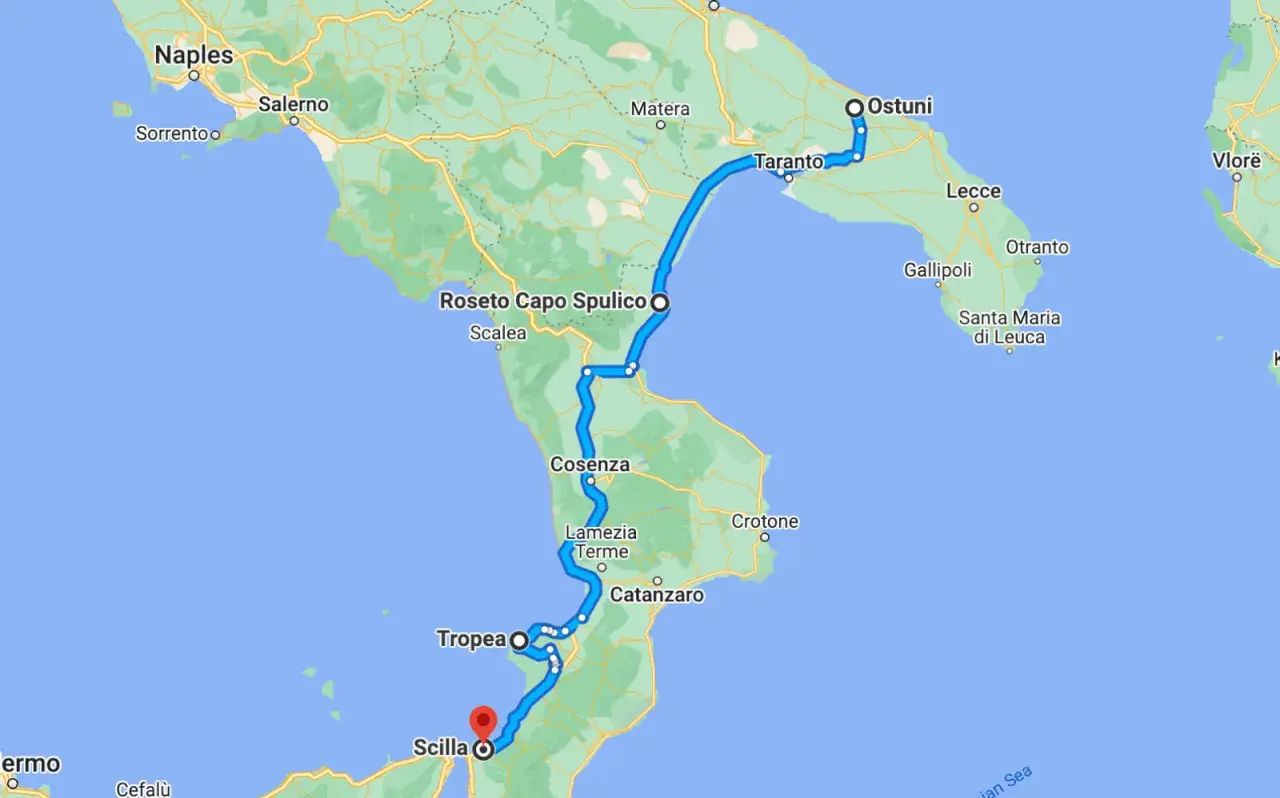
The Naples to Calabria trip can be a fast rail hop, a relaxed coastal drive, or a two-part journey that turns travel time into part of the holiday. What works best depends on which corner of Calabria you are heading to, how much scenery you want, and whether you care more about speed, flexibility, or an easy stopover. This guide breaks the route down in practical terms so you can plan it with fewer guesses and better timing.
Here is the practical version at a glance
- Lamezia Terme is the easiest Calabria hub to reach from Naples by train, with direct services that can be just over 3 hours.
- Reggio Calabria is the better rail target if you are heading to the far south or the Strait of Messina, but the ride is usually longer.
- Driving makes the most sense if you want beaches, viewpoints, and side stops, not just a point-to-point transfer.
- Tropea is usually best reached through Lamezia, rather than by treating the whole trip as one long direct push.
- Spring and September are the easiest planning windows if you want calmer roads and a less crowded coastline.
First decide which part of Calabria you are actually heading to
Before booking anything, I would separate Calabria into a few practical zones. That matters because the region is large, and a trip to Lamezia Terme, Tropea, Scilla, Reggio Calabria, or Cosenza each calls for a different strategy. If you treat the region as one destination, you end up choosing the wrong station, the wrong road base, or the wrong amount of time.
In my experience, most travelers on this route are really choosing one of three corridors:
- Tyrrhenian coast for places like Tropea, Scilla, and Reggio Calabria, where the sea is the main event.
- Inland Calabria for Cosenza and the Sila plateau, where cooler air and mountain scenery change the pace completely.
- Ionian side if you want a quieter, less obvious trip and do not mind longer local transfers.
That distinction is not academic. It changes whether a train is ideal, whether a car becomes useful, and whether you should stop in Lamezia or push farther south on the same day. Once that is clear, the transport choice becomes much easier.
The transport mode that fits the trip you want
For most travelers, the real question is not “train or car?” but “what kind of day do I want this to be?” A direct train is clean and efficient. A car gives you room to breathe. A bus is mostly a budget play. Flying rarely wins once transfers are counted.
| Option | Typical time from Naples | Best for | Main trade-off |
|---|---|---|---|
| Train to Lamezia Terme Centrale | About 3 to 4.25 hours, with the fastest trips just over 3 hours | Beach bases, easy connections, low-stress travel | You still need a local transfer if your hotel is in Tropea or farther south |
| Train to Reggio Calabria | Roughly 4 to 5.5 hours depending on the service | The far south, Scilla, the Strait, and urban arrivals | Slower than Lamezia for many itineraries |
| Car | About 3 hours 50 minutes to Lamezia and about 4 hours 54 minutes to Reggio in normal conditions | Multi-stop road trips and flexible sightseeing | Tolls, traffic, and parking become part of the story |
| Bus | Often 5.5 to 8 hours, depending on the destination | Lowest-budget point-to-point travel | Slowest and least comfortable for a long day |
| Flight | Around 3.5 hours including transfers, but often more door to door | Only if you are pairing it with another long leg | Airport time usually erases the advantage |
If I were traveling light and staying in one place, I would choose the train without hesitation. If I wanted beaches, inland villages, and a few unplanned stops, I would choose the car. The train wins on simplicity; the car wins on texture. That difference becomes even clearer once you look at the road itself.
The road trip version is better than most people expect
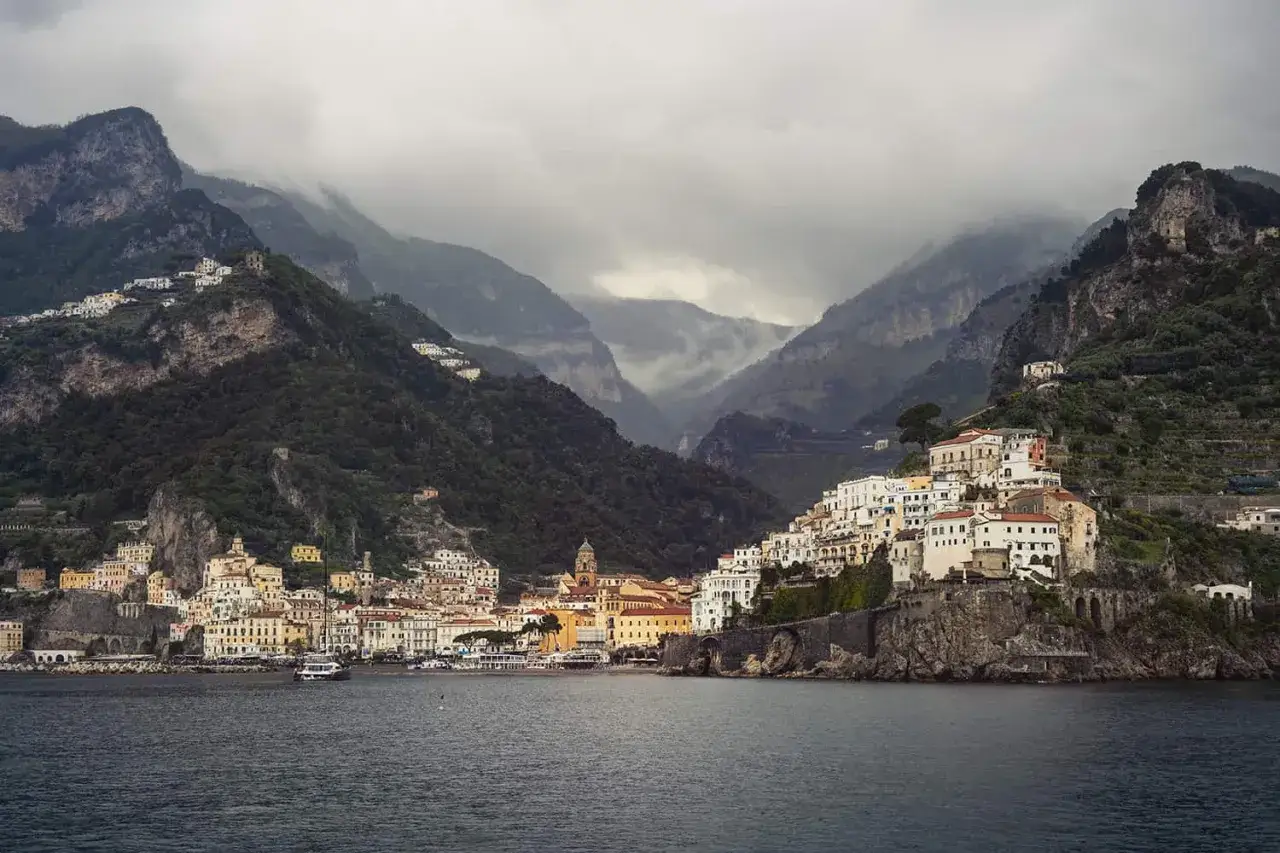
The southbound drive is more straightforward than many first-time visitors assume. Once you leave Naples, the main spine runs through the Campania-to-Calabria motorway corridor, and the current route network centers on the A3 Naples-Salerno connection and the A2 Salerno-Reggio Calabria stretch, now known as the Autostrada del Mediterraneo. That does not make it a wilderness drive, but it does make it a reliable one.
What makes this route worthwhile is not the highway itself. It is the ability to turn one long transfer into a chain of coastal breaks. That is where the journey stops feeling like logistics and starts feeling like travel. I would never rush it at the wrong time of day, though. The first hour out of Naples and the last hour into a resort town can be the least enjoyable part of the whole run, especially in peak summer traffic.
My rule is simple: drive only if you intend to stop. If you are just trying to arrive, the train is cleaner. If you want to turn the day into a coastal descent, the road gives you more control than any rail schedule can.
Stops that make the route worth remembering
If you have enough time to pause, there are a few places that genuinely improve the trip instead of just breaking it up. I would not add stops for the sake of it; I would pick ones that give the route a real personality.
- Paestum if you want an easy archaeological stop before the road gets more southern and more relaxed.
- Praia a Mare and San Nicola Arcella if you want a first taste of the Tyrrhenian coast without committing to a full beach base yet.
- Lamezia Terme if you want the most practical rail-and-road hinge in the region. It is not the prettiest stop, but it is often the smartest one.
- Tropea if the trip is really about beaches, old-town atmosphere, and a place that justifies an overnight.
- Scilla if you want a dramatic finish before Reggio Calabria. It adds a memorable visual payoff right near the end.
- Cosenza and the Sila if you want inland scenery, cooler air, and a trip that feels less coast-centric.
What I would avoid is trying to squeeze too many of these into one short journey. Calabria rewards selective planning. Three good stops will give you a better trip than seven rushed ones, and that is especially true if your schedule is under five days.
Timing matters more than map distance
The same route can feel easy in April and frustrating in August. That is not because the distance changes, but because road pressure, parking, and local crowding change the experience around it. For that reason, I think the best shoulder seasons are late spring and September. Calabria Straordinaria treats September as a particularly strong month for the sea and for slower village travel, and that matches what I would recommend in practice.
There are a few mistakes I see travelers make again and again:
- Choosing the wrong base and then spending half the trip commuting to the places they actually wanted to see.
- Booking too late for rail fares, then paying much more than necessary for a fixed schedule.
- Underestimating local transfers from Lamezia Terme Centrale to beach towns like Tropea, which are easy but not instant.
- Trying to do everything on one travel day instead of sleeping once between Naples and the deeper south.
- Assuming summer driving will feel fast just because the motorway is direct.
The long-distance rail spine is actually stronger than many visitors expect, with through services reaching the main Calabrian hubs. That makes the route easier to shape than it first appears, as long as you choose the right endpoint and do not force a one-size-fits-all plan.
A route plan I would use in real life
If I were planning this trip from scratch, I would pick one of these three patterns depending on the kind of holiday I wanted:
- Fast arrival - take the train to Lamezia Terme, then continue by regional train or car to Tropea, Pizzo, or another nearby base.
- Beach-first trip - drive or train south, sleep in Tropea, and use that as your main home base instead of bouncing around.
- Scenic road trip - leave Naples, stop once around the Cilento or Paestum area, then continue to the Tyrrhenian coast and finish near Scilla or Reggio Calabria.
- Inland reset - split the journey between the coast and the mountains by adding Cosenza or the Sila plateau, especially if you want hiking or cooler evenings.
The one version I would not force is the “see all of Calabria in one sweep” plan. That is a good way to spend the whole trip in transit and still feel unfinished at the end. A narrower route gives you better meals, better views, and fewer compromises.
The version of this trip that gives you the best return on time
For me, the smartest Naples-Calabria plan is simple: use the train if you want a clean transfer, use the car if the journey itself matters, and choose one coast instead of pretending the whole region fits into a single day. Calabria is at its best when you stop treating it as a corridor and start treating it as a destination with real internal variety.
That is the real value of the Naples to Calabria route. It is not just a way south. It is the point where the trip changes tone, and if you plan it well, that change becomes part of the experience rather than a delay you have to endure.