For a Sicily trip, the airport you choose changes the whole shape of the itinerary. The phrase sicily international airport usually points to Catania-Fontanarossa, the island’s busiest gateway, but Palermo, Trapani, and Comiso can be smarter picks depending on where you plan to stay. I would rather match the airport to the first three nights than save a small amount on airfare and lose half a day on the road.
The best airport for Sicily is the one closest to your first base
- Catania-Fontanarossa is the default choice for Etna, Taormina, Syracuse, Noto, and much of eastern Sicily.
- Palermo is usually better for Palermo city, Cefalù, Trapani, and the northwest.
- The airport in Catania sits about 6 km from the city center, so transfers are short but traffic-sensitive.
- The train shuttle runs every 10 minutes from 04:30 to 22:40 and costs €1.
- The bus runs every 25 minutes, with the first departure at 04:40 and the last at 00:30 the next day.
- For travelers from the United States, a connection through Rome, Milan, or another European hub is still the safest baseline assumption.
Why Catania is the airport most travelers mean
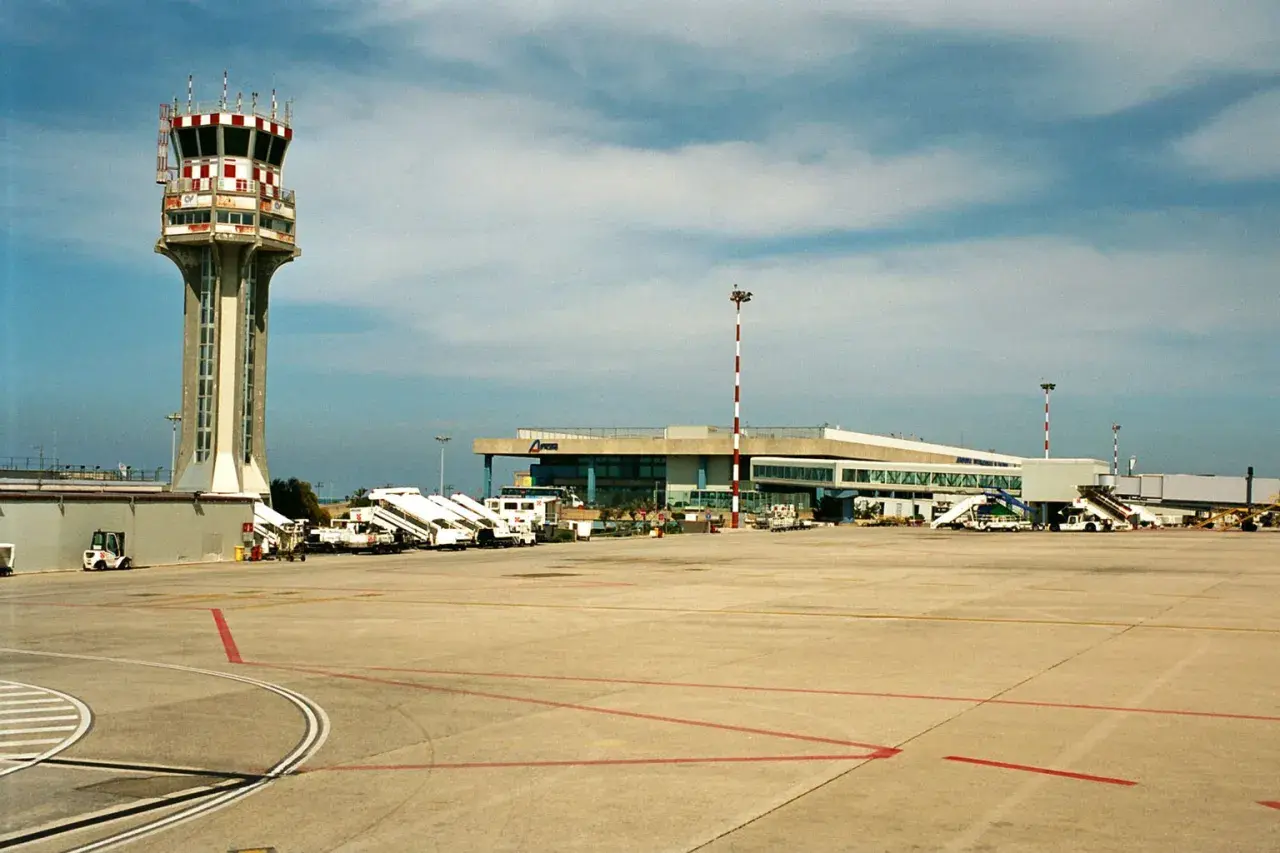
Catania-Fontanarossa is the airport I treat as Sicily’s main international gateway for most practical trip-planning purposes. Catania Airport describes itself as one of Italy’s most important airports, and that matches how it works on the ground: it is the easiest entry point for the east side of the island, the busiest option for many routes, and the one that most naturally serves a classic Sicily loop built around coast, baroque towns, and Mount Etna.
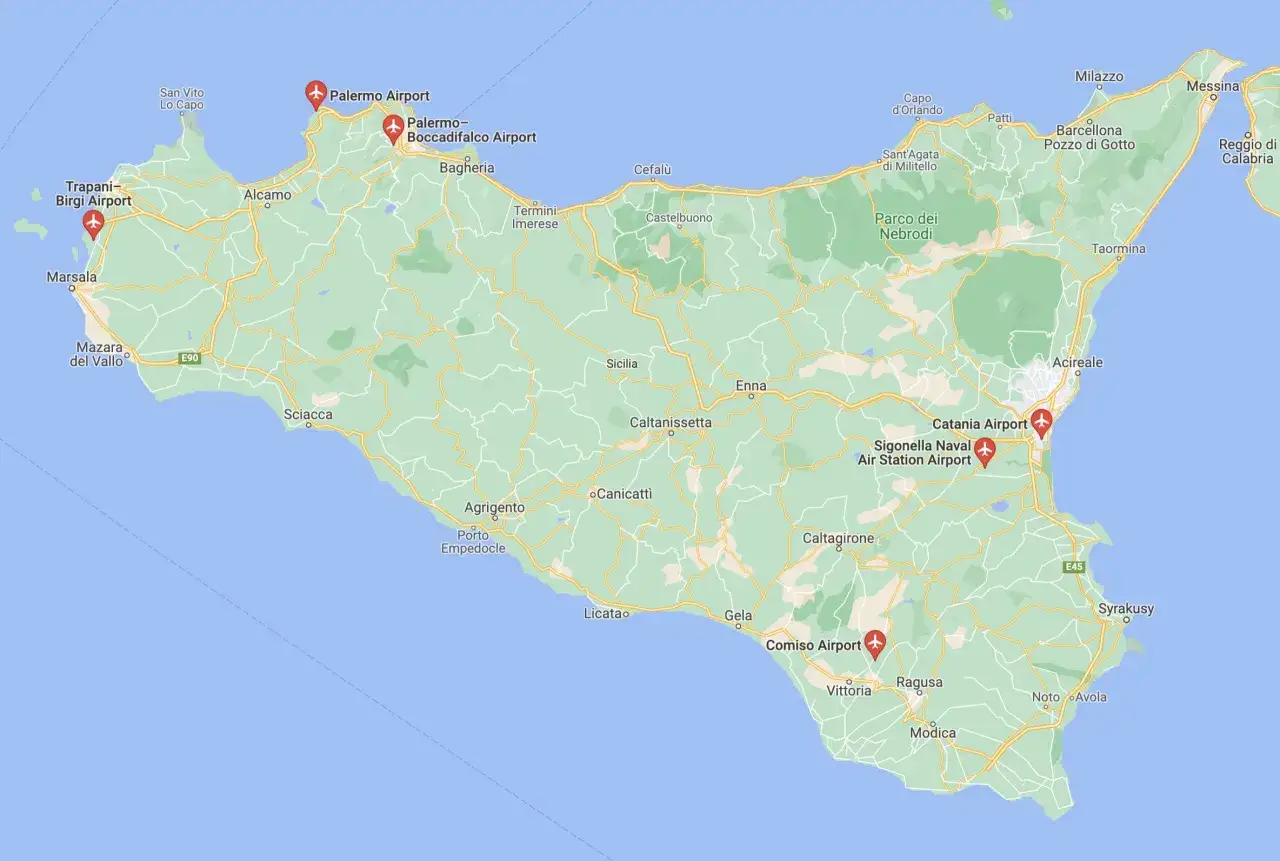
That matters because Sicily is not a compact city break. If you land on the wrong side of the island, a cheap fare can disappear into transfer time fast. Catania is the better fit when your first stop is Taormina, Syracuse, Ragusa, Noto, or a base near Etna, while Palermo makes more sense if your plan starts in the northwest. That difference matters most when you compare it with Palermo and the smaller island airports.
Which Sicilian airport fits your route best
I usually decide this by looking at the first and last legs of the trip, not just the flight price. If the airport saves you one long transfer at the beginning or end, it is often the better deal even when the ticket is slightly more expensive.
| Airport | Best for | Why it works | Main trade-off |
|---|---|---|---|
| Catania-Fontanarossa (CTA) | Etna, Taormina, Syracuse, Noto, Ragusa, eastern Sicily | Best all-round gateway for the east and southeast; strong route network and short transfer into Catania itself | Not ideal if your trip is focused on Palermo, Cefalù, or the west coast |
| Palermo Falcone-Borsellino (PMO) | Palermo city, Cefalù, Trapani, northwest Sicily | Better starting point for the western side of the island and for city-plus-coast itineraries in the north | Longer transfer if your trip is centered on the east coast |
| Trapani Birgi (TPS) | Trapani, Erice, western beaches, smaller regional trips | Useful when your stay is tightly focused on the far west | Smaller schedule and fewer options, so it is less forgiving |
| Comiso (CIY) | Ragusa, Modica, the southeast interior | Can be a very smart fit for southern Baroque Sicily | More limited service, so timing flexibility matters more |
For a first visit, I rarely recommend choosing purely by fare unless the airport sits on the same side of the island as your first base. Once the airport is decided, the next question is how you actually get into town or farther across the island.
How to get from Catania Airport into the island without wasting time
The cleanest transfer depends on whether you are staying in Catania, moving to the coast, or driving straight out of the city. My rule is simple: use public transport for the city, use a car only when your route genuinely needs one, and do not force a taxi if the train shuttle already does the job.
- Train shuttle - Best if you are staying near Catania Centrale or want the cheapest easy transfer. The Fontanarossa rail stop is connected by an AMTS shuttle that runs every 10 minutes from 04:30 to 22:40, and the ticket is €1.
- Bus - Best if you want a direct ride toward the city and you are arriving during normal service hours. The airport bus runs every 25 minutes, with the first departure at 04:40 and the last at 00:30 the next day.
- Taxi - Best after a long-haul flight, with children, heavy luggage, or a late arrival. The taxi ranks are at arrivals, which keeps the transfer simple when you are tired and do not want to think.
- Car rental - Best when your Sicily plan is already a road trip. If you are heading straight to Etna, Syracuse, Ragusa, or a countryside base, picking up the car on arrival can make sense. If you are only staying in the city for a night, I would usually wait.
I like the train shuttle for a light arrival because it is cheap, predictable, and hard to overthink. I would not choose it if I had multiple bags and a late dinner reservation, but for solo travel or a simple city stop it is the most efficient option. What changes inside the terminal is less dramatic than the road plan, but it still affects whether you catch a clean transfer or stand in a queue.
What the terminal layout means for timing and transfers
Catania Airport’s passenger flow is straightforward, but that does not mean you should arrive at the last minute. The check-in area is on the first floor of Terminal A, and the airport has 55 counters dedicated to the airlines operating there. The Fast Track facility is also in Terminal A and operates from 04:30 to 22:00, which is useful if you are trying to move quickly through a busy morning departure.
In practical terms, I plan Catania like a medium-large European airport, not a sleepy regional one. My rule of thumb is 2 hours for a short-haul departure and 3 hours if I am checking bags, traveling in peak summer, or connecting after a long drive from elsewhere on the island. The airport map also matters more than people expect because it helps you orient baggage claim, gates, and service points before you are tired and rushed.
If you are landing late, the terminal layout is one more reason to avoid an over-optimistic same-night transfer. After that, the real question for U.S. travelers is how the air route itself usually works.
What U.S. travelers should expect in 2026
For travelers from the United States, Sicily is still usually a connection trip rather than a simple nonstop into the island. In most cases, the smoothest routing runs through Rome, Milan, or another major European hub. That is the safest expectation to build around, especially if you want a reliable round-trip rather than a one-off seasonal option.
There has also been seasonal long-haul service into Catania in peak summer, which is useful to know, but I would treat that as a bonus rather than the foundation of your plan. Seasonal routes can disappear, move, or change frequency, and that is exactly the kind of detail I would not want to anchor a nonrefundable itinerary to without checking the current schedule.
One tactic I like for Sicily is an open-jaw ticket, which means flying into one airport and home from another. That works especially well here because the island rewards one-direction road trips: for example, land in Catania, finish in Palermo, and avoid retracing the same coast twice. From there, the last piece is simply avoiding the planning traps that make Sicily feel bigger than it should.
The arrival habits that make Sicily easier
The biggest mistakes are usually simple ones. People book the cheapest flight into the wrong side of the island, land late without a transport plan, or assume Sicily is small enough that a cross-island transfer will not matter. It does matter, and the difference often shows up as lost daylight on the road rather than money in the ticket price.
- Match the airport to the first three nights instead of trying to force the cheapest fare into your plan.
- Do not assume late-night public transport will still be convenient if you land near the end of service hours.
- Rent a car only when it helps the itinerary, not because it feels mandatory at the airport.
- Leave more buffer in summer, when Sicily is busier and transfer time can stretch.
- Use Catania for the east and Palermo for the west; that simple rule solves most arrival problems before they start.
If I were planning a first Sicily trip, I would choose Catania for Etna, the southeast coast, and most east-coast road trips, then pick Palermo only when the itinerary truly belongs on the other side of the island. That small decision usually does more for the quality of the trip than chasing the lowest fare. When the airport fits the route, Sicily opens up fast.