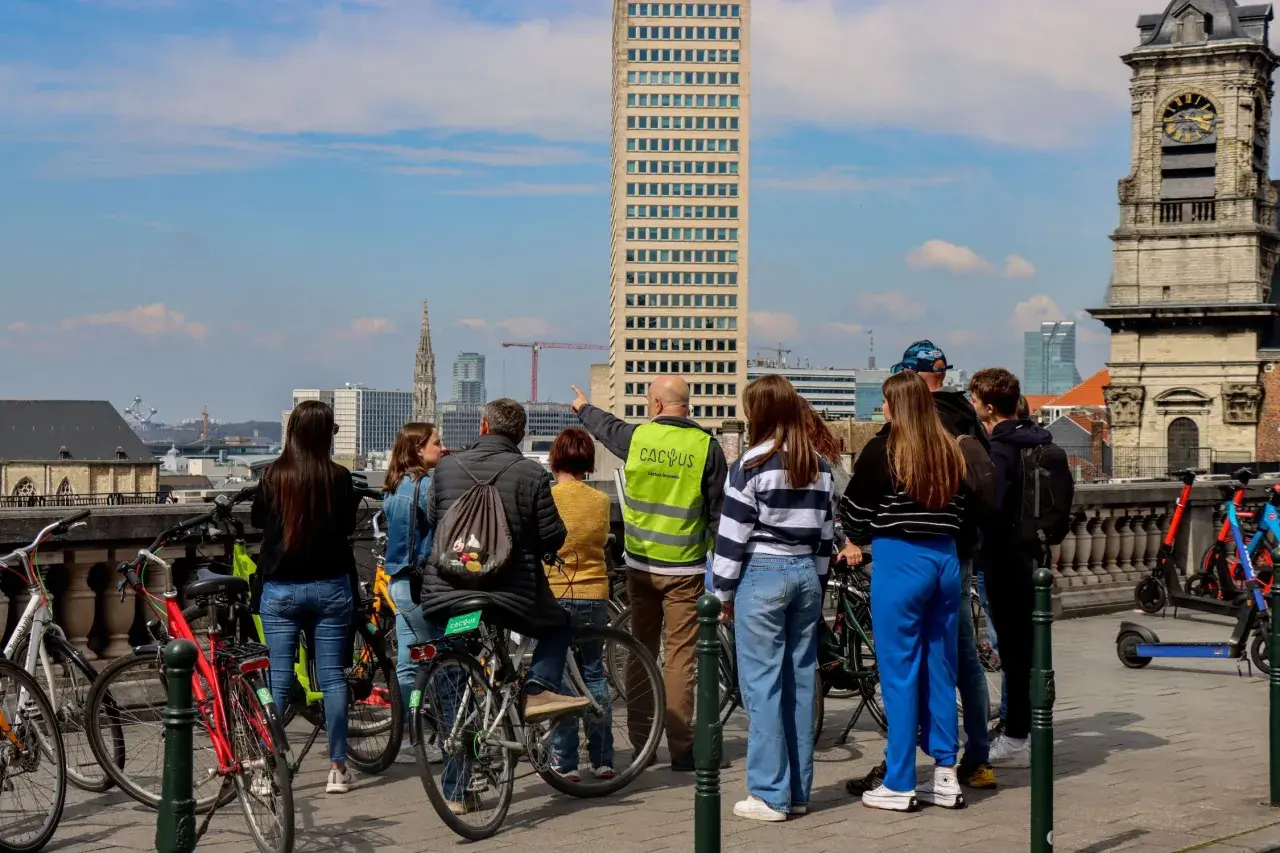
Brussels rewards people who see it at street level: the city is dense, layered, and full of contrasts that are easy to miss on foot. This guide looks at brussels bike tours from the angle that matters most to a traveler: what they cover, what they cost, how long they take, and when a guide is actually worth the extra money.
The practical takeaways for a Brussels bike day
- Most guided city rides last 3 to 3.5 hours, which is long enough for a proper overview without taking over the whole day.
- Current shared-tour pricing usually sits around €33 to €39 per person, while private and bespoke formats cost more.
- Typical routes mix Grand Place, the European Quarter, Marolles, Sablon, comic murals, and sometimes the Atomium.
- Spring through early autumn usually gives you the widest choice of departures and tour styles.
- A guide matters most when you want local context, fewer navigation decisions, and a route that feels calm rather than improvised.
Why a guided ride makes Brussels easier to read
I like Brussels for the same reason I like good cycling cities: it reveals itself in layers. You can move from medieval squares to institutional avenues, then into street-art-heavy neighborhoods, and the city never quite settles into one mood. That is exactly why a guided ride works well here. You are not just covering distance; you are getting the connective tissue between districts, landmarks, and the city’s political and cultural identity.
Visit Brussels notes that the city has more than 65 cycling nodes over 220 km, plus eight themed routes built on that network. That tells you something important: Brussels is set up for cycling in a structured way, but it is still an urban landscape, not a park trail. A guide helps you use the calmer streets, understand where the landmarks sit in relation to one another, and avoid wasting time on awkward junctions or dead-end detours.
For me, the real value is not novelty. It is efficiency with context. A good guide turns the ride into a narrative instead of a string of photo stops. Once you see that, the real question becomes which streets and neighborhoods a good tour should include.
What a typical route covers
Most guided city rides in Brussels are built for first-time visitors, which means they usually favor the city’s most legible highlights. That does not mean the route is shallow. When it is done well, it balances the famous places with neighborhoods that explain how Brussels actually works.
| Area or landmark | Why it appears on tours | What a guide adds |
|---|---|---|
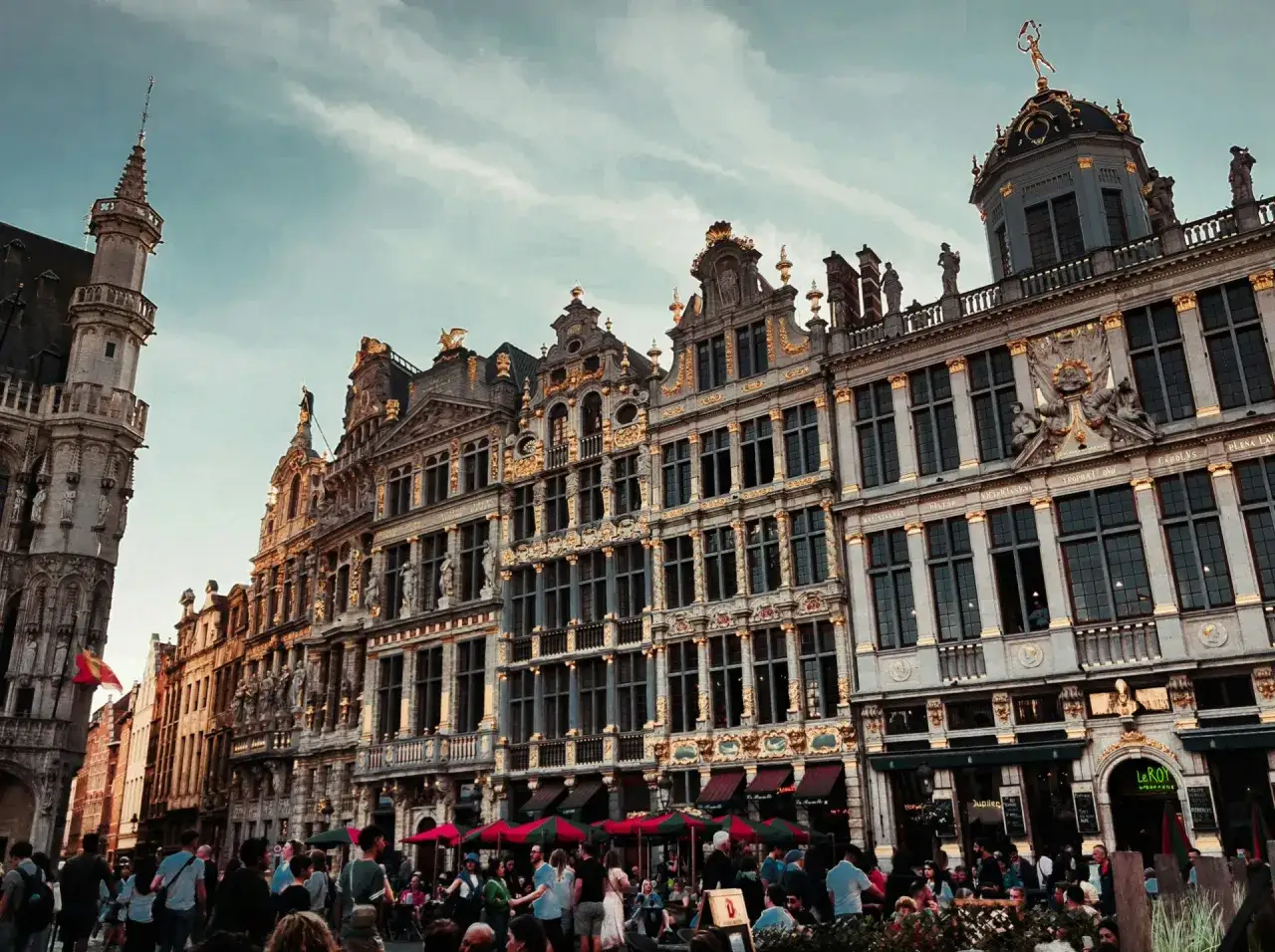
| Grand Place | The city’s most iconic square and the easiest visual anchor for a first visit | Architecture, guild history, and why the square feels more layered than it first appears |
| European Quarter | Shows the modern political side of Brussels | Context on institutions, city planning, and how the district differs from the historic center |
| Marolles and Sablon | Good contrast between local character, antiques, and lived-in city texture | Neighborhood history and the social mix that makes each area feel distinct |
| Cinquantenaire | Useful for a wider, more monumental view of the city | Urban scale, museum context, and how Brussels was shaped beyond the center |
| Comic murals and street art | A distinctly Brussels layer that many visitors would miss alone | Why comics became part of the city’s visual identity |
| Atomium | Usually included on themed rides rather than standard loops | Why it matters as a destination, not just as a photo stop |
Not every ride covers all of these, and that is normal. The Atomium, for example, tends to appear on more thematic or outward-reaching tours because it sits farther from the historic core. Some rides also build in a food stop, which I think is a smart move in Brussels because the city’s personality is as much about pauses and cafés as it is about monuments. The route mix is useful, but it also raises a practical question: which format fits your pace and budget best?
How to choose the right format
Most travelers are really choosing between four versions of the same idea: a shared highlights ride, a private tour, a themed tour, or an e-bike-friendly option. I would not overcomplicate it. The right choice usually comes down to how much structure you want and how much energy you want to spend on the day itself.
| Format | Best for | Typical duration | Typical price signal | Main tradeoff |
|---|---|---|---|---|
| Shared highlights ride | First-time visitors who want the most efficient overview | About 3 to 3.5 hours | Roughly €33 to €39 per person | Less flexibility with timing and pace |
| Private guide | Couples, families, mixed-ability groups, or anyone who wants a slower rhythm | Usually around 3.5 hours | From about €36 per person on one current listing | Costs more, but the route feels more personal |
| Themed ride | Repeat visitors and people with a clear interest in architecture, art, or the green city | Often 2 to 4 hours | Varies by theme and operator | Narrower focus, which is good if that is what you want |
| E-bike option | Riders who want less effort or a more relaxed pace | Usually similar to the main route | Often bundled or available as an upgrade | Less workout, heavier bike, but easier for longer distances |
There is one useful pattern in current listings: standard tours commonly cluster around 3 to 3.5 hours, and at least one operator runs daily 10 a.m. departures from April to October. That tells me the market is built around morning sightseeing, not all-day endurance riding. If I were booking for a first trip, I would start with a shared highlights ride unless I knew I wanted a slower pace or a custom route. That decision leads naturally to the more practical issue of budget.
What the current budget looks like
In current 2026 listings, the price spread is fairly easy to read. You do not need a huge budget, but you do need to understand what is actually included. Some tours include the bike in the price, while others split the experience into a base ride plus optional extras.
- Shared highlights rides: about €33 to €39 per person for a 3 to 3.5 hour tour.
- Private rides: from around €36 per person on one current listing.
- Student-focused rides: around €23.50 per person on one current listing.
- Custom group tours: often priced as a package, which makes sense for teams, schools, or family groups.
The only trap here is assuming that the lowest price is automatically the best value. On a city ride, value comes from guide quality, route clarity, and how smoothly the operator handles bikes, timing, and meeting points. A slightly higher fare is often justified if it means a better local guide or a calmer route.
Booking timing matters too. For a weekend in spring or summer, I would reserve several days ahead, sometimes earlier if the tour is small-group only. If you are traveling in the off-season, you can usually be looser, but the schedule may be thinner. Price matters, but preparation matters more than most first-timers expect.
How to prepare so the ride feels easy
Brussels is not a technically difficult cycling city, but it is still an urban one. That means the ride feels much better when you prepare for comfort instead of treating it like a casual afterthought.
- Wear shoes you can pedal in and comfortably walk in afterward.
- Bring a light rain layer, because the weather can change faster than you want on a half-day ride.
- Ask whether the bike, helmet, lock, and any rain gear are included.
- Choose an e-bike if you want a gentler pace or if your group has mixed fitness levels.
- Carry a little cash or a card for snacks, drinks, or a stop for fries.
- If traffic makes you uneasy, ask how much of the route uses quieter streets versus busier corridors.
You do not need athlete-level fitness. You do need to be comfortable riding for a few hours with stops and start-and-stop urban movement. In practice, the biggest challenge is usually confidence around traffic, tram tracks, and the occasional uneven surface, not the physical effort itself. That balance points straight to the limits of the experience, which is where honest expectations help most.
Where a bike tour works best and where it does not
I think Brussels is an excellent city for a guided bike tour when your goal is orientation. It is less ideal if your goal is deep immersion in one museum, long café breaks, or a perfectly leisurely pace with no schedule at all. The bike format works because it lets you see how districts connect, which is harder to grasp when you only walk short blocks or hop between single attractions.
The city has also invested in bike paths in recent years, which makes guided rides more realistic than they would have felt a decade ago. Still, this is an urban ride, not a scenic cycle path. Expect real city texture: traffic, junctions, tram lines, cobbles in places, and the occasional moment where the guide’s route choice matters a lot. That is not a flaw. It is the reason local knowledge pays off.
So I would not recommend a guided ride if you are already tired, nervous on a bike, or mainly interested in one landmark that deserves lingering. In those cases, walking may be the better choice. If you want a high-value overview, though, the bike format is hard to beat. That is why the most useful question is not whether to ride, but how to fit it into the rest of your Brussels stay.
The smartest way to fit one into a short Brussels stay
If I had only one practical formula, I would use a morning highlights ride on the first full day. That gives you the city map in your head early, plus enough local recommendations to shape the rest of the trip. After that, you can return on foot to whichever neighborhood felt most interesting, whether that is the Grand Place area, the European Quarter, or a more local district that the guide made come alive.
- First-time visitors should choose a highlights or e-bike tour.
- Returning visitors should look for themed rides focused on architecture, art, or green spaces.
- Mixed-ability groups usually get the best result from a private guide.
- Short layovers work best with a central route that avoids the city’s farthest-out landmarks.
The best version of a Brussels cycling day is not the longest one; it is the one that leaves you with a clear mental map, a few strong stories, and enough energy left to enjoy the city afterward.