I focus on the places that give a first visit real shape: city viewpoints, volcanic pools, ridgelines, levadas, and a few inland stops that show the island’s quieter side. The goal is not to collect names, but to build a trip that feels balanced and worth the effort.
The fastest way to plan Madeira without wasting days
- Start in Funchal and Monte for the easiest introduction to the island’s culture, gardens, and cable cars.
- Use the coast strategically, with Cabo Girão, Porto Moniz, Seixal, and Ponta de São Lourenço covering very different landscapes.
- Book hiking days early, because PR trails now require reservations in 2026 and have a fee of €4.50 per visitor over 12.
- Plan by geography, not by attraction count, because winding roads make overpacked days feel much longer than they look on a map.
- Leave room for one valley stop such as Curral das Freiras or Santana, which adds depth beyond the headline viewpoints.
Start in Funchal and Monte if you want the clearest first impression
If I were arriving on the island for the first time, I would not rush straight into the mountains. I would begin in Funchal, because it gives the trip context: the waterfront, the old streets, the market atmosphere, and the easy access to the hills above the city. It is the kind of place that helps you understand how Madeira hangs together before you go chasing the more dramatic scenery.Monte is the obvious next step. The cable car ride is not just a transport gimmick; it is a clean way to see how quickly the city rises into greenery. Once you are up there, the atmosphere changes. Gardens feel cooler, the views open up, and the pace drops enough to make the stop feel different from the coastline below.
- Funchal Old Town works well for a relaxed first evening and a slower look at local life.
- The cable cars give you one of the easiest scenic transitions on the island.
- The Botanical Garden is useful if you want a scenic stop that does not require a long hike.
- Monte sledges are touristy, but they are also one of the island’s most recognizable experiences.
I would not spend an entire Madeira trip in Funchal, but I would absolutely start there. Once the capital is done, the coast makes a lot more sense.
The coastline splits into three different experiences
Madeira’s coast is compact on a map, but in practice it feels like several different islands stitched together. The south coast is the easiest to mix into a short day, the northwest gives you the classic volcanic-water setting, and the eastern tip feels sharper, drier, and more exposed. That variety is a big part of the island’s appeal.
| Area | Best stop | Why it matters | Best for |
|---|---|---|---|
| South coast | Cabo Girão and Câmara de Lobos | Big cliff views and an easy half-day pairing close to Funchal | Short stays and first-time visitors |
| Northwest | Porto Moniz and Seixal | Volcanic natural pools and a rawer Atlantic setting | Swimming, scenic drives, and slower travel |
| East tip | Ponta de São Lourenço | Open cliffs, dry terrain, and some of the island’s most striking walks | Hikers and photographers |
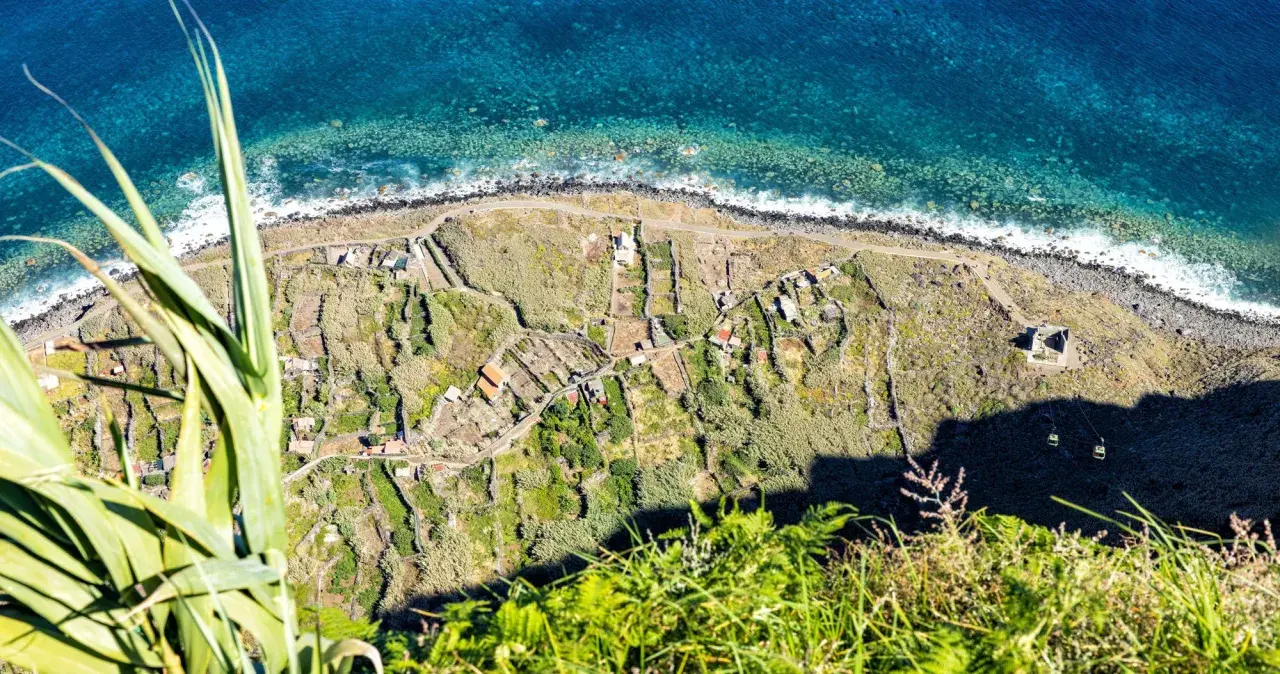
Cabo Girão is the quick-hit viewpoint I would keep on a first itinerary, especially if you want a big panorama without committing to a long hike. Porto Moniz, by contrast, is where the island’s volcanic identity becomes tactile: the pools, the rock formations, and the Atlantic exposure all make sense together. Seixal often feels a little less packaged, which is a good thing if you prefer scenery with less of a crowd. If you only have space for one coast walk, make it Ponta de São Lourenço, because the exposed peninsula gives you a completely different reading of Madeira.
The coast tells you how Madeira looks from the outside. The next question is how to experience it on foot.
The hikes that are worth your energy
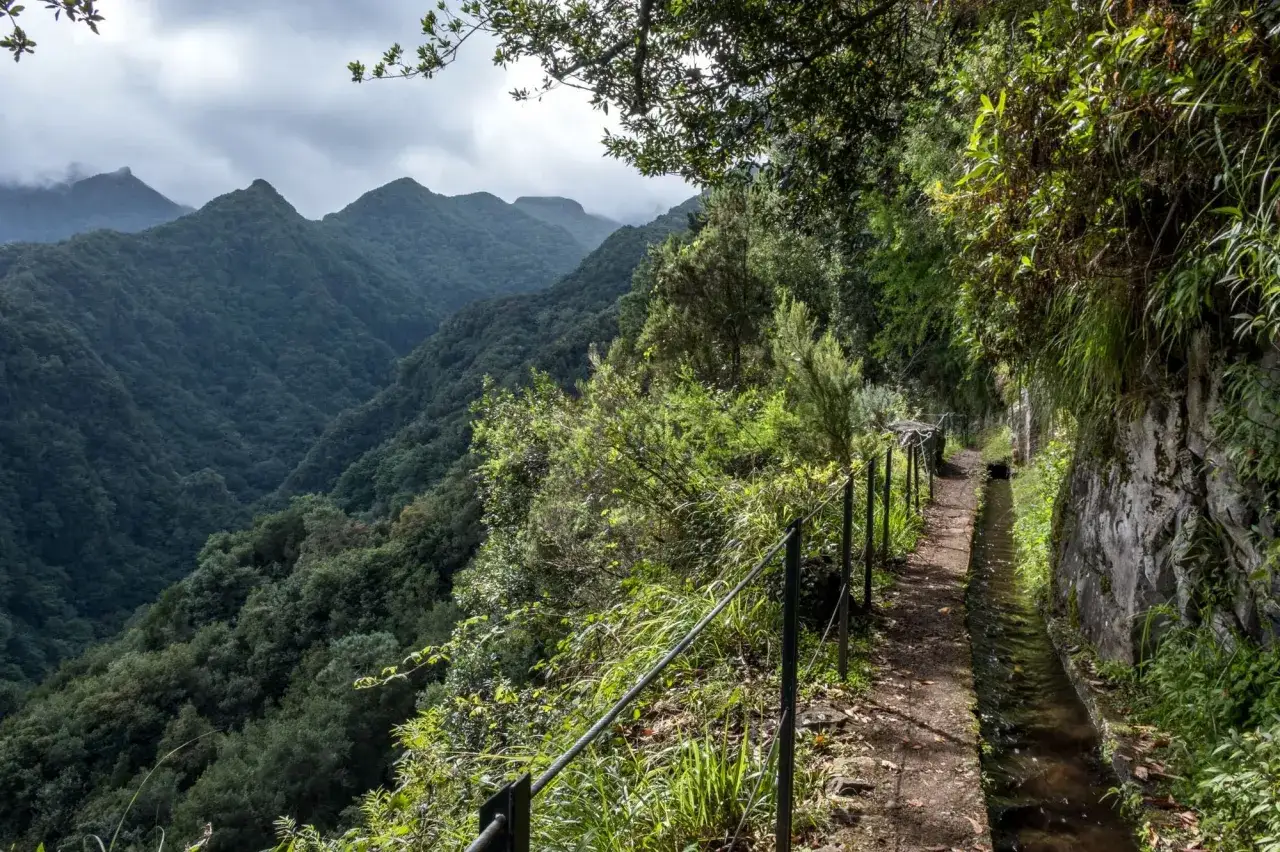
Madeira’s trail system is one of the island’s biggest draws, but I would treat it seriously rather than casually. Visit Madeira notes that, in 2026, access to classified PR trails requires a reservation and a €4.50 fee per visitor over 12, so it pays to choose your hikes before you build the rest of the day around them. That extra step is annoying only if you leave it to the last minute; otherwise it helps you plan better.
| Trail | Difficulty and time | What it feels like | Why I would choose it |
|---|---|---|---|
| PR 8 Vereda da Ponta de São Lourenço | Moderate, about 2.5 hours, 3 km each way | Dry, open, windy, and full of cliff-edge drama | The best half-day hike for first-time visitors |
| PR 1 Vereda do Areeiro | Moderate, about 3.5 hours, 6.1 to 7 km | High mountain ridges, peak-to-peak scenery, and a real sense of altitude | The island’s classic mountain walk |
| PR 6 Levada das 25 Fontes | About 3 hours, 4.3 km | Lush, shaded, and very Madeiran in the classic levada sense | The route most travelers picture when they think about levada hiking |
| PR 6.1 Levada do Risco | Easy, about 2 hours, 1.5 km | Shorter, calmer, and rewarding without demanding a full mountain day | A strong lighter option or a companion walk to 25 Fontes |
- Bring proper layers, because mountain weather can shift fast even when the coast looks calm.
- Carry water and a torch if your route includes tunnels or longer exposed sections.
- Do not assume “short” means easy, because elevation and surface conditions matter as much as distance.
- Choose one major hike and one lighter walk rather than trying to stack two demanding routes on the same day.
If I had to narrow it down, I would choose Ponta de São Lourenço for the open coastal drama or PR 1 for the mountain spectacle. Both are more memorable than trying to squeeze in too many mediocre stops.
Once the hiking plan is fixed, the rest of the trip becomes a question of timing and geography.
A sensible 3, 5, or 7 day plan
The biggest planning mistake on Madeira is treating the island like a list you can tick off in any order. The roads are scenic, but they are also winding enough that an overstuffed day turns into fatigue. I usually plan Madeira around clusters rather than individual attractions, and that keeps the trip calmer and more enjoyable.
| Trip length | Best focus | A practical mix |
|---|---|---|
| 3 days | One city day, one coast day, one hike | Funchal and Monte, Cabo Girão and Câmara de Lobos, then Ponta de São Lourenço or Levada do Risco |
| 5 days | Add the north coast and one inland stop | Funchal, Porto Moniz or Seixal, Santana, Curral das Freiras, and one mountain trail |
| 7 days | Balance the island instead of rushing it | Add PR 1 or another major ridge walk, a second pool or swim day, and more time for slower villages and viewpoints |
After the broad itinerary is set, the remaining value comes from the quieter places that make Madeira feel layered instead of repetitive.
The villages and viewpoints that give the island more depth
Some of Madeira’s most useful stops are not the headline attractions. They are the places that add texture between the big scenic moments, which is exactly why I would keep them in the plan. They help the island feel inhabited rather than curated.
- Curral das Freiras gives you the sensation of being tucked deep inside the island’s mountain core, and the valley setting is impressive even if you only stop briefly.
- Eira do Serrado is the companion viewpoint I would pair with Curral das Freiras, because it frames the valley from above and makes the geography easy to read.
- Santana is where the traditional thatched houses earn their reputation; they are not just decorative, they are a real piece of the island’s identity.
- Câmara de Lobos works as a slower harbor stop and a reminder that Madeira is not only about dramatic cliffs and hiking.
I like these stops because they keep the itinerary from becoming one long sequence of viewpoints. Without them, the trip can feel visually impressive but emotionally thin. With them, Madeira starts to show its everyday character.
The Madeira mix I would choose for a first trip
If I had to reduce the island to one first-visit formula, I would choose Funchal and Monte, one serious coastal walk, one pool stop in the northwest, and one inland viewpoint or valley stop. That combination gives you city, sea, cliffs, and highland scenery without repeating the same kind of view three times.
My practical rule is simple: cut duplicate viewpoints before you cut one good hike or one good swim stop. Madeira rewards flexibility, especially when weather or road time changes the rhythm of the day, and the strongest itinerary is usually the one that leaves a little space in it rather than trying to prove something with distance.