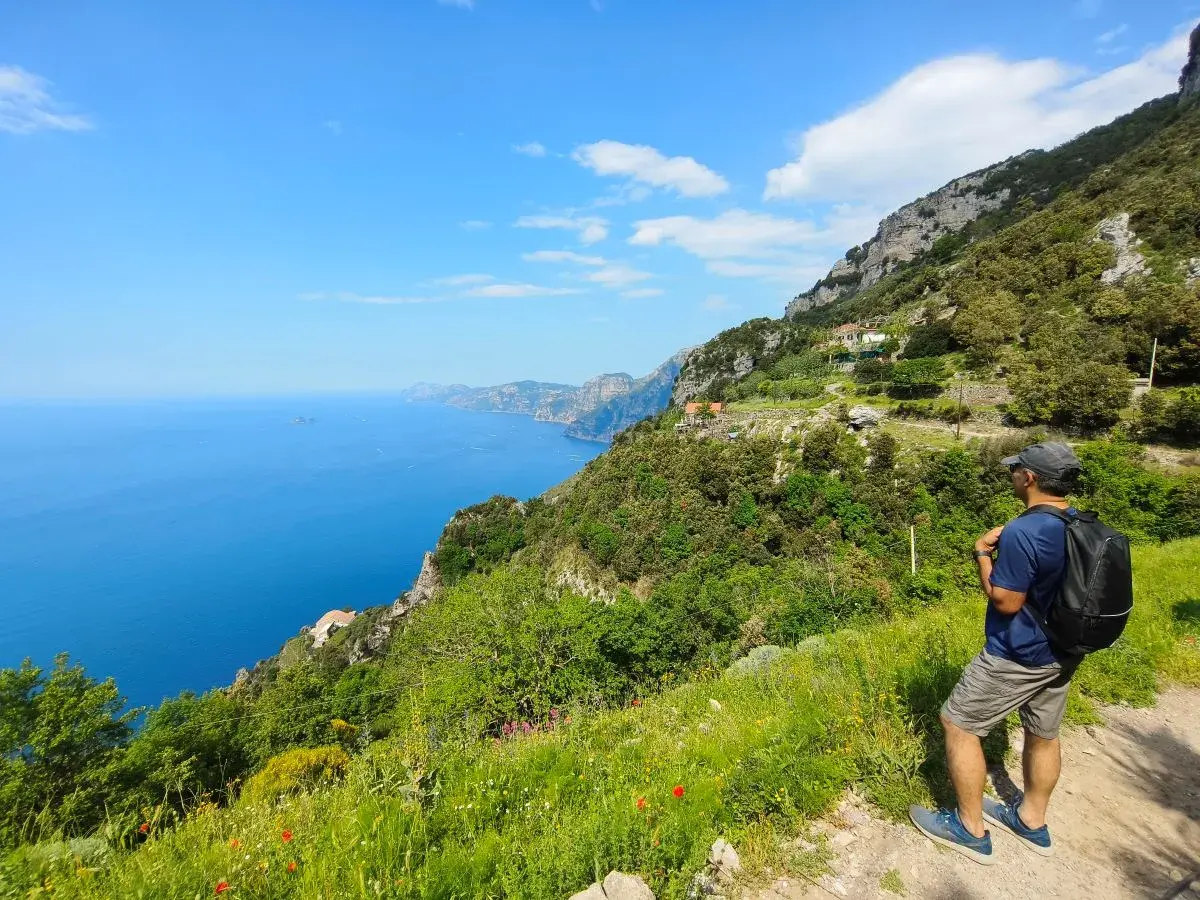
The Sentiero degli Dei is one of those hikes where the view is famous, but the practical details decide whether the day feels effortless or chaotic. The trail is scenic rather than technical, yet the exposed sections, the heat, and the return logistics matter more than many first-time visitors expect. This guide breaks down the route, the real difficulty, the best season, and the small planning choices that make the difference between a rushed walk and a memorable one.
The essentials you should know before hiking
- The classic walk links Bomerano in Agerola with Nocelle above Positano, with the option to continue down into Positano.
- The trail is generally classed as easy in hiking terms, but it has exposed stretches and is not a casual promenade.
- Plan roughly 2 to 4 hours for the core walk, and longer if you continue into Positano or stop often for photos.
- Spring and early autumn are the sweet spot; summer works best only with a very early start.
- Good hiking shoes, water, sun protection, and a flexible return plan matter more than fancy gear.
What the Path of the Gods really is
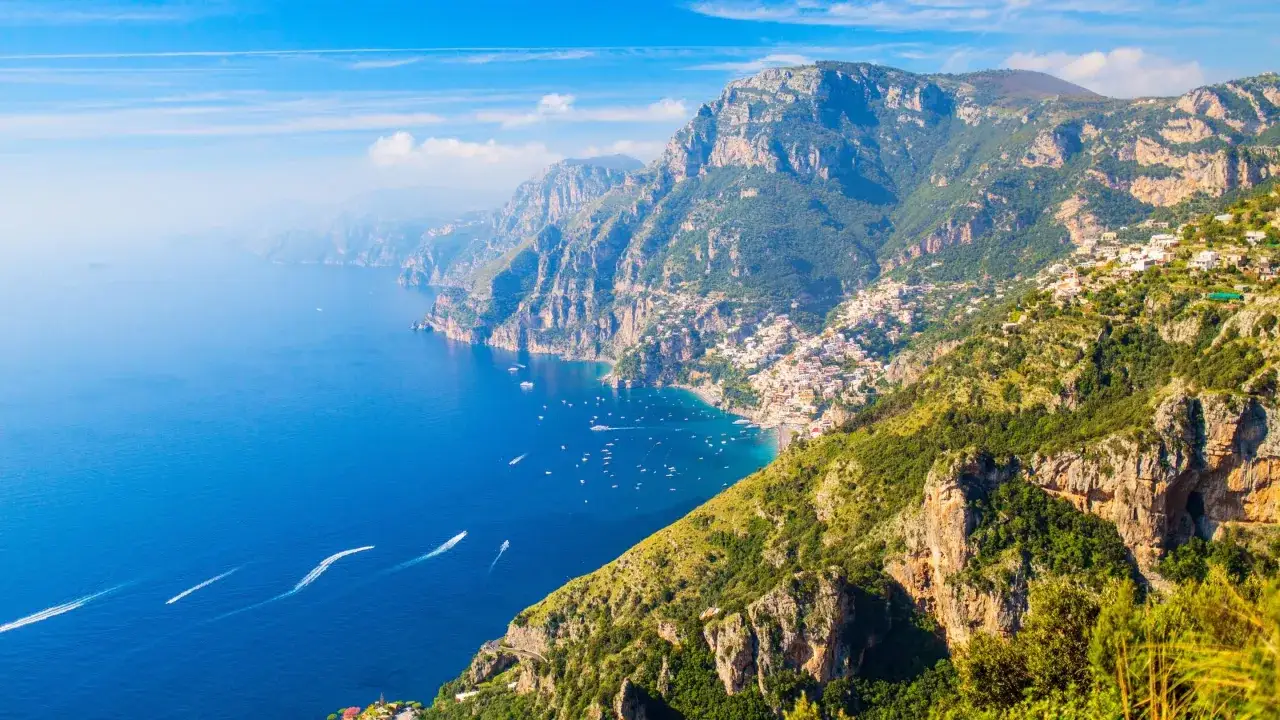
The Path of the Gods is not a mountain summit hike and it is not a coastal stroll. It is a ridge walk carved into the Monti Lattari above the Amalfi Coast, where the sea stays in view for long stretches and the terrain keeps reminding you that this is still a proper hike. The trail is famous because it combines open panoramas, old agricultural land, and a sense of height that feels cinematic without requiring alpine skills.
The Regional Park of the Lattari Mountains classifies the route as E, which in Italian hiking terms means an easy hiking route with exposed sections. That distinction matters. Easy does not mean flat, shaded, or barrier-protected. It means most walkers with normal fitness can handle it if they respect the conditions and do not treat it like a city path.
In practical terms, this is also why the trail has such a strong personality. You are walking through a landscape shaped by terraces, mule tracks, dry-stone walls, and small cliffside settlements, not just chasing a view from one photo stop to the next. Once you understand that basic shape, the route choice becomes much easier.
Which route makes the most sense for your day
CAI Monti Lattari maps the core section at about 5.3 km, but broader route descriptions often stretch the full experience to roughly 7.8 to 9 km depending on where you start, where you finish, and whether you descend all the way to Positano. That is why I think the best way to plan this hike is to choose the finish first and let the rest of the day follow from that decision.
| Route | Approximate effort | Why choose it | Main tradeoff |
|---|---|---|---|
| Bomerano to Nocelle | About 2 to 4 hours; roughly 5.3 km on one official mapping | The cleanest first-time option and the best balance of scenery and effort | You still need to decide how to get down from Nocelle |
| Bomerano to Positano | About 3 to 5+ hours; often described at around 7.8 to 9 km | Best if you want the full experience and want to end in Positano center | The final descent is hard on the legs and adds a lot of stairs |
| Praiano to Colle Serra and onward | Shorter in distance but steeper in feel | Useful if you are staying in Praiano or want a more compact challenge | The access climb is less forgiving than most first-timers expect |
If I were recommending one version to a traveler with limited time, I would pick Bomerano to Nocelle. It gives you the best ratio of reward to effort, and it leaves room to decide later whether you want to tackle the stairs into Positano or use a bus. The steeper Praiano access is better seen as an alternative entry point, not the default choice for a first visit.
That route decision also helps you judge how demanding the day will feel, which is the real question for most hikers.
How hard the walk feels once you are on it
The trail is approachable, but I would not call it effortless. What makes it manageable is the gentle overall profile on the classic route; what makes it tiring is the combination of exposure, stone steps, uneven ground, and the way the heat compounds everything in warm weather. In other words, it is rarely the legs alone that cause trouble. It is the full package.
The three things that usually surprise people are:
- Exposure - Some stretches feel open to the drop beside the path, so people with a strong fear of heights may find the walk mentally harder than physically hard.
- Descent - Going down is often more punishing than going up, especially if you continue from Nocelle to Positano.
- Surface variation - The route mixes dirt, stone, short paved connectors, and stair sections, so rhythm matters more than speed.
That is why I recommend treating the hike as a half-day outdoor outing rather than a quick scenic detour. If you move at a steady pace, stop for photos, and leave some energy for the return, the trail feels rewarding. If you try to squeeze it into a rushed schedule, it starts to feel harder than it really is. The next thing that changes the experience just as much is timing.
When to go for the best conditions
For most hikers, the best window is spring or early autumn. April, May, September, and October usually offer the most comfortable temperatures, clearer light, and a better balance between crowds and weather. Summer can still work, but only if you start early enough to avoid the hottest part of the day.
I would think about the seasons like this:
- Spring - The most reliable all-round choice, with good temperatures and strong visibility.
- Summer - Possible, but only with an early start and serious attention to water and shade management.
- Autumn - Often excellent, with softer light and less heat stress.
- Winter - Walkable in principle, but rain, wind, and occasional instability make checking same-day conditions much more important.
The trail is a public mountain route and is generally open, but weather and safety issues can still change the picture. After heavy rain, strong wind, fires, or local maintenance concerns, I would not assume the day will go exactly as planned. For me, the practical rule is simple: if the forecast looks borderline, start earlier or postpone. That caution matters just as much when you are figuring out how to reach the trail in the first place.
How to get there and back without wasting energy
The easiest mental model is to treat the hike as a one-way route and plan the return separately. Start in Bomerano, walk to Nocelle, and then decide whether you want to continue down to Positano on foot, take a local bus, or reverse your transfer later. That keeps the day from becoming a logistical puzzle halfway through the hike.
Here is the practical version I would use:
- Get to Bomerano early, because parking and bus connections are both easier before the late-morning rush.
- Choose your finish before you start walking, especially if you want to reach Positano the same day.
- Leave extra time if you are descending into Positano, because the stair section can be slower than expected.
- Do not assume public transport runs like clockwork on the Amalfi Coast; build slack into the day.
If you are driving, expect parking to be limited and to fill quickly in peak months. If you are using buses, give yourself margin for delays and transfers. If you want the least friction, a private transfer or guided outing can save time, but it is a convenience choice rather than a necessity. Once you have the route and transport sorted, the next thing that matters is what you put in your pack.
What to pack and what experienced hikers do differently
This is not a gear-heavy hike, but the right basics make a real difference. The official park guidance is sensible: sturdy shoes, a hat, sunscreen, a daypack, and water. I would add one more rule of thumb from experience: carry less than you think you need, but never skimp on water.
What I would carry
- Trail shoes or walking shoes with reliable grip
- At least 1 to 1.5 liters of water per person, and closer to 2 liters in hot weather
- Hat and sunscreen for the exposed stretches
- Light snacks such as fruit, nuts, or a sandwich
- A charged phone and some cash for transport or a café stop
- A light wind layer in spring or autumn, especially if the forecast is changeable
Read Also: Scotland Hiking Itinerary - Plan Your Perfect Trip
What I would avoid
- Sandals, flip-flops, or shoes with weak soles
- Starting late in the morning in summer
- Depending on frequent shade or water fountains
- Underestimating the final descent into Positano
- Taking very young children unless you are comfortable managing exposed terrain carefully
The most common mistake is not fitness. It is overconfidence. People see the photos and assume the walk is gentle in the same way a seaside promenade is gentle. It is not. The trail rewards a calm pace, steady hydration, and realistic expectations, and that is usually enough to turn the day in your favor. That realistic approach also explains why the trail stays in people’s memories long after they leave the coast.
Why this ridge walk stays with people after the descent
What makes the hike memorable is not only the view, although the view is obviously the headline. It is the combination of space, height, and old landscape logic: terraces cut into the hills, stone paths that still feel purposeful, and the sudden switch from open ridge to village stairs. The walk feels shaped by people and terrain at the same time, which gives it more depth than a pure lookout route.
If I had only one practical recommendation, it would be this: give the Sentiero degli Dei a proper half day, start early, and keep your return flexible. That is the difference between a box-ticked attraction and a genuinely satisfying Amalfi Coast hike. If you do the walk on its own terms, it is easy to see why so many travelers remember it as the one trail they would do again.