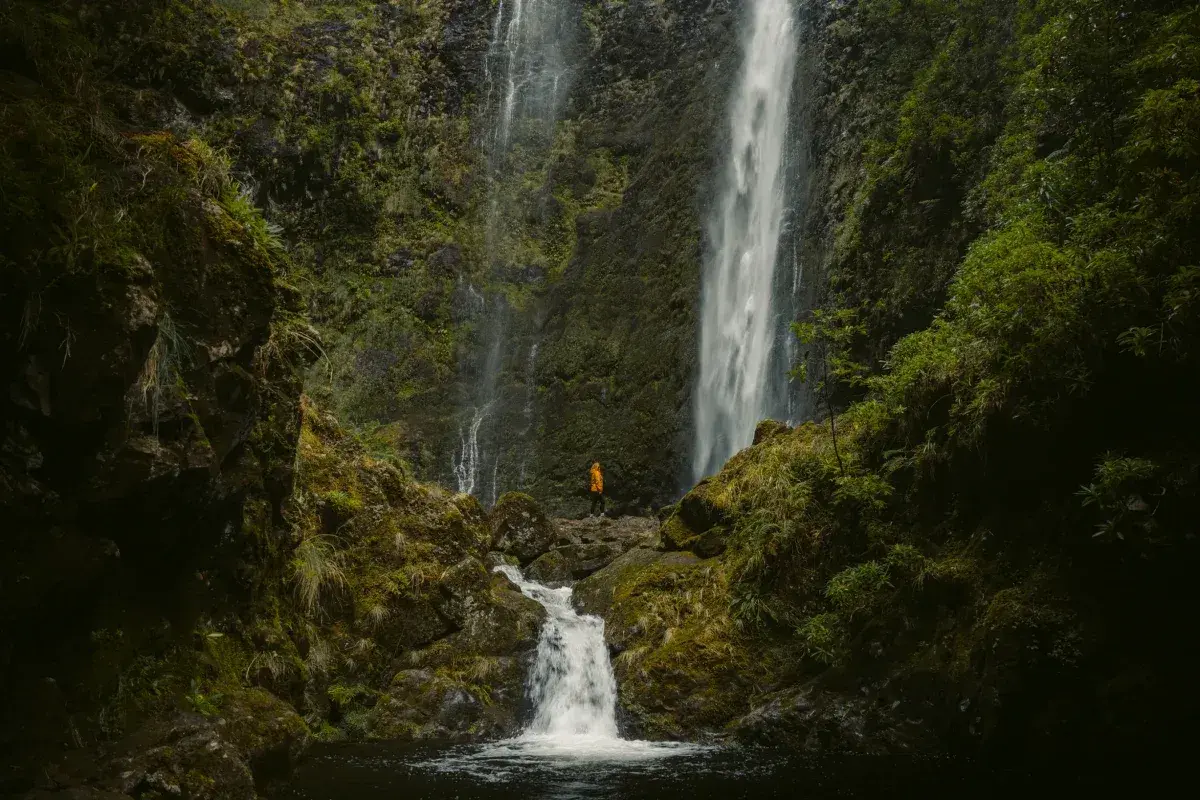
The caldeirao verde waterfall hike is one of Madeira’s most rewarding levada walks: long enough to feel like a proper day in the hills, but direct enough that you are never wondering whether you missed the path. I like it because it gives you a full sample of the island in one route - laurel forest, water channels, tunnels, damp rock, and that dramatic waterfall finish. This guide covers how hard the walk really feels, how to plan it in 2026, what to pack, and which version of the route makes the most sense for different hikers.
The essentials before you go
- Trail stats: PR9 is about 17.4 km round trip, with an official time of around 6.5 hours and a moderate rating.
- Start point: Queimadas Forest Park in Santana on Madeira’s north coast.
- 2026 access: a prior reservation is mandatory, and the standard fee for classified trails is €4.50 per person.
- Route character: mostly steady levada walking through Laurisilva forest, plus tunnels and narrow sections.
- Status: the trail was reopened on 29 May 2026, so checking the current trail notice before you leave still matters.
Why this hike feels different from a standard waterfall walk
This is not just a point-to-point scramble to a viewpoint. A levada is an irrigation channel built to carry water across Madeira’s steep terrain, and the path alongside it often becomes the walking route. That is why the Caldeirão Verde route feels so immersive: you are following the island’s water system through the Laurisilva forest, which is part of Madeira’s UNESCO-listed natural heritage, rather than simply hiking toward a single photo stop.
That distinction matters more than people expect. A classic waterfall hike gives you a destination; this one gives you a sequence of moods. The forest closes in, the light changes, the air cools, and the trail keeps pulling you forward at a steady rhythm. By the time the waterfall appears, you have already had a full hike, which is exactly why the finish lands so well.
What the route is really like
The trail begins at Queimadas Forest Park, where the thatched houses and wooded setting already feel more atmospheric than a normal trailhead. From there, the route follows the levada across a mostly gentle line through the mountain forest, which is why the official difficulty sits in the moderate range rather than the hard range. You are not fighting huge elevation gain, but you are committing to a long out-and-back day with wet surfaces, tight passages, and a few places that ask for attention.
- The opening stretch: shady forest, steady footing, and a calm start that lets you settle into the pace.
- The tunnel sections: short, dark, and exactly the reason I would never do this hike without a headlamp or torch.
- The levada walking: the most characteristic part of the route, with water beside you for much of the way.
- The waterfall finish: the point where most hikers stop, rest, eat, and turn around the same way they came.
In practice, most visitors treat the waterfall as the destination and the return walk as part of the experience. That is the right mindset, because the path rewards patience more than speed, and the next question is usually whether the hike is truly hard enough to justify a full day.
How hard it feels in real life
On paper, the hike looks approachable. In the field, the answer depends on what you find tiring: distance, damp terrain, confined spaces, or a long return after you have already spent several hours walking. I would call it an honest moderate hike rather than a casual stroll. Fit beginners usually cope well, but only if they respect the length and leave enough time.
| Hiker type | How it usually feels | My take |
|---|---|---|
| Fit beginner | Long but manageable | A very good first big Madeira hike if you pace yourself. |
| Regular hiker | Comfortable | Usually a rewarding, low-drama day out. |
| Anyone uneasy in tunnels or on narrow edges | Stressful | Better to choose a shorter forest walk instead. |
| Families with older children | Possible | Fine if everyone is used to several hours on foot. |
The main trap is underestimating the return journey. The climb is not the issue; the combination of wet ground, repeated footing checks, and cumulative fatigue is what turns a “moderate” hike into a bigger day than expected. Once you understand that, the route becomes much easier to enjoy for what it is.
How to plan it in 2026
The biggest change for hikers this year is administrative, not physical. Access to Madeira’s classified PR trails now requires a prior reservation through the official booking system, and the standard fee is €4.50 per person for individual trails. Visit Madeira lists PR9 as open, with a round-trip length of 17.4 km and an estimated duration of about 6.5 hours, which is the figure I would use when planning transport, food, and daylight.
- Reserve before you go: do not assume you can just show up and start walking.
- Check the trail-status map: closures can change after rain or maintenance work.
- Start early: the early hours are calmer, and the forest is more comfortable before the day warms up.
- Plan for a full outing: the waterfall is only the midpoint of your energy budget, not the finish line.
I would also keep one practical detail in mind: the route was reopened on 29 May 2026, which is a reminder that status can change. If the weather has been unstable, I would check the official notice again the night before and then once more on the morning of the hike. That extra minute can save a long, disappointing drive.
What to pack and what to respect on the day
People sometimes treat this as a scenic walk and forget that the scenic part comes with real trail conditions. The path can be damp, the tunnels can be dark, and the forest can feel cooler than the coast even on a good day. If I were packing for one hike on Madeira, this would be a sensible list for Caldeirão Verde:
- Headlamp or torch for the tunnels, even if you expect bright daylight.
- Grippy walking shoes or hiking boots because wet stone and moss are part of the route.
- A light rain shell for the forest section, where drizzle and mist can build quickly.
- Water and snacks because this is a long out-and-back day, not a short viewpoint stop.
- A charged phone and offline map for comfort, photos, and backup navigation.
I would also keep my hands free as much as possible. Low ceilings in tunnels and awkward footing near damp stretches are much easier to manage when you are not juggling a loose bag, a coffee, or a camera strap that keeps slipping forward. The hike is safe enough when treated with attention, but it is not the place to switch off completely.
Which version of the route makes the most sense for you
Not everyone needs the same Caldeirão Verde experience. Some hikers want the full waterfall day, others want a longer mountain challenge, and some only want a short taste of the forest without committing to a major outing. The right choice depends on your energy, your schedule, and how comfortable you are with long distances on a levada path.
| Option | Distance and time | Best for | My take |
|---|---|---|---|
| Classic PR9 out-and-back to the waterfall | 17.4 km and about 6.5 hours | Most first-time visitors | The best balance of scenery, effort, and certainty. |
| Continue beyond the waterfall toward Caldeirão do Inferno | Longer than the main route and more demanding | Experienced hikers with flexible plans | Worth considering only if current conditions allow and you are still fresh. |
| PR9.1 accessible forest route | About 1.9 km and around 45 minutes | Visitors who want the setting without the full hike | Good if mobility or time is limited, but it does not replace the waterfall walk. |
For most people, the main out-and-back route is the one that makes the most sense. It gives you the forest, the levada, the tunnels, and the waterfall without stretching the day into something that feels forced. I would treat the longer continuation as an optional extra, not the core of the experience.
The details I would not skip before setting out
If I were planning this hike myself, I would build the day around three things: book early, start early, and carry proper light for the tunnels. Those sound simple, but they solve most of the problems people have on PR9 before they even start walking.
My other advice is more about attitude than gear. Do not try to rush the route. The Caldeirão Verde trail works because it lets you move slowly through a very specific kind of Madeira landscape, where the water, the forest, and the mountain walls keep changing the mood without changing the path. That is why the hike stays memorable long after the waterfall itself fades from the camera roll.