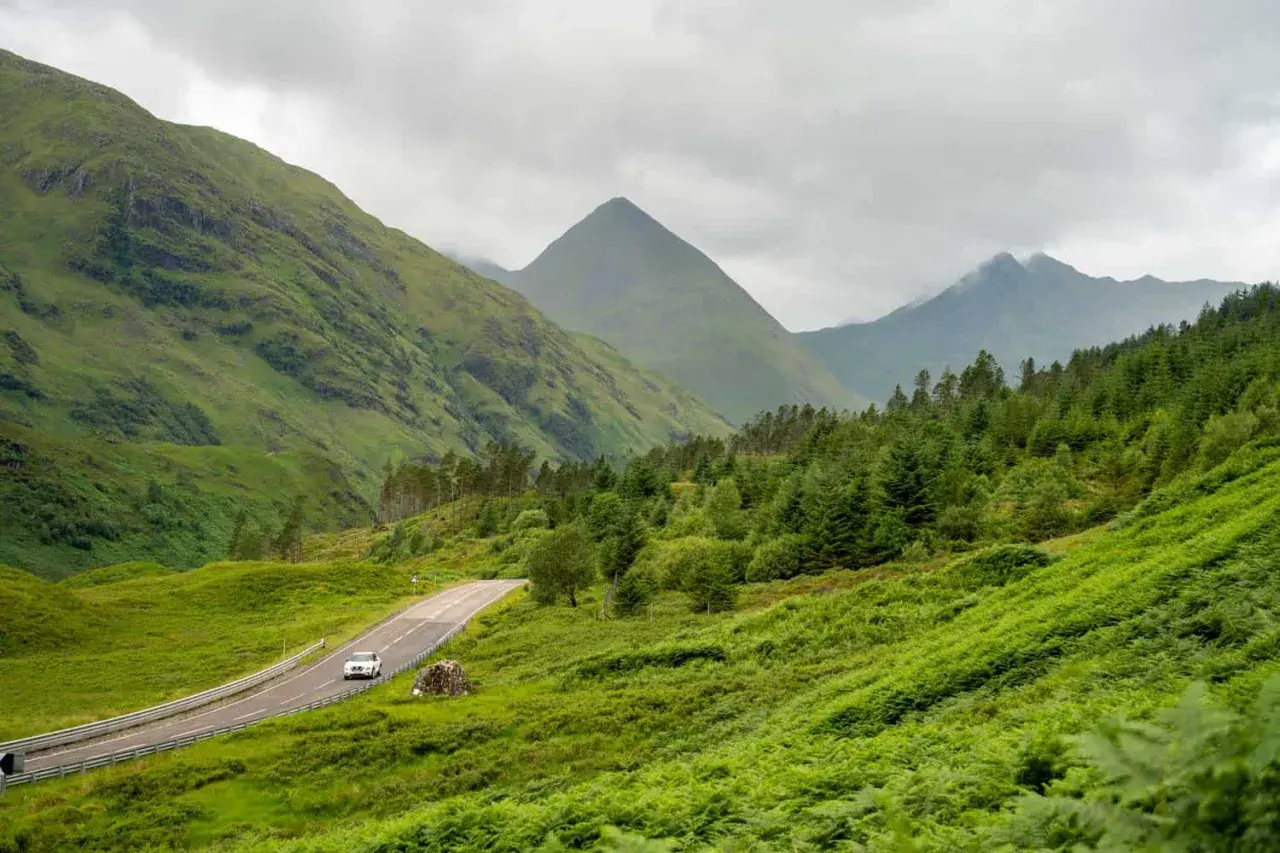
A good hiking trip in Scotland is less about cramming in as many famous spots as possible and more about matching the route to your time, fitness, and tolerance for changeable weather. A Scotland hiking itinerary works best when transport, overnight stops, and trail difficulty all line up instead of fighting each other. In this guide, I focus on the planning choices that matter most, then I lay out a route I would actually use for a first trip.
The decisions that shape the trip most
- The West Highland Way is the cleanest first long-distance choice: 96 miles / 154 km, usually 5 to 7 days.
- The Great Glen Way is a strong second option if you want another linear trail with simpler logistics between Fort William and Inverness.
- If you only have 3 to 4 days, a base in Fort William, Glencoe, or on Skye works better than forcing a full through-hike.
- Book peak-season beds early; the most popular overnight stops can disappear long before summer arrives.
- Weather, daylight, and the Loch Lomond camping rules can change the plan faster than the map does.
Choose the route style that fits your time
I usually split Scotland hiking trips into two formats. A point-to-point route means you move your overnight stop each night and finish somewhere different from where you started. A base-and-loop trip means you stay in one area and do day hikes from there. The mistake I see most often is people trying to mix both without enough days, which usually turns the trip into a logistics exercise instead of a walk.
| Trip length | Best structure | What I would use | Main risk |
|---|---|---|---|
| 3 to 4 days | Base-and-loop | Fort William, Glencoe, Skye, or the Cairngorms | Trying to move too often and losing hiking time to transfers |
| 5 to 7 days | One long-distance trail | West Highland Way or Great Glen Way | Underestimating terrain, especially when weather slows the middle stages |
| 8 to 10 days | Trail plus a base stay | One main trail, then 2 to 3 nights on Skye or in Fort William | Overpacking the route and making every day feel rushed |
| 11+ days | Mixed walking holiday | A full trail plus regional day hikes | Too many one-night stops and too much time spent checking in and out |
If I were helping a first-time visitor, I would almost always steer them toward one main trail first and a few shorter hikes second. That gives the trip a rhythm, and rhythm matters in Scotland because the weather can change the character of a day very quickly.
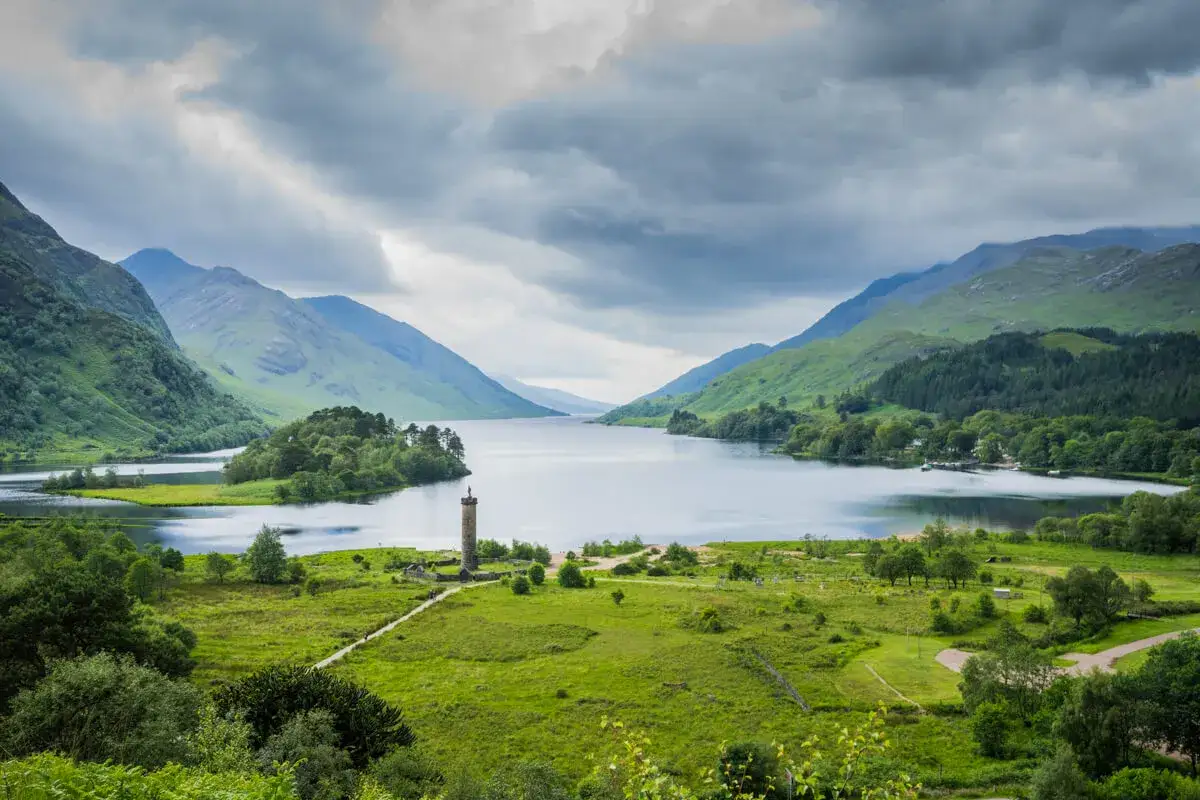
How I would shape a first trip on foot
For a first long-distance walking holiday, I would start with the West Highland Way. The official route runs 96 miles / 154 km from Milngavie, just outside Glasgow, to Fort William, and it is usually completed in 5 to 7 days. I like it because the southern stages ease you in before the landscape becomes more exposed and demanding in the north. That matters more than people expect. A good route should build confidence, not drain it on day one.| Day | Overnight stop | Why this stage matters |
|---|---|---|
| 1 | Drymen | A gentle start that lets your body settle after travel |
| 2 | Rowardennan | The path starts to feel like real Highland walking along Loch Lomond |
| 3 | Inverarnan | A longer, more remote-feeling day that teaches you to pace yourself |
| 4 | Tyndrum | A practical mid-route reset before the more open terrain ahead |
| 5 | Bridge of Orchy or Kingshouse | Big moorland scenery and the point where the trip starts to feel serious |
| 6 | Kinlochleven | The Devil’s Staircase adds a proper mountain feel without requiring technical skills |
| 7 | Fort William | A finish that feels earned, with Ben Nevis waiting at the end of the line |
I like this seven-day shape because it keeps the early mileage manageable and leaves enough energy for the middle section, where the route becomes more open and exposed. If you prefer shorter walking days, split one of the longer middle stages rather than forcing a faster overall pace. That is usually the difference between enjoying the walk and simply surviving it.
The same logic applies if you choose the Great Glen Way instead. It runs from Fort William to Inverness, covers 125 km / 79 miles, and also fits neatly into a 5 to 7 day window. I would choose it when I want a slightly calmer through-hike with strong loch and canal scenery, but the West Highland Way still has the stronger first-trip drama.
Where extra days actually help
Extra time in Scotland is best spent widening the experience, not merely stretching the mileage. I would not try to bolt on three more long trails just because the calendar allows it. Instead, I would add one well-chosen region that gives the trip a different texture.
| Extra days | Best add-on | Why I like it | What to watch |
|---|---|---|---|
| 2 to 3 days | Isle of Skye base stay | You can do iconic hikes like the Old Man of Storr, the Quiraing, and the Fairy Pools without rushing between hotels | Traffic, busy trailheads, and the need to start early |
| 2 to 4 days | Cairngorms base stay | More space, fewer crowds, and a quieter mountain atmosphere | Weather is less forgiving and visibility can drop fast |
| 5 to 7 days | Great Glen Way | A second continuous trail with straightforward route logic | Less dramatic than the West Highland Way in some sections, so expectations matter |
If I had a slightly longer trip, I would choose Skye after a main trail rather than trying to squeeze Skye into the middle of it. Skye works best when you treat it as a base, not as another thing to be rushed through. That gives you time for the weather to improve, which is often the real advantage in the Highlands.
Book the parts that sell out first
The most stressful part of a hiking holiday in Scotland is not the walking. It is discovering too late that the overnight chain is already full. I would book the following in this order: accommodation, transport to the start, transport from the finish, and only then any optional luggage transfer or guided extras.- Accommodation: For June through August, I would book 6 to 9 months ahead on popular long-distance routes.
- Transport: Milngavie is straightforward from Glasgow, and Fort William is the natural finish for the West Highland Way.
- Luggage transfer: Worth it if you want to keep the walk light and preserve your knees over several days.
- Food planning: Carry snacks even on “well-served” stages; Scotland has long stretches where the next shop is farther away than it looks on a map.
| Item | Rough planning range | Why it matters |
|---|---|---|
| Bunkhouse or hostel bed | £25 to £45 per person per night | Best value if you are happy with shared facilities |
| B&B or guesthouse room | £100 to £150 per room per night | The common sweet spot for comfort and convenience |
| Mid-range hotel | £150 to £250+ per night in peak periods | Useful when you want recovery and a more flexible schedule |
| Lunch and snacks | £15 to £25 per day | Remote trail sections reward carrying more than you think you need |
Those are planning ranges, not fixed quotes, but they are realistic enough to keep the budget honest. Once the beds are locked, the rest of the trip becomes much easier to manage. That leads straight into the factor that changes itineraries more than almost anything else: conditions on the ground.
Weather and access rules can change the plan
Scotland rewards flexibility. Late spring and early autumn are usually the best balance of daylight, temperatures, and trail comfort. Summer gives you longer days, but it also brings more people, more booking pressure, and more midges in still, damp places. Winter walking is possible in many areas, but I would treat it as a different game altogether because daylight is short and higher ground can become serious very quickly.
On the access side, Scotland is generous, but it is not casual. Responsible wild camping is broadly allowed under the Scottish Outdoor Access Code on much of the land where access rights apply, yet Loch Lomond & The Trossachs National Park has seasonal camping management zones and permit rules in certain areas. If your route touches that park, I would check the overnight plan before I check anything else. A bad camping assumption can ruin an otherwise excellent itinerary.
If the forecast turns against you, I would not force a ridge day just because it was in the original plan. Drop to a lower route, shorten the stage, or use a valley walk as your backup. That kind of adjustment is not a compromise in Scotland; it is how experienced walkers keep a trip enjoyable instead of heroic.
The route I would choose if I were booking today
For most first-time walkers, I would keep the plan simple: one main long-distance trail, a realistic daily pace, and one flexible bonus area only if the schedule allows it. If I had one week, I would do the West Highland Way and stop there. If I had 9 or 10 days, I would add two nights on Skye after the trail so the trip ends with a different kind of landscape. If I had only 3 or 4 days, I would base the whole trip in one place and pick quality day hikes over constant transfers.
That approach gives you the best odds of a trip that feels steady rather than scrambled. Scotland is at its best when the route has room to breathe, so I would build in margin, book the overnight chain early, and let the weather decide the small adjustments instead of the whole plan.