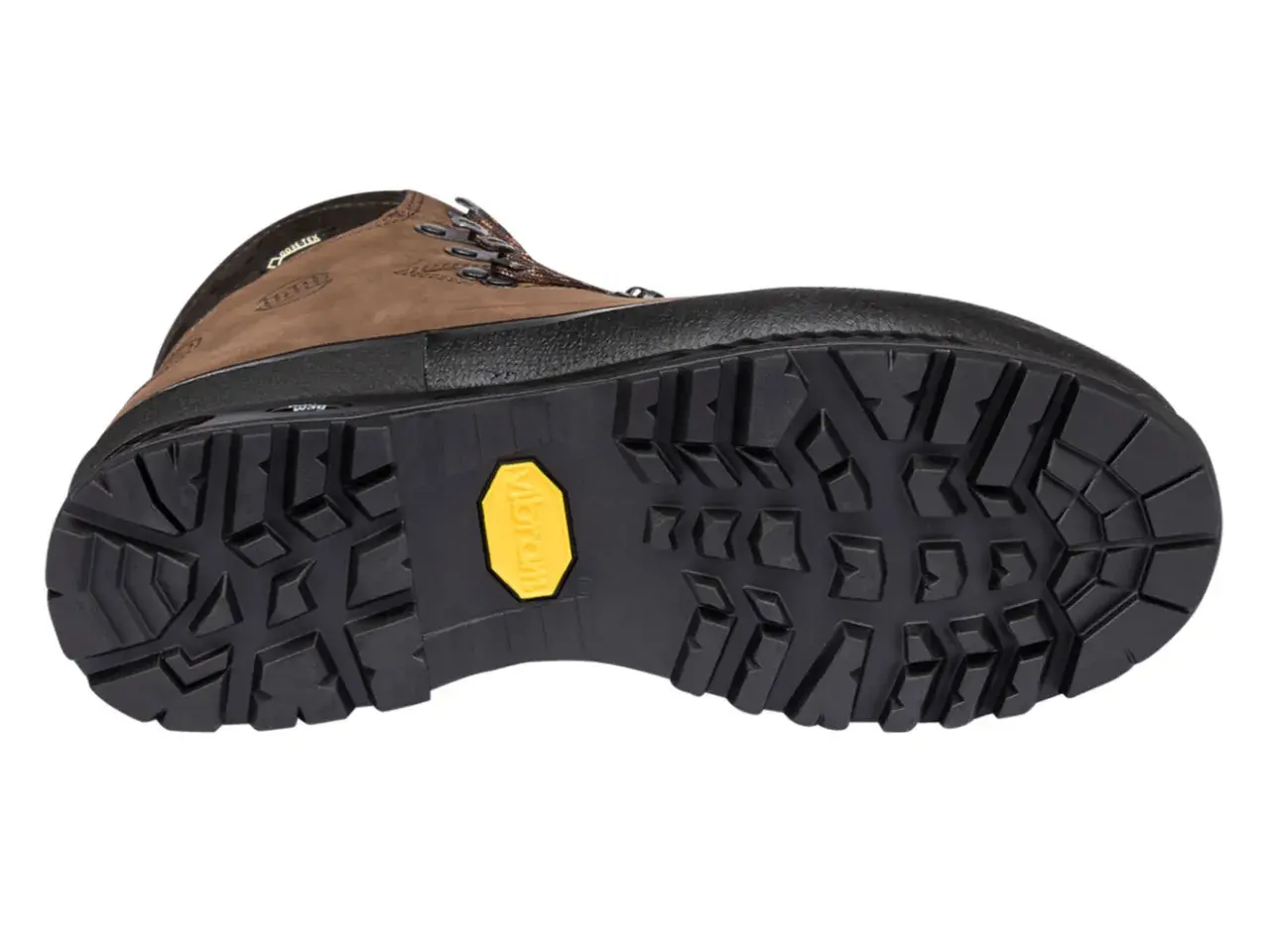
When I look at hiking boots, I start at the bottom, not the upper. The main types of boot soles in hiking footwear come down to compound, cushioning, and tread geometry, and those details decide how secure you feel on wet rock, loose dirt, or a long descent. This guide breaks down the materials and designs that matter most, so you can match the sole to the trail instead of relying on marketing language.
The bottom of a hiking boot is a system, not a single layer
- Outsole rubber controls grip, wear resistance, and how the boot behaves on wet or rocky ground.
- Lug shape and spacing matter as much as depth, especially on mud, scree, and polished stone.
- EVA midsoles feel lighter and softer, while PU midsoles usually last longer and handle heavier loads better.
- Shanks and plates add stiffness and rock protection, which becomes more important as terrain gets rougher.
- Construction determines whether a boot can be repaired, resoled, or simply worn out and replaced.
The bottom of a boot works as a system
I think many buyers make the same mistake: they treat the sole as one part when it is really a layered system. The outsole touches the ground, the midsole controls cushioning, the shank controls stiffness, and the overall shape affects how the boot brakes on descents and flexes on climbs. If you understand those layers first, the rest of the choice becomes much easier.
That matters because hiking is rarely one surface for long. A good day in the mountains can include damp grass, loose stone, rooty forest tracks, and a road walk back to the car. The right sole does not just add grip; it reduces fatigue, helps you stay balanced, and keeps the boot feeling predictable when the terrain changes under your feet. Once that idea clicks, the material choices start to make sense.
The materials that change grip, weight, and durability
When people talk about boot soles, they often lump together rubber, cushioning foam, and stiffening inserts. I separate them because each one solves a different problem. A Vibram-branded sole, for example, is not automatically better by itself; I still want to know the rubber compound, the lug shape, and how the boot is built underneath.
| Feature | Common materials or designs | What it changes | Best use case |
|---|---|---|---|
| Outsole | Standard rubber, softer sticky rubber, harder rubber or carbon-rubber blends | Grip, abrasion resistance, and how the sole behaves on wet stone | All hiking footwear, with the compound matched to the terrain |
| Midsole | EVA, polyurethane (PU) | Cushioning, weight, and how quickly the boot packs out | EVA for lighter day hikes; PU for long mileage and heavier loads |
| Shank or plate | Nylon, TPU, fiberglass, steel | Torsional stiffness and underfoot protection from sharp rocks | Steeper routes, rough ground, and backpacking with weight |
| Support shape | Heel cup, rocker profile, flex grooves, climbing zone | How the boot brakes, rolls forward, and edges on slabby rock | Mixed mountain terrain and long descents |
In plain English, softer rubber usually grips better, especially on wet stone, but it wears faster. Hanwag makes that trade-off very clear in its grip guidance, and it matches what I see on trail: if the rubber is stickier, it often feels more confident underfoot, but it may not last as long as a harder compound. That is why I never judge a sole by the brand label alone. I want to know what problem the compound is actually solving.
The practical takeaway is simple. If your hikes are short, light, and mostly on well-kept trails, you can usually prioritize comfort and weight. If you carry more weight, hike longer, or move over rough ground often, I start paying much more attention to the midsole and the stiffening pieces. Those details are less glamorous than tread patterns, but they change the way the boot feels after three hours, not just in the shop.
How tread pattern changes traction on the trail
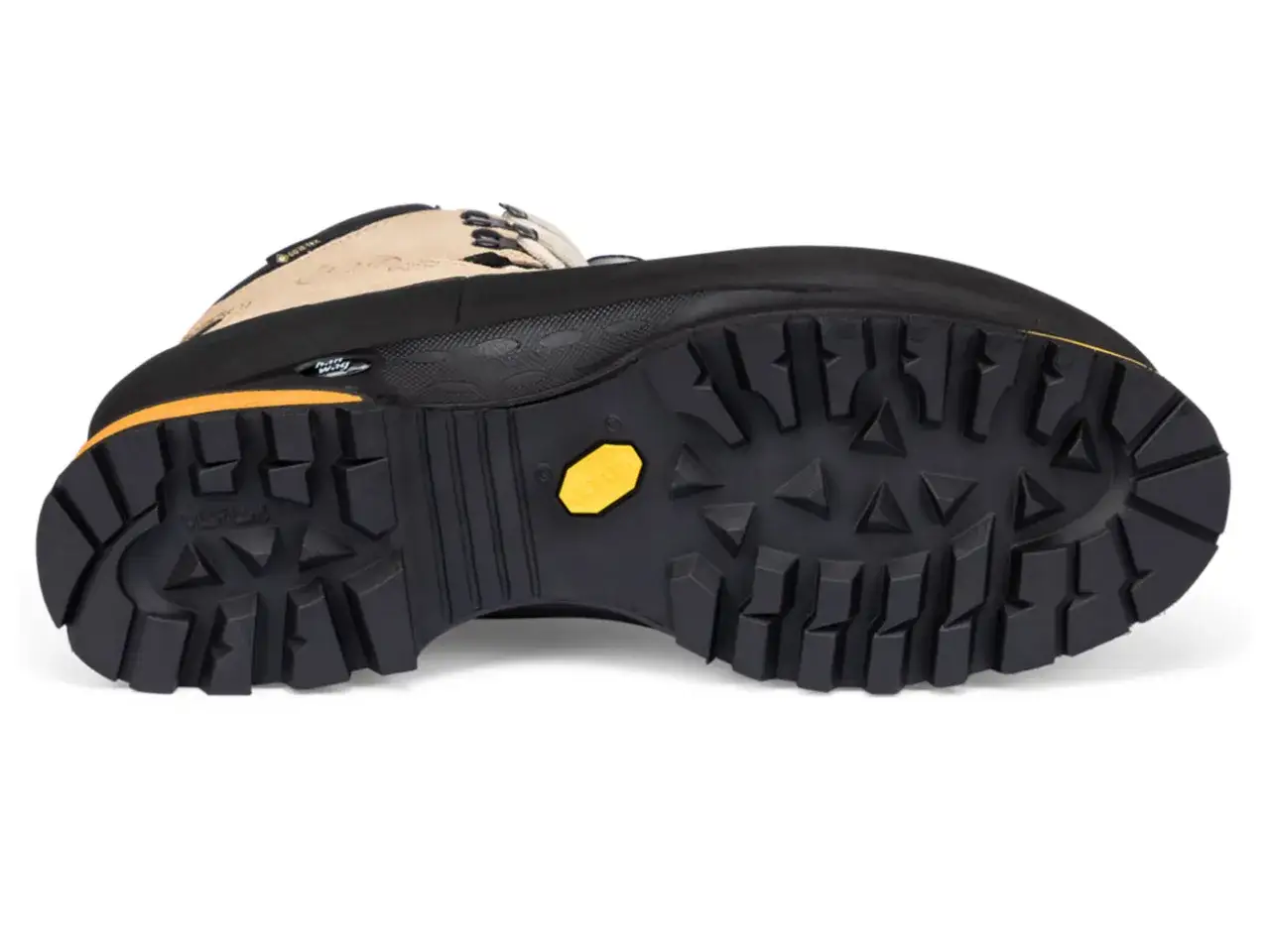
The shape of the tread is where sole design becomes visible. REI’s current hiking advice is straightforward: deeper lugs generally grip rocky or uneven ground better, while shallower lugs can make more sense on wet stone because they leave more rubber in contact with the surface. That trade-off is exactly why I look at the tread pattern before I look at the color or the marketing name.
For mixed hiking, I often think of 4 to 5 mm lugs as a practical middle ground. They are deep enough to bite into dirt and loose grit, but not so aggressive that they feel clumsy on harder trails. From there, the details matter:
- Deep, widely spaced lugs shed mud better and bite into soft ground more effectively.
- Tighter, shallower lugs usually feel smoother on hardpack, rock, and long road approaches.
- A heel brake adds stopping power on descents, which I appreciate on steep mountain trails.
- A climbing zone at the toe gives better precision on rock slabs, ledges, and scrambling moves.
- Multi-directional lugs help when the trail keeps changing direction, especially on uneven ground.
What I want is not the most aggressive tread on the shelf. I want the tread that fits the terrain I actually face. On muddy forest paths, deeper lugs matter. On polished limestone, wet granite, or slick alpine stone, I care more about rubber quality and contact area than about giant tread blocks. That leads directly to the next question: what kind of ground are you hiking on most often?
Match the sole to the ground you actually hike
The best sole for a dry ridge walk is not the best sole for a wet coastal path or a steep descent with a full pack. If I were buying one pair for general hiking in the U.S., I would think about my most common terrain first and my worst-case terrain second. That prevents me from overbuying tread I do not need or underbuying grip where it matters most.
| Terrain | What I would look for | What I would avoid |
|---|---|---|
| Mud and soft forest floors | Deep, widely spaced lugs and good mud-shedding channels | Tightly packed tread that cakes up fast |
| Wet limestone, granite, or polished rock | Stickier rubber and a flatter contact area under the forefoot | Overly chunky lugs that only touch on the tips |
| Loose scree and talus | Moderate lug depth, a firmer platform, and a helpful heel brake | Very soft soles that feel vague on unstable ground |
| Snow, slush, and shoulder-season trails | Deeper lugs, a supportive midsole, and enough stiffness to keep the boot planted | Shallow city-style tread |
| Mixed day hikes with changing surfaces | Balanced rubber, moderate lug depth, and a comfortable transition from heel to toe | Extreme tread that only excels in one condition |
This is where the context of the hike matters more than the label on the box. A trail in the Pacific Northwest, a limestone route in the mountains, and a dry desert path all reward different sole designs. If your walking is a blend of dirt, rock, and occasional mud, I usually prefer an all-rounder with moderate lugs rather than a specialist tread that overcommits to one surface. That compromise is not glamorous, but it works more often.
Why the midsole and shank matter more than most people think
People love talking about outsole grip, but the part that quietly affects comfort is often the midsole. REI’s current hiking guidance points to a simple split: EVA is lighter, softer, and usually less expensive, while TPU or PU is firmer and more durable, which is why it shows up more often in heavier-duty boots. I see that difference most clearly after several hours on trail, when a soft midsole has started to feel flattened and a firmer one is still holding shape.
The easiest way to think about it is this:
- EVA midsoles are lighter and feel cushier, which is useful for day hikes and lower loads.
- PU midsoles are denser and usually last longer, which helps on backpacking trips and rougher terrain.
- Dual-density midsoles use different firmness levels in different zones, usually to balance comfort and support.
- Shanks resist twisting, which matters when you step on uneven rock or carry a heavier pack.
- Rock plates help shield the foot from sharp edges, roots, and loose stone.
The technical term worth knowing is torsional stiffness, which simply means how much a boot resists twisting through the middle. More stiffness usually helps when you are scrambling, carrying weight, or hiking on broken ground; less stiffness can feel nicer on easy trails and during casual walking. That is the trade-off I keep in mind, because a boot that is too soft can feel tired and unstable, while one that is too stiff can feel overbuilt for simple hikes. From there, construction becomes the final piece of the puzzle.
Construction tells you whether the boot can keep working
A sole can be well designed and still be a poor long-term choice if the construction is weak. I always look at how the outsole is attached, because that tells me a lot about repairability and lifespan. Cemented soles are common on modern hiking boots and keep weight down, but they are often less repair-friendly than stitched or welted builds.- Cemented construction bonds the sole to the boot with adhesive, which keeps things light and simple.
- Stitched or welted construction is usually heavier, but it can be more durable and more likely to be resoled.
- Molded one-piece soles are often found in lighter or less expensive boots and are usually replaced as a unit.
- Reinforced rands and toe protection help the lower boot resist abrasion from rock and scree.
If you hike often enough to wear through soles before the upper fails, resolability becomes worth caring about. If you hike only a few times a year, that may matter less than fit, comfort, and traction on your usual terrain. I also pay attention to where the sole flexes: a boot that flexes too early under the arch can feel unstable, while one that never flexes can become tiring on longer walks. So construction is not a technical extra; it is part of how the boot performs over time.
The sole details I would pay for before the logo
When I strip away the branding, I usually come back to five questions. Does the rubber suit the surface I walk on most? Do the lugs clear mud or provide contact on rock? Is the midsole soft enough to be comfortable but firm enough to stay stable? Does the boot have a heel brake or climbing zone where I need it? And can the boot be repaired if I wear it enough?
That is the short version I would trust before any marketing claim. A great hiking sole is not the one with the loudest tread or the most familiar name; it is the one that matches your terrain, your pack weight, and the way you actually move. If you keep those three things in mind, you will choose better boots and avoid the common trap of buying for appearance instead of performance.