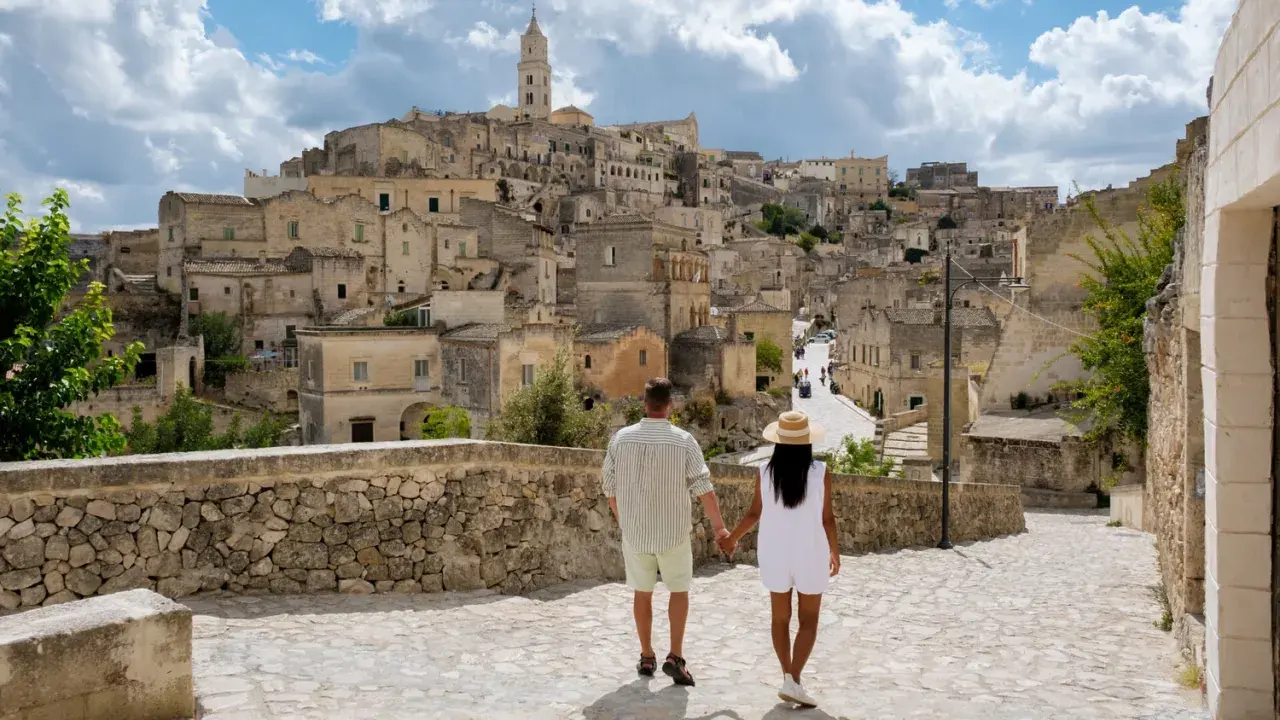
Puglia rewards travelers who choose a base that matches the trip they actually want: slow mornings in a whitewashed town, easy day trips to trulli villages, long beach afternoons, or a more urban food-and-culture stay. For most people, the answer to where to base yourself in Puglia depends on three things: whether you are driving, how many nights you have, and how much sea time you want. In this guide I break down the strongest home bases, the trade-offs behind each one, and the combinations that make the region feel easy instead of rushed.
The fastest way to narrow it down
- Ostuni or the Valle d'Itria is the safest all-round base for a first trip with a car.
- Monopoli is the most practical coastal base if you want trains, restaurants, and decent day-trip access.
- Lecce is the strongest choice if culture and food matter more than being right on the beach.
- Otranto and Gallipoli work best when the trip is clearly leaning toward the Salento and the sea.
- Bari makes sense as an arrival, departure, or transport base, but rarely as the most scenic long stay.
The short answer for most travelers
If I had to simplify the decision, I would break it into three questions: do you want countryside, coast, or city; are you driving; and how many nights do you actually have. Those three answers usually point to the right town faster than any long list of "best places."
| Base | Best for | Why it works | Main trade-off |
|---|---|---|---|
| Ostuni / Valle d'Itria | First-timers, road trips, trulli towns | Central enough for easy day trips and full of masserie, olive groves, and pretty inland villages | You will usually want a car, and the beach is not right outside your door |
| Monopoli | Coast plus train access | Good rail links, lively old town, easy access to Polignano, Ostuni, and Bari | Summer crowds and beaches that are smaller than they look on a map |
| Lecce | Culture, food, car-free travel | Best urban base in southern Puglia, with enough atmosphere to stay several nights | You are inland, so beach days take planning |
| Otranto | Scenery, sea views, east-coast Salento | Pretty, relaxed, and well placed for the southern coast | Less central for wider Puglia and usually pricier in peak season |
| Gallipoli | Sandy beaches, summer energy | Best if beach access is the priority and you want a stronger seaside feel | Can feel seasonal and busier in high summer |
| Bari | Arrival, departure, city stopovers | Main rail and transport hub with strong food and city life | Not the most scenic long-stay base if you want a relaxed scenic trip |
That is the practical map I use. Once you know which column matters most, the rest of the itinerary starts to fall into place.
How many bases you should plan
The most common mistake is changing towns too often. Puglia looks compact on a map, but once you add rural roads, summer traffic, and parking, a "quick hop" can eat half a day. I usually think in nights, not in wish lists.
| Trip length | What I would do | Why |
|---|---|---|
| 3-4 nights | Stay in one base only | There is not enough time to spend half the trip repacking and checking in |
| 5-7 nights | Use two bases | Enough time to split between countryside and coast without turning the trip into a relay race |
| 8-10 nights | Two bases, or three only if you enjoy moving around | You can add a Salento stop or a more relaxed coastal night without rushing the rest |
| 10+ nights | Mix inland, coast, and a city stop | This is when a slower loop really starts to work |
- If you have a car, two bases usually feel better than one unless the trip is very short.
- If you do not have a car, stay more central to the rail line and keep the plan simple.
- If beaches are the priority, do not waste nights inland unless you also want trulli towns and winery stops.
My rule is simple: move less when the trip is short, and only add a second or third base when it clearly solves a problem. That leads naturally to the places that actually work best.
Why I usually start with Ostuni or the Valle d'Itria
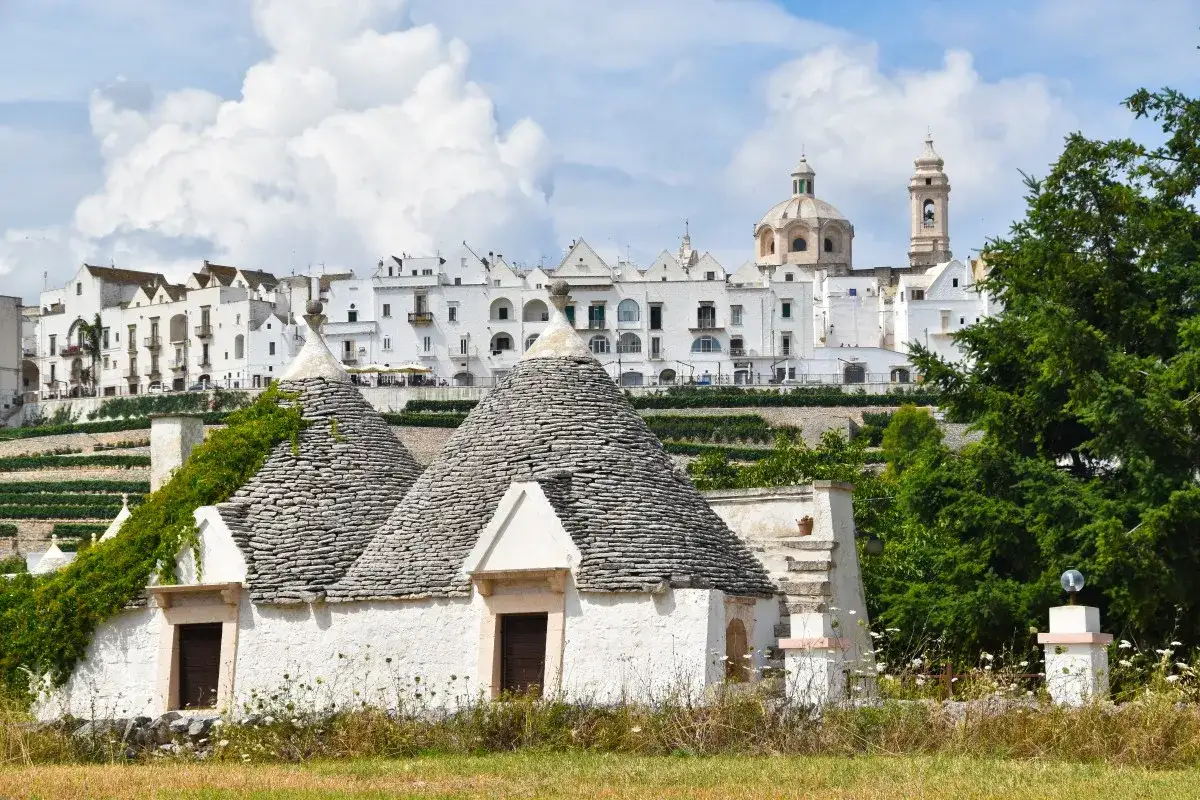
For a first trip with a car, this is the most balanced base. You can reach Alberobello, Locorotondo, Martina Franca, Cisternino, Monopoli, and Polignano a Mare in roughly 20-45 minutes, which means the driving stays manageable even if you are not trying to race around the region. The area also gives you the classic Puglia look: stone lanes, olive groves, trulli, and masserie.A masseria, if you have not stayed in one before, is a converted farmhouse hotel. In Puglia, that can be the sweet spot between comfort and atmosphere.
- Choose it if you want one base that works for sightseeing, food, and relaxed countryside stays.
- Choose it if you like waking up somewhere beautiful but not overly busy.
- Avoid it if you want to step out of your hotel and be on a proper sandy beach immediately.
I think Ostuni is slightly stronger than the smaller Valle d'Itria towns because it feels more established as a base and a little less like a place you are simply passing through. The compromise is straightforward: you gain convenience, but you give up the feeling of being right on the coast. That is why it works best when you are comfortable using the car as part of the trip, not as an inconvenience to hide from. Once that balance is clear, the coastal options become much easier to judge.
When the coast should be your base instead
Monopoli is the coastal base I trust most for practical travel. It has the strongest mix of character, rail access, and day-trip convenience, so it works well for travelers who want a seaside atmosphere without becoming dependent on a rental car. Polignano a Mare is more dramatic, but it often feels better as a short stay or a day trip because it is smaller and more exposed to peak-season crowds.
| Town | What it is good for | What to watch out for |
|---|---|---|
| Monopoli | Train-friendly base, restaurants, waterfront evenings, easy access to nearby towns | Beaches are compact and can feel busy in high season |
| Polignano a Mare | Cliff views, iconic scenery, short romantic stays | Smaller, more crowded, and less practical than Monopoli for a longer base |
Monopoli's train station is a real advantage if you are not driving, because it keeps the Adriatic side of Puglia open without making you dependent on taxis. In simple terms, Monopoli feels like a base; Polignano feels like a postcard. If I had to choose one coastal home base for a mixed trip, I would usually take Monopoli and use Polignano as an easy day trip.
That is the right answer when you want coast plus convenience. If your priorities are more southern and beach-led, the Salento deserves its own look.
Why Lecce, Otranto, and Gallipoli solve different problems
In the Salento, I think of Lecce as the culture base, Otranto as the scenic coast base, and Gallipoli as the beach base. They are close enough to connect in one trip, but they are not interchangeable.
| Town | Best for | What makes it stand out | Main limitation |
|---|---|---|---|
| Lecce | Architecture, restaurants, car-free or low-drive trips | It has the strongest city feel in southern Puglia and enough depth to stay several nights | You are inland, so beaches are a drive rather than a walk |
| Otranto | Sea views, relaxed coastal days, pretty setting | It is one of the easiest places to combine old-town charm with time by the water | It is less central and usually not the cheapest option |
| Gallipoli | Sandy beaches, summer energy, beach clubs | Better if the trip is built around swimming and a more obvious seaside atmosphere | Can feel more seasonal and more crowded in peak summer |
If you only want one Salento base and you care more about food, walking, and atmosphere than about immediate beach access, I would still choose Lecce. If your version of a good day is sea first and city second, Otranto is the better compromise. And if the beach is the point, not the bonus, Gallipoli is the one that changes the trip the most. That leaves one more town that matters mainly because it solves the logistics problem.
When Bari is the right choice
Bari is not the prettiest answer, but it is often the smartest logistical one. The city is the region's transport anchor, and if you are arriving late, leaving early, or traveling without a car, that matters more than romantic scenery. I would use Bari when the trip is anchored by the rail line, when I want a real city before or after countryside time, or when I only need one night at the start of a longer itinerary.
- Use Bari if you want an easy arrival base with excellent train connections.
- Use Bari if you like a bigger-city feel, markets, and stronger urban energy.
- Do not use Bari if your main goal is a scenic, slow, beach-leaning stay.
I would not ignore Bari entirely, because it is useful and genuinely interesting. I just would not make it the emotional center of a Puglia trip unless the practical side of the journey clearly calls for it. Once that is decided, the last step is choosing the details that make one base work better than another.
The small decisions that make a base work
The town name matters, but the details matter more than most travelers expect. A good base can feel mediocre if you choose the wrong neighborhood, overlook parking, or expect public transport to cover every day trip for you. Puglia is generous, but it rewards a little planning.
- Pick parking carefully if you are driving. In historic centers, a "beautiful" location can become annoying fast if you have to haul bags uphill or circle for a space.
- Choose a train-friendly town only if you will use the train. Monopoli and Bari make sense for that; countryside stays do not.
- Do not overestimate buses. Outside the main rail spine, service can be limited enough that a car changes the whole experience.
- Book coastal bases earlier than inland ones if you are traveling in summer. The closer you get to the sea, the faster the good rooms disappear.
- Use a beach town for beach days, not as a universal solution. If you want trulli villages, wineries, and olive groves too, plan for at least one inland stop.
If I were planning a first Puglia trip, I would choose Ostuni as the anchor, then add Monopoli for easier coast access or Lecce for a stronger food-and-city finish. That combination keeps the region readable without turning the holiday into a moving-day exercise.