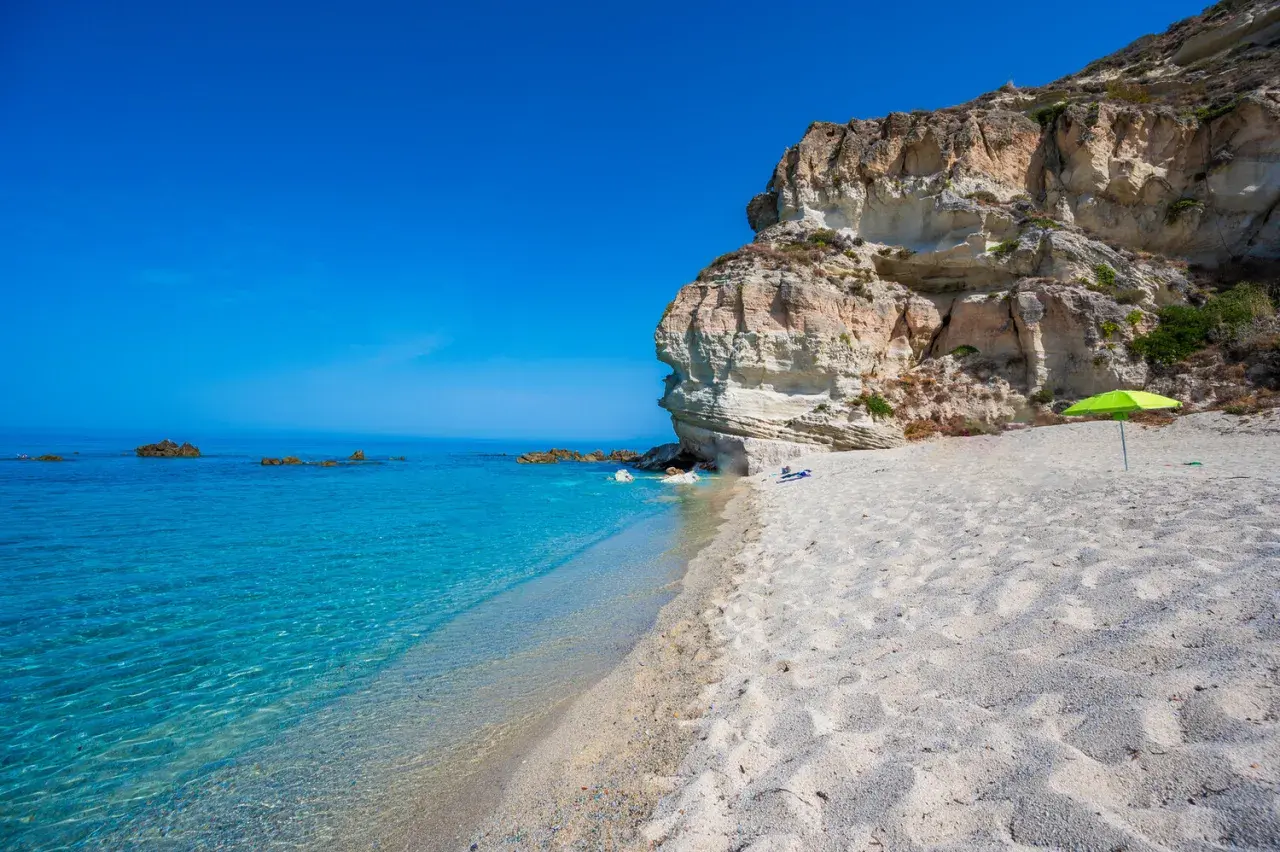
Calabria beaches are not a single kind of shoreline, and that is exactly why the region is worth planning carefully. One coast gives you cliff-backed coves, clear water, and dramatic views; the other leans into long sandy stretches, easier swimming, and quieter beach towns. In this guide, I focus on what actually helps when you are choosing where to go: which coast suits which style of trip, which beaches deserve a place on a first itinerary, and what timing and logistics matter most.
What matters most before choosing a beach
- Calabria’s coast is split between the Tyrrhenian and Ionian seas, and the difference changes the whole trip.
- If you want scenery and coves, the west side usually wins; if you want broader sand and easier beach days, the east side is often better.
- For a first visit, I would narrow the trip to one coast and one base instead of trying to cover everything.
- May, June, September, and early October usually give the best balance of weather, water, and crowd levels.
- Tropea, Capo Vaticano, Scilla, Praia a Mare, Soverato, and Roccella Ionica are the names I would shortlist first.
Why Calabria’s coast feels bigger than one beach town
What makes the region interesting is not just the sea itself, but how quickly the landscape changes. Calabria stretches between two seas, and the shoreline shifts from rocky promontories to long sandy bays, often with mountains close enough to shape the wind, the light, and even the water color. In practical terms, that means you are not choosing “a beach” so much as choosing a beach style.
I find that distinction useful because travelers often arrive expecting a uniform resort coast. Calabria is better than that. Some areas feel polished and easy, others are wild and low-key, and some beaches reward effort only if you are willing to follow stairs, narrow roads, or a boat ride. A good pair of water shoes and a flexible plan matter more here than they would on a flatter, more built-up coast.
The upside is obvious: you get variety without leaving the region. The trade-off is also obvious: the prettiest spot is not always the easiest one to reach, so it helps to decide early whether your priority is comfort, scenery, snorkeling, or a long sandy shoreline. That choice leads naturally to the most important split in the region, which is the coast itself.
Tyrrhenian or Ionian coast and what each side is best for
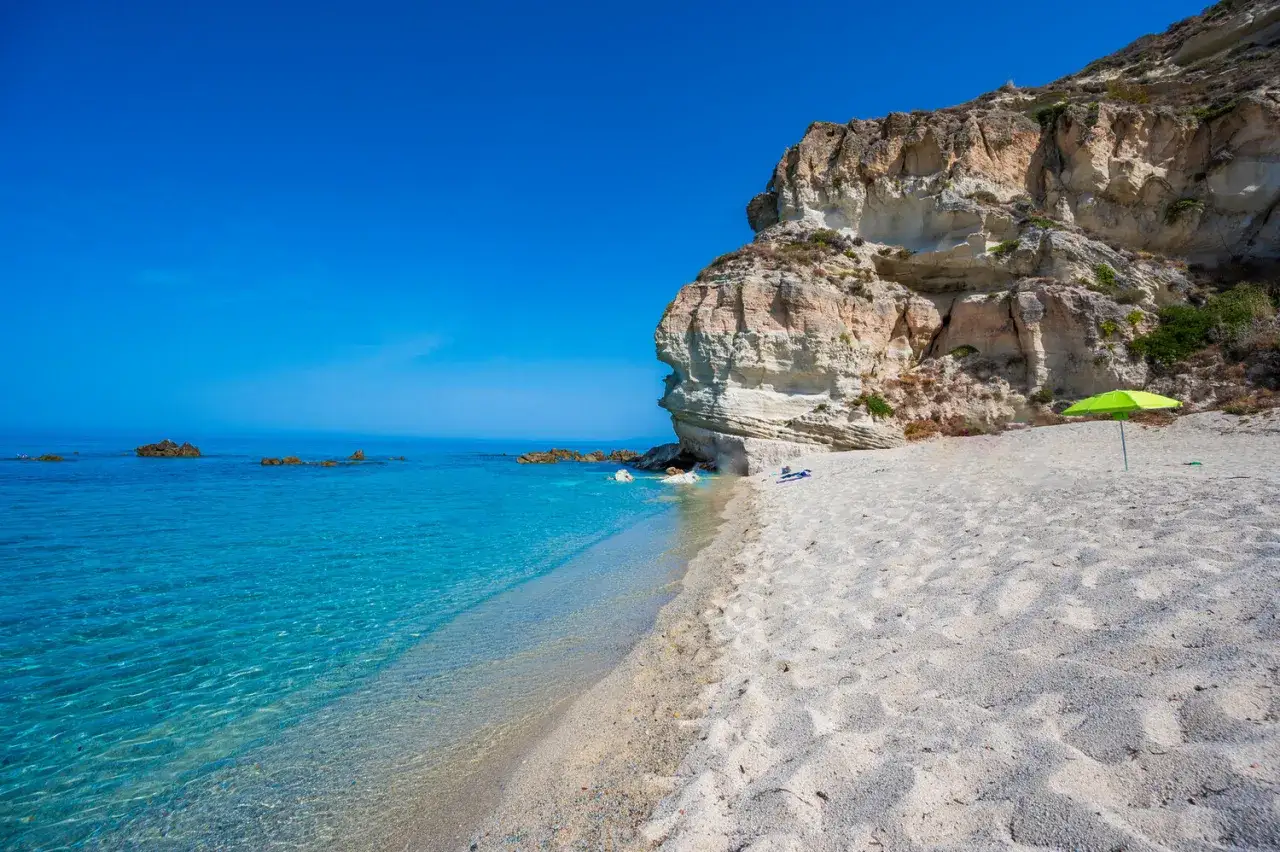
If I had to simplify Calabria into one planning decision, I would start here. The Tyrrhenian coast is the one I choose for drama: promontories, coves, turquoise water, and the kind of beaches that look better from above than from a parking lot. The Ionian coast is where I would go for longer sandy stretches, easier swimming, and a more straightforward beach day.
| Coast | Best for | What it feels like | Main trade-off |
|---|---|---|---|
| Tyrrhenian side | Scenery, coves, snorkeling, cliff views | More dramatic, more varied, often more photogenic | Access can be tighter, with steps, narrow roads, and limited parking |
| Ionian side | Longer sandy beaches, family trips, relaxed swimming | Broader, calmer, and easier to use for full beach days | Less “wow” from a cliff-top viewpoint, even when the water is excellent |
That is why I usually tell people to stop chasing the idea of a single “best” beach. If your trip is about scenery and variety, the west side around the Costa degli Dei, Costa Viola, and Riviera dei Cedri is usually the stronger fit. If your trip is about unhurried beach time with easier logistics, the east side around Soverato, Roccella Ionica, and the Costa dei Gelsomini is easier to live with. Once you accept that split, the rest of the trip becomes much easier to plan.
The beaches I would shortlist first
If this were my trip, these are the places I would put on the first pass. They are not all the same type of beach, and that is the point. A good Calabria itinerary usually mixes one iconic stop, one practical swimming beach, and one place that feels a little more hidden.
| Beach or area | Why go | What to expect |
|---|---|---|
| Tropea | The classic first stop if you want a postcard setting with real swimming appeal | Sandy stretches below a cliff-top town, clear water, and a busy feel in peak season |
| Grotticelle, Capo Vaticano | One of the best choices for snorkeling and cove-hopping | Small bays, very clear water, and a setting that feels more adventurous than resort-like |
| Arcomagno, San Nicola Arcella | The beach I would choose for scenery and a short, memorable outing | A compact cove under a natural rock arch, with limited space and access that rewards an early start |
| Marina Grande, Scilla | The best mix of beach atmosphere and village character on the Strait side | A small but striking beach under the castle, with more charm than size |
| Tonnara di Palmi | For a beach that feels different from the usual sandy resort strip | Rock-framed water, a dramatic setting, and a strong sense of place |
| Praia a Mare | My strongest practical pick for families and longer stays | Gentler water, a wider shoreline, and easier day-to-day logistics |
| Soverato | The most straightforward Ionian option if you want services and an easy base | A broad beach, promenade life, and a very usable all-round setup |
| Roccella Ionica | For a calmer, roomier beach town that does not feel overworked | A more relaxed pace, good sand, and a less pressured atmosphere |
The pattern is simple: the more iconic the cove, the more planning it tends to demand. Tropea and Capo Vaticano are the best-known names for a reason, but Praia a Mare and Soverato can be better if your idea of a good beach day is easy swimming, services nearby, and less friction. If I were choosing only three stops, I would combine one headline place like Tropea, one scenic stop like Arcomagno or Scilla, and one easy beach town on the Ionian side.
How to plan the trip without wasting time in transit
For a beach-focused trip, Calabria works best when you think like a road-tripper, even if you are not covering huge distances. A car gives you freedom to move between coves and town beaches, and it becomes even more useful when you want to avoid building the whole holiday around one crowded strip of sand. You can still do parts of the region by train or bus, but the smaller coves usually reward private transport or a boat connection.
My practical rule is to pick one base and stay there long enough to settle in. In the north and west, that usually means places near Praia a Mare, San Nicola Arcella, Tropea, or Ricadi. On the south-western end, Scilla and Reggio Calabria make sense. On the Ionian side, Soverato and Roccella Ionica are easier anchors. If you keep moving every night, you will spend too much time checking in and too little time actually swimming.
Airport choice also matters. Lamezia Terme is the most flexible gateway for the Tyrrhenian coast, Reggio Calabria is the natural choice for the Strait and the far south, and Crotone can work well for the Ionian side. Once you land, the region opens up quickly, but beach parking can still be tight in high season, especially around the most photographed coves. I would not leave this to chance in August.
Two small details save a lot of frustration: arrive early when you want a cove with limited space, and bring cash or small denominations for parking and beach clubs. Those are the kinds of practical details that do not sound exciting, but they change how smooth the day feels. That becomes even more important once you decide when to go.
When to go for warm water, fewer crowds, and better light
For a 2026 trip, I would think in three windows. May and June are ideal if you want good weather, manageable crowds, and enough energy left for walking around coastal towns. July and August give you the warmest sea and the fullest beach season, but they also bring the biggest crowds, the strongest heat, and the least forgiving parking. September and early October are the sweet spot if you want a better balance of warm water, calmer towns, and a more relaxed feel.
If your priority is pure beach time, summer still makes sense. If your priority is enjoying the coastline without feeling squeezed by heat and traffic, shoulder season is better. I usually prefer September because the sea is still inviting, the light is softer, and the atmosphere feels more open. For many travelers, that is the moment when the region stops feeling like a destination and starts feeling like a place you can actually inhabit for a week.
One thing people underestimate is wind exposure. A beach that looks perfect in photos can feel completely different on a breezy afternoon, while a sheltered cove can remain calm and comfortable. That is why I would never choose only by color or fame. A good beach day in Calabria depends on the month, the wind, and how protected the shoreline is.
How I would match each beach to the trip you actually want
The easiest way to use this region well is to match the beach to the kind of trip you want, not just to the nicest image on a screen. If you want a family trip, I would start with Praia a Mare, Soverato, or Roccella Ionica because they are easier to use for a full day and usually less demanding for children and grandparents. If you want snorkeling and clearer water, Grotticelle and the Capo Vaticano area make more sense.
If you are after scenery first, Tropea, Scilla, Arcomagno, and Tonnara di Palmi are the places that usually stay in your memory after the trip. If you want less crowded beach time, I would look harder at the Ionian coast and avoid trying to hit the headline names at peak noon in August. And if your trip needs to be easy, then a beach with services nearby matters more than whether it has the strongest reputation online.
That is the real decision behind most coast trips in Calabria: do you want comfort, drama, or space? You can get all three over the course of a longer holiday, but usually not all at once on the same stretch of sand. The smarter approach is to choose your priority first and let the beach selection follow from that.
The shortest useful shortlist for a first trip to Calabria
If I were building a first Calabria itinerary from scratch, I would keep it simple: Tropea, Capo Vaticano, and one easier beach base such as Soverato or Praia a Mare. That mix gives you the classic Tyrrhenian scenery, a genuinely good swimming beach, and one place where the logistics are less demanding. It is enough to understand the coastline without turning the holiday into a race between towns.
For a slightly richer route, add Scilla if you want atmosphere and Arcomagno if you want a beach that feels more like a discovery than a convenience. That combination gives you a better read on the region than trying to “do everything.” In Calabria, the coast is strongest when you let it slow you down a little, not when you rush through it.
My final advice is simple: pick one coast, stay close to the water, and leave room for one or two beaches that you did not choose purely for convenience. That balance is what makes a Calabria trip feel memorable rather than merely busy.