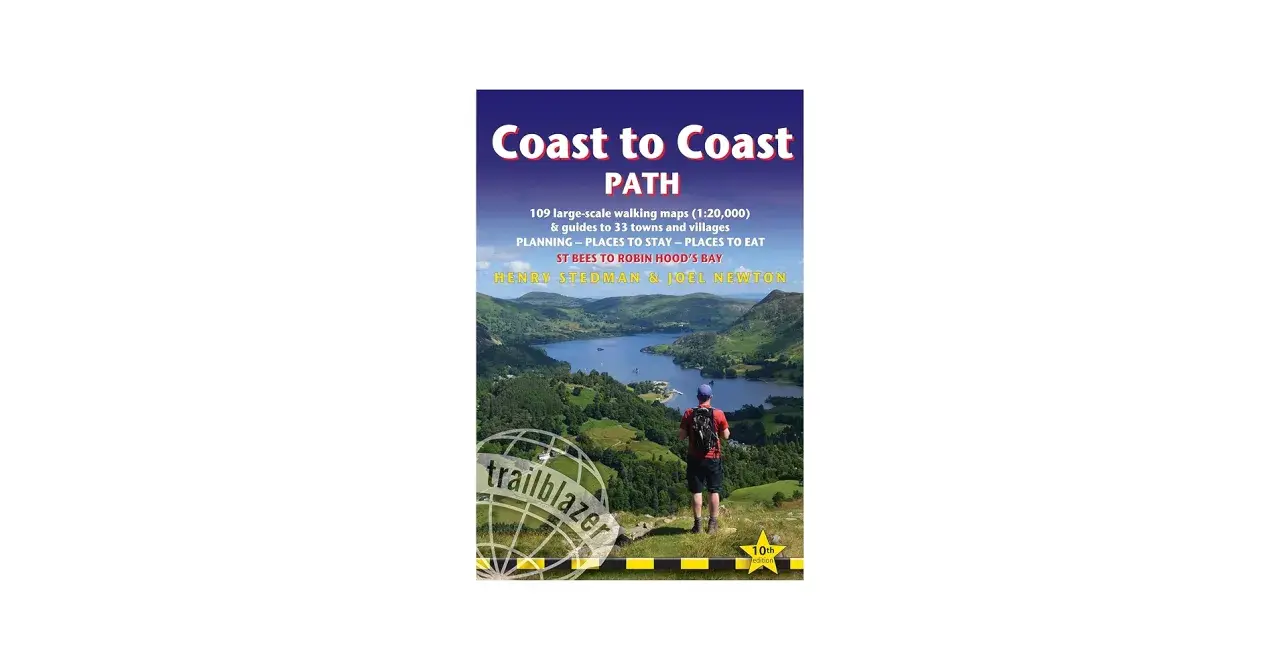
A C2C hike is one of England’s most rewarding long-distance crossings: sea to sea, three national parks, and a route that changes character every few days. In 2026, it also carries fresh National Trail status, which matters for maintenance, signage, and how walkers plan the trip. In this guide I focus on the practical side of the walk: what it is, how hard it feels, how many days to allow, what each section demands, and what I would book before setting off.
The route is 190 miles long, but your real choices are pace and support
- The Coast to Coast Path runs from St Bees on the Irish Sea to Robin Hood’s Bay on the North Sea.
- It is now an official National Trail, launched on 26 March 2026, with upgraded signage and path work in key places.
- For most walkers, the sweet spot is 14 to 16 days; shorter trips are possible but feel much tighter.
- The Lake District is the hardest section, the Yorkshire Dales are deceptively demanding, and the North York Moors are where wind and fatigue often combine.
- If you want a smooth self-guided trip, book accommodation and baggage transfer early, especially for May, June, and early September.
What the Coast to Coast crossing actually is now
This is not a single-purpose mountain path or a neat coast path with one repeating character. It is a long, stitched-together crossing through northern England that moves from coastal cliffs to farmland, fells, dales, and open moorland. GOV.UK says the route officially opened as England’s newest National Trail on 26 March 2026 after years of upgrade work, and that official status matters because it brings clearer waymarking, better surfacing in some sections, and a more stable framework for planning.
The classic line still runs from St Bees to Robin Hood’s Bay, covering 190 miles (306 km). Most walkers still go west to east, not because the other direction is wrong, but because this direction preserves the traditional finish and gives the journey a clean sense of progression. It is also the direction most route notes and trip plans are built around, which makes logistics easier. The route is now better supported than it used to be, but it still feels like a proper crossing rather than a polished promenade, and that balance is part of its appeal.
What I like about this trail is that it rewards patience. The mileage sounds straightforward until the ground starts changing under you, and that leads directly to the more important question: how hard does it actually feel day to day?
How hard the walk really is
I would describe the Coast to Coast as moderate to strenuous, not because every day is brutal, but because the effort compounds. One hard hill is manageable; a week of hills, descents, wet ground, and long mileage is where people start to feel the route. A realistic walking day is often in the range of 13 to 16 miles and can take up to 10 hours when the terrain is rough or the weather turns. That is why fitness alone is not the whole story. Downhill fatigue, muddy footing, and poor visibility can punish even strong walkers.
The route also asks for repeated climbing. Depending on how you break it up, you can easily end up with thousands of metres of ascent across the whole trip. Kidsty Pike, the highest point on the classic line, sits at about 780 metres, but the real challenge is the cumulative up-and-down rather than one summit. If you train only for distance and ignore hills, the Lake District will expose that quickly.
- If you can comfortably walk 10 to 12 miles on consecutive days with a daypack, you are in a sensible starting zone.
- If steep descents bother your knees, trekking poles are worth the weight.
- If your pack creeps above 10 kg, I would review what you are carrying.
- If you have only ever done single-day hikes, I would add back-to-back training walks before committing.
This is the kind of walk where steady pacing matters more than heroics. Once you accept that, the next decision becomes much easier: how many days should you actually give it?
How many days I would allow for the route
The classic guidebook structure is still a useful reference, but I would not force your trip to fit a rigid template. Your best itinerary depends on fitness, weather tolerance, budget, and whether you want the walk to feel like a challenge or a holiday with a challenge inside it. My default advice for first-timers is to give the route at least 14 to 16 days unless you already know you can handle long days back to back.
| Itinerary length | Typical daily distance | Best for | Main tradeoff |
|---|---|---|---|
| 12 to 13 days | 14 to 17 miles | Fit walkers with limited time | Long days, less margin for bad weather |
| 14 to 15 days | 12 to 15 miles | Most experienced recreational walkers | Still demands good booking discipline |
| 16 to 18 days | 9 to 12 miles | First-timers, slower walkers, scenery-first trips | Higher total cost because of extra nights |
If I were planning this for myself, I would aim for the 14- or 15-day range. That keeps the walk challenging without turning it into a race, and it gives you a little breathing room if one day needs to be shortened because of weather or fatigue. The important thing is not just mileage per day, but how much room you leave for the route’s different personalities, which is where the landscape section becomes more than just scenery.
What each part of the trail asks of you
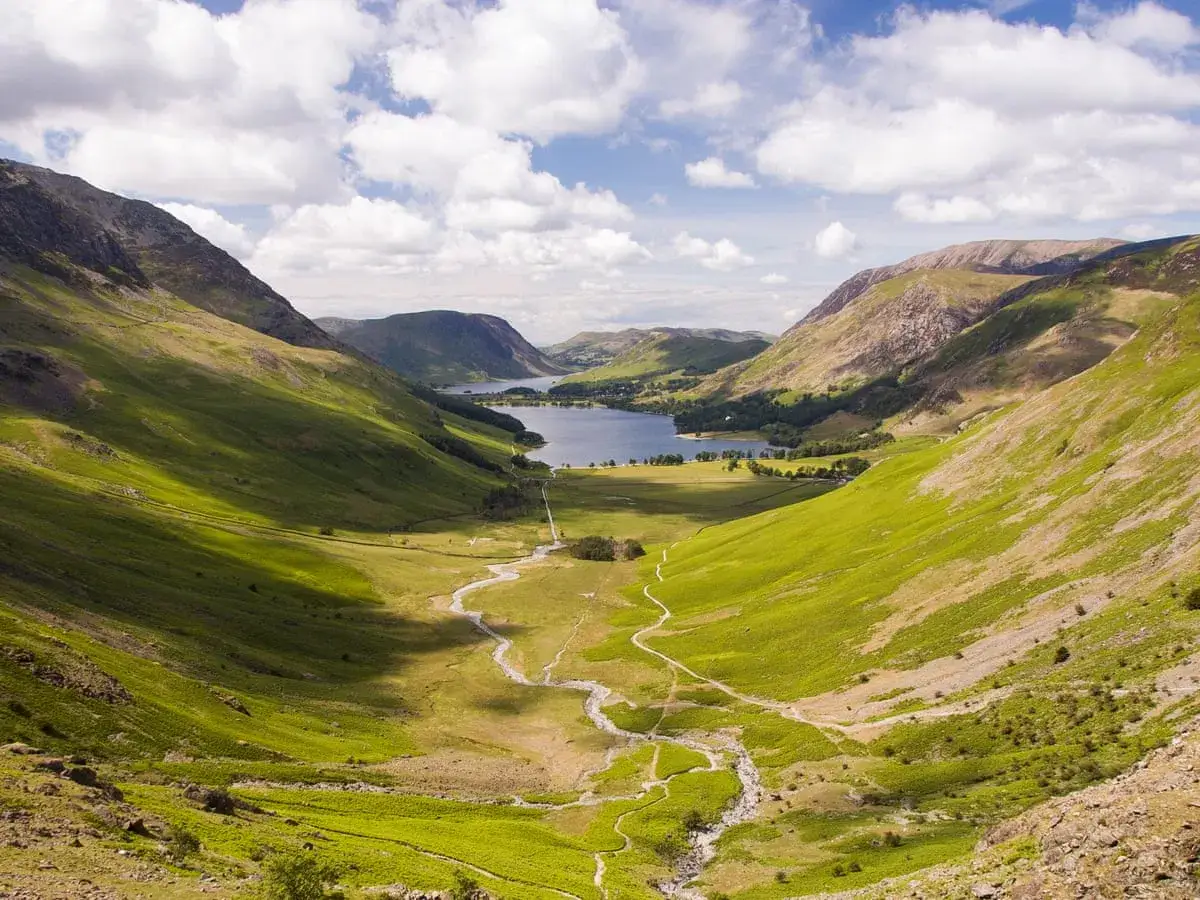
The route changes more than most people expect. That is part of its charm, but it is also why a single day-mileage figure can be misleading. A 12-mile day in the Lake District is not the same as 12 miles on gentler ground later in the walk. I think of the trail as three distinct tests, each with its own rhythm.
Lake District
This is the most demanding and technical section. The paths can be rocky, steep, and wet, and the weather changes fast enough to turn a pleasant day into a grinding one. Even with improved National Trail waymarking, you still need to pay attention here. The climbs around Ennerdale, Borrowdale, Grasmere, Patterdale, and Kidsty Pike ask for careful footing more than speed. It is also the section where I would most strongly recommend poles, because the descents can be harder on the body than the climbs.
Yorkshire Dales
The Dales feel more open and rhythmic, but they are not easy in a relaxed sense. The ups and downs are smaller than in the Lakes, yet they arrive often enough to keep your legs honest. The landscape here can trick walkers into overconfidence: dry stone walls, sweeping valleys, and attractive villages create the impression of gentler terrain, but the cumulative effort still builds. This is often where a walker either settles into a strong cruising pace or discovers they have already spent too much energy early on.
North York Moors
This final stretch is less about big climbs and more about exposure. The ground opens up, the wind becomes a real factor, and tired legs begin to notice every change in gradient. The scenery is expansive and memorable, which helps, but the moors can feel surprisingly serious when the weather is poor. Reaching Robin Hood’s Bay after that kind of day has a different emotional weight because the final approach often happens when you are already depleted. That is exactly why the finish feels earned rather than staged.
Once you understand those landscape shifts, the practical planning side becomes much clearer: the better you match pace, support, and season to the route, the less friction you create for yourself.
What to book, pack, and budget before you leave
This is the section that usually decides whether a Coast to Coast trip feels smooth or improvised. Natural England says more than 6,000 people complete the full route each year, and most use local food and accommodation along the way. That popularity is good for villages on the route, but it also means the best rooms go first. If you want a self-guided walk, I would not leave bookings to the last minute.
Booking strategy
- Book accommodation several months ahead if you plan to walk in May, June, or early September.
- Reserve baggage transfer before you lock in your itinerary, especially if you want to keep your pack light.
- Allow at least one flexible day in the middle if your schedule can handle it.
- Check transport at both ends early, because the start and finish are scenic but not especially convenient.
What I would pack
- A fully waterproof jacket and trousers, not just a water-resistant shell.
- Two pairs of good socks in rotation, plus blister treatment.
- Trekking poles if you are not already certain you never need them.
- Offline maps or a paper map backup, even if you use phone navigation.
- A power bank, because long days drain batteries faster than expected.
- One spare base layer and a warm mid-layer, even in shoulder season.
Read Also: Bushwhacking Guide - Master Off-Trail Hiking Safely
A realistic budget
For a comfortable self-guided trip, I would think in terms of a daily on-trail budget rather than a single headline number. The ranges below are realistic enough to plan with, even though the exact cost will move with season and room type.
| Item | Practical budget |
|---|---|
| Bed and breakfast or pub room | £70 to £140 per night in shoulder season, more in peak weeks |
| Baggage transfer | About £17 to £45 per move, depending on provider and whether it is bag-only or passenger transfer |
| Food and drinks | £15 to £35 per day |
| Maps, snacks, and small extras | £20 to £60 for the trip |
For a B&B-based self-guided walk, I would budget roughly £100 to £200 per person per day before getting to and from England. Guided trips cost more, but they remove a lot of friction; self-supported backpacking costs less in cash but more in effort and weight. That tradeoff is exactly why the final planning choices matter so much.
What I would lock in before the first mile
- Choose your direction first, and stick with west to east unless you have a good reason to reverse it.
- Pick the pace that matches your legs, not the pace that sounds impressive on paper.
- Decide early whether this is a hotel-and-bag-transfer walk or a more stripped-down backpacking trip.
- Build one buffer day into the plan if your calendar allows it.
- Treat the finish at Robin Hood’s Bay as part of the experience, not just a checkpoint.
If I were arranging this walk for a first-time long-distance hiker, I would choose 14 to 16 days, book the beds early, and keep the pack light enough that the hills never feel like a gear problem. That combination gives the route room to be what it is: a real crossing, full of variety, with enough challenge to feel memorable and enough structure to stay enjoyable all the way to the North Sea.