The key facts to know before you choose the route
- The name is used for two different walks on Madeira, and they should not be treated as the same hike.
- The official north-coast PR 7 route is currently listed as closed by the island’s trail board.
- The better-known Ponta do Sol loop is the version most visitors actually hike, and it is open on major trail guides.
- Expect about 8.5 km and roughly 3 hours for the loop, or 10.5 km and about 3.5 hours for the official PR route.
- This is not a technical hike, but narrow ledges, wet concrete, and a tunnel mean footwear and timing matter.
Why the name causes so much confusion
On Madeira, a levada is an irrigation channel, so the name tells you something about the island’s water system before it tells you anything about the trail itself. That is why people keep mixing up two separate walks with similar naming: the older north-coast route and the popular south-side loop around Ponta do Sol. Older blog posts, tour listings, and map apps often blur them together, which is how hikers end up planning the wrong walk.The easiest way to think about it is this: one version is a formal classified trail on the north coast, while the other is the scenic loop most travelers are actually after. If you keep that distinction clear, the rest of the planning becomes much simpler, and the route comparison starts to make sense.
Route snapshot and current status
| Route | Status in 2026 | Distance | Typical time | Access note | Why it matters |
|---|---|---|---|---|---|
| North-coast PR 7 | Closed | 10.5 km | About 3.5 hours | Official classified trail, standard adult fee is €4.50 when open | Historic water mills, longer linear walk, older route listing |
| Ponta do Sol loop | Open | About 8.5 km circular | Around 3 hours | Commonly listed as free to walk | Waterfall, tunnel, narrow ledges, the version most hikers mean |
The numbers vary slightly from guide to guide because small route variations, parking choices, and how long you stop for photos all change the final total. For a 2026 trip, I would plan around the south-side loop first and treat the north-coast PR route as a trail to verify rather than a spontaneous day-out.
That distinction matters because the walking experience is very different from one version to the other, which is where the real planning begins.
What the walk feels like on the ground
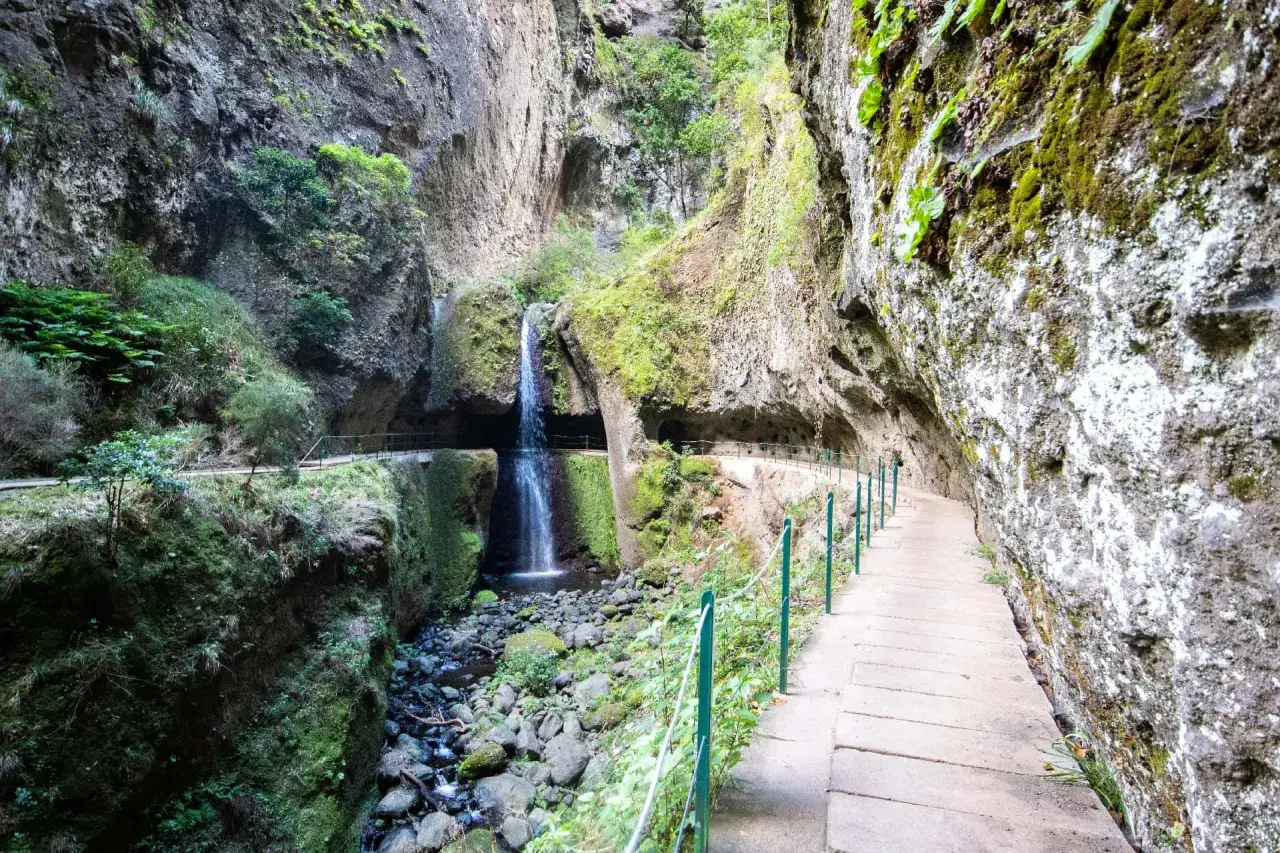
The south-side loop feels like a levada walk should feel: narrow, green, and constantly changing. You move beside the water channel on concrete and dirt sections, then the landscape opens into valley views, terraces, and small waterfall moments that break up the rhythm. It is scenic without being overpowering, which is exactly why it works so well for a half-day hike.
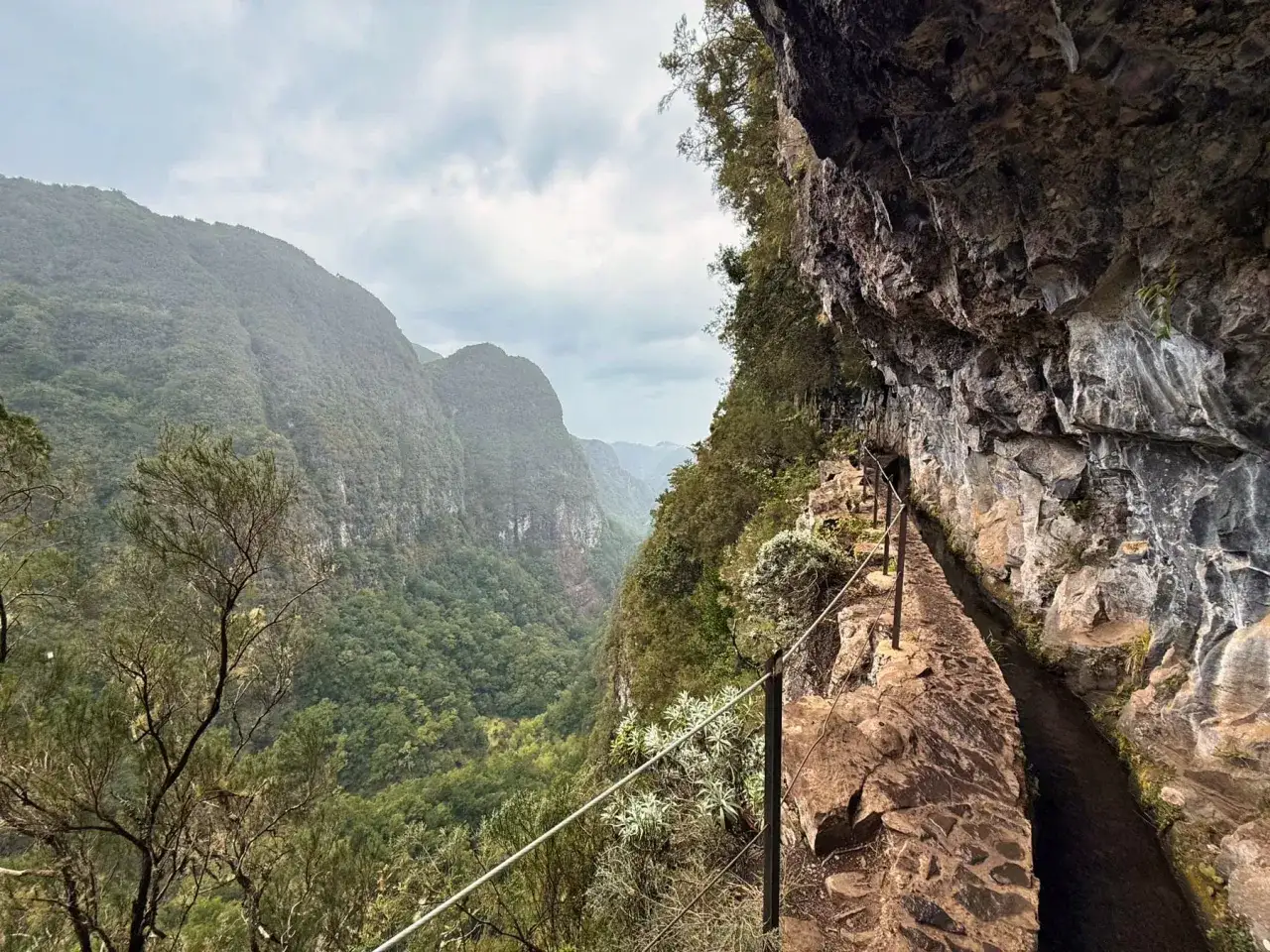
What catches many first-time hikers off guard is not the distance, but the geometry of the path. Some sections are tucked against the hillside with drop-offs beside them, and a few areas feel exposed even though the route is not technically difficult. By exposure, I mean the presence of steep drop-offs, not any kind of climbing.
- The waterfall section is the visual highlight and the main reason many people choose this walk over other levada routes.
- The tunnel adds variety, but it also means a phone light is not a bad backup.
- The narrowest parts reward calm pacing, especially when the ground is damp or there are other hikers coming the opposite way.
I like this route because it gives you a lot of Madeira in a compact package: water engineering, mountain scenery, and a bit of drama without turning into a full alpine day. The next question is whether that balance makes it easy or merely manageable.
How hard it really is
On paper, the loop is not a monster hike. Roughly 160 m of ascent is modest, and the average walking time is only around three hours. In practice, though, the trail feels more serious than the elevation gain suggests because your attention is constantly engaged by narrow ledges, uneven surfaces, and occasional damp patches.
I would call it a good moderate walk for hikers who are comfortable on exposed paths and want scenery without a huge climb. I would not choose it as a first ever trail if you dislike heights, have unstable ankles, or want a wide path that you can walk on without thinking about every foot placement.
- Good fit if you want a scenic half-day hike with variety.
- Less suitable if you have strong vertigo or want fully protected paths.
- Better in dry weather, because wet concrete and slick edges change the feel of the trail fast.
That is why route timing and gear matter more here than on a flat coastal walk, which is the practical side I would plan next.
How I would plan it in 2026
If I were doing this trail now, I would start by confirming the exact route and the live status on the same morning. Madeira’s trail conditions can change after heavy rain or maintenance work, and that is especially important if you are thinking about the north-coast PR route rather than the open loop in Ponta do Sol. For the walk itself, I would aim to start early, before the sun and parking pressure build up.
- Check the live trail status before leaving your accommodation, especially if you are aiming for the classified north-coast route.
- Wear trail shoes or lightweight hiking boots with good grip, not smooth sneakers.
- Carry at least 1 liter of water in cool weather and 1.5 liters if the day is warm.
- Bring a small rain shell and a phone light or headlamp for the tunnel.
- Allow extra time for parking and for the drive, which is roughly 30 minutes from Funchal to the Ponta do Sol start area.
One more practical point: on Madeira’s classified PR network, the standard access fee in 2026 is €4.50 per adult. The Ponta do Sol loop is commonly treated as a free walk by local guides, which is part of its appeal for independent hikers. Once the logistics are settled, the day becomes much easier to enjoy.
Nearby stops that make the day better
If I were turning this into a full day, I would keep the second half simple rather than trying to squeeze in another demanding hike. The Ponta do Sol area works well for a slow lunch, a coffee stop, or a short coastal pause after the walk. That gives the day a better rhythm and keeps the hiking from feeling rushed.
- Ponta do Sol seafront for an easy post-walk break and a slower pace.
- Calheta if you want a beach stop or a later meal on the west side.
- Ribeira Brava if you are heading back toward Funchal and want a straightforward stop.
In other words, this is one of those Madeira hikes that works best when you let the rest of the day stay relaxed. The trail gives you enough drama on its own.
The small details that matter most before you step off
The details that change this hike are usually the boring ones: weather, shoes, timing, and whether you are mixing up the two routes. Check the live status before you go, especially if you had the north-coast walk in mind, and do not underestimate how much a damp ledge changes your confidence on narrow sections. If vertigo is a real issue for you, I would choose a different Madeira levada rather than trying to force this one.
For most visitors, the Ponta do Sol loop is the version worth prioritizing in 2026. It is scenic, compact, and memorable without turning the day into a logistics puzzle, while the older water-mill route is better treated as a trail to verify than a walk to assume is ready. That is the simplest way to make sure your Madeira hike matches the experience you were actually hoping for.