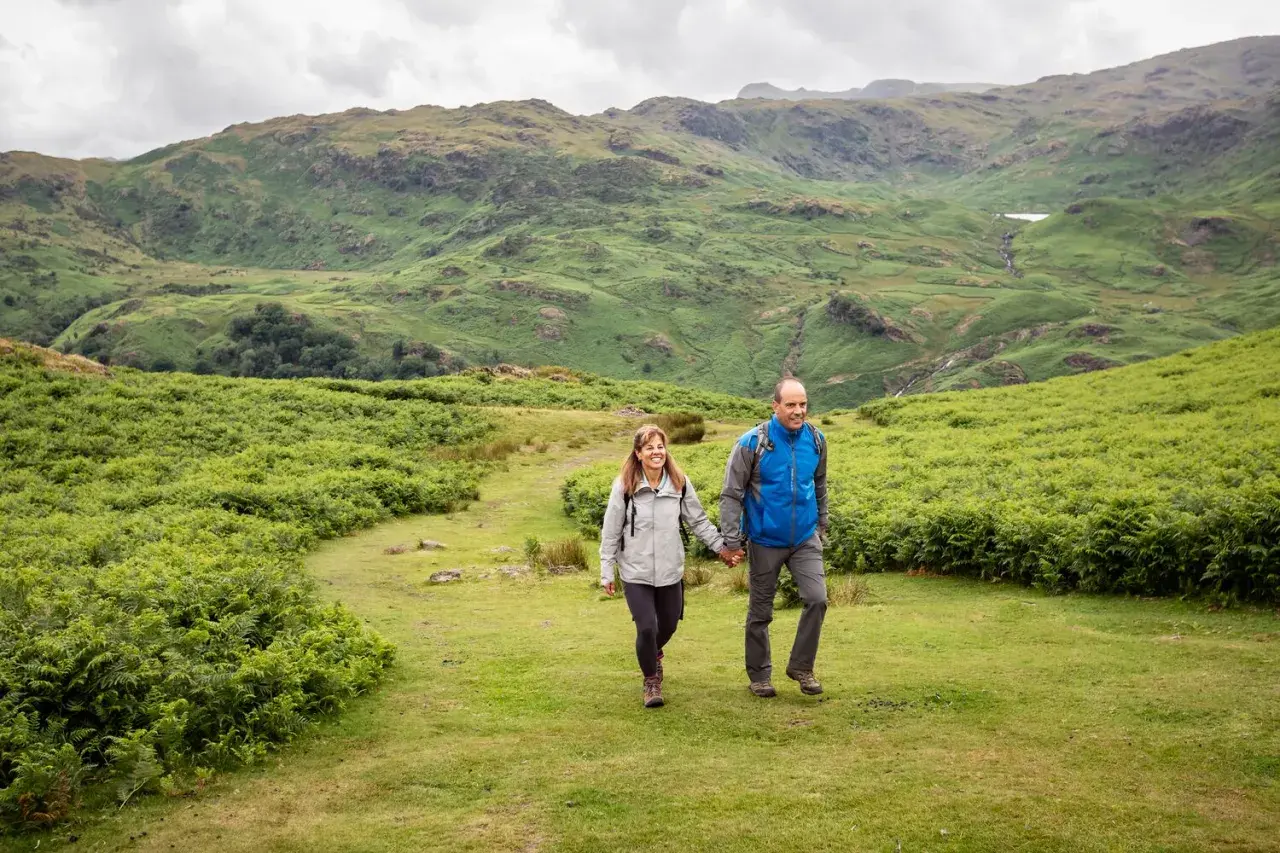
Hiking in England works best when you match the route to the landscape, the season, and how much time you actually have. This is a country of footpaths, open-access moorland, chalk ridges, coastal cliffs, and long-distance trails that are often easier to plan than people expect. Here I focus on the routes that are worth your time, the regions that give the strongest payoff, and the practical details that keep a trip from turning messy.
The basics that matter before you choose a trail
- England has 16 National Trails, plus a dense network of public rights of way and open access land.
- For a first trip, the South Downs Way and Cotswold Way are easier introductions than the Pennine Way or much of the South West Coast Path.
- Late spring through early autumn is usually the most forgiving window, but mud and wind still change the experience fast.
- For navigation, I would carry an OS Explorer 1:25,000 map or an offline mapping app backed by paper.
- On open access land, dogs must usually be on a 2 m lead from 1 March to 31 July, and at all times around livestock.
What makes walking in England so rewarding
England is built for route-based walking in a way that surprises a lot of visitors. Public footpaths, bridleways, restricted byways, and open access land create a patchwork where a good day out can move from a village lane to a ridge, a moor, or a coastline without needing a wilderness permit or a complicated permit system. A footpath is for walking, a bridleway also allows horses and bicycles, and open access land gives you wider freedom across mountains, moors, heaths, and downs.
That matters because the country is not only about big headline hikes. Some of the most satisfying days are 6 to 10 miles long, with enough ascent to feel earned but not so much that the route becomes a logistics project. In practice, England rewards people who read the map well, accept changeable weather, and understand that a stile is not a nuisance but part of the normal infrastructure of the walk. Once you see it that way, the next step is choosing the kind of landscape you actually want under your boots.
Where to go for the kind of route you actually want
I usually start with the landscape first and the famous trail second. England gives you very different walking experiences in a relatively compact area, and the right region can matter more than the exact route name.
| Region | What it feels like | Best for | Why it stands out |
|---|---|---|---|
| Lake District | Steep fells, lakes, rocky paths, quick weather changes | Experienced walkers, mountain scenery, shorter but harder days | The payoff is huge, but the terrain is less forgiving than the photos suggest |
| Peak District | Gritstone edges, limestone dales, open valleys | Mixed-ability day hikes and weekend trips | A strong balance of access, scenery, and manageable difficulty |
| Yorkshire Dales | Big upland views, dry-stone walls, moorland, waterfalls | Walkers who want a classic northern feel without constant scrambling | Long views and varied terrain make every mile feel intentional |
| South Downs | Rolling chalk ridges, open skies, softer underfoot than the uplands | First long-distance trips and moderate-effort days | Reliable, scenic, and easier to combine with train access |
| Cotswolds | Gentle escarpments, villages, fields, woodland edges | Walkers who want a more relaxed multi-day route | Good inns, good pacing, and less punishing elevation |
| South West coast | Cliffs, coves, beaches, steep ups and downs | Strong walkers and people happy to split the route into sections | Iconic scenery, but the climbs add up faster than most people expect |
If I had to reduce that to a simple rule, I would say this: choose the Lake District or Pennines when you want a serious walking day, choose the South Downs or Cotswolds when you want scenery without constant strain, and choose the coast when you want variety and atmosphere more than pure elevation. The routes below make those tradeoffs much more concrete.
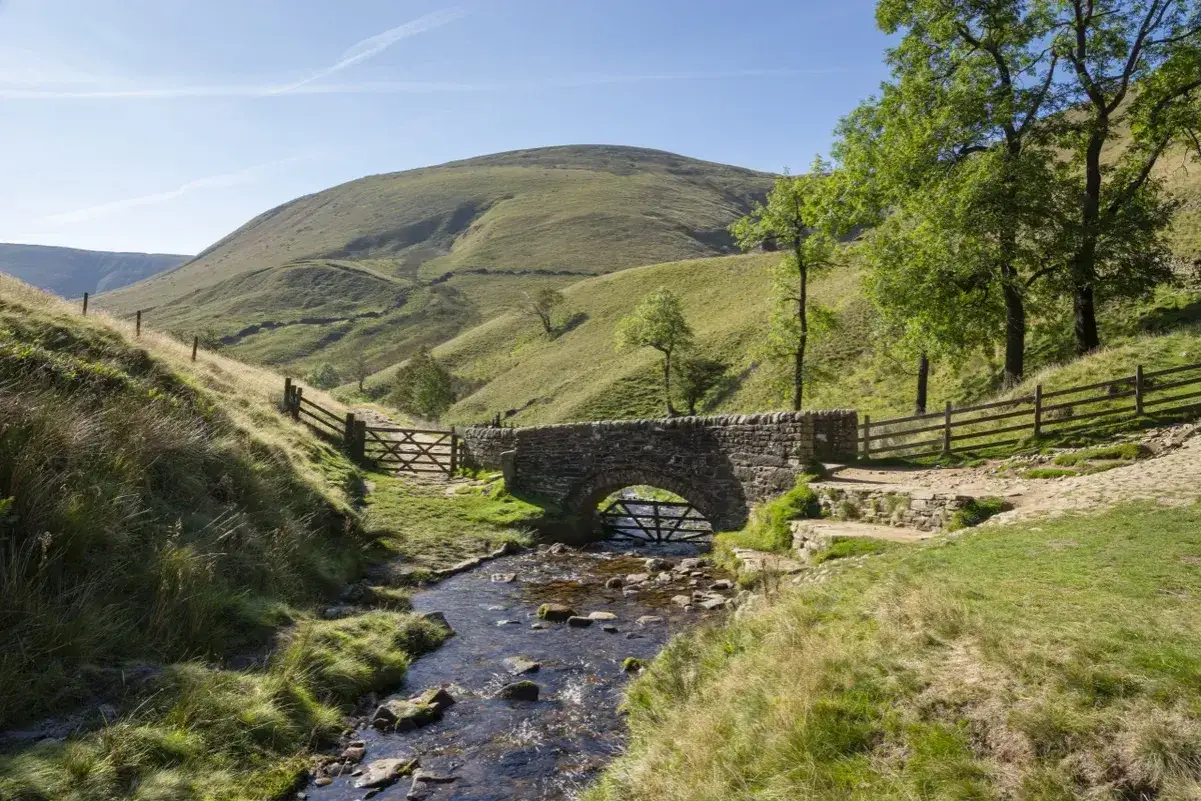
The routes I would start with first
The National Trails are the best shorthand for understanding long-distance walking in England. They are well-established, well-documented, and usually easier to plan than improvised countryside linking. For a first trip, I would look at these before anything else.
| Trail | Distance | Character | Best fit |
|---|---|---|---|
| South Downs Way | 100 miles (160 km) | Ridge walking, open chalk landscapes, straightforward logistics | A strong first long-distance trail |
| Cotswold Way | 102 miles (164 km) | Villages, escarpments, historic scenery, manageable daily stages | Walkers who want a gentler through-hike |
| Hadrian's Wall Path | 84 miles (135 km) | Roman history, strong sense of place, easy to understand route line | History-focused walkers and first-timers with limited time |
| Thames Path | 185.2 miles (298 km) | River walking, flat sections, urban-to-rural transitions | People who want a long route without major ascent |
| Pennine Way | 268 miles (431 km) | Wild uplands, exposed ground, a more demanding overall experience | Experienced hikers who want a real test |
| South West Coast Path | 630 miles (1,014 km) | England's longest National Trail, with constant coastal movement and big climbs | Walkers who want a long-term project or section hike |
| Coast to Coast Path | Around 190 miles (306 km) | Crosses the Lake District, Yorkshire Dales, and North York Moors | Hikers who want a newly opened classic with variety built in |
The biggest mistake I see is choosing a famous name without checking how the trail actually feels day to day. England is at its best when you section-hike a long route instead of forcing a full end-to-end commitment. A 20-mile slice of a famous trail often gives you the same atmosphere with less pressure, fewer transfers, and more room for weather to misbehave without ruining the trip.
When to go and how weather changes the experience
England can be walked year-round, but not every month is equal. The difference between a smooth trip and a frustrating one is often less about temperature and more about ground conditions, daylight, and wind exposure.
- March to May can be excellent for quiet paths and fresh landscapes, but mud is still common and upland weather can swing quickly.
- June to August gives you the longest daylight and the most flexibility for multi-day routes, though popular trails will be busier.
- September to October is often the sweet spot in my view: cooler, less crowded, and still workable for longer routes.
- November to February can be fine for lowland and coastal walks, but short days, saturated ground, and wind exposure make long upland days much less forgiving.
With timing sorted, the next question is what to carry so the trail stays enjoyable instead of fragile.
What to pack so the trail feels manageable
England does not usually demand expedition gear, but it does punish overconfidence. I keep the kit simple and weatherproof, because the real issue is not extreme cold so much as being damp, cold, and underprepared for half a day.
- OS Explorer 1:25,000 maps or a reliable offline map app, because detailed navigation matters on footpaths and in open country.
- Waterproof outer layers, even in summer, because showers can turn a good path into a miserable one very quickly.
- Layering pieces such as a light insulating mid-layer and spare socks, especially for higher ground.
- Footwear matched to the terrain: lighter trail shoes can work well on dry chalk and coast paths, while boots are often better on boggier or rockier ground.
- Food, water, and a charged phone, plus a power bank if you are doing a full day or a multi-day route.
- A small first-aid kit and headlamp, because a delayed return is more common than a dramatic emergency.
For navigation, I prefer paper plus phone rather than one or the other. A good map lets you understand the route in a way a line on a screen does not, especially when a path splits or a stile appears where you expected a lane. If I am heading into the hills, I also want to know whether I am planning a hike, a walk, or a mixture of both, because that determines how aggressive I can be with mileage. Once the kit is sorted, the last serious issue is behaving correctly on the land itself.
The rules and etiquette that matter on the ground
England's walking system is generous, but it is also structured. The common mistake is assuming that any attractive field or hillside is automatically fair game. It is not. Some places are public rights of way, some are open access land, and some are private land where you may only pass with permission or by following a legal path.
- Stay on marked paths unless you are on open access land and wider access is allowed.
- Close gates and use stiles properly; they are there to manage livestock and boundaries, not to slow you down for no reason.
- Give livestock space, especially around cows with calves and sheep on steep ground.
- Keep dogs under control, and use a short lead on open access land during the seasonal lead period and whenever livestock are nearby.
- Do not widen muddy paths by stepping around them; keeping to the route protects the ground and makes the trail last longer.
- Check for local diversions or closures, especially on popular coast paths, fragile walls, or sections affected by erosion.
This is the part that makes England feel different from a lot of other hiking countries. The route often depends on shared-use etiquette as much as scenic instinct. If you respect the path, close the gate behind you, and read the map instead of guessing, the countryside usually gives you a very good day in return. That practical discipline is what makes a first trip work, especially when you have limited time.
How I would plan a first trip by trip length
If I were building an England walking trip from scratch, I would choose the route around the number of days first and the scenery second. That keeps the plan realistic and avoids overcommitting to a trail that sounds better than it fits.
| Time available | Best choice | Why it works |
|---|---|---|
| 1 day | Peak District day hikes, South Downs ridge walks, Lake District valley circuits | Big scenery with minimal logistics |
| 2 to 3 days | Sections of the South Downs Way or Cotswold Way | Enough time to feel like a trip, not just an outing |
| 4 to 5 days | Hadrian's Wall Path or a longer Thames Path section | Strong identity and manageable daily mileage |
| 6 to 8 days | South Downs Way, Cotswold Way, or a substantial coast section | Enough time for a true through-hike without becoming punishing |
| 10+ days | South West Coast Path, Pennine Way, or Coast to Coast Path | Best if you want a serious walking project rather than a sample route |
If I had to recommend one balanced introduction, I would start with the South Downs Way. It is long enough to feel like a real journey, direct enough to plan without stress, and varied enough to keep the days interesting. If you want steeper, wetter, more technical ground, base yourself in the Lake District instead. Either way, the real win is the same: choose a route that matches your pace, your season, and your tolerance for changing weather, and England becomes one of the most rewarding walking countries in Europe.