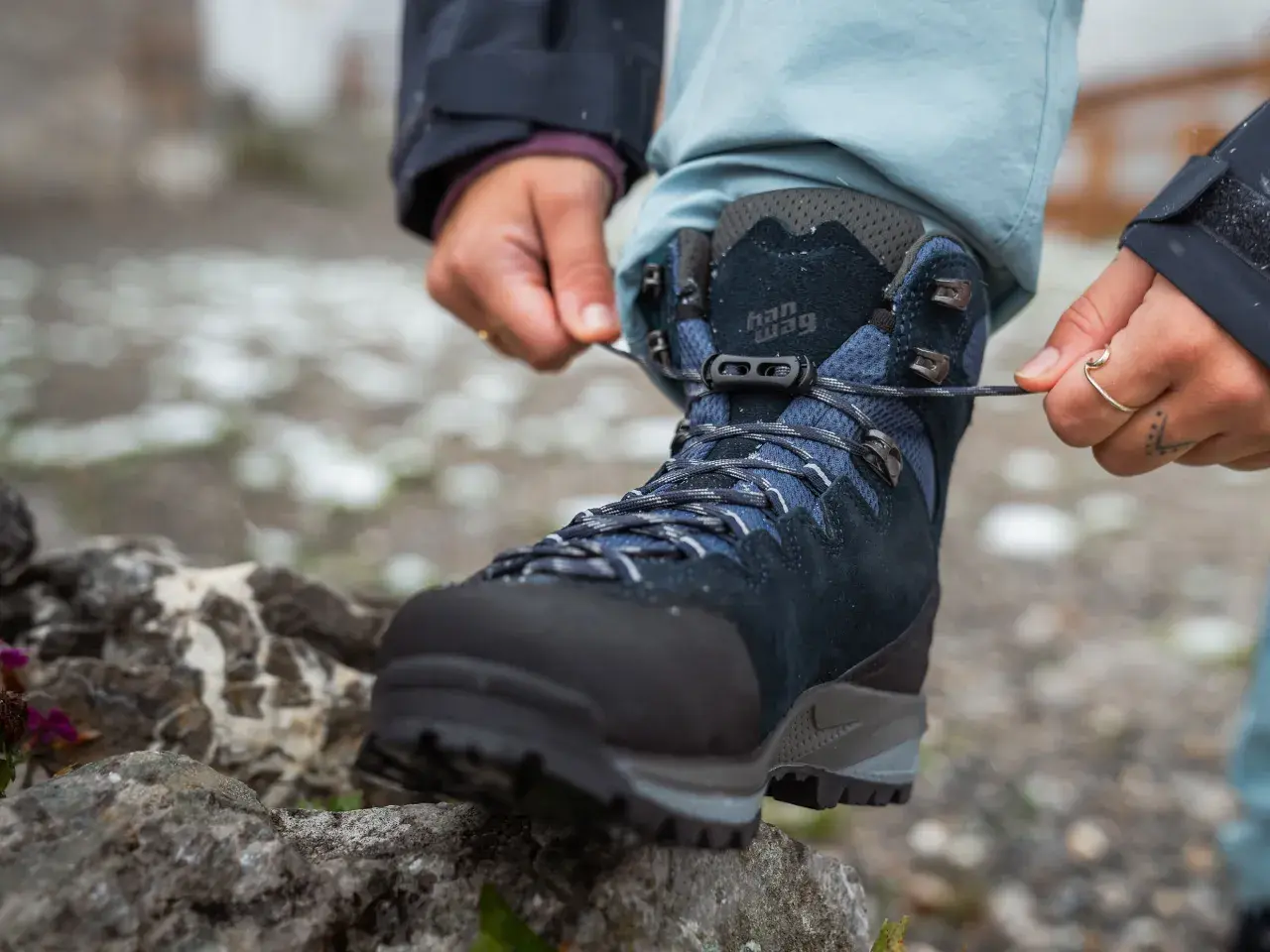
New hiking footwear should get more comfortable as it flexes, but not every pair needs the same amount of time. The real question is how long to break in shoes before they stop feeling stiff and start disappearing under you on the trail. I treat break-in time as a fit test, not a toughness contest, because the goal is to catch hot spots before they turn into blisters halfway up a climb.
Most hiking footwear gets comfortable in a few days to a few weeks
- Light hiking shoes and trail runners may feel ready after a couple of short walks, or almost immediately.
- Midweight synthetic or mixed-material hikers usually need about 1 to 2 weeks of gradual wear.
- Stiff leather boots can take 2 to 4 weeks, and sometimes longer if they are built for heavy loads.
- Break-in time is mostly about materials, stiffness, and fit rather than a universal calendar date.
- If a boot pinches, rubs, or numbs your foot, that is usually a fit problem, not a break-in problem.
- For a serious trip, I like to start at least 2 weeks early and keep the first miles easy.
What break-in timeline to expect from each type of hiking footwear
When people ask me about hiking footwear, I usually answer with a range, not a promise. REI’s practical advice matches what I see in real use: light hikers may feel perfect right out of the box, while burly leather models may require weeks. That is a big spread, but it makes sense once you compare the construction.
| Footwear type | Typical break-in time | What it usually feels like | Best use case |
|---|---|---|---|
| Lightweight hiking shoes and trail runners | 0 to 3 days | Usually flexible from the start, with only minor stiffness in the collar or tongue | Fast day hikes, warm weather, lighter packs |
| Synthetic or mixed-material mids | 1 to 2 weeks | Softens quickly, but may still feel stiff at the ankle or across the forefoot at first | General day hiking and moderate terrain |
| Full-grain leather hiking boots | 2 to 4 weeks or more | Noticeably stiff early on, then gradually molds to your foot and stride | Rocky routes, heavier packs, rougher mountain terrain |
That table is the practical answer, but I would not treat it like a law. A flexible shoe that fits poorly can still hurt on day one, while a stiffer boot that fits correctly may become comfortable faster than expected. The next question is why one pair settles in quickly and another seems to fight you every step of the way.
Why some pairs settle quickly and others need more time
The break-in process is really a mix of material behavior, foot shape, and how demanding the hike will be. Columbia says many hiking boots land somewhere between one and four weeks, with lighter models needing little to no break-in at all. That lines up with what matters on the trail: a shoe is not just soft or hard, it is a bundle of tradeoffs.
| What changes the timeline | Why it matters |
|---|---|
| Upper material | Leather softens gradually; mesh and synthetic fabrics usually adapt faster. |
| Midsole and shank stiffness | More support often means less immediate flexibility, which can feel awkward until the boot settles. |
| Boot height | Mid and high-cut boots have more collar structure, so they often take longer than low-cut shoes. |
| Fit volume and width | If the toe box or midfoot is off, no amount of break-in will fix the pressure. |
| Socks and insoles | The wrong sock thickness can make a good shoe feel tight; the right setup can improve comfort fast. |
| Load and terrain | Stiffness shows up faster under a pack, on descents, and on uneven ground. |
My rule of thumb is simple: the more the boot is trying to support you, the slower it usually feels at the start. That is why I do not rush the process, especially when the trip involves steep climbs, long descents, or heavy mileage.
A safe first-two-weeks routine that prevents most hot spots
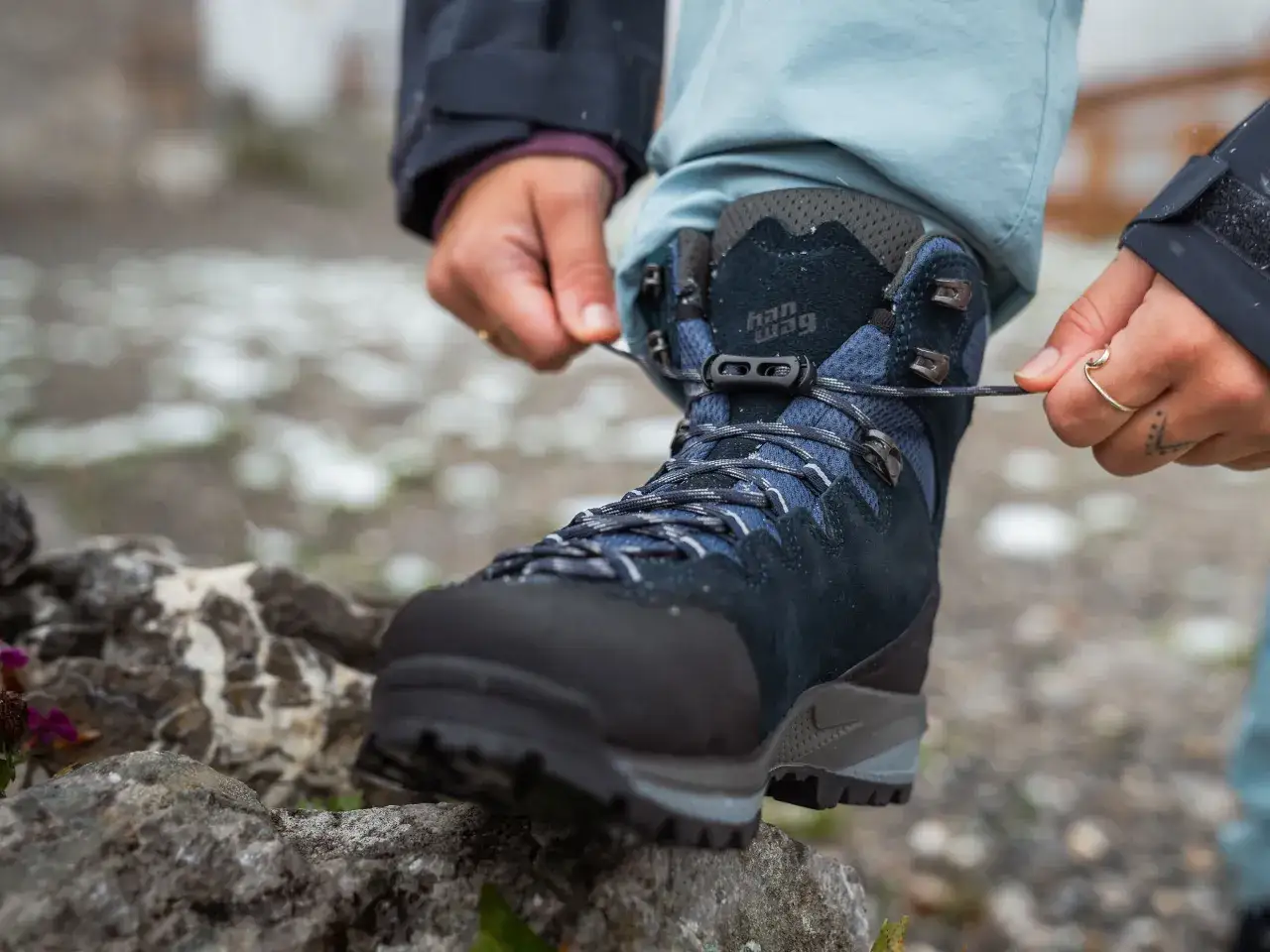
If I want a new pair ready for real trail time, I start small and let the shoe adapt in stages. REI recommends beginning inside the house, then moving to short walks around town, and only after that taking the boots onto the trail. That sequence works because it gives you time to notice pressure points before they turn into a full problem.
- Days 1 to 2 - Wear the boots indoors for 30 to 60 minutes with the socks and insoles you plan to use hiking.
- Days 3 to 4 - Take short neighborhood walks on flat ground. Keep the pace easy and pay attention to the heel, toe box, and arch.
- Days 5 to 7 - Move to longer walks of 45 to 90 minutes. If the fit still feels stable, add gentle hills or stairs.
- Week 2 - Try an easy trail hike, ideally 1 to 2 hours or less, with a light pack. This is where the shoe starts learning real movement.
- After that - Add pack weight, steeper terrain, and longer days only if you have no recurring hot spots.
I also like to keep the lacing consistent during this phase. A slightly looser forefoot and a secure heel can make a good boot feel better immediately, while aggressive tightening usually just creates new pressure points. Once the shoe is moving with you, not against you, it is time to check whether what you feel is normal stiffness or a genuine fit issue.
How to tell real break-in discomfort from a bad fit
This is the part many hikers skip, and it costs them blisters later. A new boot should feel a little stiff, maybe even slightly awkward, but it should not feel cruel. If I can predict exactly where the pain will show up every time I wear the shoe, I stop assuming it will magically disappear.
| Normal break-in signs | Signs of a fit problem |
|---|---|
| General stiffness that fades after a short walk | Sharp pressure in the same spot every time |
| Minor heel awareness that improves with wear | Heel lift that causes rubbing on descents |
| Upper material that softens over several outings | Numb toes or forefoot pinching |
| Light rubbing that goes away once the shoe flexes | Hot spots that turn into blisters during short sessions |
| Stiffness that decreases as the midsole and upper settle | Pain across the arch, bunion, or outer edge of the foot |
The key detail is repeatability. If the same pain appears after two or three short outings, I do not blame the break-in process alone. At that point, I look at width, length, last shape, sock thickness, or whether the boot is simply the wrong model for my foot. That is the difference between a shoe that needs time and a shoe that needs replacing.
What I would do before a trip if the boots are still new
When a hike is coming up fast, I become conservative. If I have only a week left, I would rather wear lighter footwear that already feels trustworthy than force a stiff new boot into service. For a long route in the mountains, that choice matters even more, because tired feet punish bad decisions quickly.
- If the trip is within 7 days, keep the outings short and low-risk. Do not debut the boots on a full-day route.
- If the trip is within 2 weeks, prioritize easy miles, then one moderate outing with a light pack.
- If the trip is a bigger objective, give yourself the full break-in window and include some uneven ground.
- Always carry blister tape, a spare pair of hiking socks, and a simple lacing plan for pressure relief.
- Avoid shortcuts like soaking, freezing, or heating boots to speed things up; those tricks tend to damage more than they help.
I usually think in mileage as much as time. By the time a pair has handled roughly 15 to 20 easy miles without creating repeat hot spots, I trust it more. If it still hurts after that, I stop calling it break-in and start calling it a fit mismatch. That is the most useful line to remember before heading out on a rocky ridge, a wet forest path, or a long European mountain day.
The smartest way to judge new hiking footwear before the trail gets serious
The safest answer is not a single number. Lightweight hiking shoes may be ready in a day or two, midweight hikers often need about a week or two, and stiff leather boots may need several weeks of gradual wear. What matters more than the calendar is whether the shoe is settling evenly, with no sharp pressure, numbness, or recurring rubbing.
If I had to reduce the whole topic to one habit, it would be this: start early, wear the right socks, build mileage slowly, and listen to the first warning signs. That approach saves more hikes than any shortcut ever will.