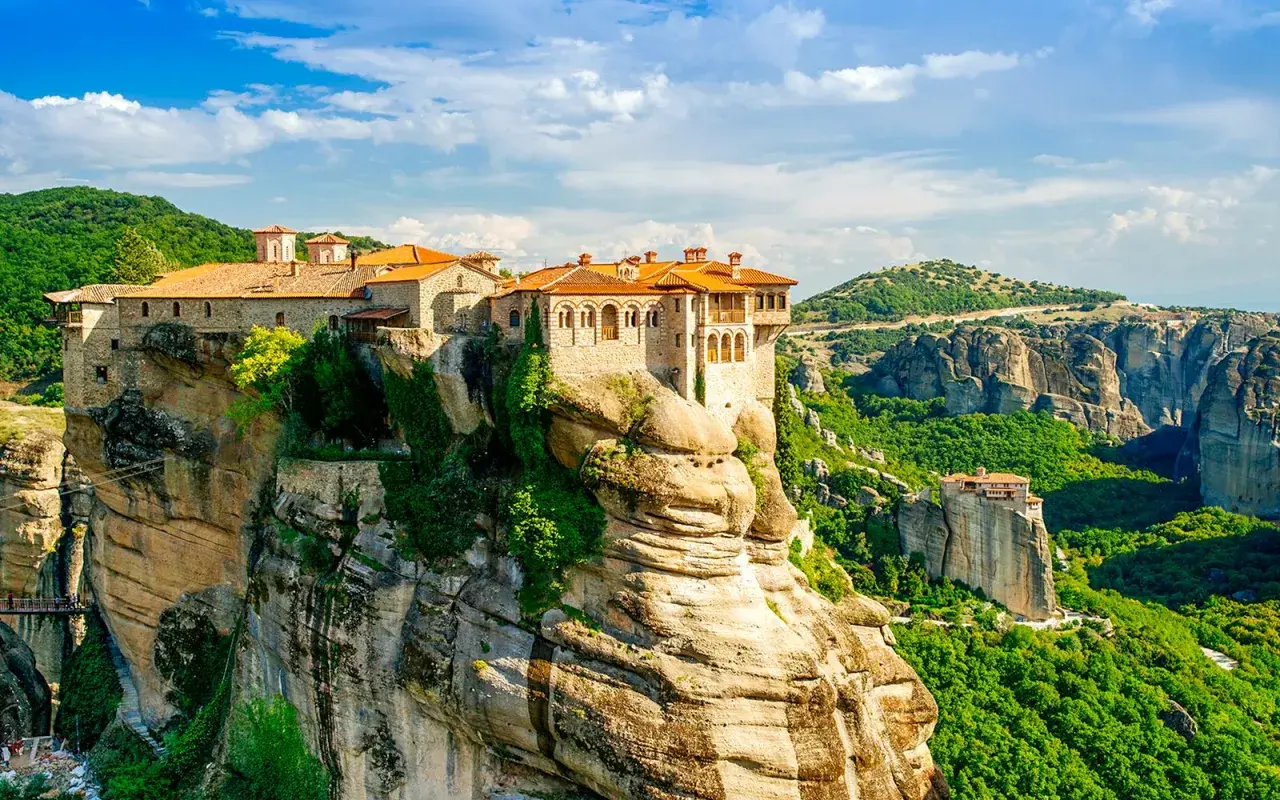
Meteora is easier to reach than it first looks, but the trip works best when you treat it as a two-part journey: first get to Kalambaka or Kastraki, then handle the steep final stretch up to the cliffs. The practical answer to how to get to Meteora monasteries depends on where you start, how much time you have, and whether you value speed, flexibility, or a simpler day. In this guide, I break down the routes, the trade-offs, and the details that matter once you arrive.
Kalambaka is the gateway, and the last mile decides the experience
- Kalambaka is the main access town; Kastraki is the quieter scenic base.
- From Athens, the overland journey is roughly 350 km; from Thessaloniki, it is about 220-230 km.
- The monasteries sit several kilometers above town, so the final leg is short on paper but slower in practice.
- Car, taxi, guided tour, and private transfer are the most reliable ways to move around the cliffs.
- Plan on €5 cash per monastery and modest clothing at the entrance.
- For most first-time visitors, 2-3 monasteries in 4-6 hours is the sweet spot.
Start with Kalambaka or Kastraki, not the cliffs
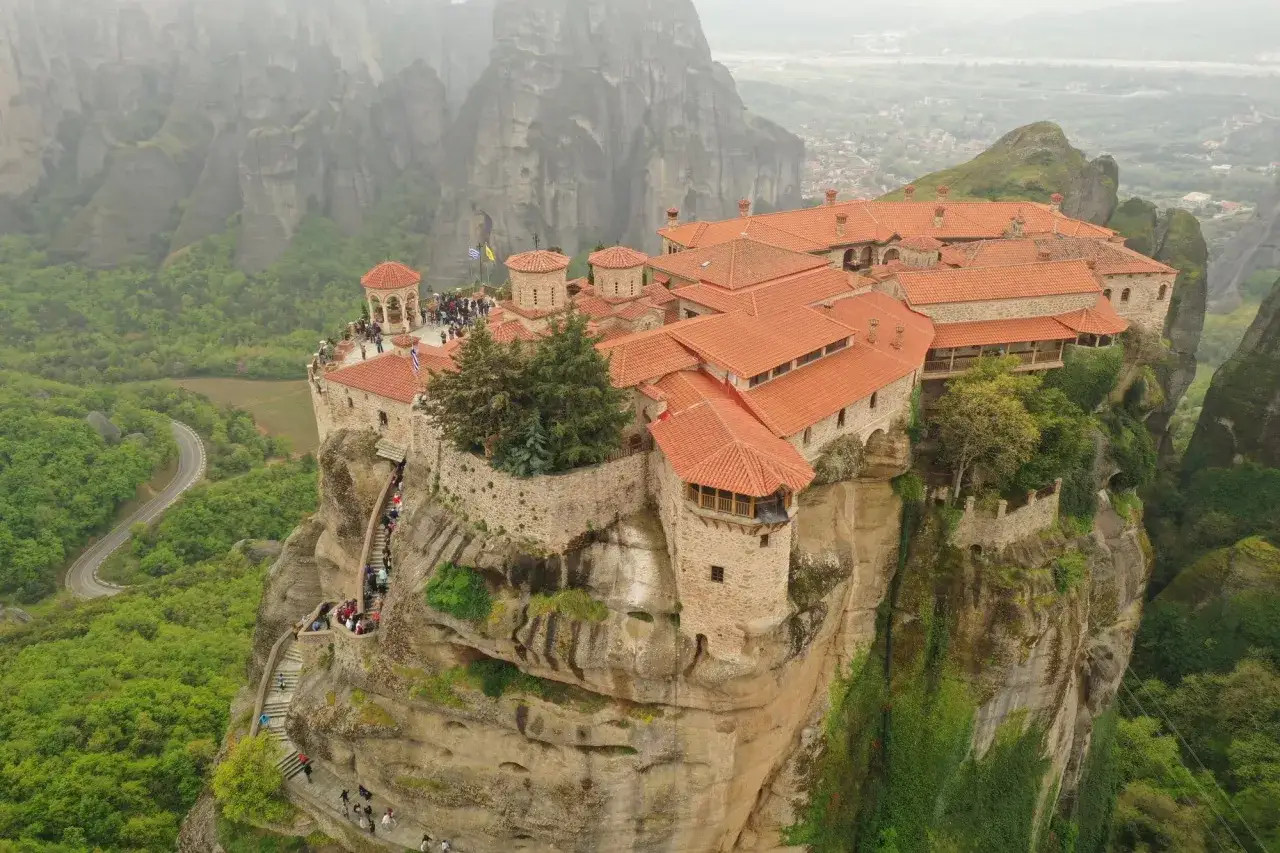
The first thing I tell people is simple: Kalambaka is the real arrival point. The monasteries are not sitting in a town center where you park once and stroll between them. They are spread across the rock formations above Kalambaka and Kastraki, which means your route planning starts with the base town, not the cliff-top sites themselves.
Kalambaka is the practical choice if you want transport, restaurants, and easier logistics. Kastraki feels more atmospheric and is often the better fit if you want views and a slower pace. I would choose Kastraki for an overnight stay and Kalambaka if I wanted the simplest access to buses, taxis, and tour pickups. Once you accept that the town is the hub, the rest of the trip becomes much easier to plan.
That also leads directly to the next decision: which long-distance route gets you there with the least friction.
Choose the right route from Athens or Thessaloniki
If you are arriving from a major Greek city, the right answer depends less on distance than on how much energy you want to spend before you even see the cliffs. Athens is the longer haul, while Thessaloniki is the easier overland approach. KTEL Trikala currently publishes one-way coach fares of €32.50 from Athens to Kalambaka and €22.60 from Thessaloniki to Kalambaka, which gives you a decent baseline when comparing coach travel with driving or a private transfer.
| Starting point | Typical travel time | Best for | What I would watch |
|---|---|---|---|
| Athens by car | About 3.5-4.5 hours | Flexibility and overnight trips | Good if you want sunrise, sunset, or stops along the way |
| Athens by coach | Around 4.5 hours or a little more | Budget-conscious travelers | Usually slower than driving, but simpler than arranging multiple transfers |
| Thessaloniki by car | About 2.5-3 hours | The fastest easy overland route | The final stretch is curvier than the highway part |
| Thessaloniki by coach | Around 3 hours or a little more | No-drive travel on a budget | Still worth checking the latest departure times before you commit |
| Rail itinerary | Varies | Travelers who prefer rail when the connection fits | Check the live itinerary close to departure; the last segment may still need a transfer |
My rule of thumb is blunt: if your day is tight, I would not choose a transport option that depends on multiple moving parts unless I had to. For a first visit, comfort and timing usually matter more than saving a few euros.
The real challenge starts after you arrive in town, because the monasteries are still above you.
Plan the last uphill stretch separately
Visit Meteora notes that the monasteries sit roughly 5 to 10 km above Kalambaka, and that is exactly why the last mile feels short in theory but slow in reality. By car or taxi, that final stretch usually takes about 10 to 20 minutes, depending on traffic and where you stop. On foot, it becomes a hill walk with stairs, heat, and uneven sections, which is manageable for some visitors but not the right default for everyone.
- Driving works well if you want to visit viewpoints, stop between monasteries, and control your timing.
- Taxis and private transfers are the easiest answer if you do not want to navigate the road yourself.
- Walking can make sense between a few nearby monasteries, but I would not treat it like a flat village stroll.
- Parking gets tighter when crowds arrive, so give yourself extra time around late morning and sunset.
- Cluster planning saves energy: Great Meteoron and Varlaam are a natural pair, and Agios Stefanos combines well with Holy Trinity.
This is why the transport choice matters so much. A good long-distance arrival can still feel messy if you underestimate the last few kilometers of road.
Pick the transport style that matches your pace
When I compare transport options for Meteora, I do not ask which one is theoretically possible. I ask which one gives the least friction for the kind of trip you actually want.
| Transport style | Best for | Main strength | Main trade-off |
|---|---|---|---|
| Self-drive | Independent travelers and photographers | Total flexibility for viewpoints, sunrise, and sunset | You handle parking, road navigation, and the full schedule |
| Guided tour | First-time visitors and day-trippers | The logistics are handled for you | Less freedom to linger wherever you want |
| Taxi or private transfer | Families, small groups, and travelers who want simplicity | Door-to-door convenience | Usually costs more than a coach |
| Train or mixed rail trip | Travelers who enjoy rail journeys | Can be scenic and relaxed when the connection works | More variables, so it rewards careful checking |
If I were planning a first Meteora visit, I would usually choose a guided tour or a car. A tour is the cleanest option when you only have one day. A car is better when you are staying overnight and want sunrise, sunset, and a little room to improvise.
Once that choice is made, the rest is mostly about timing, money, and what you need to wear at the gate.
Budget time, cash, and energy before you go inside
Meteora is not the kind of place where you can wander in casually and figure everything out at the entrance. I treat it as a half-day experience at minimum. For most visitors, 4 to 6 hours is the right window if you want to visit two or three monasteries, stop for photos, and avoid feeling rushed.
- Entrance fees: plan on €5 per monastery, paid in cash.
- Cash planning: if you expect to enter three monasteries, keep at least €15 ready just for admissions.
- Clothing: modest dress is enforced. Men should wear long pants, and women should have shoulders covered and wear a skirt or something similar.
- Wraps and scarves: some entrances provide them, but I would still pack properly rather than rely on that.
- Shoes: pick something with grip; the steps and paths are steep enough that slippery soles become a real annoyance.
- Weather: sun and heat hit harder on the rock formations than many travelers expect, especially in peak season.
In practical terms, I would also keep a small water bottle and a light layer in my day bag. The monasteries are active religious sites, and moving through them feels better when you are not improvising around the weather or the dress code.
Those are the details people forget most often, which is why the next section matters more than it sounds.
Avoid the mistakes that make Meteora feel rushed
Most bad Meteora days do not fail because the destination is difficult. They fail because the plan was too optimistic. I see the same mistakes over and over, and they are all avoidable.
- Relying on an old timetable: local transport and seasonal schedules can change, so check close to departure instead of trusting a screenshot from last year.
- Trying to do all six monasteries in a hurry: that sounds efficient, but it usually turns into a blur of stairs, parking, and missed viewpoints.
- Arriving late in the morning: crowds build, parking gets harder, and the light is less forgiving for photos.
- Skipping cash: a few euros in notes makes the entrance process far smoother.
- Ignoring the climbs: even the shorter routes involve more elevation than first-time visitors expect.
- Focusing only on the interiors: the road, the viewpoints, and the cliffs are part of the experience, not just the backdrop.
If you avoid those traps, Meteora stops feeling like a logistical puzzle and starts feeling like the scenic place it is meant to be.
From there, the final step is choosing the route plan that fits your own trip style instead of forcing one generic answer.
The route plan I would use for a first Meteora visit
If I were planning the trip from scratch, I would not try to squeeze Meteora into a rushed same-day scramble unless I had no other choice. For most travelers, the best version of the trip is the one that gives the cliffs room to breathe.
| Trip style | My pick | Why it works |
|---|---|---|
| One day from Athens | Guided coach or private transfer | You save energy for the monasteries instead of managing transfers |
| One day from Thessaloniki | Self-drive or private transfer | The shorter road time gives you more freedom on the ground |
| Weekend stay | Rental car with an overnight in Kalambaka or Kastraki | You can catch early light, late light, and a calmer pace between visits |
| Travel with limited mobility | Private transfer plus fewer monastery stops | You reduce stairs, parking stress, and unnecessary walking |
My preferred rhythm is simple: arrive early, visit two monasteries before lunch, pause for a viewpoint or a long coffee break, and leave enough time for the light to change again later in the day. That is the version of Meteora that feels memorable rather than compressed.
If you plan it that way, the journey becomes clear: use Kalambaka as your base, choose the transport that fits your time budget, and protect the last uphill stretch from unnecessary stress. That is the easiest way to turn a famous landmark into a smooth, scenic day instead of a rushed transfer with a few good photos.