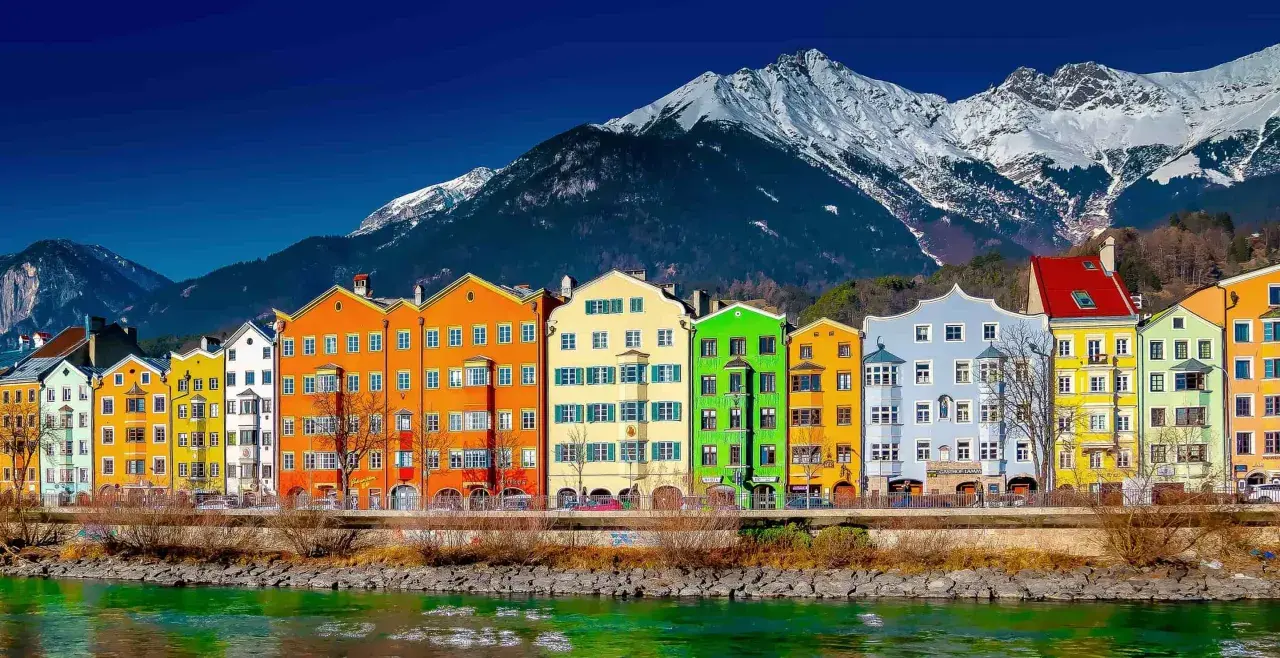
The St. Moritz to Innsbruck route is one of those Alpine transfers that looks simple on a map and becomes much more interesting once you start planning it. In practice, you are choosing between a scenic rail journey, a much faster drive, and a long bus connection, each with a different balance of time, cost, and comfort. I would treat it as a travel day worth planning carefully, not just a transfer between hotels.
Key details at a glance
- Train: usually around 5.5 to 6 hours with one or two changes.
- Drive: about 187 km / 117 miles and roughly 2h20 to 2h35 in normal traffic.
- Bus: usually the slowest option and best only when the schedule fits perfectly.
- Rail fares: some one-way tickets can start around EUR 49-91 when booked early.
- Best choice for scenery: the daytime train.
- Best choice for speed: the car.
What the journey actually looks like
This is a cross-border Alpine route, so the mileage matters less than the terrain. The rail version usually threads through Chur and Sargans before continuing toward Innsbruck, while the road version cuts across the mountain corridors much more directly. That difference explains why the train feels leisurely even though the distance is modest.
Most travelers are surprised by how far apart the rail and road times are. That is normal here: mountains do not reward straight lines, and the timetable is built around connections rather than nonstop speed. Once you accept that, it becomes easier to decide whether this should be a scenic travel day or simply the fastest way to get from one base to another.
The next step is to compare the main ways of making the trip without getting distracted by the map alone.
How the main options compare
I would narrow this journey to three realistic choices: train, car, or bus. The train is the best all-around option for scenery, the car is the fastest option for time, and the bus is the fallback. The table below shows the trade-offs I would use when planning the trip in 2026.
| Option | Typical time | Typical cost signal | Best for | Main drawback |
|---|---|---|---|---|
| Train | About 5h30-6h15 | Early fares can start around EUR 49-91 one way | Scenery, relaxed travel, no driving stress | Transfers and slower overall timing |
| Car | About 2h20-2h35 | Fuel, tolls, parking, and rental extras vary | Speed, luggage, families, flexible stopovers | Winter conditions, parking, and road stress |
| Bus | Around 8h or more | Can be low-cost, but time is the real expense | Only if the schedule fits or price is the only priority | The longest and least comfortable option |
The pattern is simple: the train wins on atmosphere, the car wins on time, and the bus only really makes sense when its schedule happens to fit your day. Once that trade-off is clear, the scenic rail route becomes much easier to judge on its own merits.
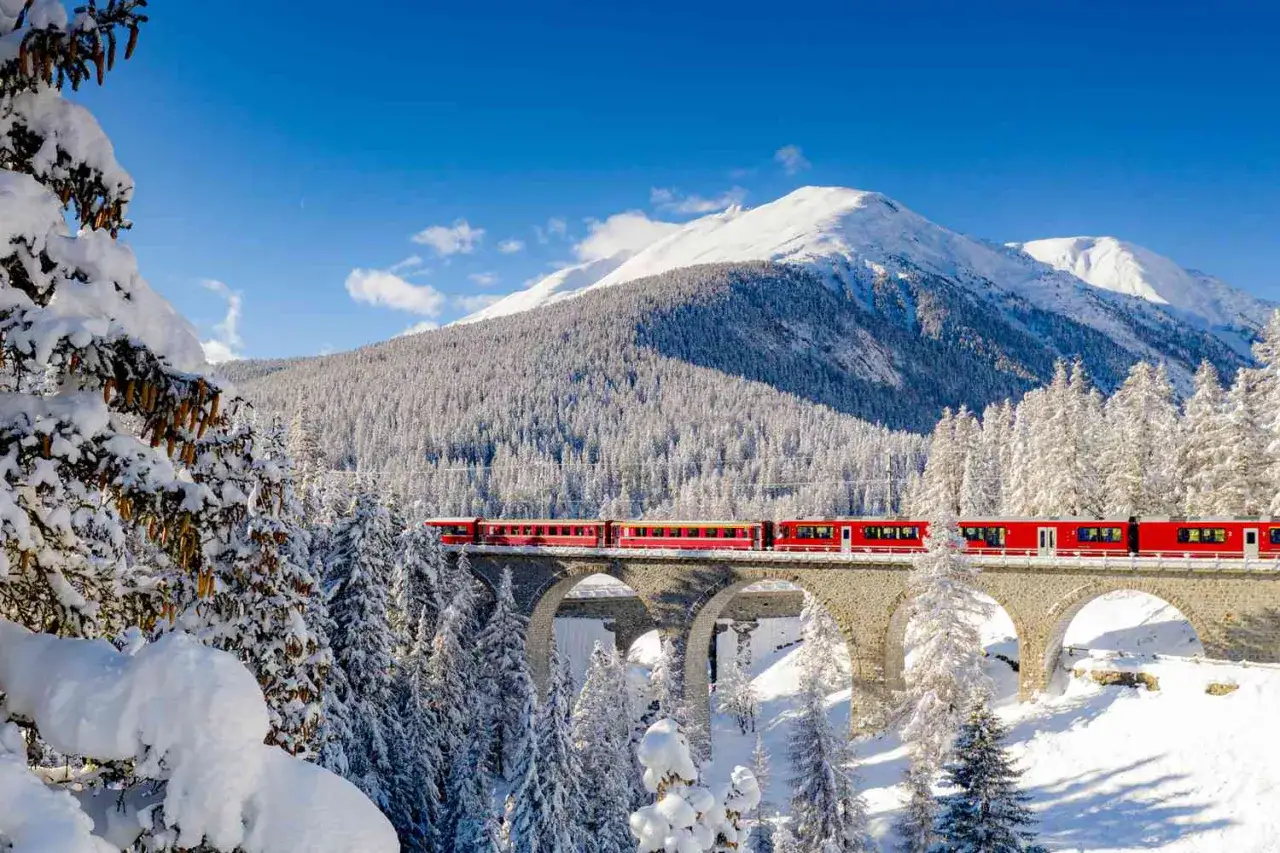
Why I would choose the train for this alpine crossing
The rail journey is the version I would choose when I want the trip itself to feel like part of the holiday. There is no direct train on most days, so the usual pattern is a change in Chur, another in Sargans, and then the Austrian long-distance leg toward Innsbruck Hauptbahnhof. Railjet, Austria's main daytime long-distance service, gives that final stretch a dependable backbone.
What makes this option worth considering is not speed. It is the combination of comfort, scenery, and low-stress border crossing. I like it because you can sit back, watch the landscape shift from the Engadin toward Chur, and let the timetable do the work instead of negotiating mountain roads yourself.
The main mistake people make is assuming every connection is equally good. It is not. On this route, a clean connection with a sensible buffer is usually better than the fastest theoretical itinerary, especially if you are traveling with luggage or in peak summer.
- Choose a daylight departure if the views matter to you.
- Leave enough time for platform changes instead of chasing the tightest transfer.
- Check the live timetable the day you travel, because cross-border connections can shift.
- Consider a seat reservation on the long-distance leg if you are traveling in busy periods.
If speed matters more than scenery, the road is where the real time savings show up.
When driving makes more sense
By car, the trip is roughly 187 km / 117 miles and usually takes about 2h20 to 2h35 in normal conditions. That makes it dramatically faster than rail, and for a family with luggage or a tight check-in window, that alone can justify the rental.
The catch is that mountain driving adds friction the timetable does not show. Winter tires, occasional snow-chain requirements, fuel, tolls, and parking in Innsbruck all matter more than they would on a flat motorway run. I would be especially cautious if you are unfamiliar with Alpine roads or if your itinerary falls in shoulder season, when conditions can shift quickly.
If you are already on a rental-car itinerary, the drive makes even more sense when St. Moritz and Innsbruck are only two stops on a longer loop through Switzerland and Tyrol. If this is a pure point-to-point transfer, the extra stress often outweighs the time saved unless your schedule is truly tight.
That leaves one more piece of the puzzle: how to book the trip in a way that saves money without creating connection problems.
How I would book it without overpaying
For the train, I would check SBB Mobile or ÖBB Scotty first and compare a few departures, because the cheapest ticket is not always attached to the cleanest connection. Early booking can produce noticeably lower fares, and some one-way tickets appear in the roughly EUR 49-91 range when demand is favorable. The more flexible your travel day is, the more likely you are to find a better combination of price and connection time.
My practical rule is to protect the transfer points. If a journey leaves you with an uncomfortably short change in Chur or Sargans, I would usually pick a slightly slower departure instead of gambling on a tight connection with luggage. For a border-crossing trip like this, 10 extra minutes of buffer can be worth far more than a small time saving on paper.
These are the habits that make the trip smoother:
- Use SBB Mobile or ÖBB Scotty rather than a static map, because schedules can shift.
- Favor daylight departures if scenery matters to you.
- Reserve a seat on the long-distance leg when you travel in peak season.
- Do not assume the shortest route is the best one if the change is too tight.
- Check whether your ticket or pass covers both the Swiss and Austrian parts of the journey.
If you compare dates this way, the best option is usually the one that fits your whole itinerary rather than the one with the shortest timetable number.
What I would choose for this alpine transfer in 2026
If I were planning this trip myself, I would choose the train when the journey is part of the experience and the car when I need to protect the clock. For a relaxed holiday transfer, the rail route is the better story and the better pace; for a fixed arrival time, the road is the safer bet.
For most travelers, that is the real answer: do not ask only which mode is fastest. Ask which one fits the rest of the day. A scenic cross-border trip can be the highlight of the itinerary, but only if you give it the right amount of time and the right kind of flexibility. I would plan it that way every time.