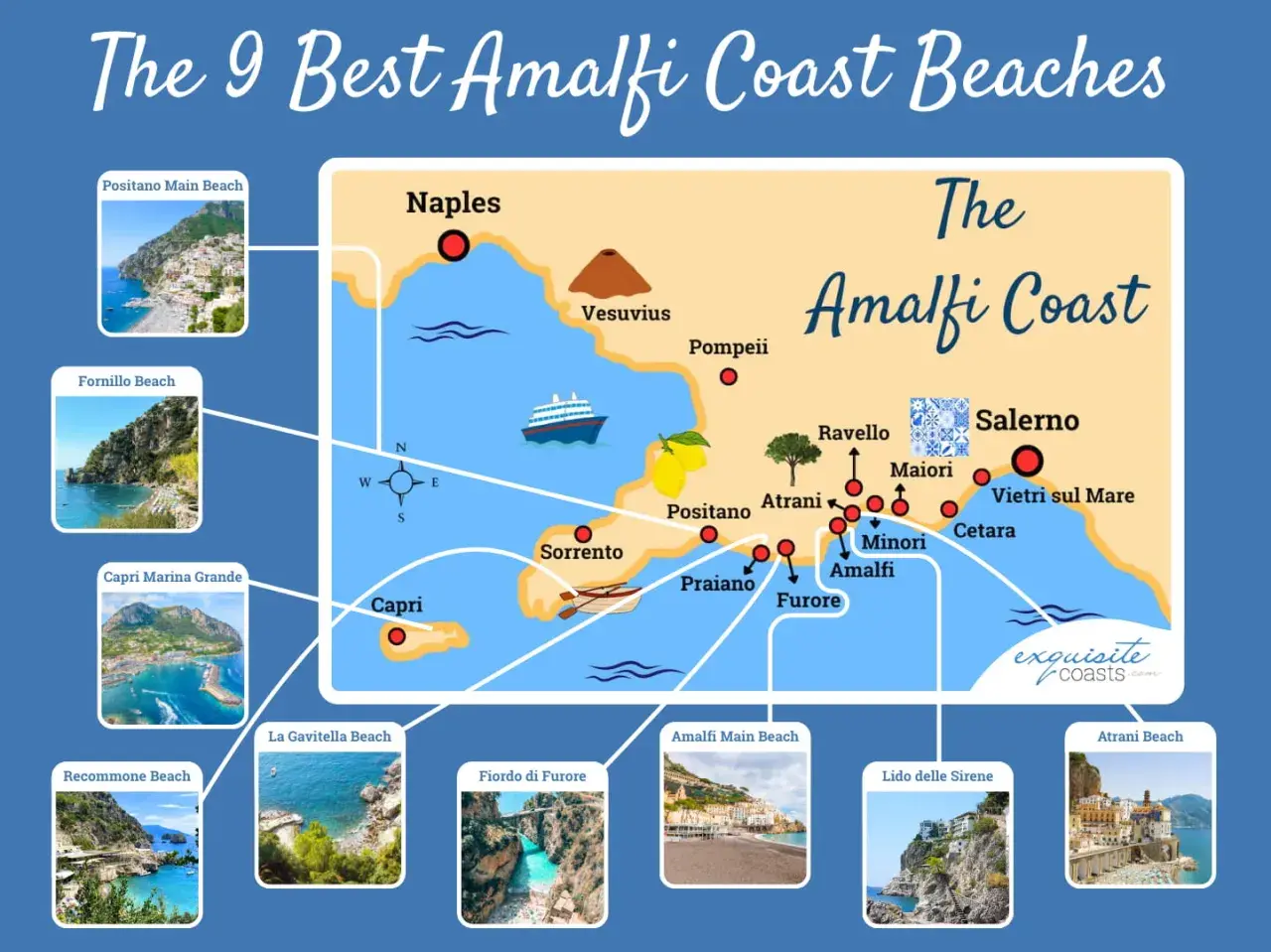
Planning a beach day on the Amalfi Coast is less about picking one long shoreline and more about matching the right cove to the way you travel. A good amalfi coast beaches map helps you see where the sand is, which towns are easiest to reach, and which spots are worth the stairs, the boat ride, or the higher beach-club bill.
This guide breaks the coastline down in practical terms: where the main beaches sit, which ones are easiest for families, where the clearest water and quieter coves usually are, and how I would build a stress-free day around them.
What matters most before you choose a beach
- Maiori and Minori are the easiest flat-waterfront choices if you want sand and simpler access.
- Positano is the most iconic beach stop, but it is also the busiest and least forgiving on budget.
- Praiano, Marina di Praia, and Duoglio reward travelers who want quieter water and do not mind stairs or boats.
- Many coast beaches sit below cliff roads, so access matters as much as the beach itself.
- Beach clubs can be a major cost line in peak season, so it helps to plan ahead.
- If you care about shade, sunset, or mobility, the town layout changes the experience more than the beach name.
How to read the coastline before you choose a beach
The first mistake I see people make is treating the coast like a single continuous beach strip. It is not. The Amalfi Coast is a sequence of towns, cliff roads, staircases, small coves, and a few flatter waterfronts, so the map matters because it tells you where the real access points are.
When I read a beach map here, I filter it four ways: how you get down, how much sand there is, how long the sun stays on the water, and whether the beach is meant for a quick swim or a full day. That sounds obvious, but it is the difference between a relaxing stop and an exhausting one.
As a rule, the easier beaches tend to sit where the coast flattens out, while the prettier coves usually ask for steps, a boat, or both. If you are traveling with kids, luggage, or limited mobility, that detail matters more than the name on the map. Once you understand the terrain, the best beaches become much easier to shortlist.
The beaches I would mark first on a trip-planning map
| Beach | Best for | Access | What to expect |
|---|---|---|---|
| Maiori | Families, easy sand, longer stays | Flat waterfront, bus-friendly, parking available | The broadest and most practical sandy option, with free stretches and beach clubs alternating along the seafront |
| Minori | Slower pace, lighter crowds | Flat center, simple walk from town | Smaller than Maiori, but easier to live with if you want a calmer beach day |
| Positano Marina Grande | Iconic scenery, first-time visitors | Easy to find, hard to enjoy cheaply | Beautiful and busy, with limited space and a strong beach-club feel |
| Fornillo, Positano | Quieter Positano day | Walkable from town, though still steep in places | Less chaotic than Marina Grande, which is why I usually prefer it if I am staying in Positano |
| Marina di Praia | Scenic cove, sunset feel | Small cove below Praiano, limited room | Excellent atmosphere, but not a place for large-group improvisation |
| Duoglio | Clear water, secluded swim | About 400 steps from the road or a boat solution | Worth the effort if you want a quieter beach day and do not mind a return climb |
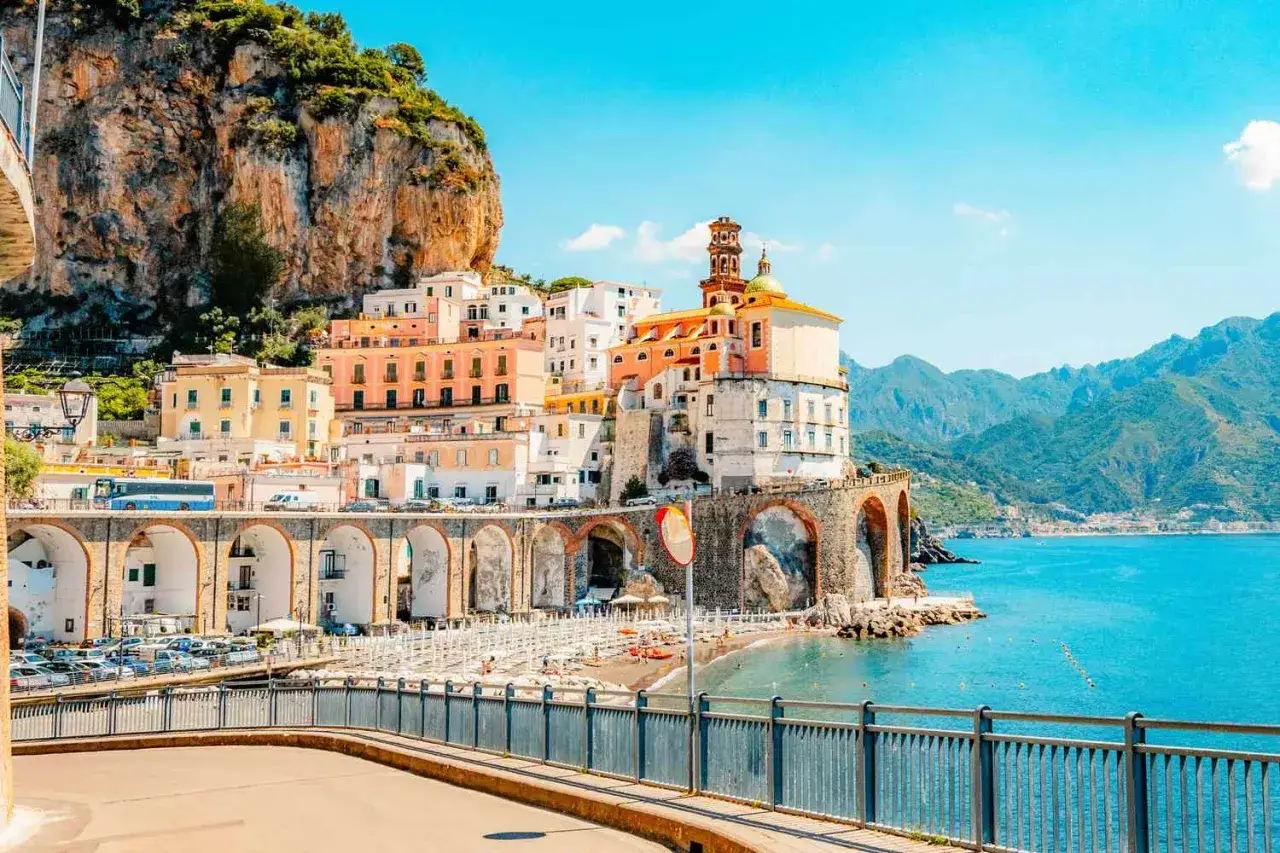
| Atrani or Cetara | Local feel, less polished scene | Compact town beaches near the center | Good when you want a real seaside town rather than a postcard stop |
The pattern is clear once you see it: the most famous beach is rarely the easiest one, and the easiest beach is not always the one you will remember most. That tradeoff is what makes the map useful, because it shows you whether you are planning for comfort, scenery, or a bit of both.
Match the beach to your travel style
For families and easier logistics
I would start with Maiori, then Minori if you want something smaller and quieter. Maiori is the rare place where the coast gives you a long, flat waterfront, which makes a real difference if you are carrying bags, umbrellas, or tired children. If train access matters, Vietri sul Mare is also worth a look because it is the most forgiving end of the coast for arrivals.
For couples and scenic days
Positano and Praiano are the obvious romantic plays, but they behave very differently. Positano gives you the postcard look and the buzz; Praiano gives you calmer tempo and better late-day light. If you want the kind of beach day that feels designed around the view, Marina di Praia is the one I would keep on the shortlist.
For swimmers and quieter water
Duoglio is the obvious candidate here, especially if you care more about clear water than easy access. The water can feel noticeably cleaner and quieter than the busier town beaches, but that comes at the cost of stairs or a boat transfer. I see this as a fair exchange, not a flaw, as long as you know what you are signing up for.
Read Also: 2 Days in Naples - The Perfect Itinerary for First-Timers
For car-free travelers
If you are not driving, build your day around the places that work with buses, ferries, or short walks rather than around the most glamorous names on the coast. Maiori, Minori, Amalfi, and Positano are easier to stitch together without a car than the smaller coves. The coast can absolutely be done car-free, but only if you accept that transport time is part of the beach experience.
Once you choose the style of day you want, the next question is how to reach the beach without wasting half of it in transit.
Getting there without losing half the day
On this coast, the straight-line distance on a map is often a bad clue. A beach that looks close to town can still require a steep descent, a crowded bus, or a climb that feels very different in afternoon heat. I plan for the access route first and the beach second.
Public buses are useful, but in summer they can be slow, full, and less predictable than most first-time visitors expect. Ferries are better when you want to skip the road, but they depend on season and weather, so I would never build an entire day around only one connection. Driving is possible, but parking is usually the most painful part of the equation.
There are a few practical rules I follow:
- Check whether the beach is reached by stairs, road, or boat before you commit.
- Assume steep stair beaches will feel harder on the way back than they looked on the map.
- Arrive early if you want a good spot at a beach club or a free stretch of sand.
- Budget more for loungers and umbrellas than you would on a typical mainland beach.
- Do not assume the sun will stay on the beach all day; many coves lose light earlier than expected.
A useful example is Duoglio: the beach is worth the effort for many travelers, but the climb is real, and that changes how much time and energy you should assign to it. Praiano works in the opposite way, where the beach itself is small but the light often lasts longer, which makes timing more forgiving.
Those access details are what turn a beach list into an actual itinerary, so the last step is building a route that fits a single day rather than trying to see everything at once.
A simple one-day beach plan that actually works
If I had only one day and wanted the least friction, I would build the day around one base town and one beach, not three or four quick stops. Trying to hop too much is how people end up spending the day on buses, stairs, and timetables instead of in the water.
- Easy and relaxed - Start in Maiori, swim in the morning, then walk the seafront and stay put for lunch. This is the best option if you want sand, shade, and minimal effort.
- Classic and scenic - Base yourself in Positano, choose Fornillo if you want less chaos, and treat Marina Grande as the postcard stop rather than the whole plan. This keeps the famous view without making the whole day about crowds.
- Quiet-water day - Spend the morning at Duoglio or another small cove, then return to Amalfi for a late lunch and a slower afternoon in town. This is the route I would choose if swimming matters more than people-watching.
If you have two beach days, split them by terrain: one flatter, easier day in Maiori or Minori, and one more scenic or secluded day in Positano, Praiano, or Amalfi. That balance gives you a much better feel for the coast than staying in the same type of beach twice.
What the map will not tell you about beach time here
The biggest limitation of any beach map on the Amalfi Coast is that it cannot show you the full physical experience. It will not tell you how exposed you will be to the sun, how loud the beach club will feel, whether the return climb is manageable in the heat, or how quickly a quiet cove can fill up in July and August.That is why I think of the map as the first filter, not the final answer. Use it to shortlist beaches by town and access, then choose with transport, mobility, budget, and timing in mind. That approach sounds less romantic than chasing the prettiest pin, but it works better in real life.
If I were planning this myself, I would start with access, then scenery, then price. On the Amalfi Coast, that order usually saves more time and frustration than any perfect list of beach names ever will.