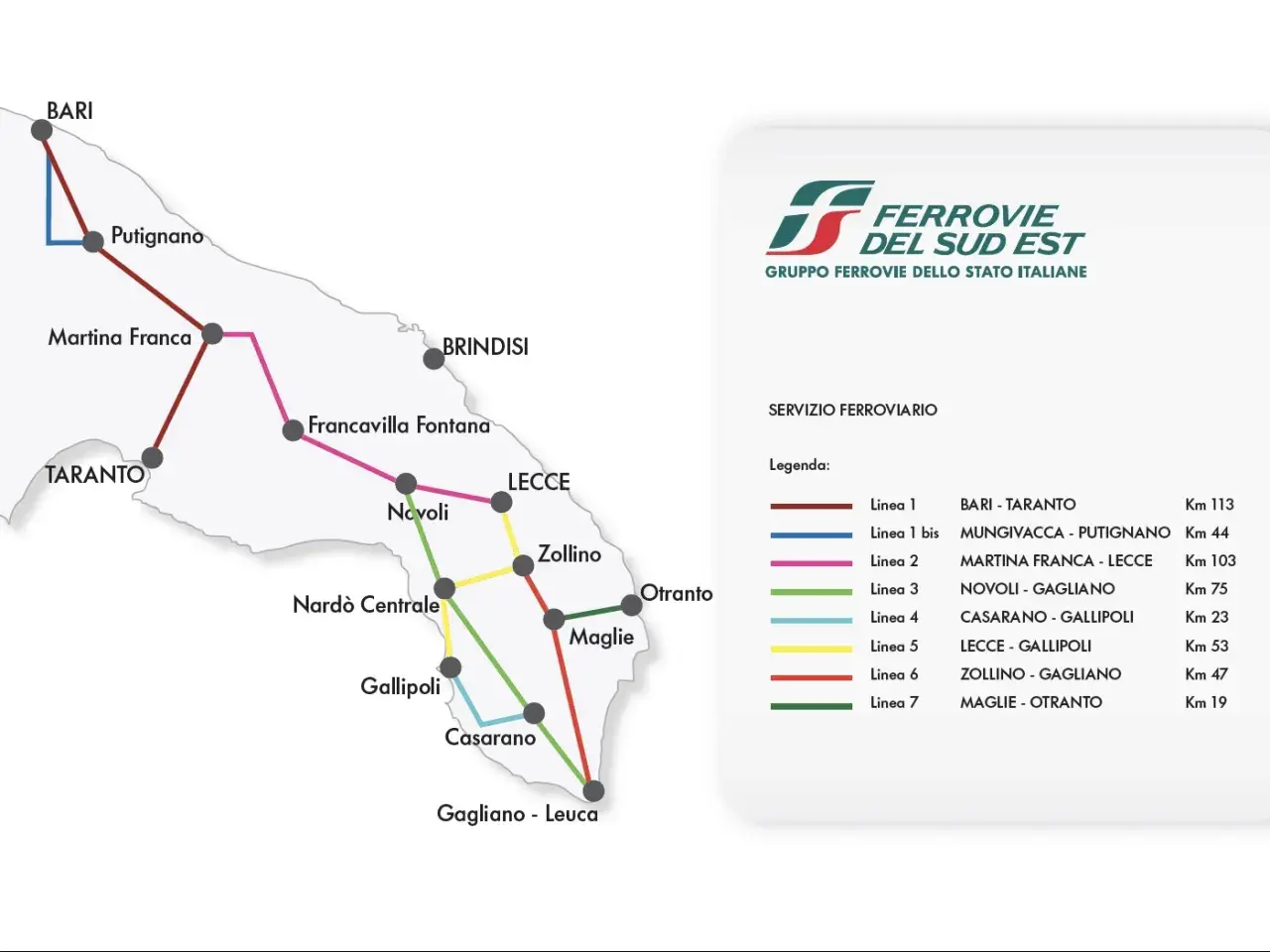
Puglia is easiest to reach when you stop thinking of it as a single stop and start treating it as a region with a few different gateways. This guide explains how to get to Puglia from the U.S. and from the rest of Italy, which arrival point makes sense for different itineraries, and when it is smarter to switch from plane to train, car, or ferry. I keep the advice practical, because the best route is the one that leaves more daylight for the coast, the towns, and the food.
The simplest route is the one that shortens your last transfer
- Bari and Brindisi are the main gateways for most trips into the region.
- U.S. travelers usually connect through Rome or Milan, then continue south by flight or train.
- Train travel is strongest once you are already in Italy, especially for Rome to Bari or Rome to Lecce.
- A car is worth it only if you plan to explore villages, beaches, and the countryside.
- Ferries matter mainly for Adriatic itineraries that already include Greece, Albania, Croatia, or Montenegro.
- Summer bookings need more lead time than people expect, especially for rail and ferries.
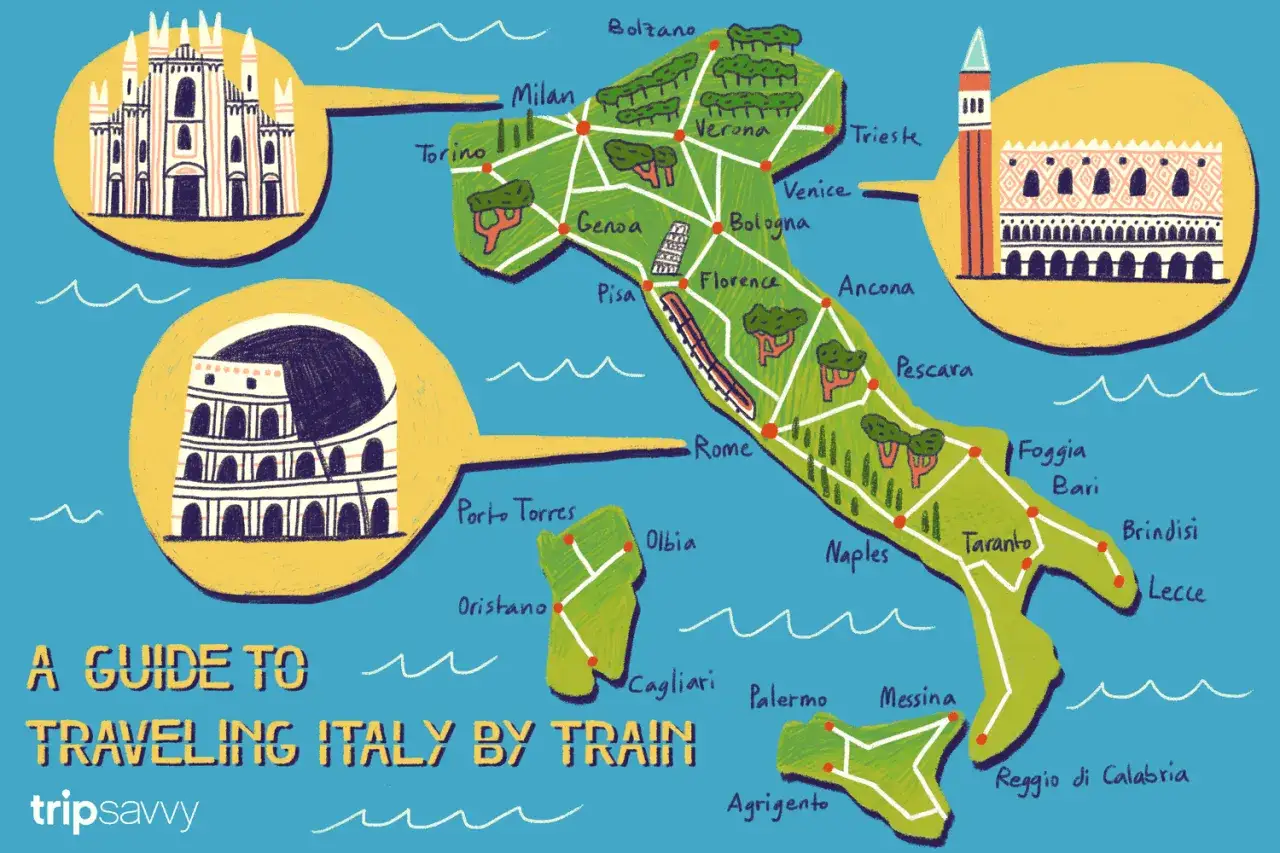
Choose the gateway that matches your base
When I plan a trip here, I start by deciding where I will actually sleep, not just where I will land. That sounds obvious, but it changes everything: Bari works best for the north and central coast, while Brindisi is the cleaner entry point for Lecce and the Salento peninsula.
| Gateway | Best for | Why I choose it | What to watch out for |
|---|---|---|---|
| Bari | Bari, Polignano a Mare, Monopoli, Valle d’Itria, Gargano | Stronger rail links, an airport bus to Bari Centrale, and easier access to the central coast | Less efficient if your trip is focused only on the far south |
| Brindisi | Ostuni, Lecce, Otranto, Gallipoli, southern beaches | Closer to the heel of the boot and often the smartest choice for a Salento base | Fewer onward options than Bari if you are combining several parts of the region |
If I had one short break and wanted the least friction, I would match the gateway to the first overnight stop rather than forcing a “best airport” decision in the abstract. That is the easiest way to keep the rest of the itinerary simple, which matters even more once you start flying in.
Flying in is the cleanest option for most U.S. itineraries
For travelers coming from the United States, I usually treat Puglia as a second leg, not the first landing. In practice, that means flying into a major European hub like Rome or Milan, then continuing south on a separate flight or on the train. Bari and Brindisi both handle domestic and European traffic, so the final step into the region is usually straightforward once you are already in Italy.
- Bari works well if you are heading to the north or center of the region and want a bigger pool of onward connections.
- Brindisi is the better fit for the southern heel, especially if Lecce is your first real base.
- Bari airport has an urban bus link to the central railway station, which makes it easier to continue without a car.
- Brindisi also has shuttle-style airport connections, so you are not trapped into a taxi-only arrival.
My practical rule is simple: if the trip is short, I would rather land as close as possible to the first place I want to explore than spend my first evening recovering from a bad connection. That is why the next question is usually rail, not wheels.
Once you are in Italy, trains are the smartest overland move
When I want to avoid one more flight, train is the option I reach for first. Direct services connect Rome to Bari in about 4 hours 15 minutes on the fastest schedules and around 4 hours 44 minutes on average, while Rome to Lecce is usually a little over 5 hours 40 minutes on the quickest trains. Once you are in Puglia, the regional legs are short: Bari to Lecce is roughly 1 hour 36 minutes by train, and Brindisi to Lecce can be as quick as 19 minutes.
That is why rail works so well for a U.S. trip that starts in Rome or Naples. You stay center to center, skip the airport shuffle, and arrive with more energy than you would after a second flight. I also like the long-distance Italian trains because they are frequent enough to be useful, but not so complex that they turn into a logistics project.
- Frecciarossa and Frecciargento are the services I would look at first for long north-south hops.
- Intercity Notte can make sense if you want to save a hotel night and do not mind sleeping on board.
- Summer departures sell fastest on Friday and Sunday, so I would book those first if my dates are fixed.
Rail is not the answer for every corner of the region, though. Once you leave the main city pairs behind, a car starts to look more attractive, especially for countryside stays.
Driving pays off once you want beaches, masserie, and inland villages
I only rent a car when the trip stops being a city transfer and becomes a route through beaches, olive groves, and small villages. Rome to Bari takes about 4 hours 48 minutes by car, Naples to Bari about 2 hours 56 minutes, and Rome to Lecce about 6 hours 20 minutes, so the drive is reasonable if you are turning it into a proper road trip rather than just moving luggage.
- Best use case: Valle d’Itria farm stays, coastal detours, and places where rail frequency is thin.
- Worst use case: a city-only stay in Bari or Lecce, where parking becomes a tax on the day.
- ZTL zones are the main trap, because Italy’s limited-traffic areas can turn a wrong turn into a fine.
- One-way drop fees can change the economics fast, so I check them before I commit to a route.
My rule is simple: if the car is only there to make an airport transfer easier, I skip it. If it unlocks several rural stops and lets me sleep in different parts of the region, it becomes one of the best tools in the whole trip.
Ferries only make sense if you are building a wider Adriatic trip
Ferries are not the fastest way into Puglia, but they are a smart one if your trip already reaches the Adriatic. Bari connects with Albania, Greece, Croatia, and Montenegro, with crossings that range from about 8 hours to 16 hours 30 minutes depending on the route. Brindisi is also useful, with routes to Corfu, Igoumenitsa, Patras, and Vlora.
The reason I like ferries in the right context is that they fit the geography. If you are combining southern Italy with the Balkans or the Greek islands, the sea route can save you from backtracking through another airport. It also works well if you are traveling with a car, because you can roll straight from one road trip into another.
- Choose Bari if you want the broader port network and a stronger city base on arrival.
- Choose Brindisi if your route is tied more closely to Salento or a southern Puglia stay.
- Book early for summer, because Adriatic ferry capacity tightens quickly.
- Carry a passport and build in extra port time, especially on international routes or when traveling with a vehicle.
- Consider a cabin for overnight sailings unless you sleep well sitting upright for several hours.
For a one-region trip, I would not force a ferry just because it sounds scenic. For a larger Mediterranean loop, though, it can be the most elegant way to arrive.
The mistakes that cost the most time
The biggest mistake I see is choosing a route that looks cheap on paper but creates a long final transfer. The second is treating every Puglia trip as if it should start and end in the same city, which is how people waste hours doubling back across the region.
- Flying into Rome and never leaving Rome makes sense only if Rome is part of your actual trip.
- Landing in Bari for a pure Salento stay or Brindisi for a north-coast loop adds unnecessary rail or road time.
- Assuming buses are always faster than trains usually leads to the wrong choice; on this corridor, rail is often the better trade-off.
- Booking late in summer can leave you with awkward departure times or higher fares.
- Renting a car for city nights only creates parking friction without giving you much freedom.
- Ignoring arrival buffers is the easiest way to miss a connection after a long-haul flight.
When I strip the trip down to essentials, the winning move is to minimize transport changes, not to chase the absolute cheapest segment. That is the logic I would use for a first Puglia itinerary in 2026.
The first-trip formula I would actually use
If I were planning a first visit from the U.S., I would fly into Rome or Milan, continue to Bari or Brindisi on the same travel day if the timing works, and then switch to the slowest possible overland transport only where it adds value. That usually means rail for city-to-city movement, a car for the countryside, and no ferry unless the Adriatic is already part of the plan.
| Trip style | Best move | Why it works |
|---|---|---|
| 3 to 5 days, one base | Fly into the closest airport and keep the transfer short | You protect time instead of spending it in transit |
| One-week coast and village trip | Train first, then rent a car only for the rural stretch | You avoid parking headaches in the cities |
| Rail-focused Italy loop | Use Bari or Lecce as the southern rail anchor | Center-to-center travel keeps the schedule flexible |
| Adriatic multi-country trip | Add a ferry into Bari or Brindisi | The sea route fits the geography and the route plan |
If I wanted the shortest answer possible, I would say this: fly to Bari for the north and center, Brindisi for the south, use the train when you are already in Italy, and add a car only when the countryside is the point of the trip. That keeps the logistics boring, which is exactly what you want before Puglia starts doing the real work.