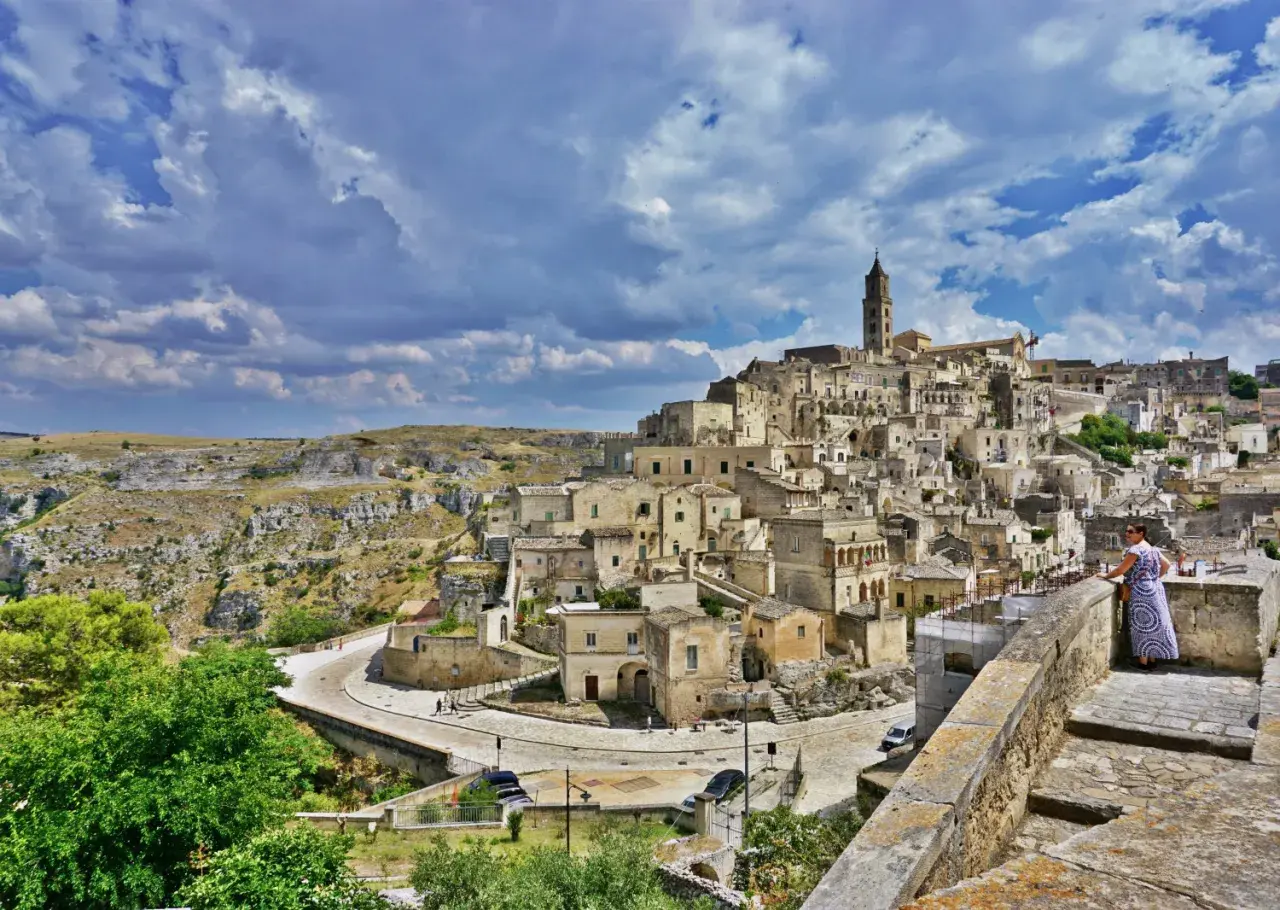
Matera is one of those places that only really makes sense once you start walking it. This guide to what to do in Matera, Italy focuses on the parts that matter most for trip planning: the Sassi, the best viewpoints, the cave churches, how much time to allow, and the practical details that make the visit feel smooth instead of rushed. If you want a trip that balances scenery, history, and a realistic pace, this is the right place to start.
The essentials if you only have one day or two
- Start with the Sassi, because the old cave districts are the heart of the city and the best first impression.
- Plan at least one viewpoint across the ravine; Matera is more dramatic when you see it from a distance.
- Two nights is the sweet spot for most travelers, even though one full day can still work for a short stop.
- Add Murgia Materana Park if you want the landscape, not just the historic lanes.
- Wear proper walking shoes; the stone streets are steep, uneven, and more tiring than they look.
- Book ahead for special cave sites and do not assume every attraction works like a casual walk-in museum.
Start in the Sassi and read the city on foot
For me, the Sassi are the reason to come to Matera at all. They are not just a scenic district; they are the city’s core identity, built into the rock and layered with houses, stairways, churches, and old water systems that make the whole place feel alive rather than preserved in glass.
I usually begin with a simple walking loop instead of a rigid route. A good first pass includes the lanes around Piazza Vittorio Veneto, the lower paths toward Sasso Barisano and Sasso Caveoso, and a stop near the cathedral area so the old stone architecture and the more formal historic center can be compared side by side. That contrast matters, because Matera is not one single image; it is a sequence of small shifts in level, texture, and light.
If you only have a short visit, do not try to “finish” the Sassi. That usually turns into a rushed checklist. I think the better approach is to let the city set the pace: walk, stop, look back, then change direction when a stairway or opening view catches your eye. Once you understand the street pattern, the rest of the trip becomes much easier to shape.
Once you see the city at street level, the next thing to do is step back and look at it from across the ravine.
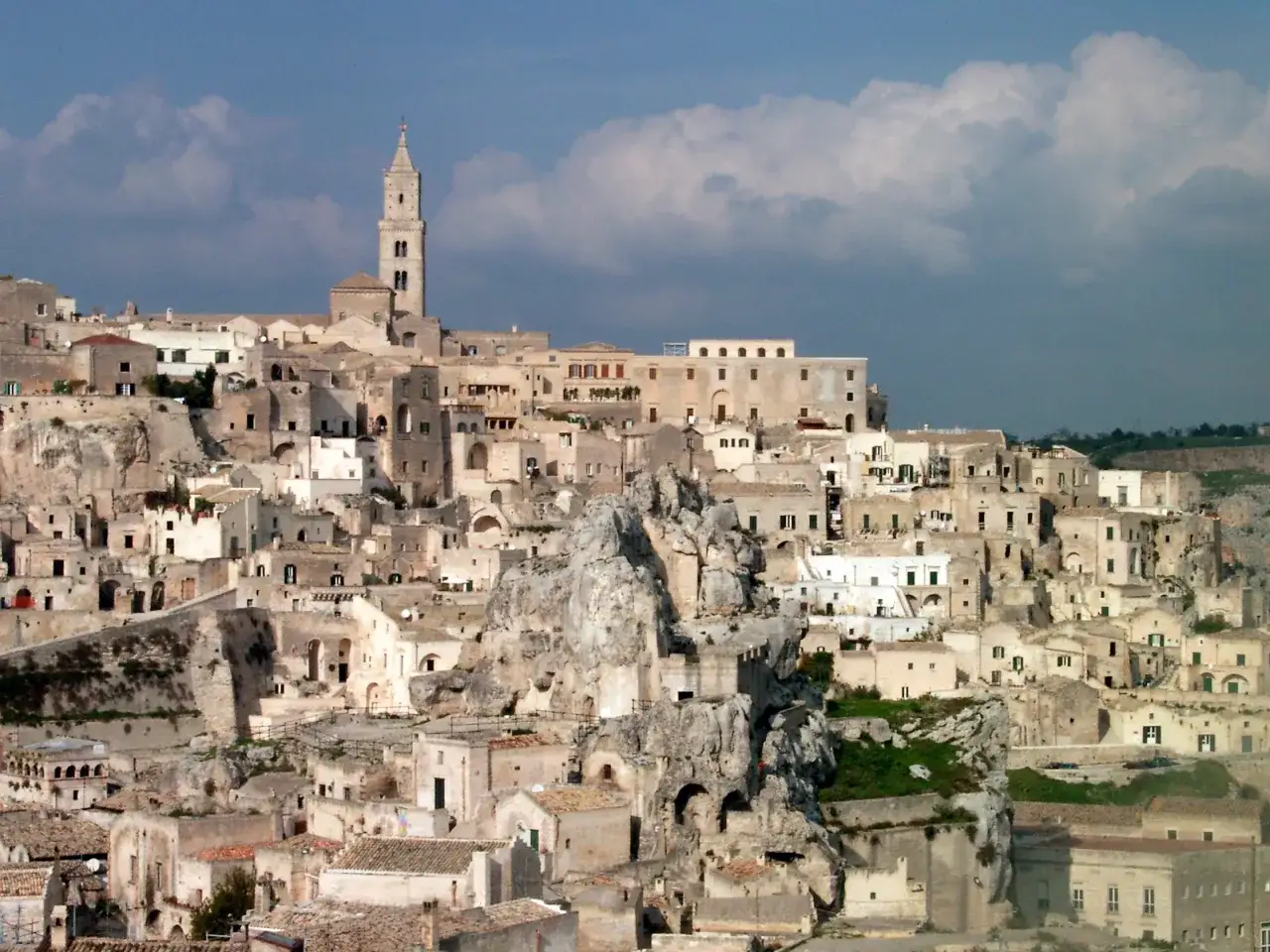
See Matera from the opposite side of the ravine
Matera becomes more impressive when you see how the stone districts sit inside the landscape. The classic move is to cross or face the ravine and take in the whole city from a viewpoint such as Murgia Timone or one of the terraces above the Sassi. That wide view is what reveals why Matera feels so unusual: it is not just old, it is carved into a setting that amplifies every wall, roofline, and path.
The best-known lookouts include Piazzetta Pascoli and the terraces near the Belvedere dei Tre Archi. These are especially useful if you want the city-facing postcard view without committing to a long hike. I would time at least one of them for late afternoon or sunset, because the light softens the limestone and the whole scene becomes much easier to read visually.
Then add one or two of the rupestrian churches, which is the term for rock-cut churches built directly into the stone. Santa Maria de Idris is one of the most scenic choices inside the city, while the Crypt of the Original Sin is the kind of site I would book ahead rather than leave to chance. The details matter here: Matera’s religious spaces are not decorative extras, they are part of how the landscape was inhabited.
- Murgia Timone gives you the widest and most complete city view.
- Piazzetta Pascoli is a good urban viewpoint if you want something easy and central.
- Santa Maria de Idris shows how tightly church and rock architecture are connected in Matera.
- The Crypt of the Original Sin is worth advance planning because it is not a casual drop-in stop.
From there, the question becomes how much of the city you want to pair with the surrounding landscape.
Decide how long to stay before you pack the rest of the trip
My rough planning rule is simple: one night is the minimum, two nights is the sweet spot. Matera can be seen quickly, but it rewards slower attention. If you compress it too much, you end up with the shape of the place but not the feeling of it.
| Trip length | What I would prioritize | Best for | My take |
|---|---|---|---|
| Half day | A short Sassi walk, one viewpoint, a quick meal | Travelers passing through on a longer southern Italy route | Enough for a first impression, but not enough to understand the city |
| 1 full day | Sassi in the morning, one cave site, sunset from a lookout | People with limited time who still want the essentials | Works well if you keep the day focused and do not overbook it |
| 2 days | Sassi, viewpoints, one park visit, one museum or cave house | Most first-time visitors | This is the balance I recommend most often |
| 3+ days | Matera as a base for slower walks, food stops, and Basilicata exploration | Walkers, photographers, and travelers who like long stays | Best if you want the city to settle in rather than just be visited |
If you are building a tighter schedule, I would keep the first day city-focused and save the more open landscape for the second morning. That way you get both sides of Matera instead of only the easy-to-photograph one, and that balance leads naturally into the park outside town.
Add Murgia Materana Park for the landscape you came for
The city is only half the story. Across the ravine, Murgia Materana Park gives you the open, rugged side of the same heritage landscape, with paths, cliffs, and rock churches spread through a much broader natural setting. This is where Matera stops feeling like a historic center and starts feeling like a terrain shaped by centuries of human use.
I like this part of the trip because it breaks the rhythm of stone lanes with something more spacious. The park contains more than 150 rock churches, along with paths that work well for walking or, if you prefer, an e-bike outing. That makes it one of the best choices if you want a little activity without turning the day into a serious expedition.
- Go to Murgia Timone at sunset if you want the cleanest city panorama.
- Choose an e-bike tour if you want to cover more ground without overdoing the climbs.
- Walk a short stretch of the park if you want the ravine and churches without committing to a long hike.
- Bring water and start earlier in warm weather; the exposed terrain feels much hotter than the old town streets.
Once the outdoor piece is in place, the museums and cave interiors become easier to appreciate because you understand how people actually lived here.
Balance cave houses, museums, and food
The most useful indoor stops in Matera are the ones that give context instead of just more images. A place like Casa Grotta nei Sassi helps you understand the scale of daily life in a cave dwelling, while Palazzo Lanfranchi and the Ridola National Archaeological Museum add art and deeper historical context. I would not treat these as filler stops for a rainy hour; they make the city legible.
If you only pick a couple, I would choose one cave house and one museum. That pairing shows the difference between living space and public history, which is exactly the tension that defines Matera. The cathedral is also worth a stop, especially because it gives the old city a more formal architectural counterpoint and sits naturally within a walking route through the historic center.- Casa Grotta is the fastest way to understand domestic life in the old cave districts.
- Palazzo Lanfranchi gives you art, architecture, and a useful city-center pause.
- Ridola Museum is the better choice if you want the archaeology behind the landscape.
- The cathedral works well as a visual break between the Sassi and the newer parts of the historic center.
For food, I would keep it local and simple rather than trying to overplan every meal. Matera works best with a slow lunch, a coffee break somewhere with a view, and one relaxed dinner where you are not watching the clock. If you build in those pauses, the city feels more generous and less like a race.
Plan around the steep streets and the common mistakes
Matera is not difficult to enjoy, but it is easy to misread. The biggest mistake I see is treating it like a city you can skim in a car. The old core is about walking, stopping, and reorienting yourself every few minutes; if you fight that rhythm, the place starts to feel tiring instead of fascinating.
The second mistake is underestimating the terrain. The stone streets are steep, uneven, and sometimes slick after rain, so comfortable shoes matter more here than in many Italian cities. I would also avoid loading the day with too many fixed tickets or timed entries. A little structure helps, but Matera rewards the space between plans.
- Do not schedule the whole visit for midday; the light is harsher and the city looks flatter than it does later in the day.
- Do not skip the opposite-side viewpoints; without them, you miss the scale of the place.
- Do not carry heavy luggage through the Sassi if you can avoid it; the climbs are real.
- Do not assume every attraction is a casual walk-in; some of the more distinctive cave sites need advance planning.
- Do not try to “finish” Matera in one hour; it is a city that opens up through repetition, not speed.
The last layer is pacing. If you respect that, the city stops feeling tricky and starts feeling deeply coherent, which is exactly how I would want a first visit to end.
The version of Matera I would recommend to most travelers
If I were planning a first trip, I would build it around two nights, one long walk through the Sassi, one sunset viewpoint across the ravine, and one morning in Murgia Materana Park. That combination gives you the city at street level, from above, and in the wider landscape that shaped it. It is the most complete version of the experience without becoming exhausting.
For anyone trying to decide what to do in Matera, the simplest answer is this: walk the old stone city slowly, step back for the big view, and leave room for one quiet meal or museum stop in between. That is the rhythm that makes Matera feel less like a sightseeing target and more like a place with depth. If you keep the schedule loose enough to notice the light changing on the stone, the city does the rest.