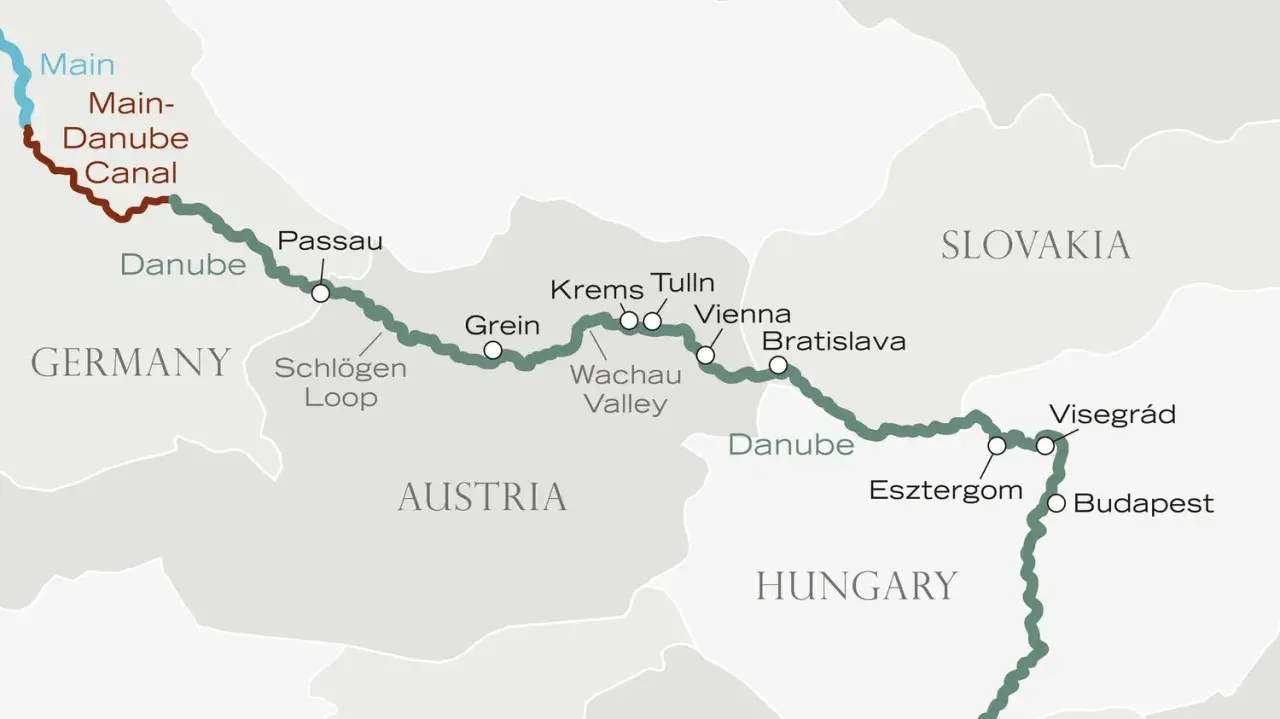
The Passau to Vienna journey is short enough to keep flexible, but long enough that the transport choice changes the whole experience. For most travelers, the real decision is whether speed, price, or scenery matters most. I’ll break down the main ways to travel, what they cost in practice, and the small planning details that save time once you are on the road or rail.
For most travelers, rail is the fastest and least complicated option
- The quickest rail connection is a little over 2 hours, while the drive is about 261 km and usually around 3 hours in clear traffic.
- Bus travel is typically around 3 hours 40 minutes and is best when price matters more than flexibility.
- Austrian motorways require a vignette for cars up to 3.5 tonnes; for a short stay, the 10-day vignette is the practical buy.
- Train luggage is easy to manage because you do not need to weigh or reserve your bags, and standard luggage travels free.
- If you want a scenic holiday rather than a transfer, a Danube cruise turns the route into a multi-day trip.
How the main travel options compare
Before you book anything, it helps to look at the route as a practical choice between four very different experiences. The times below are the main in-seat or driving times, not your walk to the station or the time it takes to get from Vienna’s terminal to your hotel.
| Mode | Typical travel time | Rough cost signal | Best for | Main tradeoff |
|---|---|---|---|---|
| Train | About 2 hours 20 minutes to 3 hours | Roughly €50 to €210 depending on ticket type and flexibility | Fast city-to-city travel, easy luggage, low-stress planning | Best fares can sell out and the exact timetable can vary |
| Car | About 3 hours | Fuel plus a 10-day vignette at €12.80, plus parking in Vienna | Detours, family travel, side trips in Upper Austria or the Wachau | Vienna traffic and parking can erase the convenience quickly |
| Bus | About 3 hours 40 minutes | Fares often start in the high-20s | Budget travel and simple point-to-point transit | Less flexible if your schedule changes or traffic slows the trip |
| Danube cruise | Usually 4 to 8 days | From the mid-€400s per person for short cruises, higher for longer sailings | Scenic travel where the journey is the holiday | Too slow if you only need to get to Vienna |
The biggest difference is not distance. It is how much logistics you want to carry with you. If I were planning this for myself, I would start with the train, then only move to the car or bus if the trip had a clear reason to do so.
Why the train usually wins for a point-to-point trip
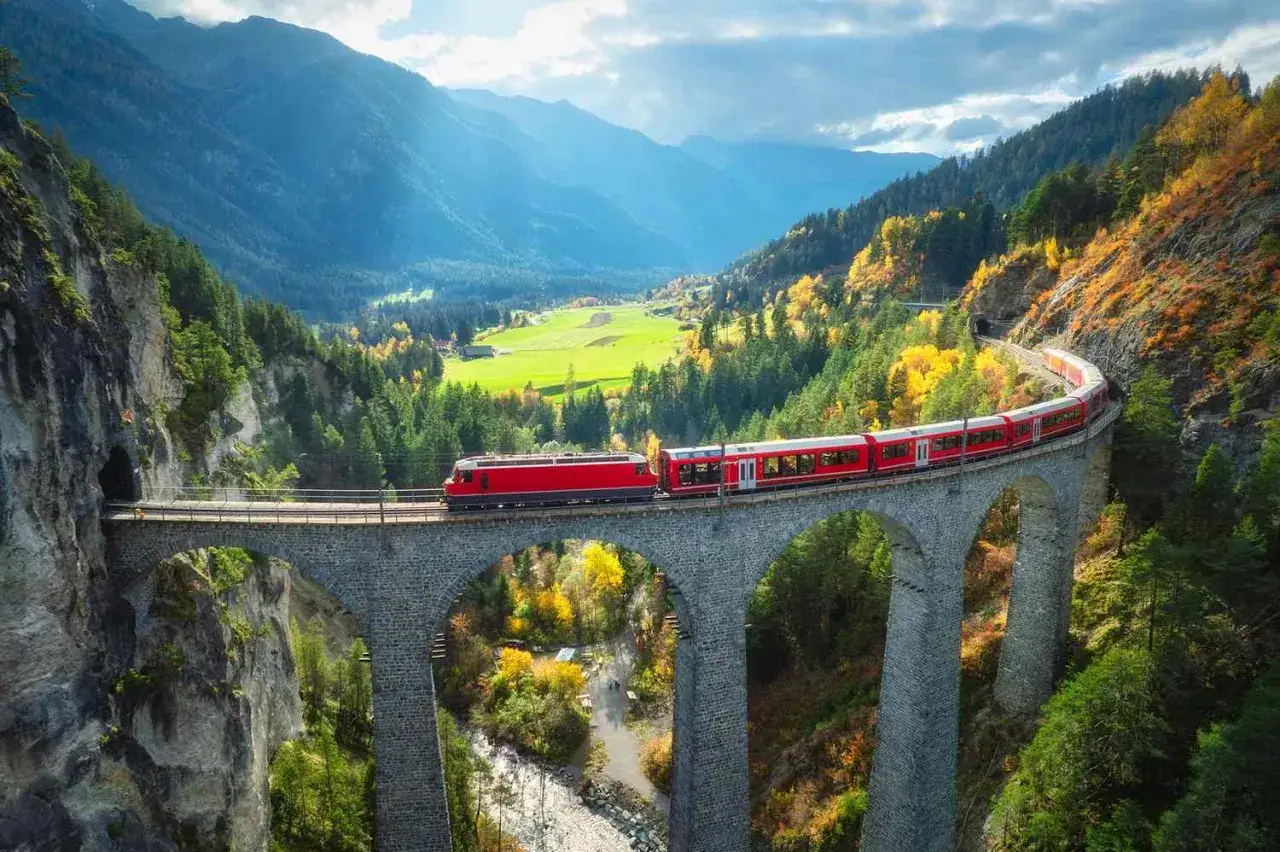
For a direct city break, I think the train is the cleanest answer. The fastest connection is a little over two hours, and even when you build in real-world transfer time, the trip stays compact. That matters because Passau and Vienna are both cities where a railway station makes more sense than a parking garage.
There is also a practical comfort advantage. You can bring standard luggage without weighing or measuring it, so the trip stays simple if you are carrying a normal suitcase or backpack. That sounds minor until you compare it with the stop-and-start rhythm of a road journey. On the rail option, the main task is to choose the right departure, then sit back and let the route do the work.
When booking, I would be a little more careful than the average traveler. Seat demand can spike on weekends, holidays, and summer travel dates, so an early booking is worth it if your schedule is fixed. Saver fares on Germany-Austria routes can be attractive when booked ahead, but the price rises fast once the best buckets are gone. If your trip includes onward travel in Vienna, the biggest advantage is that you arrive ready to move on, not ready to find parking.
One small detail that matters: do not assume every departure is identical. Check the exact train, the transfer time if there is one, and your arrival station before you book. That little bit of discipline usually saves more stress than any last-minute bargain hunting does.
Driving gives you freedom, but Vienna will test your patience
The road distance is roughly 261 km, and in clean traffic the drive usually lands around 3 hours. That is short enough to feel easy on a map, but the trip becomes more nuanced once you factor in the Austrian motorway rules, city traffic, and the reality of parking in Vienna. The drive is good when you want to shape the day yourself. It is less good when you want the lowest-friction transfer.
For a short car trip, the main fixed cost is the motorway vignette. In Austria, cars up to 3.5 tonnes need one before using motorways or expressways, and the 10-day version is the sensible choice for most visitors. In 2026, that vignette is priced at €12.80. I would treat it as part of the route cost, not as an annoying extra, because it is simply the price of using the fast roads cleanly and legally.
The real question is whether you will use the car for more than just the highway run. If you want to stop in the Wachau, wander through Linz, or turn the journey into a slower scenic day, driving makes sense. If you are heading straight into Vienna for a hotel stay, I would think twice. Parking can add cost and friction fast, and that is before you deal with traffic near the city center.
My rule is simple: I drive this route only when the car is part of a bigger plan. If it is just about getting from A to B, rail usually does the job better.
The bus makes sense when budget matters more than flexibility
The bus is the value option, and on this route it is more practical than many travelers expect. A direct service from Passau to Vienna takes around 3 hours 40 minutes, which is not dramatically slower than driving when you include real-world traffic and stop time. It is also a straightforward one-seat trip, which suits travelers who want to avoid transfers.
There are two reasons I would choose the bus. The first is price. The second is simplicity if I am traveling light. The trip is usually easier to justify when the fare difference is meaningful, especially for solo travelers or students. The operator also includes a basic luggage allowance, free Wi-Fi, and power outlets, so the experience is not bare-bones in the way people sometimes assume.
Still, the bus has limits. It is more exposed to traffic than the train, and it offers less flexibility if your plans move by an hour or two. If I had an evening reservation, a connection onward in Vienna, or a packed schedule, I would not rely on the bus as my default. I would use it when the budget saving is worth the compromise, not because it is the cleverest all-around choice.
When the scenic answer is a Danube journey instead of a transfer
Not every trip from Passau to Vienna should be treated as a transfer. If the point of the journey is scenery, then the best version is often a Danube cruise or a bike-and-boat itinerary. Passau is a natural embarkation point for this kind of travel because the riverfront is built for it, and the route into Austria is exactly where the landscape starts feeling like part of the reward.
Short cruise programs on this stretch commonly run for 4 nights, while fuller itineraries stretch into 5, 7, or 8 days. Vienna, the Wachau Valley, Melk, Dürnstein, Linz, and sometimes Bratislava all appear on these programs because they work so well together as a river narrative. That is the point I would emphasize: this is not just transport with a prettier view. It is a holiday structure built around the river itself.
If you like active travel, bike-and-boat trips are worth a look too. They usually give you a floating base and a daily ride, which is a very different way to experience the Danube corridor. That format works especially well for travelers who care more about immersion than speed. It does not work if your priority is a fast arrival in Vienna, and I would not pretend otherwise.
In other words, the scenic version is brilliant when the journey is the goal. If you only need the destination, it is the wrong tool.
What I would book for each kind of traveler
- If speed matters most, I would book the train and aim for the cleanest connection rather than the cheapest possible fare.
- If flexibility matters most, I would drive, but only if I planned to use the car beyond the Vienna leg.
- If price matters most, I would compare the bus against early-booked rail fares before deciding.
- If scenery matters most, I would stop treating this as a transfer and turn it into a Danube cruise or multi-day river trip.
- If your schedule is fixed, I would book early, because the easiest departures are usually the first to tighten up.
The best decision is usually the one that matches the shape of the whole trip, not just the distance between the two cities. For a quick city break, the train is the most balanced answer. For a road trip, the car gives you freedom but comes with parking and toll overhead. For a scenic holiday, the river route is the memorable one. I would choose first by trip style, then by price, and only then by the raw travel time.