Driving in Italy can make a trip far easier, especially if your plan includes hill towns, coastal roads, lakes, or mountain scenery that trains do not reach cleanly. The catch is that the requirements are practical, not abstract: you need the right license, the right ID, the right payment card, and enough flexibility to handle age rules, deposits, and Italian traffic zones. I am focusing here on the parts that actually decide whether you leave the rental desk with keys in hand or walk away frustrated.
The essentials you need before pickup
- Bring a valid U.S. driver’s license, and plan to carry an International Driving Permit or an official Italian translation as backup.
- Have your passport or another accepted photo ID with you, because the license alone is usually not enough at the counter.
- Use a credit card in the main driver’s name unless the exact rental desk clearly says it accepts something else.
- Check the minimum age and license-history rules before you book; many rentals start at 21, and some categories require 25.
- Expect a deposit, a possible young-driver fee, and road rules that matter just as much as the paperwork once you start driving.
What the rental desk will actually check
When I strip away the marketing and small print, the pickup process usually comes down to four things: proof that you can legally drive, proof of who you are, proof that you can pay, and proof that your booking matches the person standing at the counter. That is why the requirements for renting a car in Italy are less about one magical document and more about showing a complete, consistent set of documents.For a U.S. traveler, the safest setup is simple: a valid U.S. driver’s license, a passport, and an International Driving Permit. The U.S. Embassy in Italy advises tourists who plan to drive to get an IDP, and in practice I treat that as the safest default even where a local rule may look a little more flexible. An IDP is not a replacement for your license; it is a translation that helps the rental desk and the police read it easily.
| Document | Why it matters | Common problem |
|---|---|---|
| U.S. driver’s license | Proves you are licensed to drive | Expired, damaged, or only digital |
| International Driving Permit | Helps translate your license for local use | Getting it after you leave the U.S. |
| Passport | Used as identity verification | Bringing only a license |
| Credit card in the main driver’s name | Used for the deposit and pre-authorization | The card belongs to a spouse or travel companion |
If you are applying for an IDP from the U.S., the process is straightforward: you need your valid U.S. license, two passport photos, and the permit fee. It is a one-year document, and it is worth getting before departure rather than hoping you will not be asked for it. That extra preparation matters even more once you move from documents to age rules, because that is where many first-time renters get caught.
Age and licence history can block a booking faster than bad weather
Italy is one of those places where the legal driving age and the rental age are not the same thing. You may be legally allowed to drive, but the rental company can still refuse the booking because of age, vehicle class, or how long you have held your license. I have seen this catch travelers who only checked the headline price and skipped the eligibility rules.
- Minimum age: Many Italian rental counters start at 21, but some offices and vehicle categories require 25.
- Young-driver fee: If you are under 25, expect an extra charge in many cases.
- License age: Some suppliers want a license that has been valid for at least 12 months.
- Vehicle restrictions: A compact car may be available when an SUV, automatic, or premium model is not.
- Recent renewals: If your license was renewed recently, keep the old one if it helps show driving history.
Hertz Italy states that the standard minimum can be 21, with some locations and categories set at 25, and that drivers under 25 can face a young-driver surcharge. That kind of rule is common across the market, even if the exact threshold changes by office and season. The practical takeaway is simple: if your trip depends on a specific car type, check eligibility before you lock in the itinerary. Next comes the part that looks boring until the deposit hits your card.
Choose the car with Italy’s roads in mind
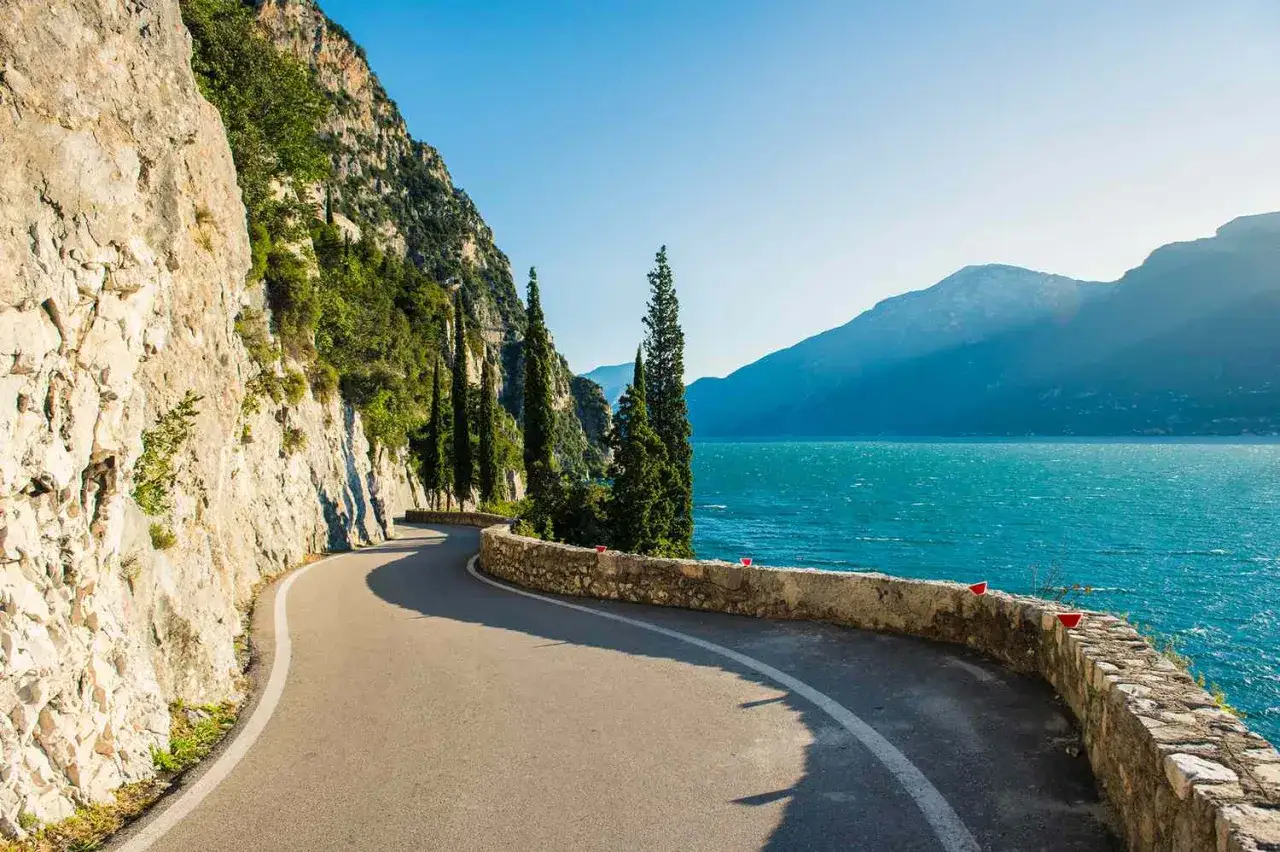
I would not pick the car the same way I would for a U.S. highway trip. In Italy, the smarter choice is usually the smaller one, because many of the roads that make the trip memorable are also narrow, twisty, and not especially forgiving when it comes to parking.
A compact car is often the best fit if your plan includes old town centers, village stays, or day trips through the countryside. It is easier to park, easier to maneuver through tighter streets, and less stressful in places where the road suddenly narrows after a medieval gate. A larger vehicle can make sense if you are traveling with family, heavy luggage, or planning long motorway runs, but I would only choose it when the space is genuinely worth the tradeoff.
If your route leans toward the Amalfi Coast, Tuscany, the Dolomites, or small lakeside towns, I would think in terms of access first and comfort second. A nicer car is not much help if you hate threading it through stone lanes or squeezing into a parking space the size of a stamp. That is also why the payment card and deposit rules deserve attention before you commit to a size class.
The card you use can matter more than the card you carry
This is the part people underestimate. A rental company can accept your booking online and still reject you at pickup if the payment card does not match the main driver, lacks enough available credit, or does not meet the office’s specific policy. I always assume the card is as important as the license.
| Payment method | How it usually works | My practical view |
|---|---|---|
| Credit card | Most reliable for the deposit and pre-authorization | Best choice for a smooth pickup |
| Debit card | Sometimes accepted, but not consistently | Only use it if the exact office confirms it in advance |
| Cash | Not a realistic pickup solution | Do not rely on it |
Hertz Italy says the card must be in the main driver’s name and used for the deposit at pickup, and it also notes that payment policies can vary by country and office. Europcar’s Italy terms point in the same direction, with a strong preference for a card in the driver’s name. My reading of that is straightforward: if you want fewer surprises, bring a real credit card, make sure the main driver is the cardholder, and keep enough limit available for the hold. Once the payment issue is solved, the road rules become the next thing that can change your trip from relaxed to expensive.
Insurance, deposits, and the fine print that changes the price
When travelers compare car-rental quotes, they often focus on the daily rate and ignore the layers underneath it. That is usually where the cost gap appears. The real questions are not just whether you can rent the car, but how much of the risk sits on you if something happens.
Before I book, I look for three things: the deposit amount, the damage excess, and what the contract actually covers in case of theft or a scrape in a tight parking spot. A cheap-looking offer can become expensive very quickly if the excess is high or if the protection package is too thin for the route you are driving. This matters especially in Italy, where narrow streets, curb damage, and crowded parking lots are part of normal travel rather than rare exceptions.
I also pay attention to fuel policy. Full-to-full is common, and it is usually the least confusing option, but the contract should still spell it out. If you are collecting the car after a long flight, the easiest mistake is agreeing to terms you do not fully read because you just want to leave the airport. I would slow down there. The final section is where those planning choices become practical on the road.
How Italy changes the first day behind the wheel
Italy is not difficult to drive in, but it is different enough from the U.S. that a little preparation saves real stress. The biggest difference is not the steering wheel position or the speed limits, although those matter. It is the way historic cities and scenic towns manage traffic.
- ZTL zones: Many historic centers restrict vehicle access and use cameras to enforce it.
- Speed limits: General limits are typically 130 km/h on autostrade, 110 km/h on main roads, 90 km/h on secondary roads, and 50 km/h in urban areas.
- Driving side: Traffic drives on the right.
- Parking: I prefer parking outside old centers and walking in whenever possible.
- Road signs: Do not assume signs will be intuitive if you are tired from travel or driving at night.
The ZTL is the detail that ruins the most casual first days. If you enter one without authorization, the camera can record the plate and the fine may be routed through the rental company. That is one reason I plan my first route from the airport to the hotel before I land, not after I pick up the keys. If you are heading straight to a city like Florence, Rome, or Verona, I would seriously consider a car park on the edge of the center instead of trying to drive into the heart of it.
The booking routine I use to avoid pickup desk surprises
My own checklist is simple, but it prevents the problems that cost time and money at the counter. I want the reservation, the driver’s documents, and the route plan to line up before I ever leave home.
- Confirm that the reservation name matches the main driver exactly.
- Check that the driver’s license will still be valid for the whole trip.
- Carry the passport, license, and IDP together, not in separate bags.
- Make sure the payment card is in the main driver’s name and has enough available credit for the hold.
- Ask whether the rental includes a second driver, and add one in advance if you need it.
- Review fuel policy, one-way fees, and after-hours pickup rules before arrival.
- Choose the smallest car that still fits your luggage and route.