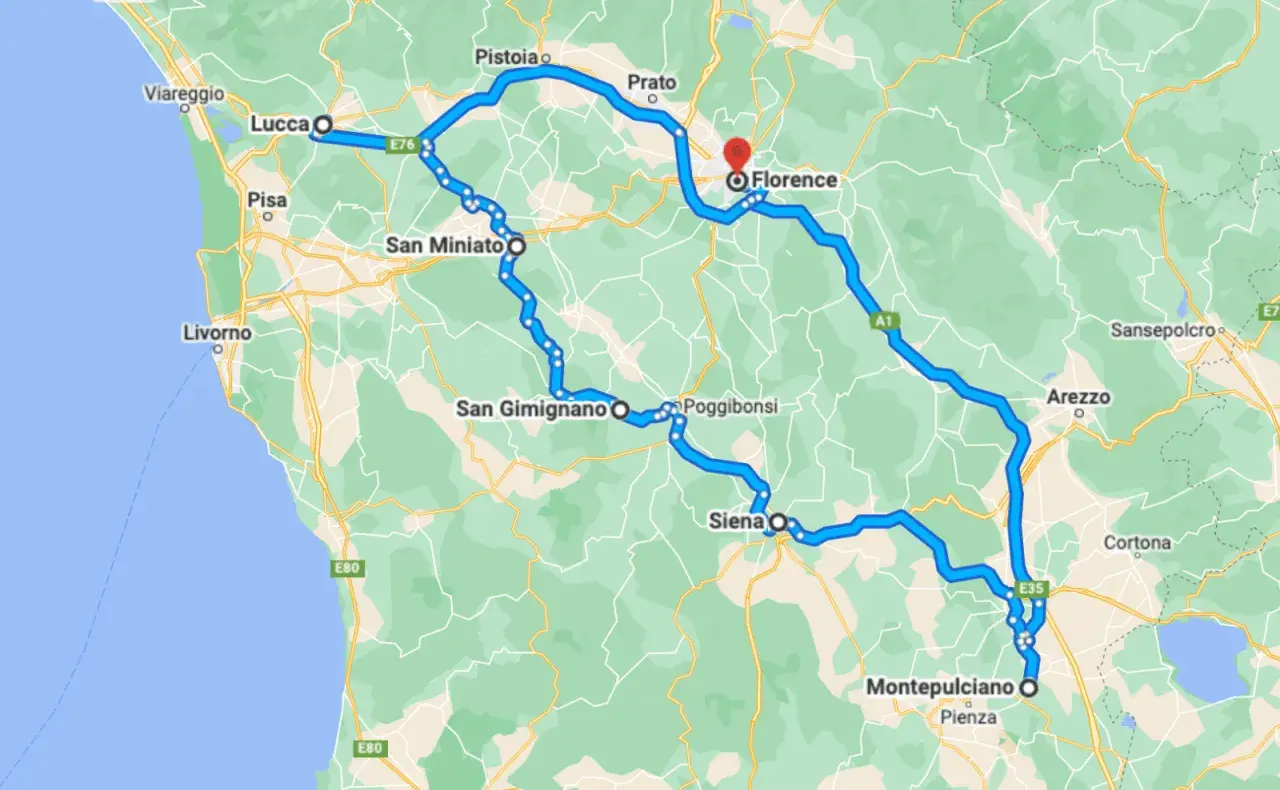
Driving from Rome into Tuscany works best when you treat it as a transfer with options, not a single fixed route. This rome to tuscany by car guide focuses on the decisions that actually change the trip: how long the drive takes, which roads make sense, where to stop, and how to avoid the parking and city-center mistakes that catch travelers out. If you plan it well, the drive becomes part of the experience instead of just the gap between two places.
The drive is straightforward, but the details decide how smooth it feels
- From central Rome, southern Tuscany is usually a 2.5 to 3.5 hour drive, while Florence, Pisa, or Lucca take longer.
- The A1 autostrada is the fastest spine of the trip; scenic detours add time but improve the experience.
- ZTL zones, parking, and hotel access matter more than the highway itself once you reach Tuscany.
- Manual cars are still common in Italy, and automatics usually cost more.
- Siena, Montepulciano, Pienza, and Chianti bases each work well for different trip styles.
How far Tuscany is from Rome and what that means in practice
The useful way to think about Tuscany is not as one destination, but as several different driving targets. If you are heading for the southern part of the region, the road from Rome is short enough for a half-day transfer. If you are aiming for Florence or the northwest, the day gets longer and the margin for a lazy start disappears quickly.
| Destination area | Typical drive from central Rome | Why it matters |
|---|---|---|
| Val d'Orcia, Montepulciano, Pienza | About 2.5 to 3.5 hours | Best if you want countryside first and city time later. |
| Siena | About 3 to 3.5 hours | A strong all-round base for hill towns, wine routes, and easy day trips. |
| Chianti villages | About 3.5 to 4.5 hours | Great if the trip is about vineyards, panoramas, and slower roads. |
| Florence | About 3.5 to 4.5 hours | Fast enough to do in one day, but the city center is not car-friendly. |
| Pisa, Lucca, or the coast | About 4 to 5 hours | Better if you are combining Tuscany with the western side of the region. |
The best route for your kind of trip
For most travelers, the A1 autostrada is the backbone of the journey. Autostrada means toll motorway, while a superstrada is a faster state road that is usually free. The A1 gives you the cleanest, most predictable drive from Rome into Tuscany, and then you can peel off toward the towns and landscapes that matter to you.
| Route style | Best for | What you give up |
|---|---|---|
| Direct A1 transfer | Fastest arrival and the least mental load | Less scenery and a toll road experience |
| A1 with a Val d'Orcia detour | First-time visitors who want the classic Tuscan landscape | More time, slower local roads, and more stops worth making |
| A1 to Siena, then Chianti roads | Wine-country trips and countryside stays | More narrow roads and more parking planning |
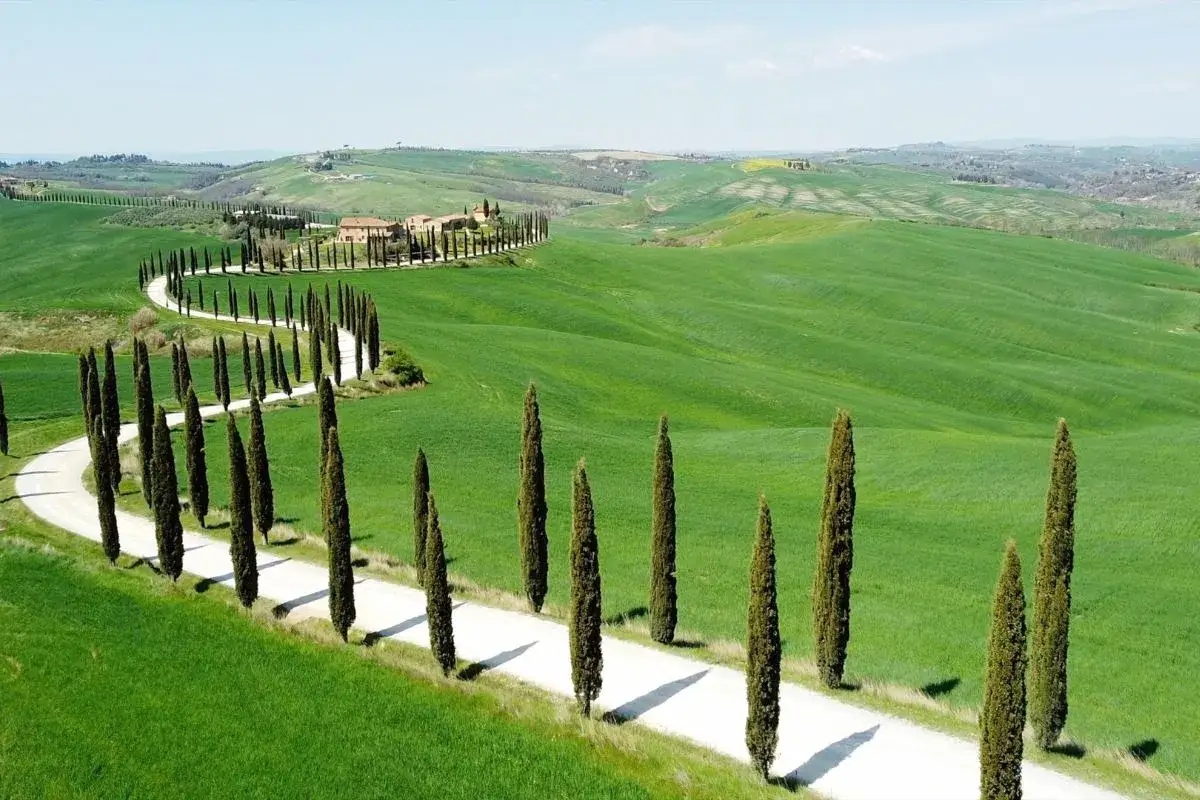
If I were planning a trip for someone who wants the most scenic balance, I would use the highway for the long transfer and save the smaller roads for daylight hours. That matters because the beauty of Tuscany is often in the final stretch, not in the first part of the drive. The roads around Val d'Orcia and Chianti are the places where the trip starts feeling like Tuscany rather than just Italy in transit.
What to know before you start the engine
Once you leave Rome, the main challenge is not speed; it is local driving rules and city access. Tuscany is easy to enjoy by car, but it punishes sloppy planning. The center of many towns is restricted, parking is limited, and a navigation app can still lead you somewhere you should not be driving.
- Drive on the right and overtake on the left.
- Common speed limits are 50 km/h in towns, 70 km/h on secondary roads, 110 km/h on superstrade, and 130 km/h on autostrade, unless signs say otherwise.
- Headlights are compulsory outside city centers.
- The legal blood alcohol limit is 0.5 g/l, so dinner and wine can become a real issue if you are the driver.
- Manual transmission cars are still common, so book an automatic early if you need one.
- ZTL zones, or limited traffic zones, are camera-controlled areas in historic centers; entering one without permission can lead to fines.
- Parking in central areas is often expensive or scarce, so a hotel with its own lot can save a lot of friction.
For U.S. travelers, I would not assume a home-state license is enough on its own. Check your rental agreement, insurance, and whether you need an International Driving Permit before you leave the States. That extra step is boring, but it is far cheaper than discovering a paperwork issue at the counter in Rome. With the legal and rental side squared away, the next practical question is where to stop so the drive feels intentional.
Where I would stop or base myself
Not every Tuscany stop serves the same purpose. Some places are better as overnight bases, some are perfect lunch breaks, and a few are best left for a slow arrival in daylight. I like to choose the stop based on how much of the region I want to feel on the first day.
| Stop or base | Best use | Why it works |
|---|---|---|
| Orvieto | Lunch stop or first overnight | It breaks the drive neatly and keeps you off Rome traffic for most of the day. It is technically in Umbria, but it fits this route beautifully. |
| Montepulciano or Pienza | Scenic first base | Excellent if you want rolling hills, wine towns, and a relaxed pace right away. |
| Siena | Best all-round base | Large enough for services and dining, but still close to the countryside and the Chianti route. |
| Greve in Chianti or Radda | Wine-country stay | Ideal if the trip is about vineyards, tastings, and slow scenic driving between small villages. |
| Florence outskirts or Fiesole | City-adjacent stay with a car | Useful if Florence is part of the trip, but I would keep the car outside the historic core. |
If I had only one overnight in Tuscany after leaving Rome, I would usually choose Siena or Montepulciano. Siena gives you more flexibility; Montepulciano gives you a more cinematic arrival. If the priority is city sightseeing, I would not force a car into the center of Florence just to say I drove there. The smarter move is to park outside the restricted area and treat the city as a walking stop.
A simple trip plan that actually works
The cleanest road-trip plan is the one that respects both the highway and the countryside. I prefer itineraries that keep the first day simple, because the temptation to cram in too much after a Rome departure usually creates stress rather than value.
- For a one-night transfer, leave Rome early, stop in Orvieto for lunch, and sleep in Montepulciano, Pienza, or Siena.
- For a two-night break, spend the first night in Val d'Orcia and the second in Siena, then use the following day for a slower scenic loop.
- For a three- to four-day mini road trip, combine southern Tuscany, Siena, and Chianti, then return to Rome or continue north depending on the rest of your itinerary.
- For a Florence-focused trip, keep the car for the countryside leg and hand it back before you settle into the city.
In practical terms, the sweet spot is one long transfer day and then shorter regional drives after that. That gives you time for the roads people remember, not just the kilometers they cover. It also reduces the chance of arriving tired, missing a turn into a ZTL, or discovering that your hotel parking is harder to find than your room.
The version of this drive I would actually choose
If I were planning the trip myself, I would keep the first leg efficient and the second leg scenic. The highway gets you into the region cleanly; the smaller roads give Tuscany its character. That combination is what makes a road trip here worth doing in the first place.
- Use the A1 for the long Rome-to-Tuscany transfer.
- Break the drive with one meaningful stop instead of several rushed ones.
- Book a stay with parking if you are sleeping anywhere near a historic center.
- Arrive in daylight whenever possible, especially if your base is in the hills.
- Leave the car outside city centers that are better explored on foot.
The most reliable approach is simple: drive from Rome to your Tuscan base, not to the middle of a medieval center. From there, let the region open up in shorter loops, because Tuscany rewards slower movement more than long, complicated days behind the wheel.