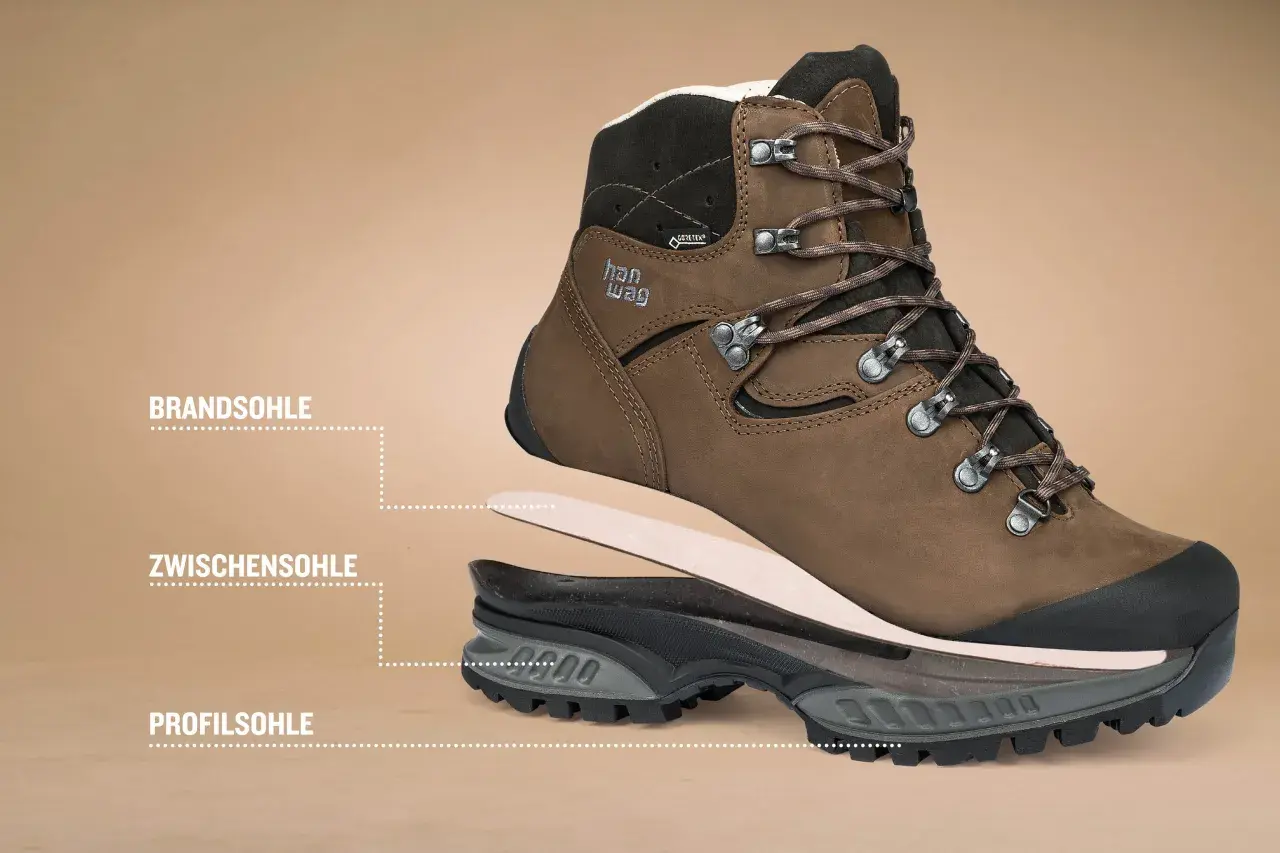
The lower part of a boot is usually called the outsole, while sole is the broader everyday term for the whole bottom unit. In hiking footwear, that distinction matters because the outsole, midsole, and tread all affect grip, comfort, and how well the boot holds up on trail. I’m going to break down the naming, the parts that sit under your foot, and what actually matters when you choose a boot for rough ground.
The quick answer and the terms worth knowing
- Outsole is the part that touches the ground.
- Sole is the broader term that can refer to the whole bottom of the boot.
- Midsole sits above the outsole and adds cushioning and support.
- Tread is the pattern on the outsole, and lugs are the raised grip blocks.
- For hiking boots, outsole design matters more than most casual shoppers realize.
The outsole is the ground-contact layer
When I answer the question directly, I usually say this: the bottom part of a boot is the outsole. If someone says sole, they are often speaking more loosely about the entire bottom assembly, not just the outer rubber layer that meets the trail.
That difference sounds small, but it helps you talk about boots with more precision. If the outsole is worn smooth, the boot may still feel fine on the inside, yet it loses grip where it matters most. Once you separate the outsole from the rest of the sole, the rest of the boot becomes much easier to understand.
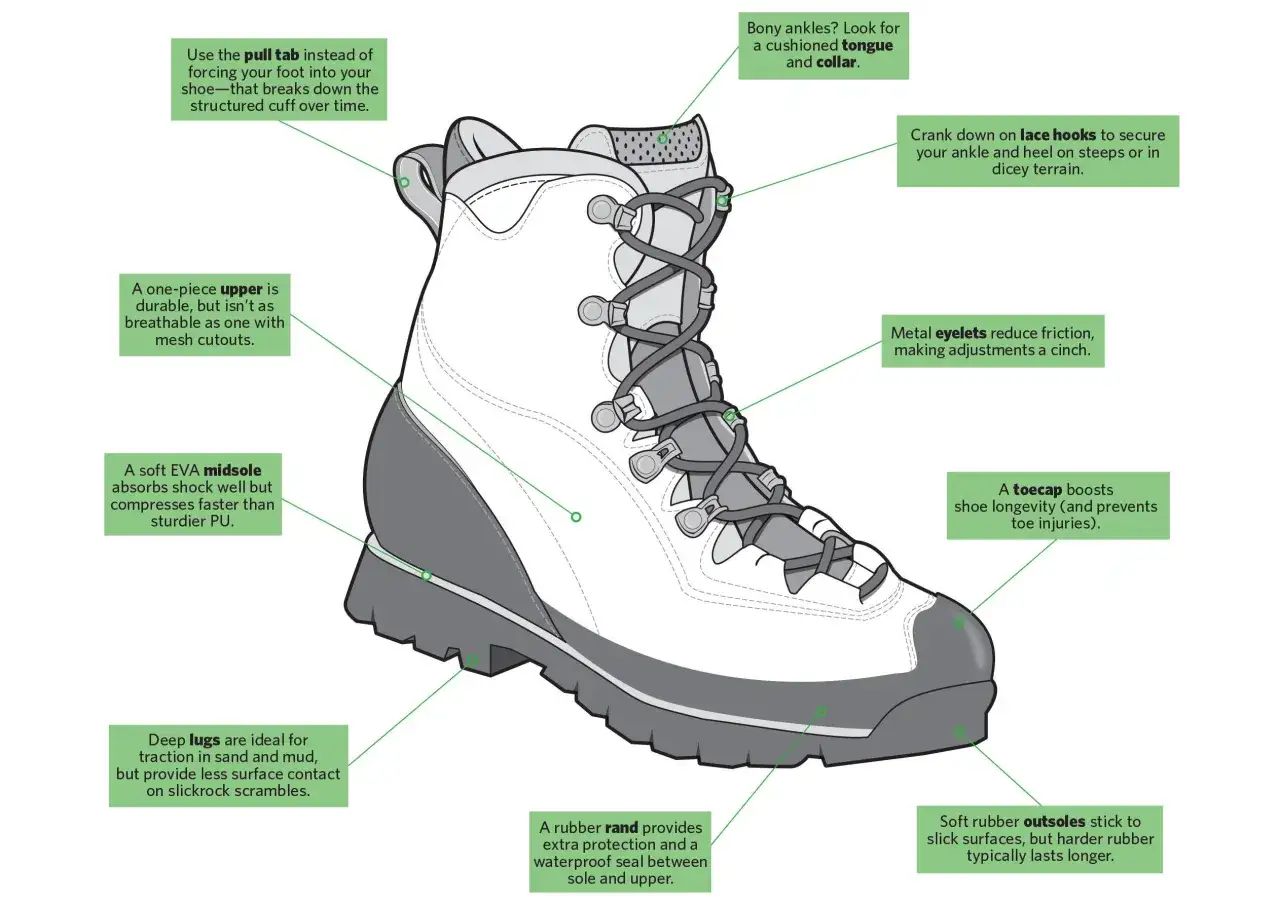
What the layers under your foot actually do
| Part | Where it sits | What it does | Why hikers care |
|---|---|---|---|
| Outsole | Outer bottom layer | Provides traction and abrasion resistance | Controls grip on rock, mud, gravel, and wet ground |
| Midsole | Between outsole and insole | Absorbs shock and adds cushioning | Affects long-distance comfort and underfoot support |
| Insole | Inside the boot, under your foot | Creates the immediate footbed feel | Can be swapped out for better fit or support |
| Shank | Embedded in the sole unit | Adds stiffness and stability | Helps on rocky terrain and with heavier packs |
| Tread and lugs | Pattern on the outsole | Improves bite and self-cleaning | Deep lugs help in mud and loose ground |
For hiking, I care most about how these layers work together rather than the name of any one part. A boot can have a comfortable insole but still feel poor on a steep descent if the outsole is too soft, too smooth, or too flexible. That is why outsole talk quickly turns into traction talk.
Why outsole design changes the way a hiking boot feels
Outsoles are not all built for the same kind of trail. Some are tuned for durability, some for grip, and some try to balance both. On paper, they may all look like rubber bottoms, but in practice the difference can be obvious after the first wet rock or loose scree slope.
- Rubber compound matters. Softer compounds usually bite better on wet stone, but they can wear faster.
- Harder compounds usually last longer, but they can feel less secure on slick surfaces.
- Lug depth matters more than most beginners expect. You will often see lighter trail shoes around 2.2 mm, while more aggressive hiking models are often closer to 4-5 mm.
- Lug shape and spacing affect how well mud sheds. Wider spacing usually clears debris better than a packed, flat pattern.
- Flex changes the ride. A stiff sole can feel controlled on rocky ground, while a more flexible one can feel smoother on easier paths.
That trade-off shows up clearly on real hikes. On damp limestone in the Picos de Europa or on rooty forest paths after rain, I would rather have dependable bite than a soft, cushy ride that slides around. The outsole is where that decision gets made, and the next question is where each type of terrain pushes you toward a different design.
How terrain changes the sole you want
| Terrain | What helps | What I would avoid |
|---|---|---|
| Wet rock | Softer rubber and a grippy tread pattern | Hard, shallow lugs that skate on smooth stone |
| Mud | Deep, widely spaced lugs | Flat tread that clogs quickly |
| Loose gravel and scree | Stable platform, decent stiffness, controlled heel | Very soft soles that twist too easily |
| Mixed trail and town use | Moderate lugs and a balanced midsole | A highly aggressive outsole that feels clumsy on pavement |
| Snow and cold conditions | Deeper traction and compounds built for cold weather grip | Light trail soles that harden too much in low temperatures |
This is where boot choice becomes more than vocabulary. If your hikes are mostly mellow paths, an oversized, aggressive outsole can feel like overkill. If you travel into wetter or rockier places, though, the outsole is one of the few parts of the boot that can save a hike from feeling sketchy. The same logic applies whether you are hiking in the U.S. Rockies or in the sharper, wetter terrain of northern Spain.
Common mistakes that cause confusion
- People call the insole the bottom of the boot, even though it sits inside under your foot.
- People use sole and outsole as if they mean the same thing, which is fine in casual talk but not precise.
- People focus on cushioning and ignore traction, then wonder why the boot feels unstable on steep descents.
- People assume more aggressive tread always means better hiking performance, even though deep lugs can feel awkward on hard surfaces.
- People forget that outsole wear is often the first sign a boot needs repair or replacement.
My rule is simple: if you are talking about comfort inside the boot, you are probably talking about the insole or midsole; if you are talking about contact with the ground, you are talking about the outsole. That one distinction removes a lot of confusion and makes product descriptions much easier to read.
The boot-bottom details I trust on long routes
When I’m evaluating a hiking boot, I look for three things first: confident grip, a midsole that matches the load I’m carrying, and an outsole that fits the terrain I actually hike. If the route is wet, rocky, or steep, I care more about traction than about a soft step-in feel. If the route is easier and longer, I care more about efficient comfort and less about aggressive tread.
- Choose a grippier outsole for wet stone, mud, and technical ground.
- Choose a more durable compound if you walk a lot on mixed surfaces.
- Choose deeper lugs if debris and loose soil are common on your trails.
- Choose a stiffer sole when stability matters more than flexibility.
- Check whether the boot can be resoled if you expect to use it heavily.
If you remember only one thing, make it this: the part touching the trail is the outsole, but the performance of the boot depends on the whole sole system working together. That is the detail that separates a boot that merely looks sturdy from one that actually feels right on the mountain.