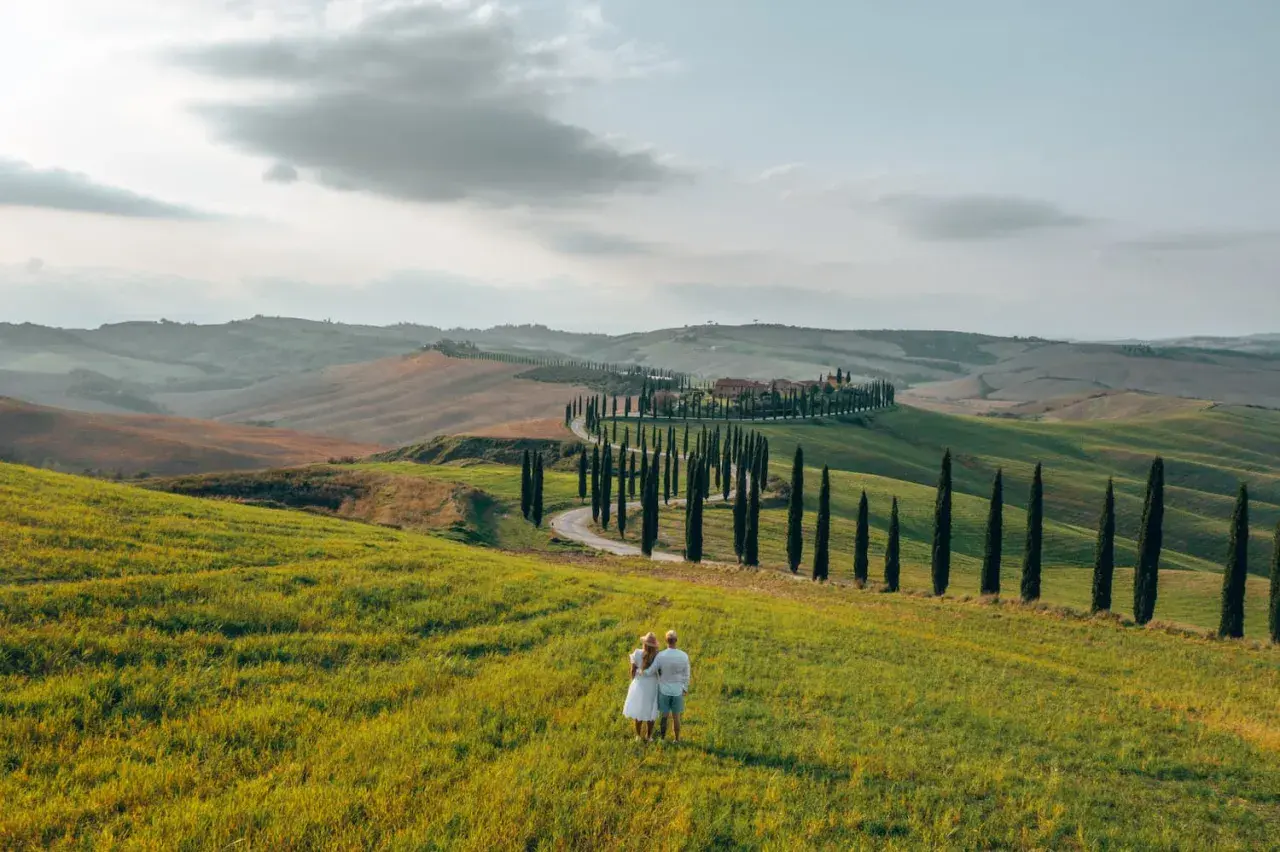
The few decisions that matter most before you collect the keys
- Use a car for the countryside and skip it if your trip is mostly Florence, Siena, or Pisa city time.
- Bring the right documents: for American travelers, that means getting an International Driving Permit before leaving the U.S., plus a credit card in the main driver’s name.
- Book small and simple: a compact car is easier on narrow roads, in parking lots, and in old town streets.
- Watch the ZTL: camera-controlled restricted zones are the fastest way to turn a scenic drive into a fine.
- Budget for more than the base rate: insurance, fuel, parking, tolls, and one-way fees can change the real cost fast.
When a car is worth it and when it is not
I usually tell travelers to think in nights, not kilometers. If most of your time is spent in one city, a car becomes a nuisance: parking takes time, old centers are restricted, and short hops are often easier by train or taxi. If your route leans into the countryside, though, the equation flips quickly.
| Trip style | Car? | Why |
|---|---|---|
| Florence or Siena base with museum days | Usually no | Parking is awkward, ZTL zones are common, and trains or taxis are simpler. |
| Chianti, Val d'Orcia, Montepulciano, Montalcino, smaller villages | Yes | Public transit is sparse and the best stays are often outside town centers. |
| Family trip with luggage and multiple farm stays | Yes | Door-to-door flexibility matters more than train convenience. |
| Short city hop between Florence, Pisa, and Lucca | Maybe | It depends on whether you are day-tripping or sleeping outside the centers. |
For most people, the right answer is not “always rent” or “never rent.” It is “rent when the map turns rural.” Once that is clear, the next step is handling the paperwork properly so the counter does not become the hard part of the trip.
The documents and booking details you should sort first
The U.S. Embassy in Italy says Americans visiting as tourists and intending to drive should obtain an International Driving Permit before leaving the U.S. I would treat that as essential, not optional, even when a booking site makes the process look casual. It is one of those small steps that can save you from awkward conversations at the desk or roadside complications later.
- Passport and valid driver’s license - the basics still matter, and the names must match the reservation.
- International Driving Permit - especially important for U.S. travelers.
- Credit card in the main driver’s name - most agencies want it for the security deposit.
- Age rules - many companies charge young-driver fees or set higher minimum ages for certain vehicle classes.
- Extra driver rules - if someone else will share the driving, add them to the contract.
- Fuel and mileage terms - full-to-full fuel and unlimited mileage are usually the cleanest setup, but check the fine print.
I pay the most attention to insurance language. The excess is the amount you would pay before the insurer starts covering a claim, and a low daily rate can hide a painful deductible. If you want real peace of mind, read the exclusions for glass, tires, underbody damage, and roadside assistance rather than assuming that “full coverage” covers everything.
Once the paperwork is clear, the next mistake to avoid is choosing the wrong car for Tuscany’s roads and parking spaces.
How I would choose the car and pickup point
My default choice for Tuscany is a compact hatchback. It is easier to park, less stressful on narrow roads, and generally cheaper to rent and fuel. Bigger is not better here unless you have a specific reason for it, such as extra luggage, child seats, or a route that is mostly highway rather than village roads.
| Choice | Best for | Trade-offs |
|---|---|---|
| Compact manual | Travelers comfortable with stick shift who want the lowest price | Cheapest and easiest to place in tight spaces, but not ideal if you are rusty with manuals. |
| Compact automatic | American drivers and anyone who wants the least stressful option | Usually costs more and books out earlier, especially in peak season. |
| Station wagon or small SUV | Families, longer stays, or heavier luggage | More comfortable for storage, but less pleasant in tight lanes and small parking bays. |
| Airport pickup | First-time drivers and direct countryside itineraries | Often the smoothest exit from the city, though airport rates can be higher. |
| City pickup | Travelers spending the first nights car-free | Useful if you are basing in town first, but you still need a clean exit route out of the center. |
I prefer airport pickup when I am leaving the city immediately, because the first twenty minutes are simpler and I avoid weaving through old streets with luggage in the back. If I am spending a few nights in Florence first, I wait until I am actually heading into the countryside. That small delay often saves more stress than money, which is a better trade in Tuscany anyway.
Automatic cars are worth the premium for many U.S. travelers. Manual cars are common in Europe, but the road stops, hill starts, and parking maneuvers can be enough to make a holiday feel like a driving exam. If you want the trip to stay easy, book the simplest car that fits your luggage and your comfort level.
With the car chosen, the real driving challenge is not distance. It is the rules hidden in city centers and parking signs.
The driving rules that catch visitors out
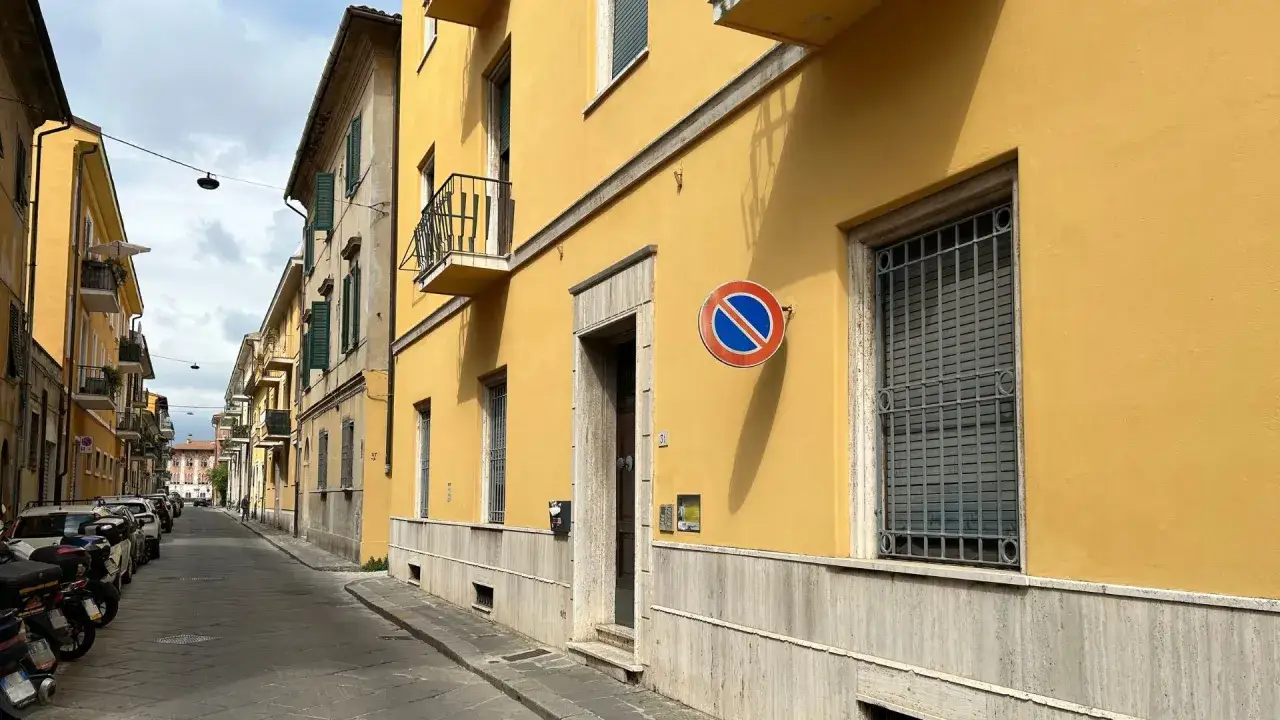
The biggest trap in Tuscany is not the open road. It is the historic center. Many towns use ZTLs, or limited traffic zones, where cameras record license plates and unauthorized entry can trigger fines. If a sign shows restriction, assume it is real. Do not follow another car into a zone just because the road looks open.
- ZTL zones - historic centers often use plate-reading cameras and clearly marked access signs.
- Parking colors - blue is usually paid, yellow is reserved, and white can mean free or resident-only depending on the sign.
- Navigation apps - useful for routes, but not a guarantee that a turn is legal in an old town.
- Town driving - narrow streets, blind corners, scooters, and pedestrians require slower reactions than the map suggests.
- Speed limits - Italia.it lists the standard limits as 50 km/h in built-up areas, 90 km/h on secondary roads, 110 km/h on main roads, and 130 km/h on motorways.
The rule I use is simple: if the road feels like it belongs to pedestrians, park outside and walk in. That is especially true in Florence, Siena, Lucca, and the smaller hill towns where the prettiest streets are also the least car-friendly. If your hotel offers parking, ask for the exact approach route before you arrive. “Near the center” is not the same thing as “easy to reach by car.”
There is one more detail that matters on the road: plan for Italian driving rhythm, not U.S. driving expectations. Rural roads can be narrow, overtakes happen quickly, and roundabouts are everywhere. I slow down more than I think I need to, and that habit has saved me more than once on blind bends and village approaches.
Once you understand the rules, the next question is money: what a Tuscany car trip actually costs once the extras are added.
What the trip will probably cost
The base rental is only part of the bill. A realistic budget needs room for fuel, parking, tolls, and the extras that appear during checkout. I would rather see travelers overestimate a little than be surprised by a low quote that grows at the counter.
| Cost item | Typical planning range | What to watch |
|---|---|---|
| Compact rental | $40-$90 per day in calmer periods; $80-$150+ in peak summer, airport pickups, or automatic cars | Price moves fast with transmission type, location, and travel dates. |
| Insurance upgrades | Roughly €10-30 per day, sometimes more at the desk | Check the excess, not just the headline wording. |
| Parking | €1-3 per hour for many public spaces; €15-30 per day in busy garages | Town-center garages are often the safest choice near ZTLs. |
| Tolls | A few euros on some highway legs | Scenic backroads are usually toll-free, but longer autostrada sections add up. |
| Fuel | Varies by route; for a multi-day loop, plan for an extra meaningful expense | Short rural drives look cheap until you add several days of stop-start touring. |
| Possible surcharges | Young-driver, one-way, second-driver, after-hours pickup | These are the fees that quietly change a deal. |
If a quote looks especially cheap, I check three things first: the excess, the mileage policy, and whether the car is actually available at the promised time. The cheapest headline rate is not always the cheapest trip. Once those numbers are understood, the last piece is route planning, because Tuscany rewards simple itineraries more than ambitious zig-zags.
A route plan that keeps the trip easy
I like to design Tuscany trips so the car is used for scenery, not for solving city logistics. That means one simple principle: sleep in the city before you pick up the car, then use the car for the countryside sections where it genuinely improves the trip.
- Start with the city nights first, then collect the car when you are actually leaving town.
- Cluster your driving by region instead of zig-zagging across Tuscany every day.
- Book lodging that gives you a real parking solution, not just a vague promise.
- Build in extra time for lunch, check-in, and small road delays on rural routes.
- Return the car before the final big-city stay so you are not paying for parking you do not need.
That pattern works well for routes like Florence to Chianti, or Siena to Val d'Orcia, or a countryside loop that includes Montalcino, Pienza, and Montepulciano. It also keeps the trip readable. You are not constantly asking whether the car should be with you every day; you are using it where it actually earns its keep.
A small but useful habit is to plan parking before the drive, not after arrival. I look up the hotel lot, a public garage, or a legal edge-of-center option before I leave for the day. That one habit avoids the worst kind of travel fatigue: circling an old town with luggage and no clear place to stop.
The simplest way to keep Tuscany flexible, not stressful
If I were planning this trip from scratch, I would keep the formula simple: choose the smallest car that fits your bags, get the International Driving Permit sorted before you leave the U.S., collect the car only when you are ready to leave the city, and park outside historic centers unless you have confirmed access. That approach gives you the good part of Tuscany by car without dragging you into the bad part.
For a city-heavy itinerary, trains and taxis can be the better tool. For vineyard roads, hill towns, and farm stays, a rental car is often the right answer. The win is not just flexibility; it is control over your own pace, which matters more in Tuscany than almost anywhere else in Italy.