Choosing a base on the Amalfi Coast is less about finding a single “best” town and more about matching the trip to the terrain, the budget, and the amount of movement you want to deal with. Positano gives you the classic cliffside drama, Amalfi puts you closer to transport, Ravello trades the beach for quiet views, and places like Praiano, Maiori, Minori, Sorrento, and Salerno can make the whole coast easier to enjoy. I’m breaking down the trade-offs so you can decide where to stay with fewer regrets and fewer logistical surprises.
The smartest base depends on scenery, access, and how much walking you want
- Positano is the most iconic choice, but it is steep, busy, and usually the priciest.
- Amalfi is the best all-round base if you want central access to ferries, buses, and day trips.
- Ravello is ideal for quiet, romantic stays with big views, but it is not a beach base.
- Praiano often gives you a calmer feel and better value without leaving the coast.
- Maiori, Minori, and Atrani are stronger picks for easier walking, smaller crowds, and more practical pricing.
- Sorrento and Salerno work best when transport convenience matters more than the postcard setting.
Choose the base that matches your trip style
The easiest way I’ve found to narrow down the Amalfi Coast is to stop thinking in terms of “best hotel” and start thinking in terms of best base. A great room in the wrong town can make the trip feel tiring, while a simpler stay in the right place can make everything flow better.
| Base | Best for | What it gives you | Main trade-off |
|---|---|---|---|
| Positano | Honeymoons, luxury trips, first-time visitors chasing the classic postcard | Iconic cliffside views, beach clubs, designer hotels, a strong “special occasion” feel | Steep stairs, dense crowds, high prices, and a lot of walking up and down |
| Amalfi | First trips, day-trippers, travelers who want the coast without overthinking logistics | Central location, ferry and bus access, a historic town center | Busy in peak months and less intimate than the smaller villages |
| Ravello | Quiet luxury, gardens, views, slower romantic escapes | High-altitude scenery, elegance, and a calmer atmosphere | No beach base and more separation from the water |
| Praiano | Couples, value-conscious travelers, people who still want coastal views | A quieter middle ground between Positano and Amalfi | Smaller choice of nightlife and fewer headline sights |
| Maiori | Families, easier walking, longer stays | Flatter streets, easier luggage handling, a more practical beach-town feel | Less dramatic scenery than the headline towns |
| Minori | Relaxed stays, food-focused trips, low-key beach time | Compact layout, smaller crowds, a softer pace | Limited nightlife and fewer luxury options |
| Atrani | Travelers who want to sleep near Amalfi but away from the busiest center | A tiny, atmospheric base with easy access to Amalfi town | Very limited inventory and not much room to spread out |
| Sorrento | Transport convenience, broader hotel choice, mixed itineraries | Easy rail access, strong ferry connections, more accommodation variety | Not technically on the Amalfi Coast and less visually dramatic |
| Salerno | Budget-minded travelers, easy arrivals and departures, lower-stress logistics | Better transport links and usually softer pricing than the cliff towns | It feels more like a practical city base than a romantic coastal escape |
If I were stripping the decision down to one question, it would be this: do you want the postcard, the ease, or the value? That one filter does more work than browsing ten luxury lists, and it leads straight into the towns that are most rewarding in real life.
Positano and Ravello solve different problems
Positano
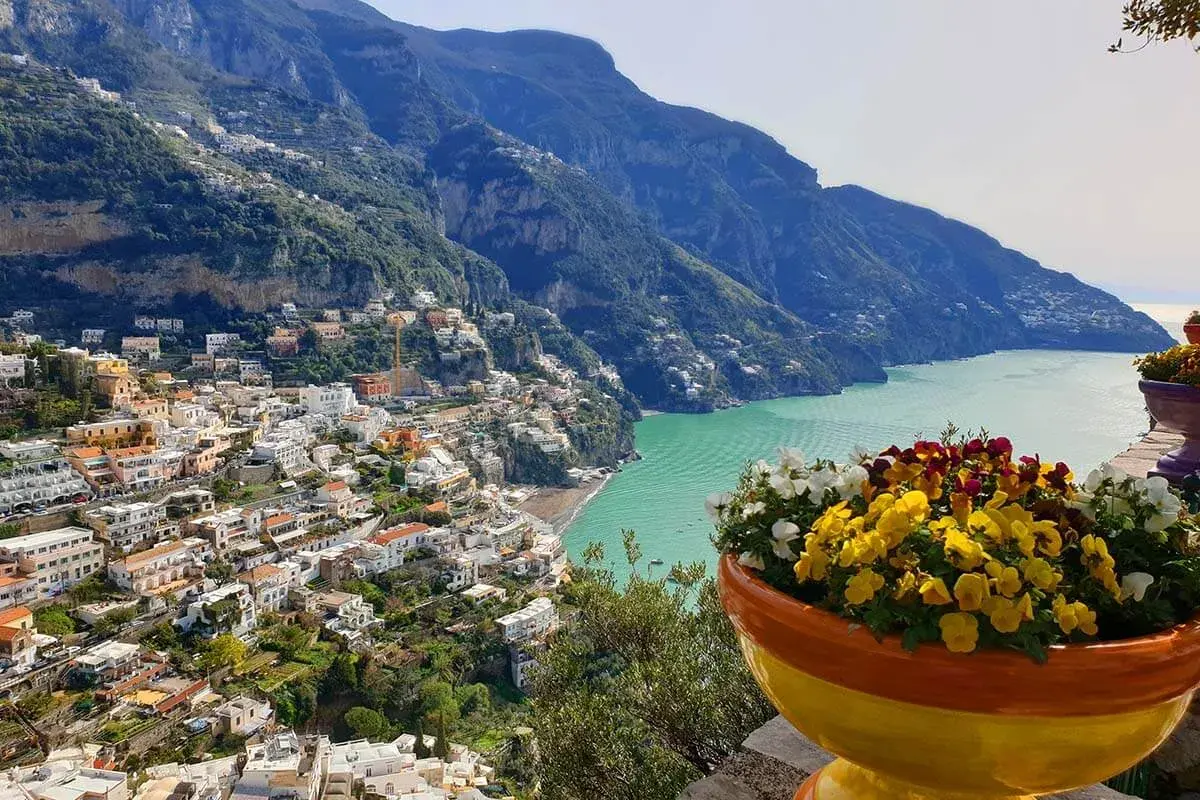
Positano is the answer when the stay itself is part of the experience. The vertical layout, the colored houses, the beach clubs, and the sea views create the exact Amalfi Coast fantasy most people have in mind. I would choose it for a honeymoon, a milestone trip, or a short stay where the hotel is meant to be the headline.
The catch is that Positano asks a lot from you. You will work around stairs, uphill walks, and crowded lanes, and that becomes more noticeable the longer you stay. If mobility, luggage, or easy in-and-out movement matter, I would treat Positano as a splurge, not the default.
Ravello
Ravello lives in a completely different rhythm. It sits above the coast, which means the views are excellent and the pace is much calmer, but you are giving up direct beach access. That trade is worth it if you want gardens, quiet mornings, and a more refined feel rather than a beach-and-bars scene.
I usually recommend Ravello to travelers who care more about atmosphere than swimming. It is one of the best places to sleep if the goal is to slow down and enjoy the landscape instead of constantly moving through it. From here, the question becomes whether you want a more practical base that still keeps you close to the sea.The quieter coastal towns make day-to-day life easier
Amalfi and Atrani
Amalfi is the most useful middle ground on the coast. It is central, well connected, and much easier to use as a base if you plan to ferry between towns or do several day trips. It is also historic enough that staying here still feels like a real Amalfi Coast trip, not a compromise.
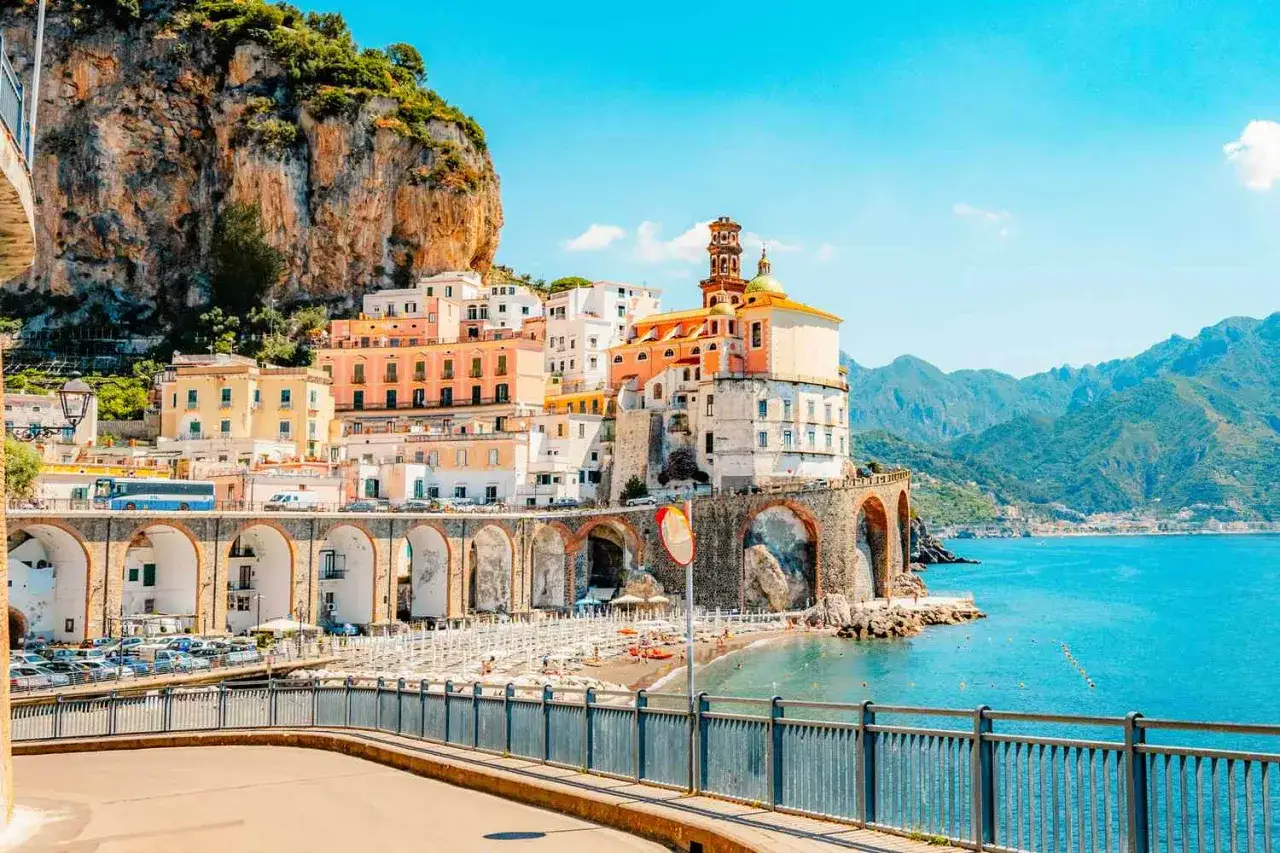
Atrani is the small-scale version of that idea. It is a short walk from Amalfi, which gives you proximity without the busiest center right outside your door. I like Atrani for travelers who want a quieter night’s sleep but still want to move around without much friction.
Praiano
Praiano is the sleeper pick on a lot of Amalfi Coast itineraries. It sits between Positano and Amalfi, but it does not carry the same crowds or the same price pressure. If I want a place that feels coastal and scenic without being the center of attention, Praiano is usually where I start looking.
It is especially strong for couples and repeat visitors who do not need to be in the most famous town every night. You trade away some convenience and nightlife, but you get breathing room, which matters more than people think once the coast gets busy.
Read Also: Which Sicily Airport? Choose the Best for Your Trip
Maiori and Minori
Maiori and Minori are practical in a way the headline towns are not. They are better if you care about easier walking, a less exhausting arrival, and a stay that feels more like living near the coast than performing it. That matters for families, longer stays, and anyone who does not want to haul luggage up endless staircases.
I also like them when the budget needs to stretch a little further. You are still on the Amalfi Coast, but the mood is more relaxed and less theatrical. That makes them useful bases when scenery matters, but not at the expense of comfort. Once you accept that trade-off, the next question is whether it makes sense to stay slightly outside the coast altogether.
Sorrento and Salerno are the practical escape hatches
Sorrento is not technically part of the Amalfi Coast, but I still include it because it solves a lot of trip-planning problems. It has a broader range of hotels, easier rail access, and solid ferry links, which makes it useful if your itinerary also includes Naples, Capri, or Pompeii. I think of it as the logistics-first choice, not the romance-first one.
Salerno plays a similar role farther south. It is especially useful if you want a less hectic arrival or departure, and it often offers better value than the cliff towns. If the coast is only one part of a wider southern Italy trip, Salerno can make the whole plan easier to run.The main rule here is simple: use Sorrento or Salerno when movement and convenience matter more than staying inside the most cinematic stretch of coastline. If you stay on the coast itself, the next decision is how much you should expect to spend.
Know what different stay types cost before you commit
Booking.com currently shows average rates across the Amalfi Coast at about $286 for 3-star hotels, $548 for 4-star hotels, and $1,389 for 5-star hotels. I treat those numbers as a useful planning baseline, not a promise, because the same room can swing hard by season and by town.
| Stay type | Planning range | What you usually get | Best fit |
|---|---|---|---|
| Guesthouse or simple B&B | $150 to $300 per night in shoulder season, often more in summer | Smaller rooms, fewer facilities, a stronger chance of being outside the most famous towns | Maiori, Minori, Atrani, Salerno, and some inland pockets |
| Mid-range boutique hotel | $300 to $700 per night | Better design, breakfast, often a view or terrace, but still plenty of stairs | Amalfi, Praiano, Sorrento, and selected spots in Positano |
| Luxury cliffside hotel | $700 to $1,500+ per night | Big views, strong service, pools, transfers, and the kind of setting that defines the trip | Positano, Ravello, Amalfi |
| Apartment or villa | $250 to $1,200+ per night depending on size and location | More space, a kitchen, and a better setup for families or groups | Longer stays, multi-generational trips, and travelers who want a slower pace |
The biggest money mistake I see is paying for a famous town when the room category does not match the way the trip will actually be used. A great apartment in a quieter village can be better value than a small room with a famous postcode, and that difference becomes obvious the moment you start moving around. Next comes timing, because the same room can behave very differently depending on how long you stay and when you book it.
Plan the stay length and booking window around the season
Lonely Planet suggests staying at least four or five nights on the Amalfi Coast, and I agree with that as a minimum. Five nights is usually the point where you stop feeling rushed, can take one or two day trips, and still have time to enjoy the town you chose instead of using it only as a bed.
For the main season, I would book earlier than most travelers expect, especially if you want Positano, Ravello, or a sea-view room. Summer demand pushes good rooms out quickly, and the best locations are usually the first to disappear. If you are traveling in spring or early autumn, you still want to book ahead, but you will have a little more flexibility.
Seasonality matters more here than on many other coastlines. Some properties close outside the peak window, ferries run on seasonal rhythms, and buses get crowded at the times everyone wants to move. I also think it is smart to check the luggage situation before you confirm anything, because a room that looks perfect online can become annoying if it sits at the top of a long stair climb.For most travelers, ferries are the cleanest way to hop between the main seaside towns, while buses work as the backup when timing is less important. If you want to keep the trip easy, choose one base and move by boat rather than switching hotels every couple of nights. That one decision removes a lot of friction.
The shortest route to the right answer depends on your trip
If I am choosing for a first-time visitor, I usually point them to Amalfi for the balance of location and usability. It is central enough to work well, and it does not force you into the steepest version of the coast unless you want that.
If the trip is about romance and scenery first, Positano or Ravello makes sense, but for different moods. Positano is the glamorous, high-energy version; Ravello is the quiet, elegant one. I would pick based on whether you want to wake up in the middle of the action or above it.
If the goal is better value without leaving the coast, I would look first at Praiano, Atrani, Maiori, and Minori. If the goal is easier arrivals, more transport choice, or a broader hotel pool, Sorrento and Salerno become the smart picks.
When I strip the decision down to one rule, I choose the town that removes the biggest annoyance. That might be stairs, crowds, price, or transit, and the “best” base is the one that makes the rest of the coast feel easy rather than expensive in every sense of the word.