A week in Madeira gives you enough room to do the island properly: one or two serious hikes, a coastal drive, a slow Funchal day, and still a little time to breathe between them. This guide is built for travelers who want a seven-day plan that feels balanced rather than crammed, with practical notes on where to stay, how to move around, and when to shift plans because of weather. The island rewards that kind of pacing.
What matters most for a smooth seven-day Madeira trip
- Base in Funchal unless you have a strong reason to split your stay.
- Keep one flexible day for mountain weather, because the high ground changes fast.
- Use a car if you want the full island circuit, but save guided tours for the steepest or most relaxed days.
- Pack layers even in warm months, since Madeira’s microclimates can change within an hour of driving.
- Prioritize contrast: one east coast hike, one mountain day, one north coast loop, one slower food-and-sea day.
Why seven days is the sweet spot for Madeira
Madeira is compact, but it is not a place you should rush. The island feels bigger than it looks on a map because the roads climb, twist, and slow down the pace in a way that forces you to be realistic. Seven days is the point where you can see the dramatic east coast, the central mountains, the north coast pools, and the calmer south without turning the trip into a logistics exercise.
I also like a full week because it leaves room for the weather to be imperfect. On Madeira, that matters. You can leave Funchal in sunshine, hit mist in the mountains, and arrive on the north coast in wind and spray. A seven-day trip gives you a built-in buffer so you can move a hike, swap a beach day, or shift a scenic drive without losing the shape of the holiday. That is the difference between a good plan and a stressful one.
If you only have four or five days, I would cut Porto Santo or one of the coast loops. If you have a week, you can do the island justice and still slow down enough to enjoy the food, the viewpoints, and the places that are easy to miss when you are in a hurry. That is why I prefer planning the week around a clear rhythm instead of a long wish list.
A route that mixes peaks, coast and Funchal
When I plan a seven-day Madeira itinerary, I try to alternate effort and recovery. The island gives you a lot of hiking and a lot of scenery, but the best week is not seven consecutive hard days. The route below keeps the intensity moving up and down so you can stay fresh and actually enjoy the views instead of collecting them in a blur.
| Day | Main focus | Best overnight base | Why it works |
|---|---|---|---|
| 1 | Funchal, the Old Town, Monte | Funchal | Light arrival day that introduces the city without a long drive. |
| 2 | Ponta de São Lourenço and the east coast | Funchal | Best place to see Madeira’s drier, windier, more dramatic side. |
| 3 | Central mountains and a levada walk | Funchal | Signature hiking day, with a lower trail as backup if the ridge is cloudy. |
| 4 | North coast loop | Funchal | Good contrast: lush valleys, surfier coastline, and volcanic pools. |
| 5 | West coast and a slower sea day | Calheta or Funchal | Lets you recover while still keeping the scenery strong. |
| 6 | Funchal food, gardens and culture | Funchal | Balances the week and keeps one day deliberately unhurried. |
| 7 | Buffer day or a beach-focused add-on | Funchal | Protects the trip from bad weather, fatigue, or a last-minute change of plan. |
Day 1 starts best with Funchal, not a big excursion
On the first day, I keep things simple. Walk Funchal’s Old Town, stop at the market, and take the cable car up to Monte if the timing works. The ride is 3,200 metres long, so it feels like a real change in perspective rather than a quick transfer. Monte Palace Tropical Garden is a strong first stop because it gives you greenery, art, and enough quiet to reset after the flight.
This is also the right day for the classic Madeira habits that make sense but never need to be rushed. Try a long lunch, taste poncha if you want it, and leave room for a proper dinner. If you arrive late, do less. Funchal is a city that works well as a landing zone because it introduces the island without draining energy you will need later in the week.
Day 2 should go east toward Ponta de São Lourenço
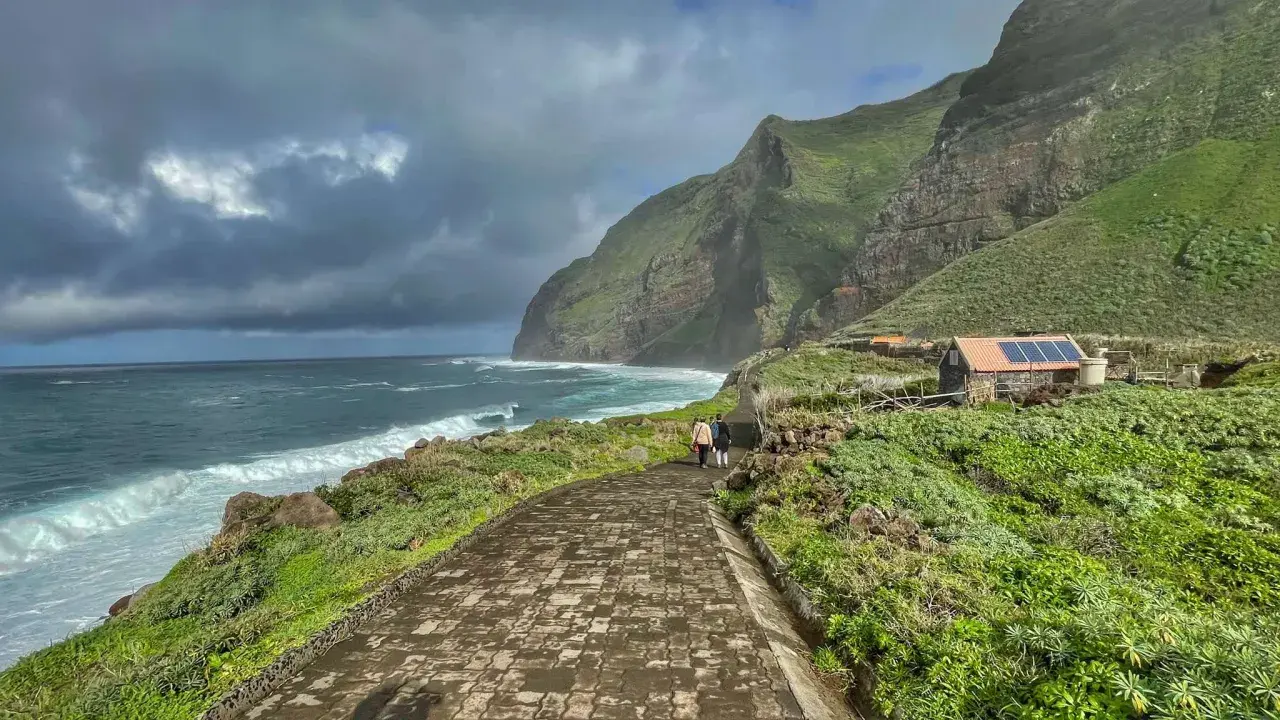
The east coast gives you one of the island’s clearest contrasts. Ponta de São Lourenço is exposed, rocky, and more arid than the green, misty interior, which is exactly why it belongs in a seven-day plan. The trail is roughly 3 km out and 3 km back, and the usual walking time is about 2.5 hours. It is not difficult in a technical sense, but it is exposed, windy, and far less forgiving than a shaded levada.
That is why I tell travelers to bring more water than they think they need, plus sun protection and a light layer for the wind. After the hike, Machico or Caniçal makes a sensible lunch stop, and the coast there is a good place to slow down before heading back. I like this day because it shows that Madeira is not just about forests and mountain mist. It has a dry, volcanic edge too, and that variety is part of the island’s appeal.
Day 3 is the mountain day, with a backup if the ridge is closed in
This is the day I reserve for the central highlands. If the full ridge route from Pico do Arieiro toward Pico Ruivo is open and the forecast looks decent, it is the signature mountain experience of the trip. If cloud, wind, or trail conditions make that a poor choice, I switch to a lower levada walk instead of forcing it. I would rather have a great lower trail than a miserable high-route slog with zero visibility.
Two practical alternatives work well here. Levada das 25 Fontes is about 4.3 km and usually takes around 3 hours, so it is a serious but manageable half-day. Levada do Risco is shorter and easier, which makes it useful when you want the scenery without spending the whole day on steep ground. The point is not to check off the hardest hike. The point is to get a real mountain day that still fits the weather and your energy level.
Day 4 is where the north coast earns its place
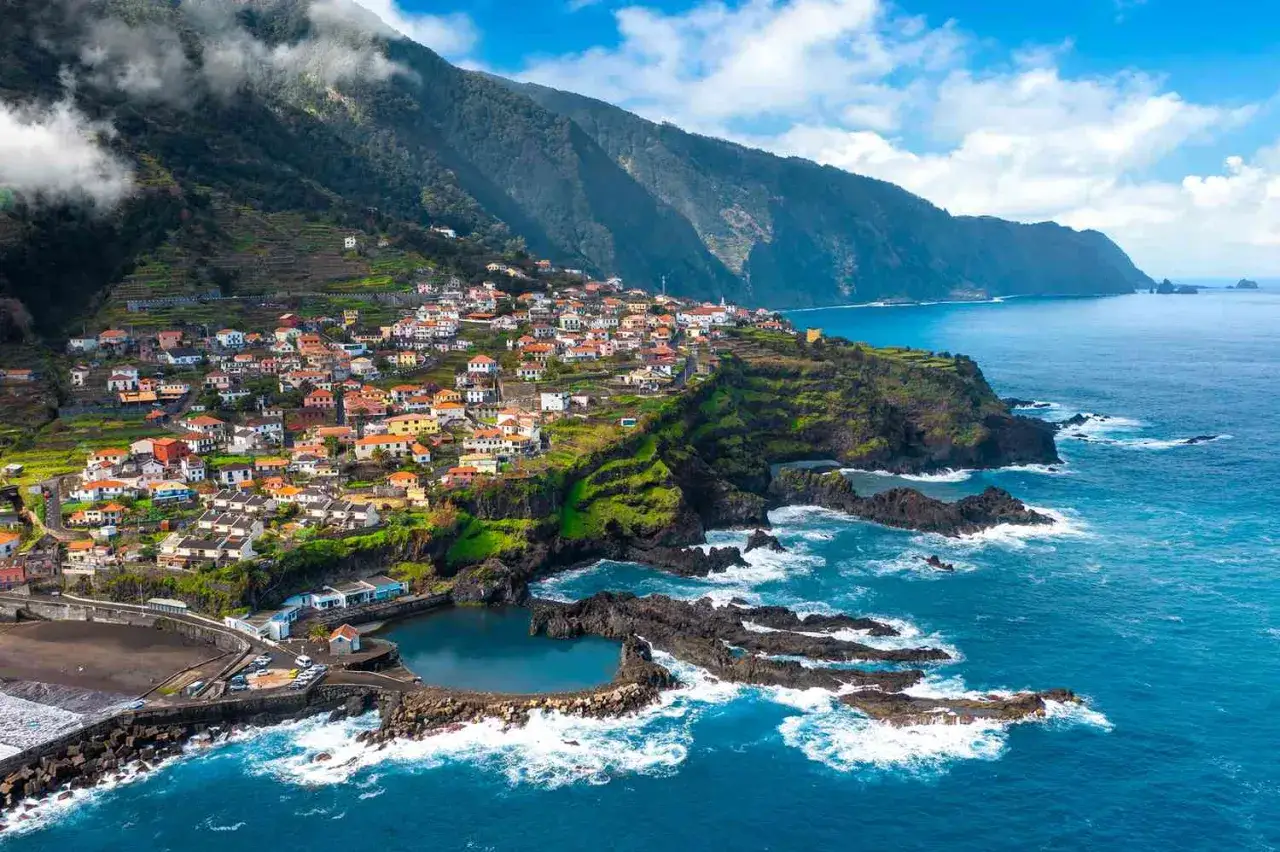
The north coast gives the week its raw, green middle. I would build a road loop through places like São Vicente, Seixal, and Porto Moniz, then stop for the natural pools. Porto Moniz is the classic choice because the pools are formed by volcanic rocks and filled with clear seawater, which makes them feel more like a natural amphitheatre than a simple swim stop.
This is a day for slow movement. The scenery is the point, not the number of stops. If you try to cram too much into the north coast, you end up seeing more road than landscape. I prefer one or two good pauses, a proper lunch, and enough time in the pool or at the viewpoint to let the place register. That is what makes this side of the island memorable.
Day 5 should be the lighter sea day
After two or three active days, I like a softer rhythm. Calheta works well for that because it gives you one of Madeira’s few yellow-sand beaches, along with facilities that make it genuinely easy to linger. If you want a calmer swim day, this is where I would place it. If the sea is cooperative, whale watching is also a smart option because it is a year-round activity and does not depend on a perfect hiking forecast.
For travelers who do not want a beach-only day, the west coast gives enough variety to stay interesting. You can combine a coastal lunch with a short drive through quieter villages and still be back in Funchal for sunset. I see this as the recovery hinge of the week. It keeps the trip balanced instead of turning it into a sequence of mountain efforts.
Day 6 belongs to Funchal’s quieter side
By day six, I want the city to feel like a reward rather than a compromise. That is when I would return to Funchal for the market, the old streets, a garden visit, and a slow meal. Monte Palace, the cable car, and the city viewpoints all work here if you missed them on arrival. If you already did them, this is the day for wine, local food, and a more relaxed walk along the waterfront.
Funchal matters because it prevents the trip from becoming only a nature checklist. Madeira has strong outdoor credentials, but the city gives the week depth. A good lunch, a wine tasting, or an unhurried evening in the old center often stays in your memory as clearly as a summit does. That balance is easy to underestimate before you arrive.
Read Also: Where to Go in Calabria for Beaches, Villages and Mountain Air
Day 7 is your pressure release valve
On the final day, I would keep the schedule loose. If the mountain weather finally clears, use the day for the big ridge or the hike you delayed. If the weather has already cooperated, repeat your favorite coast or go back to a viewpoint you want to see in better light. The cleanest version of a Madeira week is the one that leaves room to adapt instead of forcing every choice in advance.
If you want a true beach-oriented add-on, this is also the day to consider Porto Santo, which has a very different mood from Madeira’s volcanic coastline. I would treat that as optional rather than mandatory. It is useful when you want sand and shallow water, but the main island already gives you enough variety to make a seven-day trip feel complete on its own.
Where to stay and how to move around without wasting time
For most first-time travelers, I would stay in Funchal for the entire week. It is the most practical base because many tours start there, the restaurant choice is strongest, and a lot of the island sits within about an hour’s drive. More importantly, it reduces the friction of the trip. You unpack once, settle in, and use the same base while the island keeps changing around you.
If you prefer a split stay, do it only for a clear reason. A southwest base like Calheta makes sense if you want a quieter pace and easier access to the west coast. A north coast base near São Vicente or Porto Moniz suits hikers who care more about scenery than nightlife. Otherwise, I think switching hotels creates more stress than it removes.
| Base | Best for | Trade-offs |
|---|---|---|
| Funchal | First-time visitors, food lovers, no-car trips, easy logistics | Mountain and coast days require more driving, and the city can feel busier. |
| Calheta or the southwest coast | Quieter evenings, beach time, west coast day trips | Less urban variety and longer drives to the east and north. |
| São Vicente or Porto Moniz | Hikers, pool lovers, travelers who want dramatic scenery first | Fewer dining options, wetter weather, and a more remote feel. |
For getting around, a rental car is the simplest choice if you want the whole island at your own pace. Madeira’s roads are good, but they are mountainous, and that changes how long everything takes. I would choose a compact car, start early on hike days, and avoid stacking multiple long drives into one day. Guided tours still make sense for some travelers, especially if you want to relax on the steepest routes or avoid mountain parking altogether. Public transport can work for bits of the trip, but I would not rely on it for the full seven-day plan.
The practical rule is straightforward: if your trip is mostly Funchal, a few tours, and one or two easy day trips, you can probably get by without driving. If you want the island’s full range, a car is the difference between seeing Madeira and actually moving through it well. That is a bigger deal here than on many islands.
When to go and what to pack for Madeira’s microclimates
Madeira has a mild climate year-round, with average temperatures ranging from about 15°C in winter to 25°C in summer. The sweet spot for many travelers is spring and early autumn, especially April, May, September, and October, when hiking feels easier and the weather is generally comfortable. Summer is best if swimming matters most. Winter is still very workable, but you should expect more cloud on the mountains and keep your plans flexible.
The bigger issue is not the season itself. It is the microclimate. The south is usually more sheltered, while the north and the higher interior can feel windier, wetter, and cooler even on the same day. That is why I never pack for Madeira as if I were going to one climate. I pack for several.
- Trail shoes with grip, especially if you plan to hike on rock, wet paths, or steep levada sections.
- A light rain shell or wind layer, even in warm months.
- One warmer layer for the mountains, where temperatures can drop quickly.
- Swimwear and a quick-dry towel for natural pools, beaches, or boat days.
- Sun protection because exposed trails can feel hot even when the island is mild overall.
- Water and snacks for hike days, since some trailheads are more isolated than they look on the map.
If you pack for sun only, you will eventually feel underprepared. If you pack for rain only, you will overcorrect and carry too much. I prefer the middle ground: light, layered, and ready for a fast shift in conditions. That approach makes the week easier and keeps you from wasting time on weather-driven frustration.
What I would book first and what I would not leave to chance
The first thing I would lock in is accommodation, especially if you want a specific view, a boutique place in Funchal, or a quieter base in Calheta. After that, I would book the car if you are renting one, because availability and price tend to tighten when demand rises. Then I would anchor one major hike day and one special experience, such as whale watching or a wine-focused evening, so the trip has a few fixed points instead of feeling vague.
There are also a few mistakes I would actively avoid:
- Trying to do the east coast, the north coast, and a mountain hike all in one day.
- Leaving the hardest hike for the final day with no backup option.
- Assuming Madeira is mainly a beach destination and underestimating how much time the landscapes deserve.
- Skipping trail checks before mountain days, especially when cloud or wind is moving around the island.
- Staying too far from Funchal if you are trying to see everything on a short schedule.
I see these as planning mistakes, not character flaws. They happen because Madeira looks compact until you start driving it. Once you accept that the island wants a slower rhythm, the itinerary becomes much easier to enjoy. That is the mindset that keeps the week from turning into a race.
The one adjustment that makes the whole week easier
If I could change only one thing in a Madeira plan, I would protect a buffer day. Not an empty day, exactly, but a day that can absorb weather, energy, or a better-than-expected opportunity. If the summit is clear, use it for the big hike. If the mountains are clouded in, move to a coast day or stay low and scenic. That small bit of slack is what keeps the whole trip from feeling brittle.
That is the version of Madeira I would recommend most strongly: Funchal as the base, one east coast hike, one mountain day with a fallback, one north coast loop, one slower sea day, and one final day you can shape at the last minute. It gives you the island’s best contrasts without forcing them into a rigid schedule, and that is usually what makes a trip feel genuinely well planned.