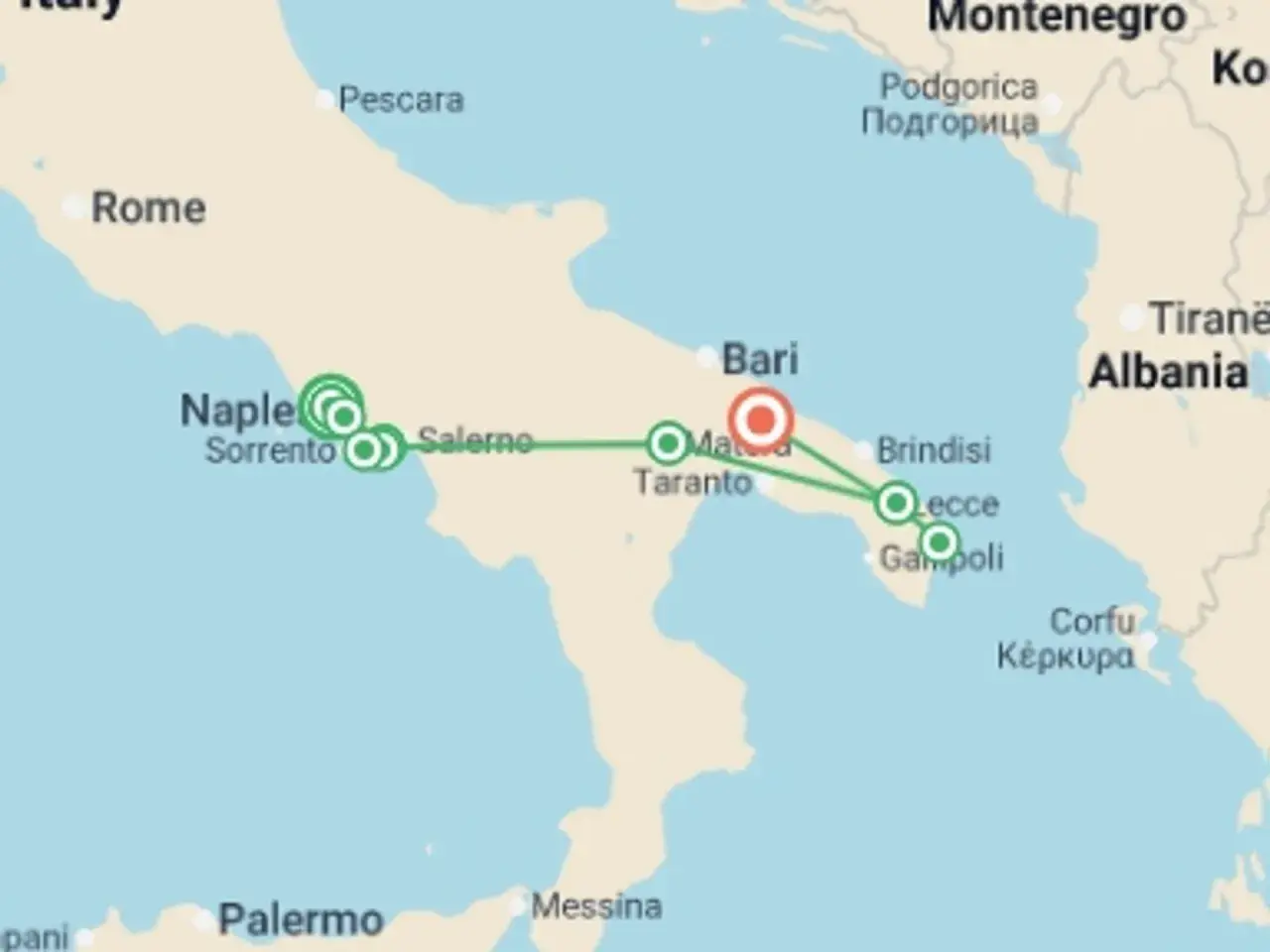
Planning 10 days in southern Italy is enough time to build a trip with real contrast: a serious city, a coastline that earns its reputation, an inland stop with atmosphere, and a final stretch that feels slower and more open. The mistake I see most often is trying to fit in too many famous places and letting transfers eat the trip. In this guide, I focus on a route that is practical, scenic, and realistic for travelers who want the south to feel memorable rather than rushed.
The easiest version is a Naples to Puglia route with only a few base changes
- Use Naples, the Amalfi Coast, Matera, and Puglia as the backbone of the itinerary.
- Skip Sicily unless Sicily is the real priority; it deserves its own trip.
- Keep hotel moves limited and let day trips do more of the work.
- Use trains for the long city-to-city legs, ferries for Capri and coastal crossings, and a car only where it genuinely helps.
- April-May and September-October are the most forgiving months for weather, crowds, and walking.
- Book the most scenic overnight stays early, then keep the rest of the trip flexible.
The route I would choose first
If I were building a first trip, I would not try to cover the entire south in one loop. I would choose a mainland route that starts in Naples, moves through the Amalfi Coast, dips inland to Matera, and finishes in Puglia. That gives you city life, coastline, and landscape variety without the logistics headache of trying to stitch together islands, ferries, and long backtracks.
The main planning rule is simple: one major city, one coastal base, one inland stop, and one more relaxed region at the end. That structure works because each place has a different rhythm, and none of them feels like a rushed half-day stop.
| Route type | Best for | Tradeoff |
|---|---|---|
| Naples, Amalfi Coast, Matera, Puglia | Travelers who want the best overall balance | Requires a few hotel changes, but each one has a purpose |
| Naples and Amalfi only | Visitors who prefer less movement and more sea time | Less variety and no real inland contrast |
| Sicily only | Travelers who want islands, volcanoes, and a deeper regional focus | It is too much to add casually to a short mainland trip |
If Sicily is non-negotiable, I would make it the whole trip rather than tacking it onto a mainland itinerary. Once the route is settled, the next step is turning it into a day-by-day plan that does not waste your best energy on transfers.
A 10-day itinerary that keeps the pace humane
I like to treat the first day as an arrival day, not a full sightseeing day, especially for travelers coming from the US. Jet lag makes ambitious plans look better on paper than they feel in real life. This version gives you enough structure to know where you are going, while still leaving space for food, views, and one or two long walks.
| Day | Sleep base | Focus | Why it works |
|---|---|---|---|
| 1 | Naples | Arrive, check in, walk the historic center, eat early | Keeps the first day light and avoids a bad jet-lag decision |
| 2 | Naples | Naples museums, waterfront, or a slow food day | Lets the city feel like part of the trip, not just a transit point |
| 3 | Sorrento | Pompeii or Herculaneum, then move to the coast | Front-loads the archaeology and gets you closer to the sea |
| 4 | Sorrento | Amalfi Coast day trip to Positano, Amalfi, or Ravello | One scenic day without changing hotels again |
| 5 | Sorrento | Capri by ferry, or a coastal walk if you prefer land over crowds | Gives the coastline a second day without making the schedule frantic |
| 6 | Matera | Travel inland, settle into the Sassi, and watch sunset from a viewpoint | Breaks the trip into a sea-and-stone rhythm that feels distinctly southern |
| 7 | Ostuni or the Valle d’Itria | Alberobello, Locorotondo, or small hill towns en route | Slowly shifts the trip into Puglia without a long dead day |
| 8 | Lecce | Polignano a Mare, Monopoli, then continue to Lecce | Combines two of the most photogenic Adriatic stops into one efficient move |
| 9 | Lecce | Lecce old town, then Otranto or a Salento beach | Balances baroque streets with a proper coastal finish |
| 10 | Bari or Lecce | Easy breakfast, final walk, departure | Leaves a buffer for flights, trains, or one last ferry delay |
If you want to move even less, keep Sorrento as your coast base for all of Days 3-5 and use Matera plus Lecce as the two inland anchors. That version is especially good if you care more about scenery than checking off names. After that, the real difference comes from how you move between places.
How to move between places without wasting the trip
In southern Italy, distance is only part of the story. The real issue is transfer friction: parking, port queues, luggage, and the kind of road that looks short on a map but takes more of your day than you expected. I would use three transport rules and ignore the rest.
| Mode | Best use | Watch out for | My take |
|---|---|---|---|
| Train | Naples, Salerno, Bari, Lecce, and other major city hops | Summer maintenance, timetable changes, and station transfers | The best default choice for long overland moves |
| Ferry | Capri and some Amalfi Coast crossings | Weather, seasonal frequency, and sold-out departures | Excellent for scenery, but never the least flexible option |
| Car | Matera, Valle d’Itria, Salento, and small countryside detours | ZTLs, parking costs, and narrow roads | Useful only when the landscape benefits from it |
For a trip like this, I would avoid driving the Amalfi Coast unless I had a very specific reason. The roads are narrow, parking is expensive, and even a short stretch can take longer than it should. A ferry or private transfer is usually the smarter play there, while a small rental car becomes more useful once you are in the Puglia countryside.
On the rail side, book the longer intercity legs once schedules are stable, but keep one eye on the calendar because summer 2026 maintenance can still shift times. Ferry schedules are even more seasonal, so I treat those as something to reconfirm closer to departure rather than as fixed months in advance. If the route starts in Rome instead of Naples, the fast train makes the transfer manageable, which is one reason open-jaw flights are so convenient here.
The short version: train where the rail network is strong, ferry where the sea makes the journey better, and car only where the countryside justifies it. Where you sleep matters almost as much as the route, because it determines how often you unpack.
Where to stay so you are not repacking every morning
One of the easiest ways to improve a 10-day trip is to use fewer, better-chosen bases. I would rather sleep in four places well than in seven places badly. The exact mix depends on whether you care more about coastline, ruins, food, or scenic towns, but a few stays matter more than others.
| Base | Suggested nights | Best for | My note |
|---|---|---|---|
| Naples | 2 | Arrival, food, museums, and easy access to the archaeological coast | Stay central so your first and last hours are easy, not complicated |
| Sorrento or Salerno | 2 to 3 | Amalfi Coast access and day trips to Capri | Sorrento is more convenient for ferries; Salerno is often easier on the budget and rail side |
| Matera | 1 | Atmosphere, viewpoints, and the stone city experience | One night is enough for most travelers unless you want a very slow pace |
| Lecce or Ostuni | 3 to 4 | Puglia, beaches, baroque towns, and countryside day trips | Lecce is better if you want energy; Ostuni is better if you want calm and views |
If you want a more scenic trip with fewer hotel switches, keep one coastal base and one Puglia base, then use day trips to do the heavy lifting. That is especially effective if you are traveling with a partner, because it reduces the time lost to check-ins and luggage. Timing then decides whether the same route feels calm or chaotic.
When to go and what the season really changes
For most travelers, the sweet spot is April to May or late September to October. The weather is usually better for walking, the light is cleaner for coastal views, and you are less likely to spend the trip waiting in lines or crossing packed ferry terminals. I would choose those months every time if I cared about scenery and comfort more than beach temperatures.July and August are the hardest months for this itinerary. It is not just the heat; it is the way heat changes the day. Midday walking becomes more draining, coastal towns fill up faster, and simple transfers can start to feel longer than they should. If you must go then, keep your days lighter, start early, and assume you will need more breaks than you think.
Winter is not a bad option if you care more about cities and food than swimming. Naples, Matera, and Lecce still work well, but some beach clubs, boat routes, and late ferries become less useful. That means your trip should lean inland a bit more and rely less on the sea for daily movement.
For budget, I would think in ranges rather than fixed numbers. For a comfortable midrange trip, I usually see roughly $180 to $250 per person per day if you are sharing a room and using regular restaurants, and more like $250 to $400 per person per day if you want better hotels, a few ferries, and some guided experiences. Boutique stays, private transfers, and the most desirable coastal rooms can push that higher quickly. The practical lesson is simple: location matters more than square footage in this part of Italy. A smaller room with the right view or the right base is often a better buy than a larger room in the wrong place.
If the trip is built around good walking weather, a clearer shoulder season, and a realistic budget, the whole route becomes easier to enjoy. From there, I would only tweak the itinerary if your priorities are very different from the default mix of coast, culture, and scenery.
How I would reshape the trip for different travel styles
The basic route works for most travelers, but I would adjust it depending on what matters most. Southern Italy is flexible if you know what to cut, and the fastest way to improve the trip is usually to remove friction rather than add more places.
- Beach-first: spend less time in Naples, add an extra night near Capri or Salento, and keep one day deliberately unplanned for swimming or a boat outing.
- History-first: keep Pompeii or Herculaneum, make Matera non-negotiable, and use Puglia for slower town walks rather than beach hopping.
- Outdoor and scenic: prioritize the Path of the Gods, cliffside viewpoints, Matera’s edge walks, and coastal drives or ferries that give you time to look around.
- Slow travel: reduce the number of bases to three and use day trips from each one instead of changing hotels every second night.
- Food-first: stay longer in Naples and Lecce, where the trip naturally becomes as much about meals and neighborhoods as about landmarks.
I would also treat Capri as a day trip unless you specifically want the island after the day crowds leave. An overnight can be lovely, but it is not automatically the best use of a limited schedule. The same logic applies to the Amalfi Coast more broadly: the famous names are useful, but the trip gets better when the route serves your pace, not the other way around. The final piece is booking only the things that truly protect the trip from friction.
The bookings that make the trip smoother
There are only a few reservations I would treat as essential. Everything else can stay a little flexible, which is useful in a region where weather, ferries, and train schedules can all change enough to matter.
- Book the first and last hotels early, especially if you are arriving late or flying out early.
- Reserve coastal stays in Sorrento, Positano, Amalfi, or Lecce well ahead of peak season if you want a good room rather than the leftovers.
- Buy long-distance train tickets once the fares open and the timetable looks stable, usually a few months ahead for the faster services.
- Keep ferry days flexible when you can, because sea conditions and seasonal schedules are not things I would lock too tightly.
- Prebook any must-do boat trip, Pompeii guide, or popular restaurant only if it genuinely anchors the day.
- If you drive, confirm parking and ZTL rules before you land so you do not discover the expensive mistake after the fact.
If I were planning the trip from scratch today, I would fly into Naples, keep the route tight, and leave one buffer day that could absorb a weather delay, a ferry cancellation, or simply an unexpectedly good lunch. That is the version of southern Italy I trust most: scenic enough to feel complete, structured enough to stay easy, and flexible enough to let the region do what it does best.