What matters most before you get behind the wheel
- Bring the right paperwork, especially a valid US license and an International Driving Permit.
- Choose a compact car unless you have a strong reason not to, because streets and parking spaces are often tight.
- Avoid historic centers unless you understand the ZTL rules and where to park.
- Default Italian limits are 50 km/h in towns, 110 km/h on extra-urban roads, and 130 km/h on motorways, unless signs say otherwise.
- Most of the stress comes from parking and city access, not from long open-road driving.
- For trip planning, a car helps most when you are linking beaches, countryside, and smaller towns in one day.
What the roads feel like once you leave the airport
The first thing I tell people is simple: Sicily is not hard to drive across, but it does reward restraint. Main roads can be smooth enough, yet the moment you enter a historic quarter or a village center, space gets tight, traffic becomes less predictable, and parking stops being a casual afterthought.
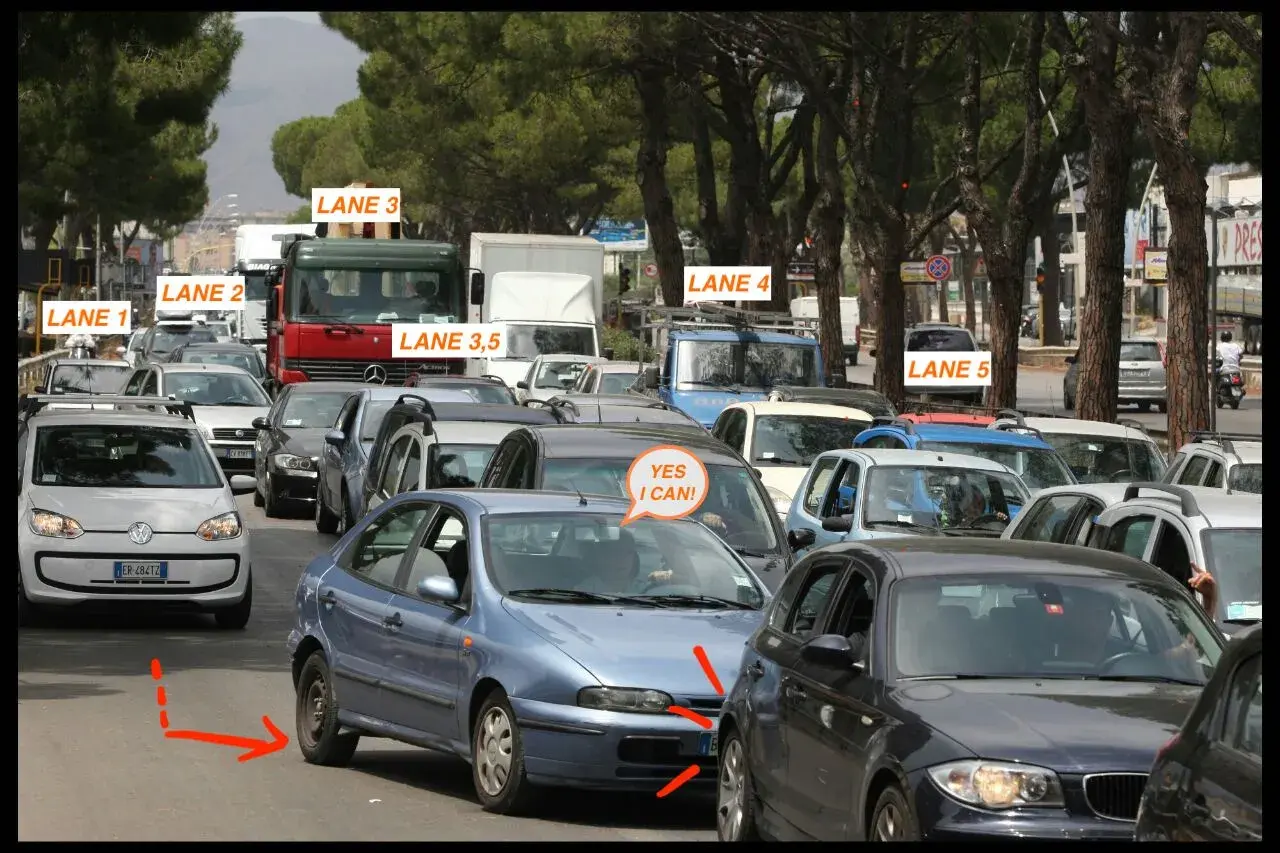
That contrast is the whole story. On one side, you have relaxed stretches along the coast, decent motorway links between major cities, and some genuinely beautiful drives. On the other, you have scooters slipping through gaps, blind corners, narrow one-way streets, and road surfaces that may be rougher than the map suggests.
The small-car rule is real. I would not rent a large SUV unless you truly need it. A compact hatchback is easier to place, easier to park, and much less tiring in older towns. If you are planning scenic stops rather than a full luggage-heavy road expedition, smaller is better almost every time. That practical choice sets you up for the next big question, which is the paperwork you need before you even turn the key.
The paperwork and rental setup I would not skip
For US travelers, I would bring a valid state driver’s license and an International Driving Permit. The U.S. Embassy in Italy advises tourists intending to drive to obtain one before leaving the United States, and in practice it removes a lot of friction at the rental desk and if you are stopped on the road.
I would also check three rental details before booking: transmission type, insurance coverage, and the deposit hold on your credit card. Automatics are often more expensive and less available, so book early if you want one. Insurance is not just a checkbox here, because narrow streets and tight parking make small scrapes more likely than dramatic accidents.
- Choose a compact car unless your route is mostly motorways and you are traveling light.
- Pay extra for an automatic if manual gear changes will add stress on hills, in traffic, or when parking on slopes.
- Confirm the insurance excess, because a low daily rate can hide an expensive deductible.
- If more than one person will drive, add the second driver in advance instead of hoping it will be easy at pickup.
- Ask the hotel whether it has private parking before you book, especially if you plan to stay in a city center.
I also like to verify pickup logistics before arrival. Some airport rentals are straightforward, but a lot of the stress starts when you collect a car, miss one instruction, and then try to navigate urban traffic while reading signs for the first time. Once the car itself is sorted, the real test becomes understanding the local road rules.
The road rules that matter most in practice
Italy’s rules are not mysterious, but they are enforced enough that guessing is a bad idea. I keep the core limits in mind and then still watch for local signs, because roadworks, weather, and town-specific restrictions can change the picture quickly.
| Rule | What it means on the road | My practical approach |
|---|---|---|
| Speed limits | Default limits are 50 km/h in built-up areas, 110 km/h on extra-urban roads, and 130 km/h on motorways. | I treat those as ceilings, not targets, because narrow bends and poor surfaces can make lower speeds smarter. |
| Headlights | On motorways and suburban roads, dipped headlights are compulsory. | I leave them on whenever I leave town so I do not have to think about it twice. |
| Seat belts | Front and rear seat belts are mandatory. | I make everyone buckle up before the car moves, not after. |
| Horn use | Inside built-up areas it is generally reserved for emergencies. | I avoid using it as a frustration signal, because that is not how local traffic culture works. |
| Right of way | At intersections, vehicles coming from the right usually have priority unless signs say otherwise. | I slow down early and assume somebody may not stop where I expect them to. |
| Alcohol | Italy’s legal limit is 0.5 g/l, with stricter limits for some younger or professional drivers. | I keep it simple and do not drink if I am driving that day. |
Those rules sound basic, but they matter because Sicily is not a place where relaxed driving habits should become careless driving habits. That is especially true once you reach the parts of the island where access control and parking can cost you time or money very quickly.
ZTL zones and parking can make or break a day
The biggest trap for first-time visitors is the ZTL, or Zona a Traffico Limitato, which is a restricted traffic zone in many Italian town centers. Camera enforcement is common, and missing one sign can turn a short detour into a fine that arrives long after the holiday is over.
Palermo is the clearest example. Its central ZTL currently runs on weekdays from 8:00 to 20:00, with extra night restrictions on weekends. That kind of schedule is exactly why I prefer to leave the car outside the historic core unless I already know where I am going and where I will park.
Parking markings also help more than most visitors expect. In Palermo and much of Sicily, the color system is straightforward once you know it, and it is worth learning before you circle a block five times looking for a space.
| Marking | Meaning | What I do |
|---|---|---|
| Blue lines | Paid parking | I check the meter, app, or nearby sign and keep proof visible if required. |
| White lines | Usually free parking | I still read the sign, because time limits can apply. |
| Yellow lines | Reserved spaces for specific users or functions | I do not use them unless I am clearly authorized. |
My rule is simple: if I am staying in Palermo, Catania, or another busy city, I book accommodation with parking or a nearby garage before I arrive. In practical terms, a decent garage in a city center often costs somewhere around €10 to €20 a day, sometimes more in the busiest spots, but that is usually cheaper than wasting an hour hunting for a legal street space. Once that is settled, the next cost question is whether toll roads will affect the route.
Tolls, fuel, and the costs that actually change the trip
Most of Sicily can be explored without dealing with constant tolls, but I would not assume the island is completely toll-free. The main tolled motorway sections are the A18 and A20 corridors, which are the roads you are most likely to use if you move between Messina, Catania, and Palermo.
That matters more for route planning than for budget shock. For many Sicily road trips, the toll bill is modest compared with hotel parking, fuel, or rental-car upgrades. I would carry a card and some cash anyway, because the most annoying moment of the trip is not paying a toll itself, but discovering you have picked a lane or payment method that does not suit you.
Fuel stops are generally manageable on main routes, but I would not run the tank low in rural areas or on a tight Sunday schedule. In smaller towns, hours can be shorter than travelers expect, and self-service is often the safest assumption when you are moving between less busy places.
When I budget a Sicily drive, I think in this order: rental cost, parking, fuel, and then tolls. That keeps expectations realistic and prevents the common mistake of obsessing over motorway charges while ignoring the city-center parking that will probably cost more. With the money side clear, the next step is deciding whether a car actually fits the way you want to travel.
How I would plan a road trip that feels easy instead of rushed
If your trip is mostly cities, you may not need a car every day. If your trip is about beaches, wineries, hill towns, and viewpoints, a car becomes much more valuable. I usually recommend basing the decision on the places you want to visit, not on a generic idea that “having a car is always better.”
| Your trip style | Car or no car | Why |
|---|---|---|
| Palermo or Catania city break | Maybe no car at first | Parking and restricted access can outweigh the convenience. |
| Coast plus smaller towns | Yes, a car helps | You gain flexibility for beaches, viewpoints, and dinner stops. |
| Hill towns and countryside | Yes, strongly recommended | Public transport is slower and less direct for this kind of trip. |
| One base, many day trips | Often yes | You avoid constant hotel changes and keep the trip simpler. |
What I avoid is the overpacked itinerary, where every day requires a long drive, a new hotel, and a late arrival in a center you do not know yet. Sicily looks compact on a map, but the real pace is set by roads, parking, and how often you have to slow down for towns and scenic detours. If you plan around that reality, the trip feels much better.
The habits that save the most stress on Sicilian roads
The last thing I would say is this: good Sicily driving is mostly about habits, not bravado. The people who struggle are usually the ones who trust the GPS too much, arrive too late in the day, and assume parking will sort itself out.
- Leave early when you need to cross a city or arrive at a tourist town before lunch.
- Check hotel parking before you book, not after you land.
- Use offline maps, but still read street signs with your own eyes.
- Do not chase a historic center parking spot when a garage two streets away would end the problem immediately.
- Watch scooters, delivery vans, and pedestrians as if they may appear at the edge of the lane without warning.
- Stop for photos only where there is a safe lay-by or legal space to pull over.
If I were planning the trip again from scratch, I would keep the car small, the itinerary lighter than my first instinct, and the city-center access rules at the front of my mind. That combination does far more for a Sicily road trip than trying to memorize every road law in advance.