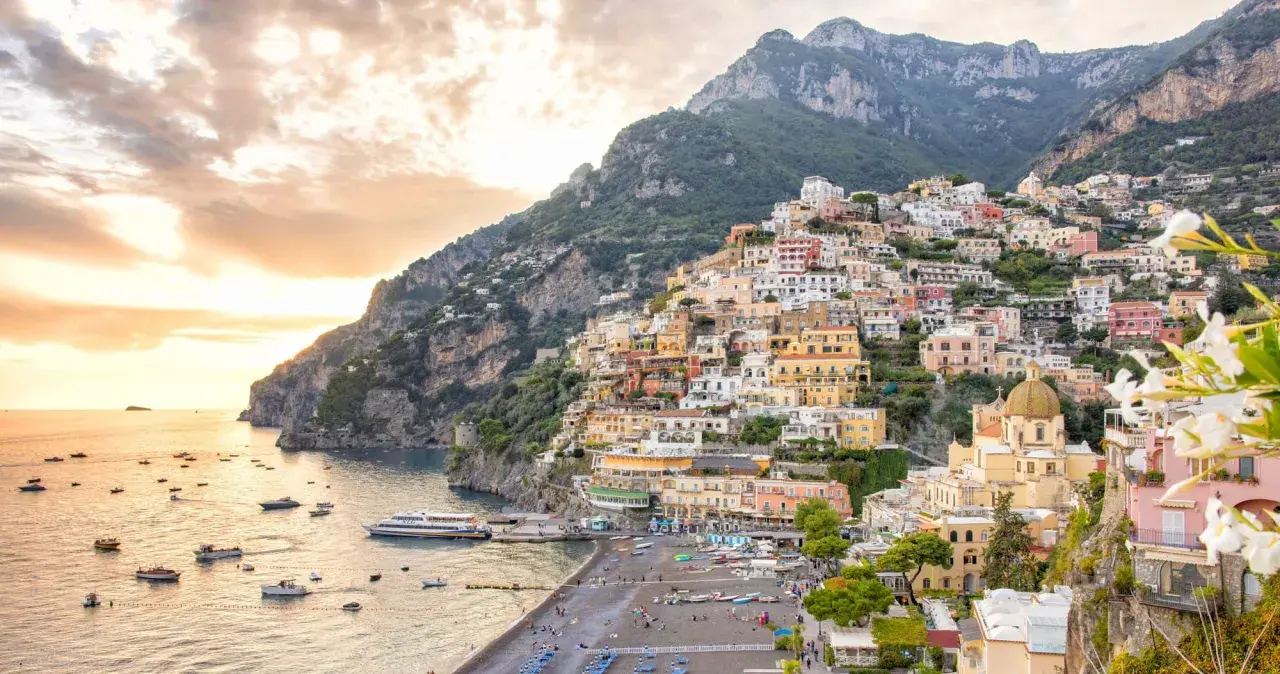
Two days on the Amalfi Coast is enough for a trip that feels rich and memorable, but only if the plan is tight. A solid amalfi coast 2 day itinerary should keep transfers short, use ferries whenever possible, and leave room for one big viewpoint rather than trying to tick off every village. In this guide, I focus on the parts that actually change the quality of the trip: where to base yourself, how to divide the days, what to skip, and how to move around without burning time.
The fastest way to make 48 hours on the coast feel complete
- Base in Amalfi if you want the easiest logistics; choose Positano if the view from your hotel matters most.
- Spend Day 1 on Positano plus the Path of the Gods, or keep it slower if you prefer more time in town.
- Use Day 2 for Amalfi and Ravello, which pair well because one is a sea-level hub and the other is a hilltop viewpoint town.
- Ferries usually save the most time; buses make sense for Ravello and short inland hops.
- Do not try to add Capri, Pompeii, and every coastal village in the same 48 hours.
- Start early, travel light, and keep one meal slot flexible so the trip still feels relaxed.
What two days can realistically cover
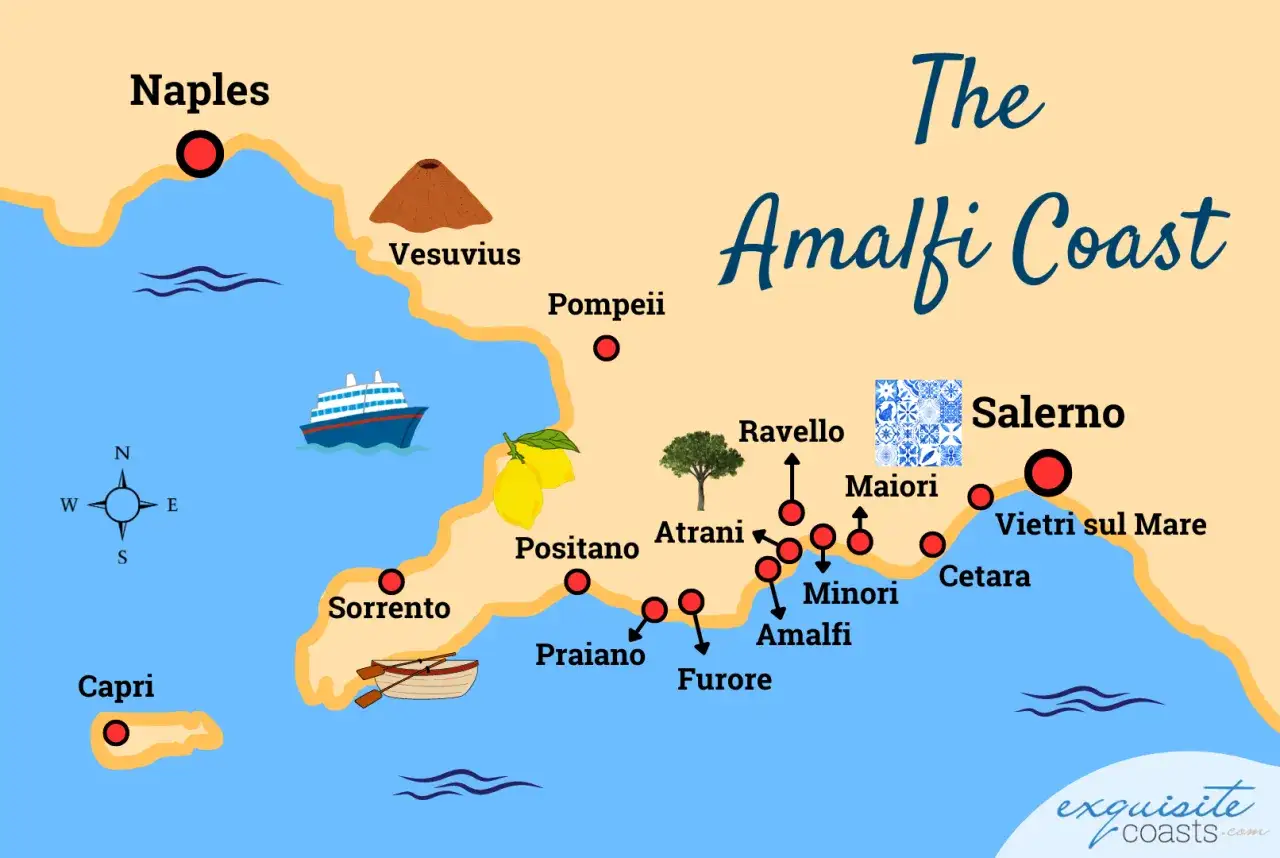
The Amalfi Coast looks compact on a map, but the pace on the ground is slower than most first-time visitors expect. Roads are narrow, parking is limited, and even a short hop can turn into a long one once you add crowds, stairs, and waiting time. That is why I would not try to “see everything” in 48 hours. I would aim for one iconic village, one higher-view town, and one scenic transfer route that makes the travel itself part of the experience.
For a short stay, I think the smartest priorities are simple:
- One base that reduces packing and unpacking.
- One main coastal town with enough time to walk, sit, and eat.
- One elevated viewpoint such as Ravello, where the coast looks completely different from above.
- One active element, if you want it, such as a hike or a long scenic walk.
That approach gives the trip shape without forcing it into a checklist. Once you accept that limit, the route becomes much easier to build. The next step is deciding how I would actually spend the two days.
A two-day route that fits the coast instead of fighting it
| Day | Morning | Afternoon | Evening |
|---|---|---|---|
| Day 1 | Arrive early in Positano and walk the center before the crowds build. | Do the Path of the Gods, or swap it for a slower coastal afternoon if you want a lighter day. | Settle into a long dinner in your base town and keep the night low-key. |
| Day 2 | Explore Amalfi at an easy pace, including the cathedral and the central square. | Go up to Ravello for the views, gardens, and a quieter finish to the trip. | Return to your base, have one last walk, and leave margin for departure. |
Day 1 works best as a contrast day. Start with the coastline’s most famous postcard town, then add a slower or more active second half depending on your energy. If I am writing this for a fit traveler, I like the combination of Positano plus the Path of the Gods. Visit Amalfi describes that trail as roughly 9 kilometers and ending in Positano, which is exactly why it makes sense only if you start early and treat it as a half-day commitment rather than a casual stroll.
If hiking is not your thing, I would not force it. Replace the trail with a ferry ride, a long lunch, and time in Praiano or another quieter stop. The coast rewards unhurried time, and the worst mistake on a short trip is spending the whole day in motion. Day 2 should feel different: more settled, more cultural, and less physically demanding. Amalfi and Ravello are the cleanest pairing because one gives you the energy of the waterfront and the other gives you the calm of the hills.
That balance is what makes the itinerary work. You are not trying to cover every village; you are trying to give the coast enough variety to feel complete. From there, the real question is where you should sleep so the route is easy to execute.
Where to stay if you want the least friction
| Base | Why it works | Tradeoff | Best for |
|---|---|---|---|
| Amalfi | Best overall logistics, good ferry access, and a central feel. | Less dramatic than Positano from a pure scenery standpoint. | Travelers who want the easiest two-day plan. |
| Positano | The most iconic views and the strongest sense of arrival. | Steep, busy, and often pricier than other bases. | First-timers who care most about the classic postcard look. |
| Ravello | Quiet, elegant, and excellent for views. | Inland, so it is less convenient for ferry-based movement. | Travelers who want atmosphere over convenience. |
| Praiano | Calmer than Positano and still well placed between major stops. | Fewer services and less of a “main stage” feel. | People who want a lower-key stay with fewer crowds. |
| Sorrento | Good transport links and a wider range of hotels. | Not as immersive as staying on the coast itself. | Visitors who want easier access from Naples or the train network. |
My default pick for a short trip is Amalfi. It is the most practical base if you want ferries, buses, and town services within easy reach. Positano is the better choice when the hotel view matters more than logistics, and Ravello is the right choice if the trip is about atmosphere rather than movement. Sorrento works as a transport base, but it does not give the same sense of being inside the landscape.
For most readers, I would narrow it down this way: choose Amalfi for ease, Positano for glamour, and Ravello for quiet elegance. Once that choice is made, the only thing left is how you move between those places without wasting half the trip in transit.
How to move around without losing half the day
On a short Amalfi Coast trip, transportation is not a side detail. It shapes the whole experience. I usually treat ferries as the best use of time whenever sea conditions and schedules cooperate, because they are often faster and far less stressful than sitting on the road. The local tourism listings in Visit Amalfi point to regular sea connections between the main towns, and that lines up with how I would plan a two-day stay: use the water for the coastal hops, then use the road only where the geography forces you to.
- Use ferries for Positano, Amalfi, and other coastal links when they are running and the timing works for your day.
- Use buses for Ravello, since it sits above the coast and is better reached inland.
- Use taxis or private transfers when luggage, late arrivals, or tight timing make public transport too risky.
- Walk strategically, especially downhill or on clearly marked trails, but do not underestimate the stairs.
My practical rule is to keep to one major transfer in the morning and, at most, one more later in the day. Anything beyond that starts to eat into sightseeing time. It is also worth remembering that a “short” bus ride can still take longer than expected when the coast is crowded. If you build in margin, the trip feels calm; if you build it too tightly, the coast becomes a sequence of connections instead of a destination. That is why it helps to be ruthless about what you leave out.
What I would leave out on a 48-hour trip
Two days is not the right window for trying to see the entire region. I would skip anything that adds complexity without improving the trip much.
- Capri, unless the whole trip is boat-focused and you are happy to trade a coastal day for island time.
- A hotel change between nights, because repacking and moving luggage rarely pays off on a short stay.
- Too many village stops, especially if they all sound appealing on paper but are only small variations on the same view.
- Overbooked lunch plans every day, because one flexible meal does more for the pace of the trip than another reservation.
- Late-afternoon hikes in peak summer, when the heat and fatigue can make a scenic walk feel punishing instead of enjoyable.
If you want a clean rule, this is mine: on a 2-day trip, every extra destination has to earn its place. If it does not create a new experience, a new view, or a meaningful break from the crowd, I leave it out. That mindset is especially useful in summer, when the coast is beautiful but also at its most crowded and least forgiving. The itinerary becomes better not by adding more, but by removing the wrong things.
That leads to the final layer of planning, the small choices that make the whole thing feel smooth instead of rushed.
The small decisions that make two days feel longer
When an Amalfi Coast trip works, it usually works because the details are calm. I would book the stay early, especially if the trip falls in the busy season, and I would keep the first morning as open as possible so you are not starting the itinerary in a scramble. I would also pack lighter than usual. Stairs, station platforms, and uneven streets turn heavy luggage into a real problem faster than most travelers expect.
There are three habits I rely on for short coastal trips:
- Start before the crowds, ideally before 9 a.m. on your main sightseeing days.
- Keep one scenic transfer in the plan, so transit feels like part of the trip rather than dead time.
- Leave one block unplanned, even if it is just an hour after lunch, because the coast is better when you are not chasing the clock.
If I had to compress the whole plan into one version, I would keep it simple: Positano on Day 1, Amalfi and Ravello on Day 2, ferries where possible, and a single base that makes early starts easy. That is the difference between a rushed checklist and a trip that still feels like the Amalfi Coast when you get home.