Driving in Italy is rewarding when you treat it like a local system, not a generic road trip. The best tips for driving in Italy for the first time usually come down to a few practical decisions that keep you out of trouble and leave more room for the part of the trip you actually want: the scenery. I would plan the drive the same way I would plan a mountain day or a coastal detour, because in Italy the details matter more than confidence alone.
What matters most before you start the engine
- Carry the right documents, especially your U.S. license and an International Driving Permit if you are visiting from the United States.
- Know the core limits: 50 km/h in towns, 90 km/h on secondary and local roads, 110 km/h on main roads, and 130 km/h on motorways.
- Avoid ZTL zones, watch parking colors, and expect tolls on most motorways.
- Choose a compact car if possible, and keep your first driving day short.
- Keep a reflective vest, warning triangle, and emergency numbers easy to reach.
Get the paperwork and rental setup right
For non-EU drivers, Italia.it says you should carry your foreign license plus an international driving license or sworn translation, along with proof of insurance if you are bringing your own vehicle. If you are renting, the desk will usually want a passport or ID, a credit card in the driver’s name, and a license held for at least a year; many companies also set minimum ages of 21 or 23. USAGov says U.S. travelers should carry both the IDP and their U.S. license, and the permit is valid for one year.I treat that paperwork as non-negotiable. The easiest mistake to avoid is assuming the rental counter or local police will be flexible because you are a tourist.
- Bring your U.S. driver’s license and International Driving Permit together.
- Use the same name on your booking and your credit card.
- Check age rules before you pay, because some agencies charge extra for younger drivers.
- If you are driving your own car, confirm insurance coverage before you leave.
- Keep all documents in the car, not buried in your suitcase.
Once the paperwork is settled, the next step is understanding the road rules that matter every day, especially the ones that are easy to miss on a vacation drive.
Learn the rules that catch first-timers
I keep Italy’s driving basics simple in my head: drive on the right, stay out of the emergency lane, keep a safe gap, and obey the signs before you trust your instincts. I also keep the sign colors straight: green for motorways, blue for suburban roads, and white for urban roads.
| Road type | Typical limit | What it means in practice |
|---|---|---|
| Urban streets | 50 km/h | Slow down early; scooters, tight corners, and parked cars appear fast. |
| Secondary and local roads | 90 km/h | Expect curves, villages, and slower traffic. |
| Main roads | 110 km/h | Useful for longer cross-country stretches, but posted signs still override the general rule. |
| Motorways | 130 km/h | Good for fast connections between regions, usually with tolls. |
| Licenses held for under 3 years | 100 km/h on motorways, 90 km/h on main roads | Double-check this if your license is still relatively new. |
- Dipped beams are mandatory in tunnels and are also required outside built-up areas and in poor visibility.
- Mobile phones should stay hands-free only while driving.
- Seat belts and approved child restraints are mandatory.
- The legal alcohol limit is 0.5 g/l, but my rule is simpler: I do not drink and drive at all.
- Bus lanes and other reserved lanes are not shortcuts.
When you understand the rules, Italy becomes much less intimidating. The next challenge is the one that catches people with perfectly good driving habits: tolls, parking, and restricted city centers.
Make tolls, parking, and ZTLs part of the plan
Most motorways in Italy are toll roads, and some tunnels are too. The normal routine is straightforward: take a ticket when you enter, then pay at the exit or end of the toll section by cash, card, or prepaid card. If you expect a lot of motorway mileage, ask your rental company whether electronic toll payment is available, because it can save time on busy routes.
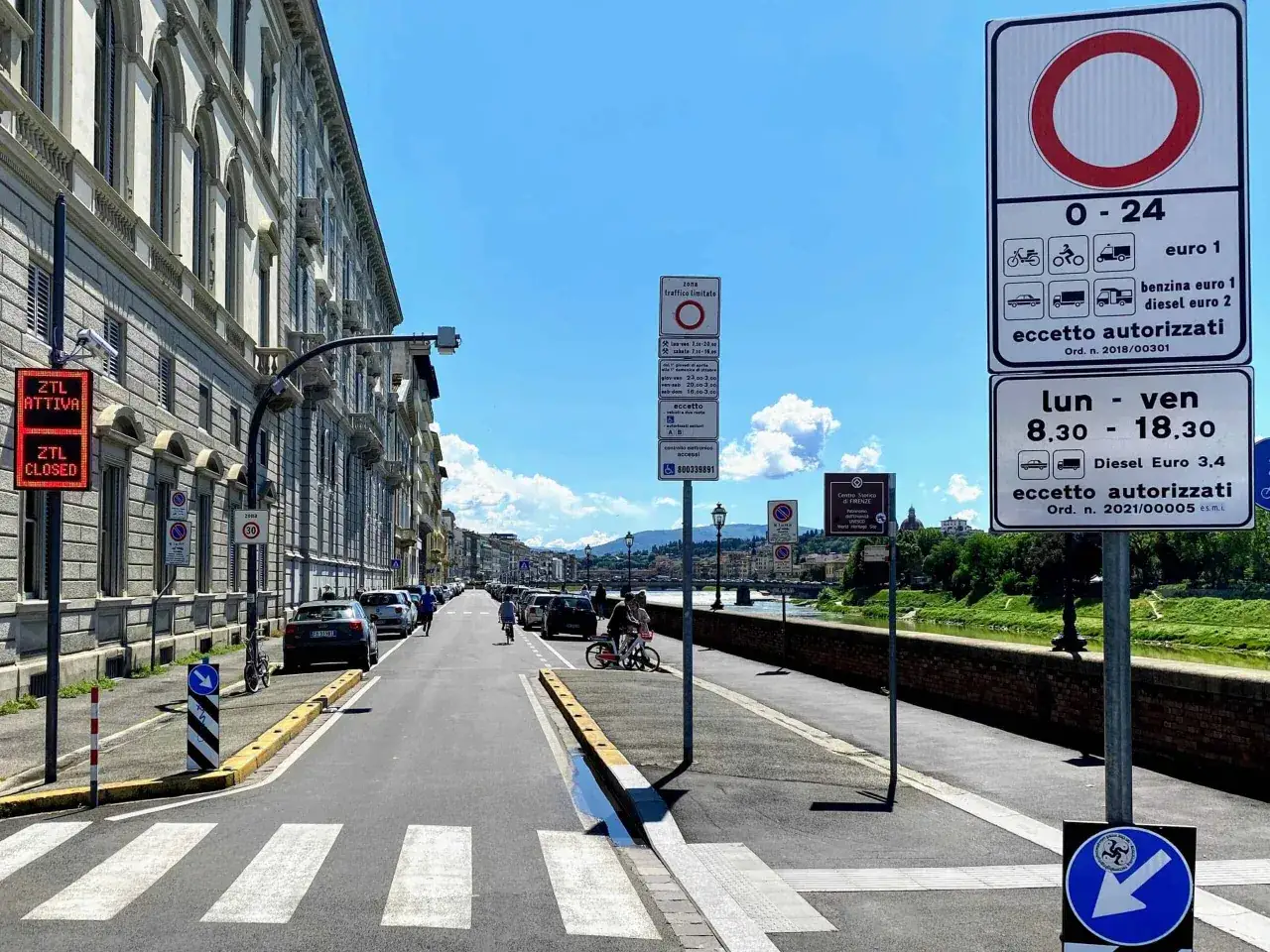
The bigger trap for visitors is parking and historic-center access. Blue lines usually mean paid parking, white lines mean free parking, and yellow lines are reserved. In old towns, I would assume street parking is limited until proven otherwise. ZTL zones are the other thing to respect immediately: these restricted traffic areas sit in many historic centers, and the rules apply at the times shown on the signs.
- If your hotel is inside a ZTL, send them your plate number before you arrive so they can arrange access or permission.
- Do not drive into a historic center just because the GPS looks confident.
- Use a garage or park-and-walk option when the town center is tight.
- Do not park in spaces reserved for disabled drivers unless you are entitled to use them.
- Keep the toll ticket safe until you leave the motorway.
In practice, the quickest way to ruin a first drive in Italy is not a hard corner or a long road. It is a beautiful town, a confident GPS, and one accidental entry into a camera-controlled zone.
Drive the kind of roads Italy actually gives you
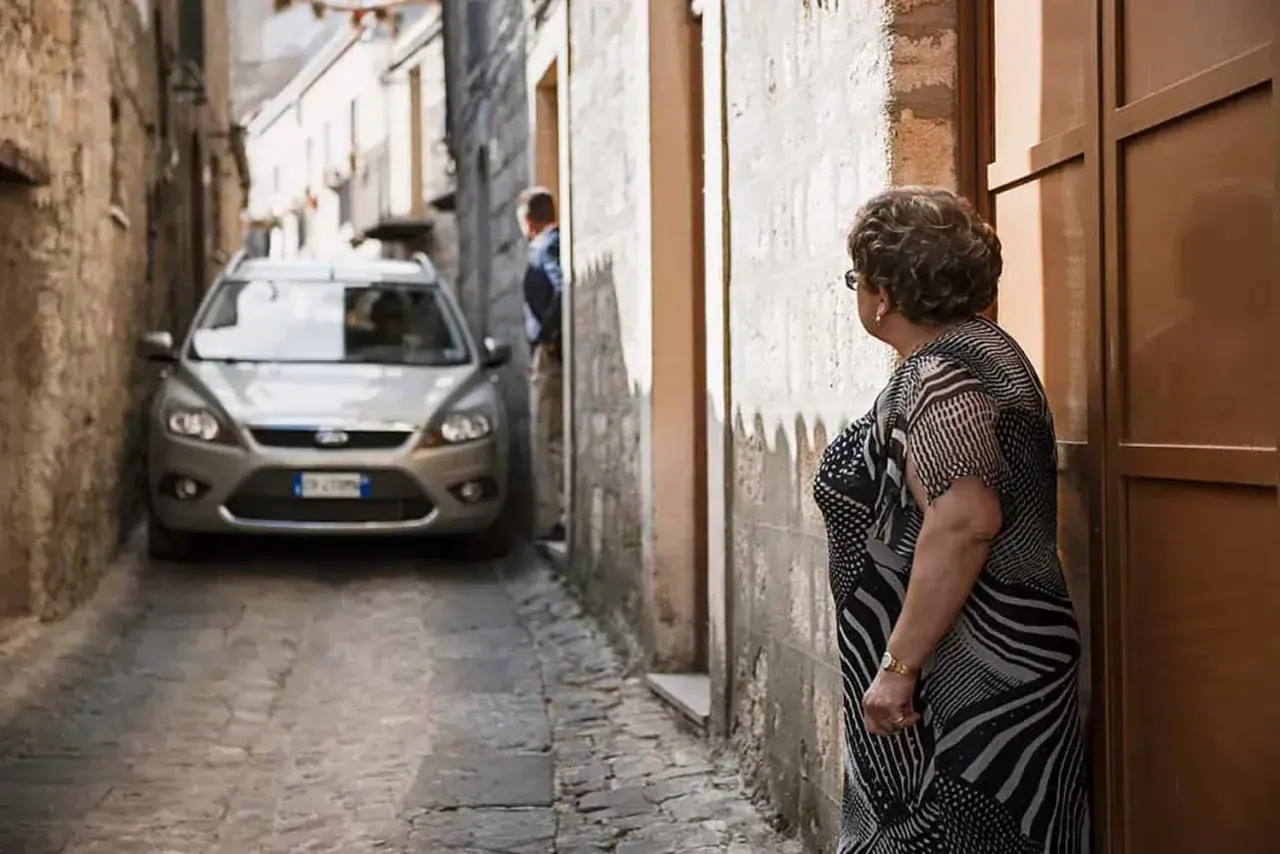
Italy rewards slower, more flexible driving. I would not plan my first route around maximum daily mileage, because the country is full of roads that are scenic, narrow, and slower than they look on a map. A compact car is usually easier to place in old streets, mountain villages, and small car parks, and it is less stressful than a big SUV when the road narrows unexpectedly.
My best advice is to treat the car as a tool for the parts of the trip that trains do poorly: lakes, coastlines, hill towns, vineyards, and mountain valleys. That means fewer city-center laps and more deliberate route choices.
- Book the smallest car that still fits your luggage.
- Choose an automatic if shifting gears will distract you on hills or in traffic.
- Start your first drive in daylight if you can.
- Build in extra time for roadworks, tractors, and photo stops.
- Download offline maps before you leave the hotel or airport.
I also like to leave a little fuel and a little mental energy in reserve. When a scenic road takes longer than expected, that buffer is what keeps the trip enjoyable instead of stressful.
Be ready for weather, breakdowns, and small emergencies
Rain, fog, and mountain weather can change the tone of a drive fast, especially outside the big cities. I would keep a reflective vest within reach, not buried in the trunk, and make sure the warning triangle is easy to access; in Italy it should be placed at least 50 metres behind the car in an emergency stop. If you have to drive through a tunnel, remember that dipped beams are mandatory, and I would never ignore that rule just because traffic feels light.
If your route crosses winter mountain roads, check the local signs and your rental agreement before you leave. I would never assume a pass is clear simply because the valley looks fine; winter equipment requirements can change by road and by conditions, and mountain routes deserve more caution than a dry-day forecast suggests.
- For a breakdown outside built-up areas, put on the hi-vis vest before you step out.
- If you have an accident, stop, stay calm, and call the police or emergency services.
- ACI roadside assistance is available 24 hours a day at 800.116.800.
- 112 is the emergency number to try first, and it is smart to keep local numbers in your phone as backup.
If you are traveling with children or pets, plan that in advance too. Approved child restraints are mandatory for smaller children, and pets should be secured properly so they do not become a distraction in traffic.
The simplest way to shape your first Italian road trip
The easiest first trip is rarely a full loop of the country. It is usually a simple route with one or two driving bases, city stays handled without the car, and scenic legs left for the countryside where driving actually improves the experience. I would pick up the car only when I am leaving the dense city part of the trip, and I would avoid making my first driving day the same day as a long-haul flight.
- Use trains for the busiest city-to-city legs, then rent a car for the scenic stretch.
- Choose hotels with private parking whenever possible.
- Keep your first drive short enough that you still have energy to deal with surprises.
- Leave historic centers for walking, not for improvised parking.
- Think in half-days and scenic stops, not in nonstop mileage.
If I were planning it myself, I would protect the trip from stress first and let the scenery do the rest. That is the difference between fighting the road and actually enjoying Italy from behind the wheel.