Key things to know before you book
- Do not keep a car in central Florence unless you truly need it. The city center is compact, walkable, and heavily restricted.
- Pick up at Florence Airport or outside the center if you can. That usually makes the exit from the city much easier.
- Bring a physical driver’s license, passport, credit card, and, for U.S. travelers, an International Driving Permit.
- Book early if you want an automatic. In Italy, manuals are still more common and automatic stock can disappear fast.
- Assume the historic center is off-limits. Florence’s ZTL is the mistake that catches most first-time renters.
When a car actually makes sense in Florence
If your plan is mostly museums, churches, and dinners in the historic center, I would not start with a car at all. Florence is one of those cities where driving adds friction faster than it adds freedom, especially because parking is limited and the old town is tightly controlled. The car starts paying for itself when you want to move beyond the city and into Tuscany’s hill towns, vineyard roads, and country lanes.
For a road trip, the payoff is real. Chianti, San Gimignano, Val d’Orcia, Montepulciano, and the smaller villages that sit away from rail lines are much easier with your own wheels. That is the point where a rental stops being an inconvenience and becomes the trip’s main tool. Once you make that call, the next step is getting the right documents lined up before you reach the counter.
What you need at the counter
I would treat the rental desk in Florence like a place where small paperwork mistakes cost time. Bring everything in the original format and keep it easy to reach in your carry-on. If you have to dig through luggage while a line forms behind you, the whole pickup gets more stressful than it needs to be.
| Item | What I would bring | Why it matters |
|---|---|---|
| Driver’s license | Physical, unexpired, and valid for the full trip | Many suppliers require a license held for at least 1 year |
| International Driving Permit | Recommended for U.S. travelers alongside your license | It helps avoid confusion at the counter and during a traffic stop |
| Passport | The same passport you used to travel | Used to confirm identity and match the booking |
| Credit card | Main driver’s credit card, ideally with room for a deposit hold | Most counters use it for the security deposit and extras |
| Booking confirmation | Printed or saved offline on your phone | Shows vehicle class, times, fuel policy, and add-ons |
One more thing I check every time: do not rely on a digital copy of your license. Some desks are strict about seeing the physical card, and it is not worth arguing at the counter when a paper copy is sitting in your wallet. Once the documents are sorted, the next question is where to pick the car up so you do not immediately drive into the hardest part of the city.
Where to pick up the car
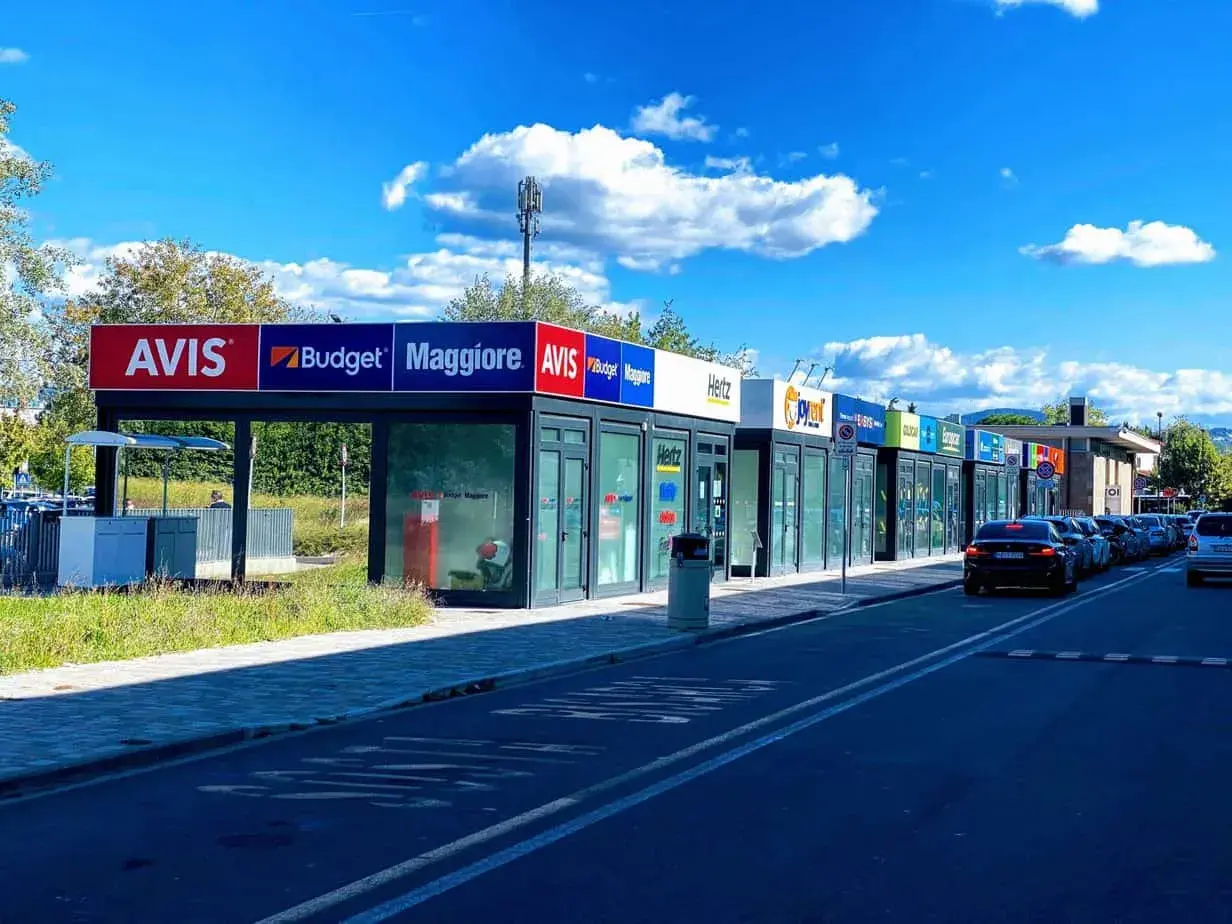
In Florence, the pickup location matters almost as much as the price. A car can be cheap on paper and still be awkward if the office sits inside the city center or near traffic restrictions. For most travelers, Florence Airport is the cleanest choice because you can collect the car and head straight out toward Tuscany without threading through the old streets first.
| Pickup option | Best for | Trade-offs |
|---|---|---|
| Florence Airport | Arrivals who want to start driving immediately | Often busier, but usually the simplest exit from the city |
| Downtown Florence | Travelers staying in the city before the road trip begins | More exposed to ZTL confusion and awkward parking while loading bags |
| Outside the center | People who want less congestion and a cleaner departure route | May require a taxi or shuttle before pickup |
If you only need the car after a couple of days in Florence, I usually prefer to wait and pick it up later rather than pay for city-center parking while I am sightseeing. One-way rentals can also work if you are continuing to Rome, Pisa, or another city, but I would compare the drop fee carefully before assuming it is the best deal. Once you know where the handoff happens, the big Florence-specific problem is the ZTL, and that deserves its own section.
How to avoid the ZTL and parking traps
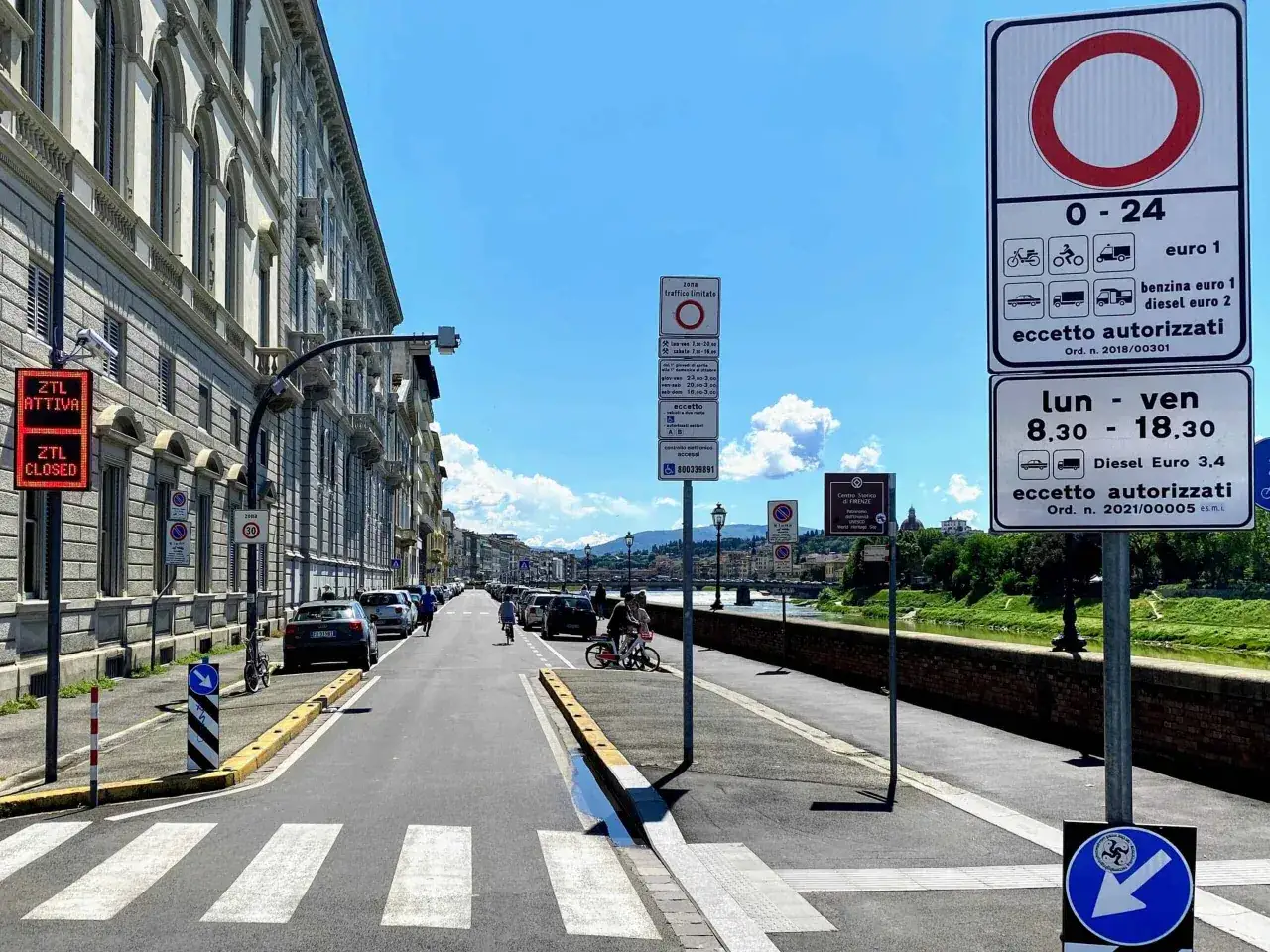
Florence’s historic center is a restricted traffic zone, or ZTL, and that is the rule that ruins the most first-time rentals. The entire center is regulated, and rental cars do not automatically have permission to enter just because you have a reservation. If you drive in casually, rely on the wrong GPS turn, or assume “just a quick drop-off” is harmless, you can end up with a fine you never wanted.
My rule is simple: plan parking before you arrive. If your hotel offers a garage, confirm that it is outside the ZTL or that the property can explain exactly how guests access it. If you are using a public garage, save the address and entrance in your navigation app, not just the hotel name. That small detail matters because the safest route is often not the prettiest one, and Florence’s narrow streets punish guesswork.
- Set your parking destination before entering the city.
- Do not assume a hotel address is safe to drive to without checking the access route.
- Watch for ZTL signs and cameras, especially near the historic core.
- If you are unsure, stop outside the center and ask the garage or hotel staff.
Parking itself is usually easier in a garage than on the street, and I would rather pay for convenience than spend the first hour of a trip circling blocked streets. That approach also keeps the rest of the rental experience calmer, which brings me to the part travelers often try to cheap out on first: insurance and extras.
Insurance and extras worth paying for
I do not think every extra is worth buying, but Florence is a place where a few of them genuinely pull their weight. Tight streets, unfamiliar road signs, and busy garage ramps make minor damage more likely than on a wide suburban drive. The goal is not to buy everything; the goal is to remove the few risks that would ruin the trip if they happened.
| Add-on | My take | When it helps most |
|---|---|---|
| Collision and theft cover | Usually worth considering | When you want less financial exposure if the car is damaged or stolen |
| Lower excess | Often the smartest upgrade | When you do not want a large out-of-pocket bill after a scrape or chip |
| Additional driver | Worth it on longer trips | When two people want to share the driving through Tuscany |
| Roadside assistance | Useful for remote itineraries | When you plan to spend time on smaller rural roads |
| GPS unit | Usually skip it | Your phone navigation is normally enough unless your data plan is weak |
If you are under 25, or even close to that threshold, I would expect fees to move the total more than you want. If you need an automatic transmission, I would book sooner rather than later because it is one of the first categories to sell out. These two details often matter more than the flashy headline rate, and they can change the value of the whole rental faster than the base price does. Once you have chosen the coverage and the car class, the last piece is the actual booking routine.
The booking routine I would use for a Florence trip
The cleanest way to book is to work backwards from the road trip, not from the city stay. First I decide whether I really need the car on day one or only after I leave Florence. Then I pick the most practical pickup point, usually the airport or a location outside the center. After that, I compare the smallest car that fits the bags, because a compact vehicle is easier to park and less annoying on Tuscan roads.
- Choose the pickup point that avoids city-center stress.
- Confirm the age, license, and credit card rules before paying.
- Reserve an automatic early if you need one.
- Check the fuel policy, mileage limits, and one-way fee if applicable.
- Save the confirmation offline and photograph the car at pickup.
- Document the exterior, tires, windshield, and fuel level before leaving the lot.
That last step matters more than people think. A few clear photos at pickup can save a lot of argument at drop-off, especially if the car already has small marks on it. I would also use this moment to ask where the nearest fuel station is, how the return lane works, and whether the drop-off is 24-hour or tied to office hours. Those little logistics are easy to ignore until you are trying to make a flight.
The simplest way to make it work on a first Florence trip
If I were planning a first trip, I would keep Florence itself car-free, then pick up the rental only when I was ready to leave for the countryside. That one decision removes most of the pressure: no ZTL panic, no expensive city parking, and no need to drag luggage through narrow lanes with traffic behind you. It also means the car starts serving the road trip instead of complicating the city break.
For most travelers, that is the sweet spot: a compact car, airport or outside-center pickup, a physical license plus IDP if needed, and enough insurance to make a small mistake feel annoying instead of expensive. If you get those pieces right, Florence becomes a very strong base for Tuscany instead of a place where driving gets in the way. And once you are past the city limits, the whole region opens up in a way train timetables never quite match.