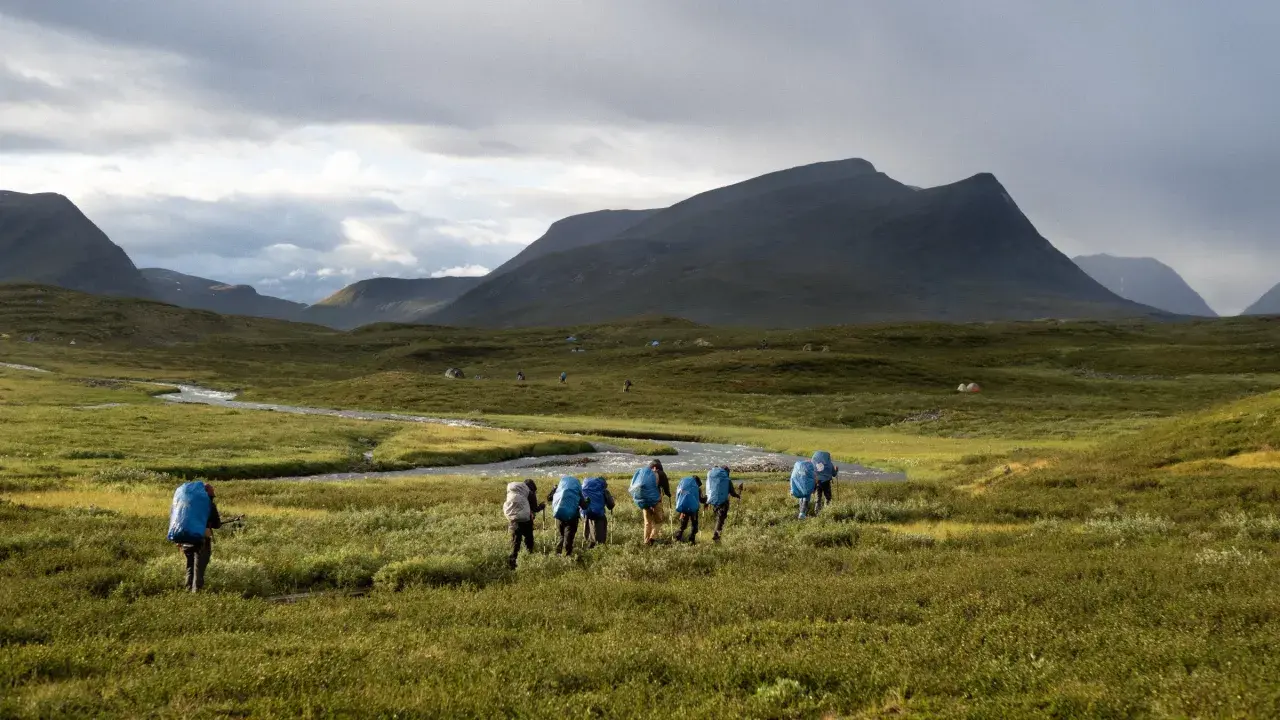
Fjällräven Classic Sweden is one of the clearest examples of a trek where the format matters almost as much as the scenery. You walk 110 kilometers from Nikkaluokta to Abisko, carry your own overnight kit, and move through Arctic terrain that can change from calm to punishing in a single afternoon. This guide focuses on the practical side: how the route works, what support you actually get, what to pack, and which details make the difference between a memorable journey and an unnecessarily hard one.
The essentials at a glance
- The Swedish Classic is the original and longest Fjällräven Classic trek, covering 110 km (68 miles) on the King’s Trail.
- The event is self-supported, but it still handles a lot of logistics for you, including transport, maps, fuel, food basics, and baggage transfer.
- Expect 3 to 7 days on the trail, limited mobile coverage, and weather that can shift quickly.
- Camping is broadly flexible under Sweden’s right of public access, but Abisko National Park has stricter rules.
- The smartest prep is not overthinking gear; it is building a realistic pack, training with weight, and arriving with buffer time in Kiruna.
What makes the Swedish classic different from a normal trek
This is not a lodge-to-lodge hike and it is not a race. The appeal is that Fjällräven Classic Sweden gives you just enough structure to make a remote Arctic trek doable, while still asking you to manage your own pace, camp, food, and weather decisions. That balance is exactly why the event feels rewarding: you get real wilderness without having to solve every logistical problem from scratch.
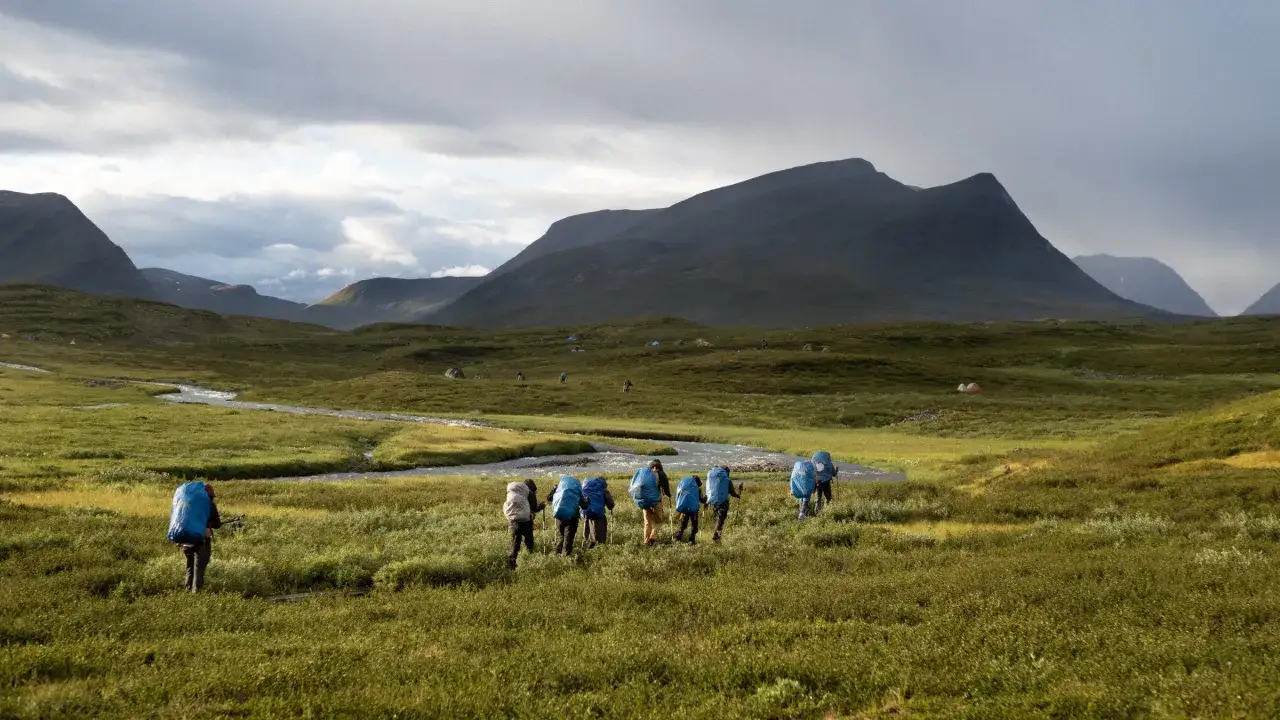
I also think the route earns its reputation because it is honest about the terrain. Birch forest, lakes, river crossings, rocky passes, and open alpine sections all show up on the same journey, so you are not just collecting views. You are adapting all day, every day, which is a very different experience from a casual weekend trail. Once you understand that, the route itself starts to make more sense, especially where the hard and easy sections sit.
The route and what each stage feels like
The classic line runs from Nikkaluokta to Abisko along a stretch of the King’s Trail. The event materials describe it as a 3 to 7 day trek, and that range matters because pace, weather, and camp choices all change the experience. There are five staffed checkpoints between the start and finish, and the route is built so that support shows up at the moments when self-sufficiency matters most.
| Stage | Distance | What stands out |
|---|---|---|
| Nikkaluokta to Singi | About 31 km / 19 mi | The long opening push. You climb steadily, and the optional 6 km boat shortcut across Lake Laddjú can save both legs and time. |
| Singi to Sälka | About 12 km / 7.5 mi | One of the most camp-friendly sections, with beautiful places to stop and a more relaxed profile than the opening leg suggests. |
| Sälka to Tjäktja | About 15 km / 9.3 mi | Deceptive on paper. The gradient looks manageable, but the rocks make this a slow and careful section. |
| Tjäktja to Alesjaure | About 10 km / 6.2 mi | The highest point of the trek sits here. It is challenging, but it feels earned once you pass the pass and look back. |
| Alesjaure to Kieron | About 19 km / 11.8 mi | The terrain softens gradually from alpine ground into easier grassland, which is a welcome mental reset. |
| Kieron to Abisko | About 19 km / 11.8 mi | The final push through birch forest and toward the finish. It is often the section people underestimate because they are thinking about the end. |
Two details matter most on the route itself. First, the checkpoints are not just symbolic markers; they are places where you can stamp your Trekking Passport, refill certain supplies, and get support if conditions change. Second, the trail is more varied than many first-timers expect. The rocks around Sälka and the climb toward Tjäktja are usually where pace drops, while the more gentle ground after Alesjaure can trick you into relaxing too early.
That route only works because the event handles the movement into and out of the trail. The start process is where most first-timers either save time or create avoidable stress.
How the start, transfers, and accommodation work
If I were planning this from the United States, I would build in a buffer before the start. Check-in takes place in Kiruna, not at the trailhead, and the trek begins in Nikkaluokta after a bus transfer. For the 2026 edition, start groups are offered on August 6, 7, and 8, which means your travel plan needs to match your assigned departure slot rather than your own ideal schedule.
- Check-in happens at Högalidsskolan in Kiruna.
- The bus from Kiruna to Nikkaluokta takes about one hour.
- Reserved buses depart between 07:00 and 11:40, and you must take the one tied to your ticket.
- You can transport one bag up to 60 liters or 20 kg to Abisko.
- There are night buses from Stockholm to Kiruna, with return buses from Abisko to Stockholm after the trek.
- The return event transfer from Abisko to Kiruna city centre or Kiruna Airport costs 400 SEK per person and runs from August 10 to August 14 in the 2026 season.
Accommodation is another place where people underestimate the logistics. Kiruna, Nikkaluokta, and Abisko all have options, but August is high season in northern Sweden, so booking late usually means paying more or settling for whatever is left. For a long-haul traveler, the cleanest approach is usually one night in Kiruna before the trek and one flexible night after Abisko. That gives you room for flight delays, tired legs, and a much less rushed exit.
Once the travel puzzle is solved, the next question is simpler: what do you actually need to carry so the hike feels manageable instead of heavy.
What to pack if you want the trek to feel manageable
The official packing guidance is more serious than many people expect, and for good reason. This is wilderness trekking with limited mobile coverage, unpredictable weather, and random equipment checks at the start. I would treat the mandatory list as the real baseline, not as a suggestion to interpret loosely.
| Category | What matters most | Why it matters |
|---|---|---|
| Sleep system | Three-season sleeping bag, tent, sleeping mat | Cold nights and wet ground are normal enough to plan for them, not react to them. |
| Navigation and safety | Compass, head torch, first aid kit, map | Do not assume visibility or cell service will save you when the weather turns. |
| Clothing | Rain shell, shell trousers, thermal base layers, warm mid-layer, gloves, hat | Layering is what keeps you moving when temperatures and wind shift. |
| Cooking and hydration | Stove with pot, water bottle, fuel, cup, cutlery | Eating and drinking consistently keeps fatigue from building too early. |
| Trail comfort | Boots, wool socks, spare shoes or sandals, insulated jacket, sunscreen, power bank | These are not luxuries on a multi-day trek; they reduce friction at camp and on long walking days. |
The event includes some basics, such as fuel, a map, a trash bag, and toilet paper, and that helps keep the pack simpler. But I would still pay close attention to comfort items that feel minor in the living room and decisive on the trail: dry socks, a proper mid-layer, a head torch that you actually trust, and enough snack food to prevent energy dips between checkpoints. If you get the weight right, the route feels challenging in a good way; if you get it wrong, every kilometer starts to feel expensive.
Pack well and the route becomes manageable. Pack carelessly and the freedom of the trail starts to work against you, which is why the camping rules matter so much.
How to camp responsibly when the trail gives you so much freedom
One of the most distinctive parts of Fjällräven Classic Sweden is how much camping freedom you get. Sweden’s right of public access, Allemansrätten, lets you camp almost anywhere as long as you respect nature, wildlife, and other hikers. That sounds generous, and it is, but it only works if participants behave like guests rather than opportunists.
- Choose flat, durable ground rather than fragile vegetation.
- Stay away from streams and lakes when you pitch your tent.
- Carry out all waste and use the checkpoint toilets when you can.
- Do not rely on STF mountain cabins for shelter, indoor facilities, or evacuation waiting areas.
- After Checkpoint Kieron, remember that camping is prohibited in Abisko National Park except at Nissunjåkk, about 5 km from the finish.
The safety side is equally important. There are no roads, mobile coverage is limited, and the weather can change rapidly. The event expects participants to be responsible for their own safety, including insurance that covers accidents, injuries, and evacuation. If you are coming from the U.S., that means you should not treat this as a normal supported race or festival hike. You need real travel insurance, and you need to know how to signal for help if something goes wrong.
Those rules sound strict, but they are the reason the trek still feels wild. They also point to the final issue that matters most: whether you are actually ready for this kind of experience.
The details I would not overlook before committing
Most people do not struggle on this trek because they lack enthusiasm. They struggle because they misjudge the small things that accumulate over several days. The biggest mistakes are usually boring ones: poor layering, too much pack weight, weak footwear, and not enough attention to recovery between walking days.
- Train with the pack weight you will actually carry, not just on flat ground.
- Break in footwear before the event, but do not rely on old boots that are already failing.
- Assume at least one day will be wet, cold, or windy, even in August.
- Keep one dry layer untouched for camp so you have a real reset at the end of the day.
- Do not share critical gear with people you may separate from on the trail.
- Use the checkpoints to refill food and gas instead of trying to stretch supplies too far.
For me, that is the real appeal of Fjällräven Classic Sweden: it gives you enough structure to succeed, but not enough comfort to fake readiness. If you respect the distance, pack for weather rather than optimism, and plan your travel around the event instead of hoping it will all work out, you get one of the most memorable long-distance hikes in northern Europe.