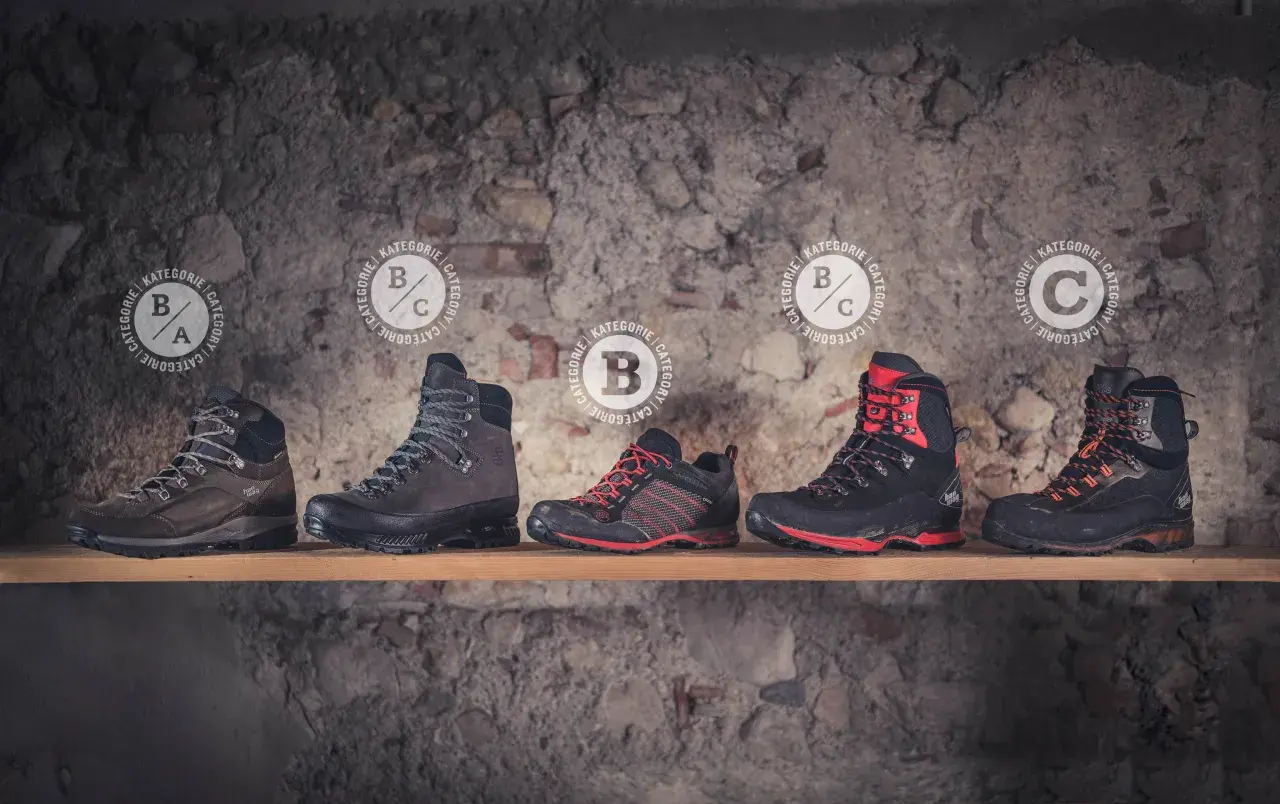
The difference between mountaineering boots vs hiking boots is not just stiffness or branding; it is the kind of terrain they are built to handle when conditions get serious. Hiking boots are made to keep you moving comfortably over miles of trail, while mountaineering boots are built for snow, ice, steep ground, and the extra control that comes with crampons. In this guide I break down the practical differences, where each type makes sense, and how to avoid paying for more boot than your route actually needs.
The short answer is to match the boot to the hardest part of the route
- Hiking boots prioritize comfort, walking efficiency, and enough support for trails and backpacking.
- Mountaineering boots prioritize stiffness, warmth, and secure crampon compatibility for snow and ice.
- Rugged hiking boots can handle short snowy sections, but they are not a substitute for true alpine footwear.
- In current U.S. retail, hiking boots often land around $100 to $300, while mountaineering boots commonly start around $350 and can exceed $700.
- The more time you spend on firm snow, steep rock, or glacier travel, the more the case shifts toward mountaineering boots.
The real job of each boot
Hiking boots are designed for movement that stays mostly on trail: dirt, roots, rock, wet grass, and long days with a pack that is annoying, but not extreme. They need to be supportive enough to reduce fatigue, yet flexible enough that your foot can roll naturally for hours. That is why a good hiking boot often feels like a compromise in the best sense of the word: enough protection without turning every step into work.
Mountaineering boots solve a different problem. They are meant for alpine routes where the surface can change from snow to rock to ice in a few minutes, and where a soft sole or loose upper can become a real liability. If you are crossing glaciers, front-pointing on steep snow, climbing mixed terrain, or using crampons for extended periods, the boot has to behave more like a platform than a sneaker with lugs. That is the entire point: control first, comfort second.
For scenic mountain travel, that distinction matters more than people think. A summer walk in the Alps, a ridge hike in the Pyrenees, or a long approach to a viewpoint in the U.S. backcountry usually rewards a hiking boot. Once the day turns into snow travel, winter exposure, or technical alpine movement, the logic flips quickly. That is where the hardware details start to matter.
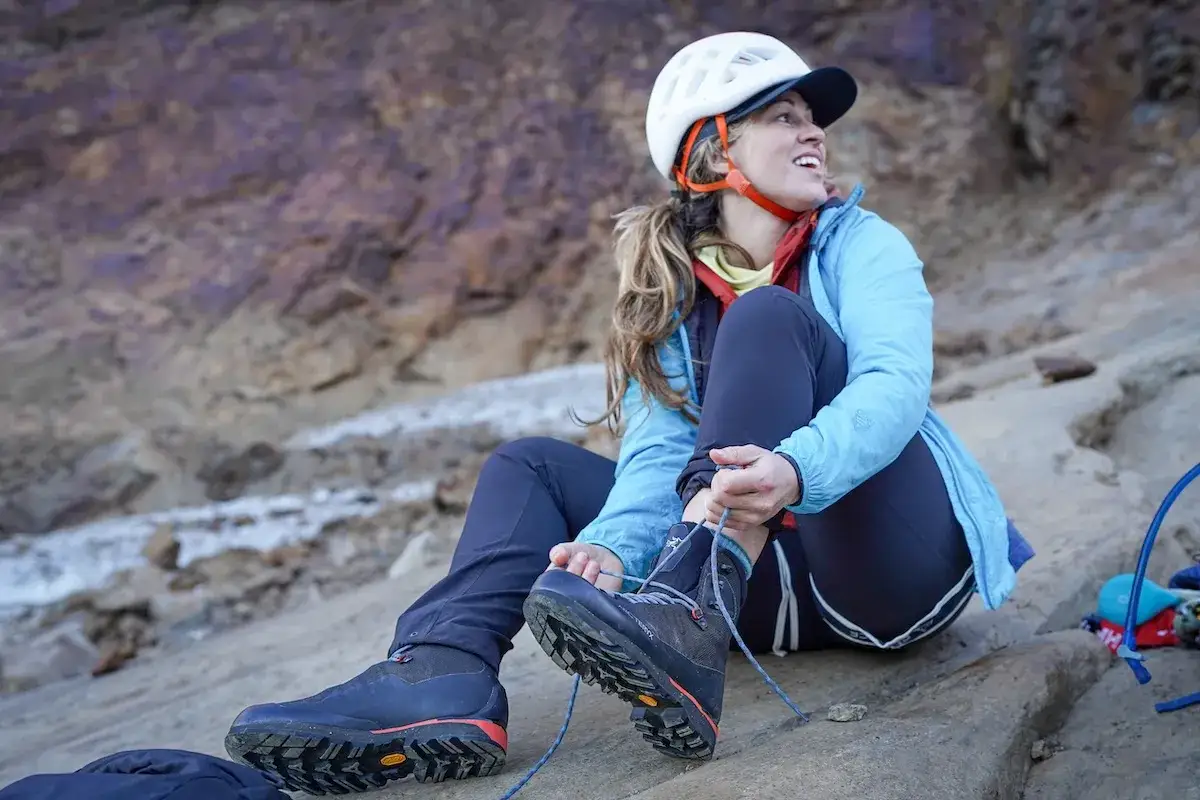
What changes in the build
| Feature | Hiking boots | Mountaineering boots | Why it matters |
|---|---|---|---|
| Sole stiffness | Flexible to moderately stiff | Very stiff to rigid | Stiff soles resist flex under load and give crampons a stable base. |
| Support structure | Supportive, but still built for walking efficiency | Higher cuff and stronger chassis | More structure helps on uneven alpine ground and when edging on snow. |
| Insulation | Usually uninsulated, with some winter exceptions | Often insulated, especially in winter and high-altitude models | Warmth becomes a safety issue when temperatures stay low for hours. |
| Crampon compatibility | Some rugged models work with strap-on or hybrid systems, but not all | Usually designed for crampons, including step-in systems on technical boots | A secure crampon fit is about more than convenience; it affects traction and safety. |
| Weight | Often about 1.5 to 3 lb per pair, with some heavier backpacking models | Commonly about 3 to 5 lb per pair, sometimes more for insulated models | Extra structure and warmth cost energy on long approaches. |
| Price | Usually around $100 to $300, with premium models higher | Commonly around $350 to $700+, with technical pairs above that | The more specialized the boot, the less forgiving the purchase becomes. |
Two technical terms are worth decoding here. A shank is the reinforcing piece inside the sole that controls flex, and a welt is the ledge at the toe or heel that helps a crampon lock onto the boot. In plain English, those parts are what make a mountaineering boot feel much less like a walking shoe and much more like equipment for climbing.
That is why a boot that feels perfect on a forest trail can feel completely wrong on a glacier. The next question is not which boot is stronger on paper, but which one is actually useful in the terrain you plan to walk.
When hiking boots are the better choice
I reach for hiking boots when the route rewards comfort, not maximal structure. That includes day hikes, multi-day backpacking trips, wet shoulder-season trails, and alpine approaches where the hard part is still mostly walking. If your day is long but the terrain is not technical, a good hiking boot usually gives you the best mix of grip, protection, and range of motion.
They are also the smarter choice for most warm-weather trips. A mountaineering boot that never sees snow can feel hot, heavy, and unnecessarily stiff, especially on a long descent. I have seen plenty of people buy the burliest boot in the shop for a trip that would have been better served by a lighter, more forgiving model. That usually ends with sore feet and extra fatigue rather than extra confidence.
For many hikers, the best value is a sturdy backpacking boot that can handle rough trails and moderate pack weight. It will not replace a true alpine boot, but it will do far more jobs well. If your scenic trip is mostly footpaths, ridgelines, and mixed but non-technical terrain, that is usually where the money should go.
Rule of thumb: if you are walking more than climbing, hiking boots are usually the right call. If the mountain is asking you to fight the surface instead of just follow it, keep reading.
When mountaineering boots earn their place
Mountaineering boots make sense when the route depends on traction on snow or ice, not just tread on dirt. That means glacier travel, winter ascents, steep couloirs, mixed routes, and any objective where you expect to wear crampons for more than a short crossing. Once the footwear needs to hold a crampon securely and stay supportive in cold conditions, the extra stiffness stops being a luxury and starts being the point.
These boots also matter for low-temperature use. Cold changes everything: materials stiffen, feet lose warmth faster, and sloppy foot placement becomes more expensive. A more protective upper, a stiffer sole, and often insulation all work together to keep the boot predictable when the terrain and weather are trying to take control away from you. In winter alpine settings, that predictability is worth the extra weight.
There is a tradeoff, and it is a real one. Mountaineering boots are bulkier, more expensive, and less pleasant on long trail approaches. If your route only includes a few short snow patches, they may be overkill. For simple snow travel, a rugged hiking boot with the right traction aid can be enough; for technical climbing, that same boot can be the wrong tool entirely. If you only need a pair once or twice, renting often makes more sense than buying.
The cleanest way I think about it is this: hiking boots handle distance, mountaineering boots handle commitment. The moment the route becomes steep, cold, and crampon-dependent, the second category starts to justify itself.
A practical rule I use before buying boots
When I am deciding between these two categories, I ask four questions in order:
- Will I need crampons for real traction, not just extra confidence on a snowy path?
- Will I spend more time walking than standing on steep snow or ice?
- Is the cold sustained enough that insulation matters for comfort and safety?
- Is the route technical enough that a flexible sole would feel vague or unstable?
If the answer to the first or fourth question is yes, I start looking at mountaineering boots. If the route is mostly trail travel with only brief snow crossings, I stay with hiking boots or a stiff backpacking boot and move on. That simple filter prevents most bad purchases.
I also think in scenarios rather than categories. For a summer trek with long valley approaches, I want hiking boots. For a shoulder-season alpine hike with scattered snow and no technical climbing, I want a sturdy boot with enough support and traction, but not a fully rigid alpine model. For glacier travel, winter peaks, or mixed terrain where crampons are part of the plan, I stop trying to make hiking boots do a mountaineering job.
That approach keeps the decision honest. I buy for the coldest, steepest, most technical part of the day, not for the easiest 90 percent of it, because that last 10 percent is usually where boot choice gets exposed. If the route is mostly about scenery and mileage, a hiking boot is the better tool; if the route is about snow, ice, and control, a mountaineering boot is the one I trust.