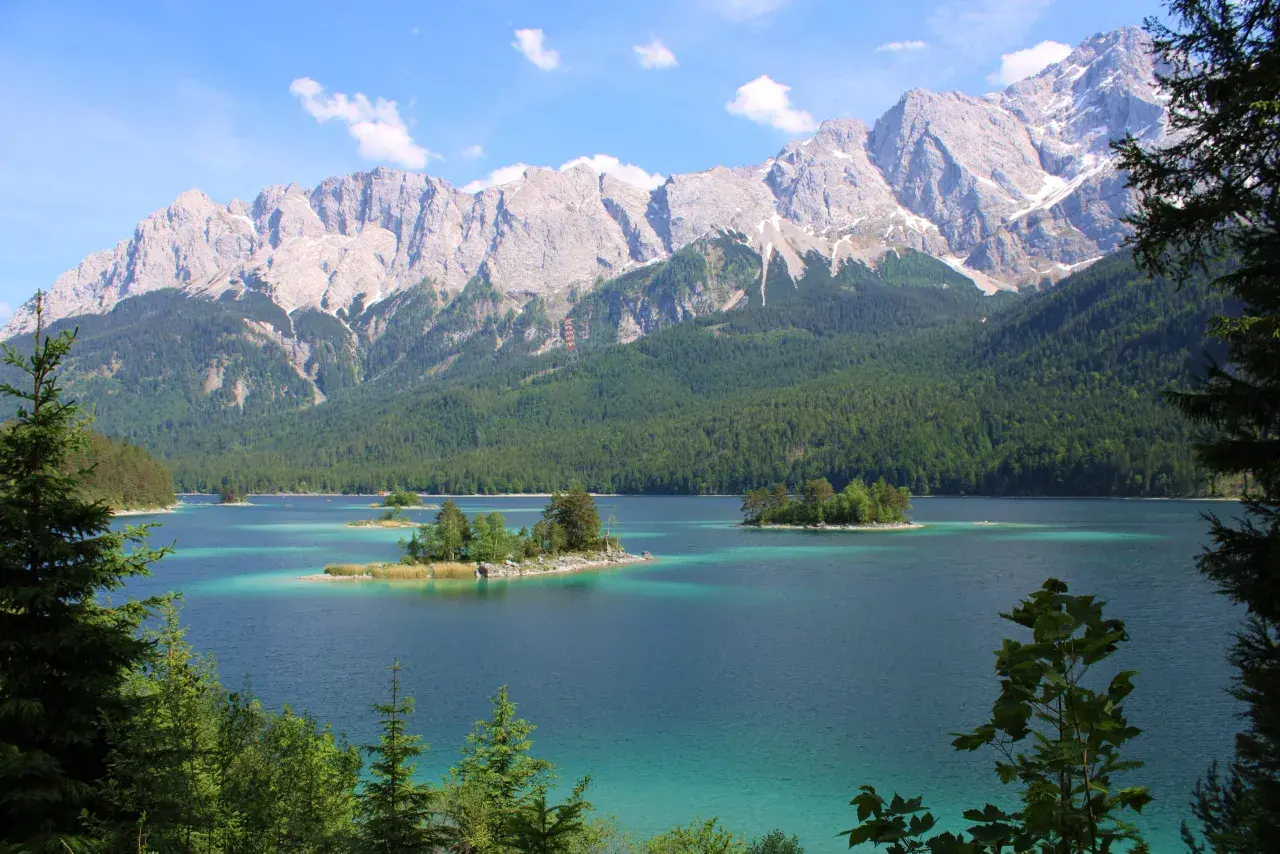
The bavarian countryside is best understood as several landscapes in one: alpine foothills, lake districts, forested plateaus, and wine hills that all feel distinct once you leave the motorway. This guide shows which parts are worth prioritizing, what each region is best for, and how to plan a trip that feels scenic without becoming rushed. If you want real outdoor value, not just postcard scenery, the details here matter.
What you need to know before choosing a rural base in Bavaria
- Bavaria’s rural side is not one uniform region; the experience changes a lot between lakes, Alps, forests, and vineyard country.
- For an easy first trip, Upper Bavaria and the lake belt are the simplest starting point.
- For bigger mountain scenery, Allgäu and Berchtesgadener Land deliver the strongest payoff.
- For quieter landscapes, longer walks, and fewer crowds, the Bavarian Forest and Franconian inland regions work very well.
- The best hiking and cycling window is usually April to June and September, while winter sports fit October to March.
- Two to four nights per region is usually the sweet spot; any shorter and you spend too much time moving.
Why Bavaria feels so different from one region to the next
I usually think of Bavaria as four trips in one. Bavaria’s official tourism guide points to four large holiday regions, and that alone explains why two travelers can come back with completely different impressions of the same state. One person remembers lakes and easy train trips, another remembers steep alpine paths, and a third remembers forests, river valleys, and slower village life.
That variety is not marketing language. Bavaria’s official tourism guide also highlights 40,000 kilometers of signposted hiking trails and around 200 bathing lakes, which tells you how deeply the region is built for slow outdoor travel. The landscape is broad enough that your base, season, and transport choice all change the trip in a real way.
| Region | Landscape character | Best for | Why it stands out |
|---|---|---|---|
| Upper Bavaria | Lake districts, foothills, valleys, and alpine edges | First-time visitors, easy day hikes, swimming, scenic drives | It combines access and scenery better than almost anywhere else |
| Allgäu / Bavarian Swabia | Meadows, mountain walls, river valleys, and village-filled slopes | Hikers, cyclists, families, castle-and-nature trips | It gives you the classic alpine Bavaria look without needing extreme trekking |
| Franconia | Low mountain ranges, cliffs, vineyards, and wooded hills | Walkers, food-focused travelers, quieter road trips | The terrain is gentler, but the variety is stronger than many travelers expect |
| East Bavaria | Forests, Danube plains, and long, quiet ridgelines | Long hikes, nature stays, winter trips, low-crowd travel | The Bavarian Forest gives the region a much more remote feel |
Once you see that split, the planning becomes much easier. The real question is not whether to visit Bavaria, but which version of its landscape fits the trip you want.
The destinations I would put on a first-time route
Upper Bavaria for lakes and easy access
If I were sending someone to Bavaria for the first time, I would start with the lake belt south of Munich. Lake Starnberg, Tegernsee, and Chiemsee are useful because they give you a soft landing: you can walk, cycle, swim, eat well, and still get a strong sense of the landscape without long transfers. Chiemsee is especially good if you want space, because it is Bavaria’s largest lake and has enough scale to feel open rather than cramped.
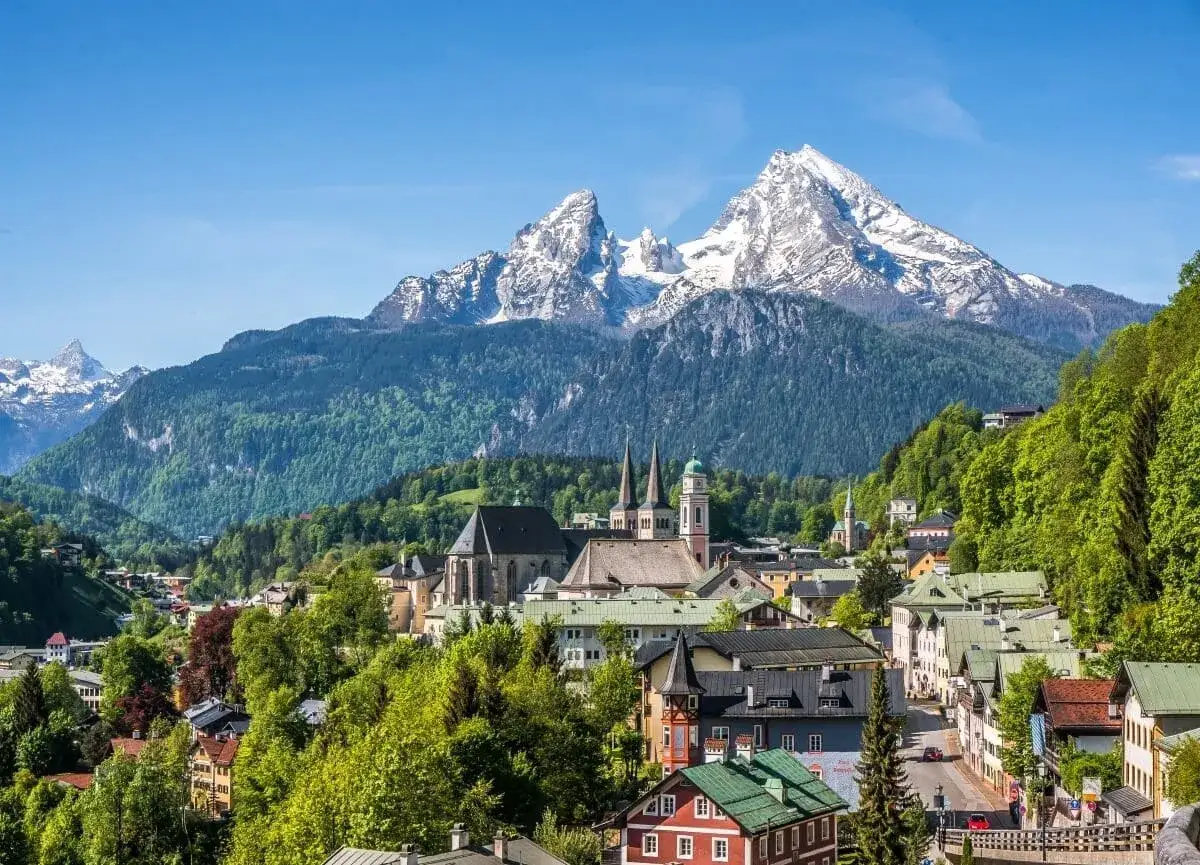
This is also the easiest region to combine with a few mountain-edge outings. If you want a little more drama, push farther south toward Berchtesgadener Land or the Garmisch area, where the scenery tightens and the peaks become part of every view. For travelers who like a trip to feel polished and efficient, this is the most forgiving place to begin.
Allgäu and Bavarian Swabia for the classic alpine look
The Allgäu is where many visitors finally get the image they were hoping for when they thought about Bavaria: rolling meadows, steep mountain walls, and villages that sit neatly against the slope. Oberstdorf is the most obvious hiking base, Füssen works well if you want lakes and castles in the same stay, and smaller places like Bad Hindelang feel calmer if you prefer a less polished atmosphere.
What makes this region important is not just scenery, but balance. You can do proper hiking here without needing technical mountain experience, and you can still have a comfortable base with good food and straightforward logistics. If your trip needs one region that feels unmistakably alpine, this is the one I would choose.
Franconia for low mountains, wine hills, and village culture
Franconia is the part of Bavaria that many people underestimate. It is less dramatic than the Alps, but it is full of shape and texture: limestone cliffs, river bends, vineyard slopes, medieval towns, and long wooded ridges. Franconian Switzerland is one of the best areas for active families because the terrain is lively without being punishing, while the Steigerwald, Haßberge, and Rhön give you quieter walking country with good food stops along the way.
This is the region I would pick if I wanted more than scenery alone. The landscape and the local food culture work together here, so a short walk can end in a village inn, a wine stop, or a castle view that does not feel staged. It is the most grounded, least obvious option on the list, and that is part of its appeal.
Read Also: Porto Santo Travel Guide - Your Golden Island Escape
East Bavaria and the Bavarian Forest for quieter nature
If you want the least crowded side of the state, go east. The Bavarian Forest is the anchor here, and it changes the mood completely: deeper woods, longer ridge walks, and a stronger sense of space than you get in the better-known lake districts. The region does not try as hard to impress you, which is exactly why it works for travelers who want calm rather than spectacle.
It is also the best answer for anyone who wants a more restorative trip. You are less likely to be jumping between landmarks and more likely to settle into a rhythm of walking, eating, sleeping, and repeating. If the goal is to feel away from it all, this region does that better than almost anywhere else in Bavaria.
That is the shortlist I would use for a first trip, because each region gives you a different kind of rural Bavaria rather than a repeat of the same view.
How to choose the right base for your trip style
The easiest way to avoid a weak itinerary is to match the region to the way you actually travel. If you like moving every day, Bavaria can handle that, but I would not recommend it for a first visit. A single base is usually better, especially if you are coming from the US and want the trip to feel relaxing rather than like a logistics exercise.
| Trip style | Best base | Why it works | Main trade-off |
|---|---|---|---|
| Easy first trip | Chiemgau or the Starnberg area | Simple access, mixed scenery, good day-trip options | It can feel busy in peak summer |
| Big mountain views | Allgäu or Berchtesgadener Land | Highest scenery payoff and strongest alpine feeling | Weather changes fast and distances are less forgiving |
| Quiet outdoors | Bavarian Forest | Long walks, open space, fewer crowds | Fewer nightlife and dining options |
| Food, wine, and smaller towns | Franconia | Great for slow driving, tasting stops, and village stays | The scenery is gentler than in the south |
| Mixed family trip | Lake Chiemsee or the Altmühltal area | Good mix of cycling, swimming, and short walks | You need to book the best lakefront stays early |
My rule is simple: if you have four or five nights, keep one base and do not overcomplicate it. If you have a full week, split the trip between one lake region and one higher or quieter region. That gives the landscape time to register, which is what makes the trip feel memorable rather than fragmented.
What to do beyond the scenery
The landscapes are the main reason to come, but they are not the only reason to stay engaged. Bavaria works well for active travelers because it offers enough structure to support hiking, cycling, and winter sports without making every day feel like an expedition. The seasonal window matters too. The official guide points to April to June and September as the strongest months for hiking and cycling, with temperatures often around 12 to 20 degrees Celsius. For winter sports, the best period is usually October to March.
- Hiking works best in the Allgäu, the Bavarian Forest, and Franconian Switzerland, where the trail networks are broad and the terrain changes often enough to stay interesting.
- Cycling is strongest around lakes and river valleys, especially Chiemsee, the Altmühltal, and flatter parts of Franconia.
- Swimming and lake days belong in Upper Bavaria, where bathing lakes are part of the rhythm of summer rather than a side activity.
- Winter walking, cross-country skiing, and snowshoeing make the most sense in higher or forested areas, where snow tends to hold better and the scenery feels quieter.
- Food stops are not filler here; they are part of the experience. Farm inns, monastery breweries, and wine villages add context to the landscape instead of distracting from it.
The best trips use the scenery and the activity together. A good walk, a lake swim, or a long lunch in a village usually matters more than trying to tick off a famous viewpoint you barely remember later.
How to move around without wasting time
Transport is where most first-time trips either become smooth or start to fray. Regional trains are excellent for the more accessible parts of Bavaria, especially if you are staying near Munich or close to main rail corridors. A car becomes more useful once you want to reach smaller villages, trailheads, or places with weaker evening connections. If you try to do the whole trip on public transport, keep your route tight; if you want freedom, rent the car and use it properly.
| Transport option | Best for | Strength | Limitation |
|---|---|---|---|
| Regional train | Lakes near Munich, towns, and easy excursion bases | Low stress, no parking, good for one-way day trips | Last-mile service can be thin in the countryside |
| Rental car | Multi-region trips and remote trail access | Best flexibility and the easiest way to chain small stops | Parking, fuel, and winter roads add friction |
| Bike plus train | Lakes, river valleys, and flatter terrain | Fits the slow-travel rhythm of the region | Not a good match for steep alpine days |
| Guided day tour | One-off highlight days from a city base | Simple if you only need one signature experience | Fixed pace and less room for wandering |
The main practical mistake is not distance; it is assuming every place runs on the same timetable. Rural buses can be sparse in the evening, some mountain stops move faster than expected, and small inns may keep shorter hours than city restaurants. I would always leave one flexible half-day in the schedule, because that extra space usually becomes the part of the trip you remember most.
The route I would choose for a first visit
If I were building a first trip from scratch, I would keep it simple and let the landscape do the work. The strongest formula is one lake base, one mountain base, and one quieter inland stop. That gives you contrast without forcing you to spend half the trip in transit.
- Start with 2 nights around Chiemsee or Tegernsee so you can settle in with easy walks, lake views, and a relaxed first impression.
- Move to 2 nights in the Allgäu or near Füssen if you want the alpine part of the trip to feel bigger and more dramatic.
- Add 1 to 2 nights in Franconian Switzerland or the Bavarian Forest if you want a quieter final act with forests, cliffs, or old village scenery.
If you only have three or four nights, cut the route down to two bases and keep the pacing slow. A good rural Bavaria trip is not about collecting the most famous names; it is about choosing one landscape carefully, then giving yourself enough time to actually enjoy it.