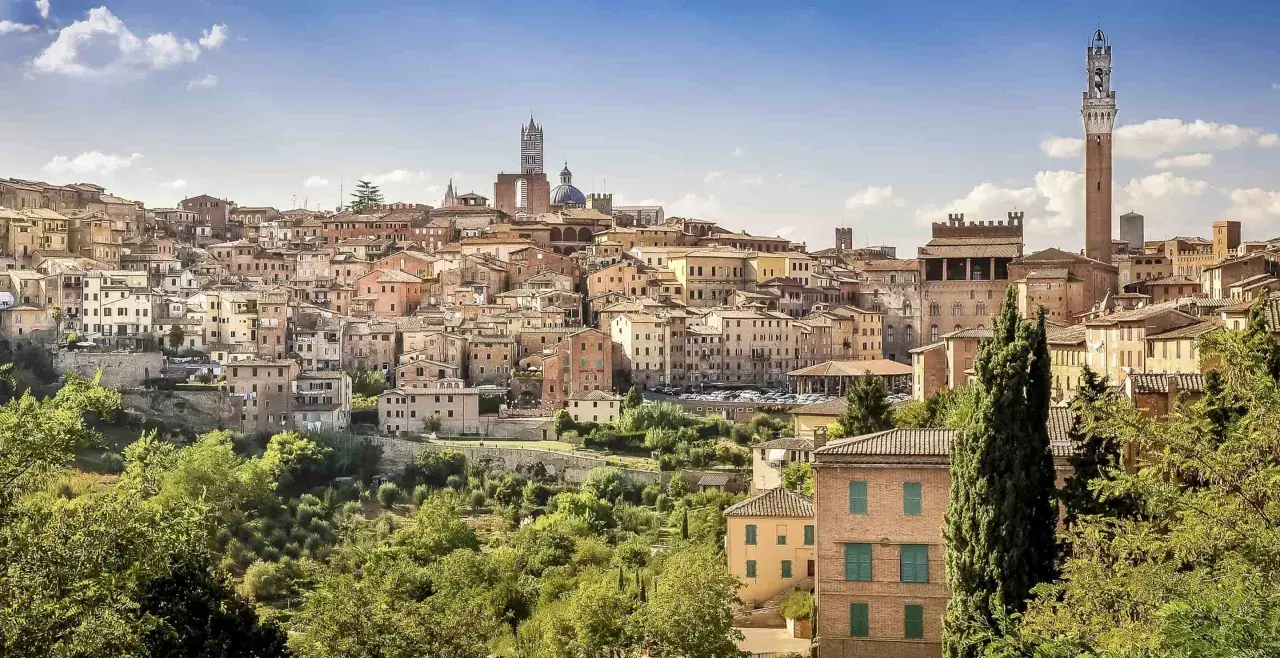
The trip from Lucca to Siena is easy to underestimate. On paper it is a compact Tuscan transfer; in real life, the best choice depends on whether you want the fastest arrival, the least friction, or a drive that feels like part of the holiday. I’m breaking down the route options, the time and cost tradeoffs, and the scenic version I would actually choose when the countryside matters as much as the destination.
The route is short, but the planning decisions matter
- The road distance is about 108 km / 67 miles, and driving is usually the fastest option at around 1 hour 50 minutes.
- There is no direct train, so rail travel usually means at least one change and roughly 2 hours 45 minutes to 3 hours.
- Direct coach options exist, but the frequency is limited, so they work best when the timetable already fits your day.
- If you want scenery, I would add one hill-town stop, not three or four.
- The biggest planning trap is not the distance itself, but parking, connections, and Siena’s historic-center access rules.
The route is short, but the logistics are not
Lucca and Siena are not far apart, but Tuscany is not built for straight-line speed. The road trip is about 108 km (67 miles) and usually takes around 1 hour 50 minutes by car, while the rail journey is slower because there is no direct train. That means the real question is not distance; it is how much schedule flexibility you have and whether you want the trip itself to be scenic or simply efficient.
In my experience, this is the kind of transfer that goes smoothly when you plan around the final mile as much as the journey. Siena’s historic center is uphill and tightly managed, so a "fast" route on paper can still become a clumsy arrival if you do not think about parking, luggage, and the last walk into town. That tradeoff is what makes the next comparison so useful.
Which transport option makes the most sense
When I compare the options, I start with friction instead of mileage. A slightly slower ride that is direct is often better than a theoretically shorter itinerary with a stressful connection.
| Option | Typical time | Typical cost | Best for | Watch out for |
|---|---|---|---|---|
| Coach | About 2 hours 10 minutes | €10-€20 | Budget travel and a simple no-car transfer | Sparse departures and less schedule flexibility |
| Train with changes | About 2 hours 45 minutes to 3 hours | €14-€28 | Rail-based itineraries and travelers already using trains in Tuscany | At least one connection and more transfer risk |
| Car | About 1 hour 50 minutes | €17-€25 in fuel and tolls | Flexible stops and the most scenic version of the trip | Parking, ZTLs, and village traffic |
Note: These are planning ranges, not fixed fares. Date, season, booking window, and day of week can move the numbers noticeably.
If I were traveling light and the departure fit my schedule, I would take the coach. If I wanted countryside stops or full control over timing, I would drive. I only treat the train as the best option when the broader itinerary is already rail-based and I can absorb a connection without stress. Once that is clear, the scenic driving version becomes much easier to judge.
How I would make the transfer without a car
If you are not renting a car, I would simplify the day and let the schedule do the work. Current direct coach service is limited, but it is the cleanest no-car solution when the timing matches, and on current FlixBus service you can board with a mobile ticket instead of printing anything.
- Check the coach first and book it if the departure fits your hotel check-in or museum timing.
- If the coach does not work, use the train only with generous transfer time. I would want at least 30 to 45 minutes of slack on a route like this, because missed connections are more annoying than extra waiting time.
- Plan the last mile into Siena before you leave. The historic core is not a curbside drop-off zone, so budget time for a walk, a local bus, or a short taxi ride if your lodging sits high in the old town.
That approach keeps the transfer predictable, which matters more than squeezing out the last ten minutes on a day when you may already be carrying luggage or arriving after lunch. Once that is clear, the scenic driving version becomes much easier to judge.
The scenic drive worth slowing down for
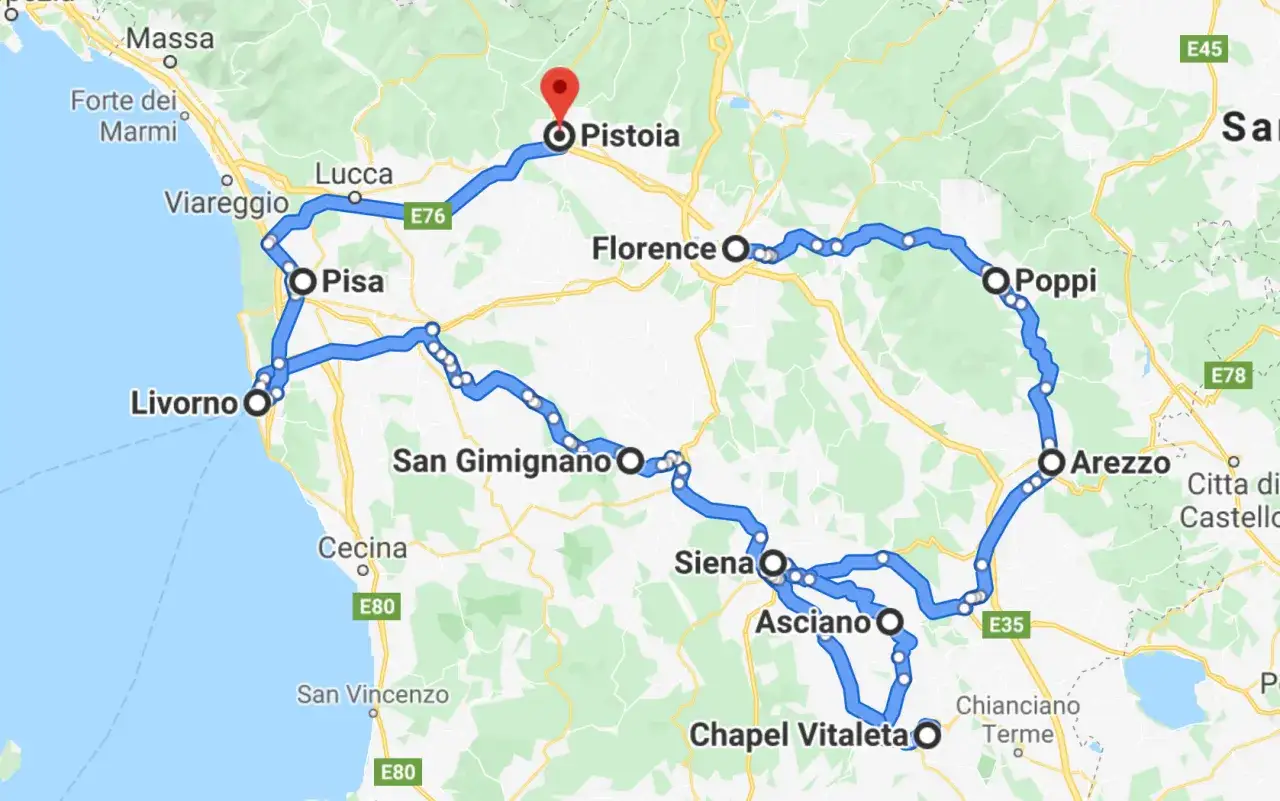
If I have a car, this is the leg I turn into part of the trip. The cleanest scenic framework is to head out of Lucca toward Florence and then drop onto the Chiantigiana, the historic wine road through the Chianti hills toward Siena. It is not the quickest line on a map, but it is the version that gives you vineyards, hilltop villages, and the feeling that you are moving through Tuscany rather than just crossing it.
For one meaningful stop, I would pick San Gimignano. It is large enough to feel worth the detour and compact enough to visit without wasting half a day on parking and logistics. If you want a shorter pause, Monteriggioni is a better fit because it gives you the walled-village atmosphere without pulling the route too far off course.
The mistake I see most often is trying to stack too many "must-see" towns into one transfer day. Volterra, San Gimignano, and Siena can all be brilliant, but if you add them all to a Lucca departure you stop having a transfer and start having a marathon. I would keep one major detour, watch for ZTLs (restricted traffic zones) in historic centers, and park outside the walls rather than gambling on a town-center shortcut. If you are renting, an automatic car is worth reserving early, because the added comfort matters on narrow regional roads.
That way the drive stays graceful instead of becoming a parking exercise, and the next decision is mostly about season and timing.
When to travel and what to book first
Spring and early autumn are the sweet spot for this route. In April, May, September, and early October, the roads are easier, the hill towns are more comfortable to walk, and the scenic detours feel like a reward instead of a heat test. July and August can still work, but they are the months when I keep detours short and arrive earlier in the day. For a same-day move, I would book in this order: transport first, hotel second, sightseeing third. Right now in 2026, the direct coach is sparse enough that you should not assume a spontaneous midday option will exist when you need it. Trenitalia will show rail combinations, but because the trip requires a change, I would build in a buffer instead of trusting the fastest-looking connection on the screen.My personal rule is simple: if a connection or departure matters, I want 30 to 45 minutes of slack around it. That cushion is cheap insurance when you are dealing with Tuscan town traffic, station changes, or a dinner reservation that you do not want to miss. With that buffer in mind, the route becomes much easier to fold into the rest of your trip.
How I’d combine Lucca and Siena in one Tuscany plan
When I stitch these cities into a broader itinerary, I keep the transfer day focused. Lucca pairs naturally with Pisa or the northern coast, while Siena works best with the Chianti hills, San Gimignano, or a longer southbound loop into the countryside. If the point of the day is moving between bases, I would stop at one hill town at most and save the rest for separate day trips.
- Best no-stress choice: the direct coach when the departure fits your day.
- Best freedom choice: a car, especially if you want one scenic stop.
- Best rail choice: only when your wider Tuscany route is already built around trains.
That is usually enough to make the transfer feel deliberate instead of improvised. If you keep the day realistic, choose one transport mode with confidence, and resist the urge to overpack the route with extra stops, the Lucca-Siena leg becomes one of those quiet Tuscany journeys that improves the whole trip.