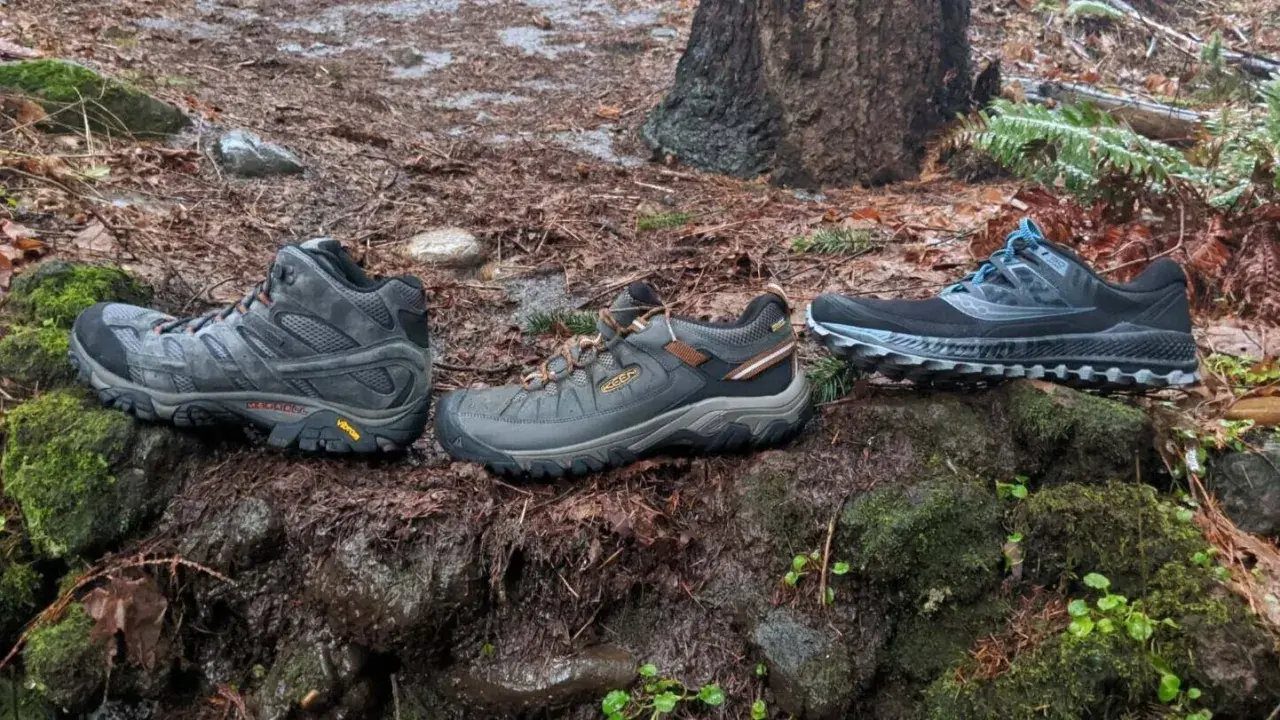
Choosing footwear for the trail is mostly a question of trade-offs: lighter shoes make it easier to move fast, while more structured shoes protect you when the ground gets rough or the pack gets heavy. The real choice behind trail running shoes vs hiking shoes is not about which category is “better,” but about which one matches your route, your pace, and your feet. In this guide, I break down the differences that actually matter, where each type shines, and how I would choose for a day hike, a fast mountain walk, or a longer backcountry trip.
The short version for most hikes
- Trail runners are lighter, more flexible, and usually feel better on fast, moderate hikes.
- Hiking shoes add structure, protection, and confidence when terrain gets rough or the pack gets heavier.
- On mixed routes, traction compound, fit, and stability matter more than the label on the box.
- If you hate break-in time, trail runners or soft hiking shoes are usually the safer bet.
- For multi-day trips, wet rock, or frequent load-carrying, hiking shoes usually make more sense.
What each shoe is really built to do
Trail running shoes are designed around motion. I think of them as shoes that try to get out of the way: lighter uppers, more flexible midsoles, and a lower-profile feel that lets your foot roll quickly. Hiking shoes are built around control and protection. They usually use tougher materials, firmer midsoles, and more structure so the shoe can handle long hours, uneven ground, and extra weight without collapsing into a sloppy ride.
That difference sounds small until you spend a full day on a stony descent or cross a stretch of wet roots. The shoe that feels comfortable in a shop can feel completely different after three hours outdoors, which is why the rest of the comparison matters. The next step is looking at the features that change how the shoe behaves on real terrain.
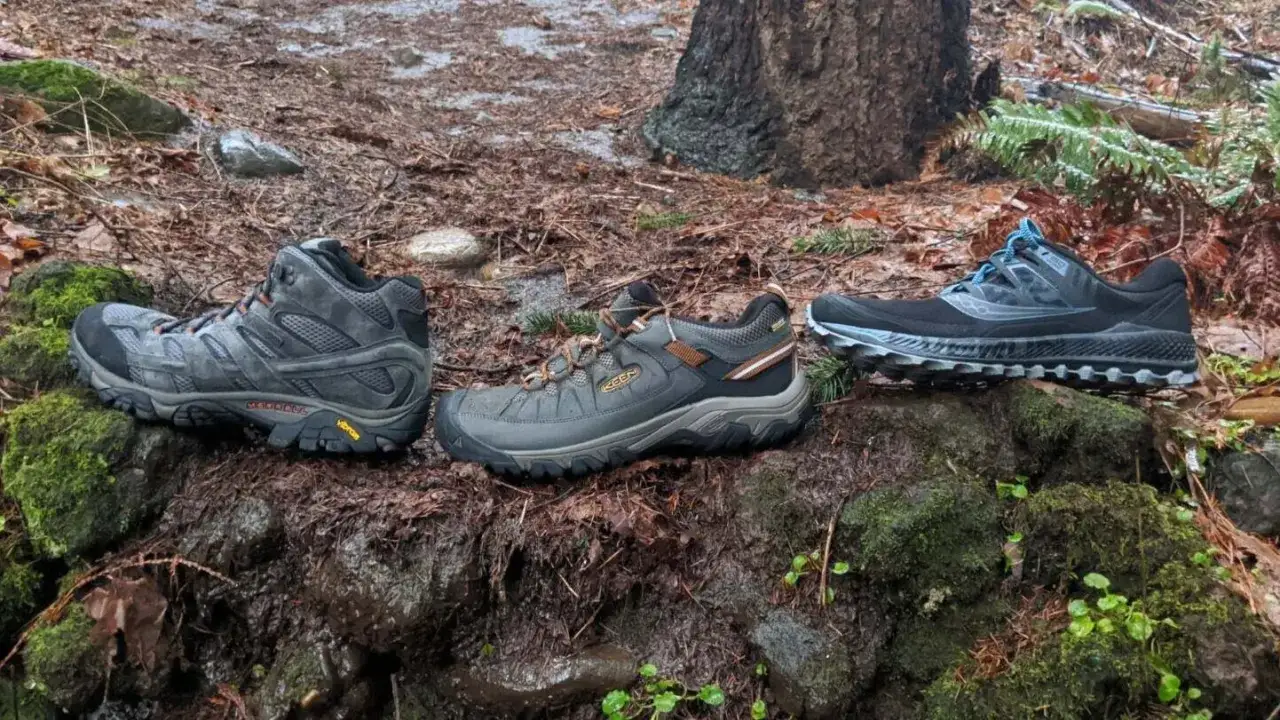
The differences that matter once you leave the parking lot
| Factor | Trail running shoes | Hiking shoes | Why it matters |
|---|---|---|---|
| Weight | Lighter and easier to move in | Heavier, but steadier under load | Less weight usually means less fatigue on long, fast days |
| Flexibility | More flexible and responsive | Stiffer and more controlled | Flexibility helps speed; stiffness helps on rough, broken terrain |
| Support | Moderate support with a low-profile feel | More structure, sometimes with a firmer shank or higher sidewall | Support matters more when the ground is uneven or the pack is heavy |
| Traction | Can be excellent, especially with sticky rubber | Usually deeper or broader lugs for steady grip | The outsole has to match the surface, not just the distance |
| Durability | Speed-focused materials, often less abrasion-resistant | Built to shrug off more wear | More durable shoes can last longer on rocky, abrasive routes |
| Break-in | Little or none | Often needs a few outings | Break-in time changes how soon a shoe feels trustworthy |
On wet stone, I care less about lug depth alone and more about the rubber compound. A sticky outsole can outperform a more aggressive tread if the trail is smooth rock rather than loose dirt. A lug is the raised block on the outsole, and a rock plate is a thin stiff layer in the sole that helps spread pressure from sharp stones instead of letting every pointy edge punch through to your foot.
That is why the same shoe can feel brilliant on one route and mediocre on another. Once you understand those trade-offs, it becomes much easier to match the shoe to your actual hiking style.
When trail runners make more sense
If I am heading out for a fast day hike, a Camino stage, or a loop with a light pack, I usually lean toward trail runners. They reward pace. They also make long days feel less punishing when the route is smooth enough that you do not need a lot of structure underfoot.
- You want to cover ground quickly without feeling like you are dragging your feet.
- Your route is moderate, well-marked, or mostly packed dirt rather than sharp, unstable rock.
- You are carrying water, layers, and snacks, not a heavy overnight setup.
- You want a shoe that breathes well in warm weather and dries more quickly after rain or stream crossings.
- You dislike a long break-in period and want something that feels usable almost immediately.
They also work well when the day involves a lot of mixed walking, like trail sections linked by pavement, village streets, or gravel farm roads. That is where the lighter feel really pays off. The limit shows up when terrain gets unstable, the pack gets heavier, or you start sidehilling on loose scree. At that point, less structure can start to feel like more work for your feet. That is when hiking shoes start to earn their keep.
When hiking shoes earn their extra structure
Hiking shoes make more sense when the route starts demanding more from your footing than from your pace. If you are carrying a fuller pack, crossing rougher ground, or planning a long day with a lot of descent, that extra support can feel less like a luxury and more like insurance.
I also like hiking shoes for routes with a lot of abrasion: sharp limestone, broken rock, talus, or trails that constantly scrape the sides of the shoe. Many models use tougher uppers, reinforced toe caps, and more rugged outsoles. A shank is a stiffening insert in the sole that helps the shoe resist twisting and bending too much, which is useful when the ground is uneven and your foot wants a stable platform.
One thing I would not overpromise: higher-cut or more structured hiking shoes do not magically prevent every ankle roll. They can improve confidence and reduce fatigue, but good foot placement still matters. What they do give you is a calmer feel when the trail keeps changing under you, especially on long descents or slippery, off-camber sections.
If the trail is technical enough that you keep thinking about your footing, hiking shoes usually become the more forgiving choice. From there, the real question becomes whether you need a traditional hiking shoe or one of the growing number of hybrids in the middle.
The middle ground most hikers overlook
Most people do not actually need the lightest trail runner or the stoutest hiking shoe. They need the middle: a low hiking shoe or a rugged trail runner with a protective toe cap, a firmer midsole, and enough grip for broken stone and wet dirt. That middle category is useful because modern routes are rarely pure versions of anything. They are often a mix of path, pavement, gravel, steps, rock, and weather.
For a trip that mixes cobbles, farm tracks, and mountain sections, that middle ground is often the sweet spot. It is also where a lot of long-distance walkers land on routes like the Camino or multi-day coastal walks, because the shoe needs to feel comfortable at noon and still behave sensibly after hours of use.
When I am looking at that middle ground, I care about five things more than marketing labels: a secure heel, enough room in the toe box for foot swelling, a grippy outsole, a breathable upper, and either minimal or moderate waterproofing depending on the climate. Waterproof membranes can help on cold, wet routes, but they also slow drying and can trap heat. On warmer trips, I usually prefer a non-waterproof shoe that dries faster and feels less stuffy.
This is also where fit becomes more important than category. If a shoe lets your heel slide on descents or squeezes your forefoot, the “right” type on paper will still feel wrong by lunch. At that point, the trip itself should become your final test, because the best option is the one that still feels calm after an hour of movement.
How I would choose for a real trip
I usually ask myself five questions before I buy or pack a pair for the trail.
- How much weight am I carrying, and will that weight change during the day?
- How technical is the terrain, especially on descents and wet surfaces?
- Am I trying to move fast, or am I happy to take my time?
- How much heat, rain, or stream water am I likely to deal with?
- Do my feet prefer a soft, flexible feel or a more locked-in platform?
My rule of thumb is simple. If the trip is light, fast, and mostly moderate underfoot, I start with trail runners. If the trip is rough, loaded, or likely to chew through shoes quickly, I move toward hiking shoes. If it sits in between, I look for the best hybrid I can find and pay close attention to traction, fit, and upper durability rather than chasing a category label.
The mistake I see most often is choosing for the easiest part of the route instead of the hardest. A shoe that feels great on smooth forest paths can turn annoying on a long rocky descent, and a very sturdy shoe can feel overbuilt on a quick warm-weather loop. Once you decide based on the hardest realistic part of the day, the choice gets much clearer.
The choice I would make for a mixed mountain day
For a classic mixed mountain day, I would choose the shoe that makes the hardest section feel boring. That usually means hiking shoes when the route includes wet stone, heavier gear, or long technical descents, and trail runners when the day is about covering ground quickly with a light pack. The best pair is the one that disappears once you start moving.
If you still feel stuck, I would use one final filter: pick the shoe that matches your pace on the roughest terrain, not your pace on the smoothest one. That keeps the decision honest and usually leads to fewer blisters, less foot fatigue, and more confidence when the trail stops being predictable.