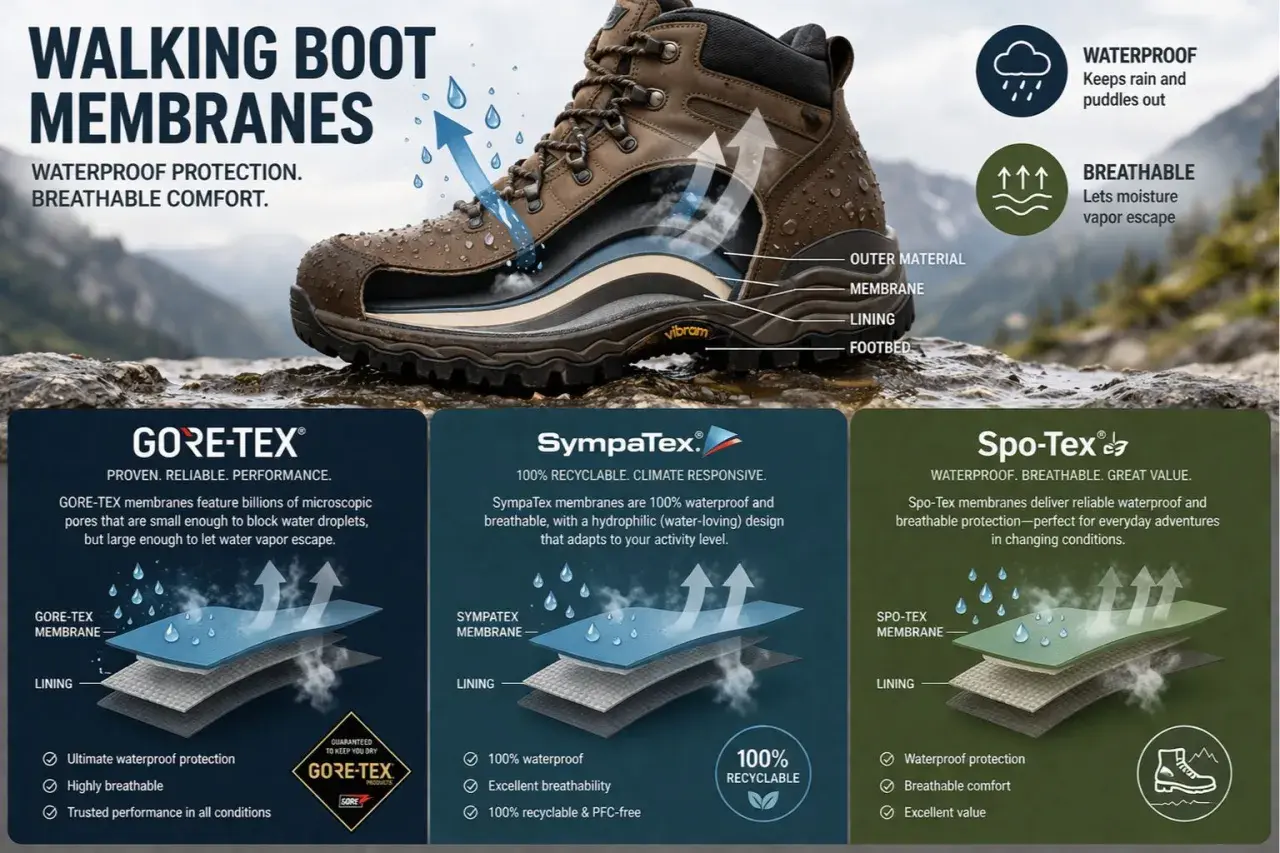
The short version for hikers choosing between the two
- OutDry bonds the waterproof layer directly to the outer shell, so the upper usually takes on less water and feels less soggy.
- GORE-TEX is a broader platform with more shoe models, brands, and fit options, which matters if your foot shape is hard to match.
- For cold rain, slush, wet meadows, and shoulder-season hiking, either technology can work well.
- For warm, humid, or desert conditions, I would usually skip waterproof footwear altogether and choose faster-drying shoes.
- If you expect stream crossings or full submersion, a quick-dry shoe or sandal is usually the smarter buy.
- The membrane matters, but fit, outsole grip, and upper material still decide whether the shoe feels good after three hours.
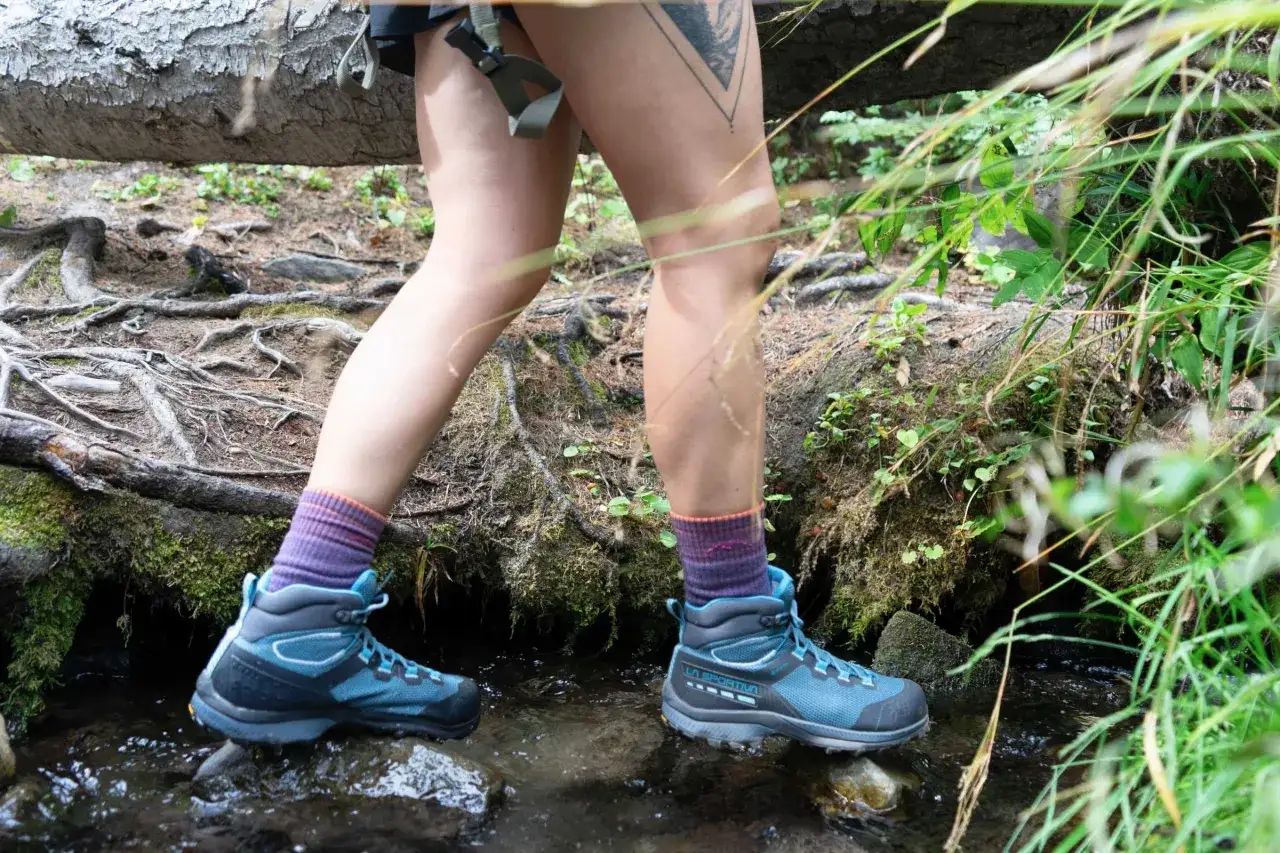
How OutDry and GORE-TEX are built differently
The biggest difference is structural. OutDry is built as a one-piece waterproof-breathable barrier that is bonded directly to the outer fabric, so the membrane sits right where water would otherwise try to enter. Columbia describes it that way for a reason: fewer internal layers mean fewer places for water to hang around, and less chance of the upper turning into a soaked sponge.
GORE-TEX is a broader system rather than one single build. In hiking footwear, the membrane is used across different constructions, and the exact shoe can feel quite different depending on whether it uses a standard laminate, Invisible Fit, or a newer ePE-based version. That is why I rarely judge a GORE-TEX shoe by the badge alone; the model matters just as much as the membrane name.
| Criterion | OutDry | GORE-TEX |
|---|---|---|
| Layer placement | Bonded directly to the outer shell | Integrated into a wider family of shoe constructions |
| Water pickup | Usually less exterior wet-out | Standard models can wet out more; Invisible Fit reduces that effect |
| Model variety | Narrower, mostly Columbia-led | Much wider across brands, lasts, and categories |
| Best fit for | Wet brush, rain, slush, and hikers who hate soggy uppers | Shoppers who want more choices and a proven waterproof platform |
That difference sounds technical, but on trail it shows up quickly. If you have ever finished a hike with shoes that were still dry inside but looked and felt heavy from the outside, you already understand why the construction matters. Once you see that, the next question is how the shoe actually feels underfoot in real weather.
What that means for breathability, wet-out, and drying time
Breathability is the quiet part of this debate, and it is where hikers often make bad assumptions. Waterproof does not mean airy; it means the shoe has to balance vapor transfer against a barrier that blocks liquid water. Waterproof footwear can get hot and less breathable, especially in humid or desert conditions, so I treat that tradeoff seriously instead of assuming every waterproof shoe is a universal upgrade.
In practice, I separate three sensations that people often mix together: dry inside, cool on foot, and fast to recover after rain. OutDry tends to help with the first and third because the outer shell absorbs less water. Standard GORE-TEX shoes can still keep water out well, but the upper may wet out more, which makes the shoe feel heavier until it dries. Invisible Fit models narrow that gap and often feel closer to a technical running shoe than a traditional boot.
- Dry inside comes from the membrane itself.
- Dry on the outside depends on the upper fabric and the DWR finish, which is the durable water-repellent coating on the shell.
- Fast recovery after rain depends on both the membrane and how much water the upper has absorbed.
The common mistake is to think a wet-looking upper means the shoe failed. Not necessarily. Often the membrane is still doing its job while the outer material has simply soaked through or picked up trail grime. That is why the trail conditions matter so much when you choose between them.
When each option makes sense on real trails
For hiking footwear, climate often matters more than the name on the box. Wet grass, drizzle, and muddy forest paths are annoying but manageable in either system. Full submersion is a different story: once water comes over the collar, a waterproof membrane can trap that water almost as effectively as it keeps rain out.
| Trail scenario | Better fit | Why |
|---|---|---|
| Cold rain, slushy shoulder-season hikes, wet meadows | Either, with a slight edge to OutDry if you hate soggy uppers | Both keep water out well, but OutDry usually stays less waterlogged on the outside. |
| Warm, humid, or desert hiking | Usually neither | Breathability becomes more important than waterproofing, and waterproof barriers trap heat and sweat. |
| Long day hikes where fit choices matter most | GORE-TEX | There are more brands, lasts, widths, and outsole patterns to choose from. |
| Frequent stream crossings or full water immersion | Neither | Quick-dry shoes or hiking sandals recover faster once water gets inside. |
| Snowy, cold trail days | Either | Waterproofing helps when moisture is cold and the extra warmth is useful. |
If I were buying for a damp walk on coastal stone paths or a muddy forest loop, I would care more about how quickly the shoe sheds water and mud than about the badge on the tongue. That is where OutDry feels especially practical. GORE-TEX, on the other hand, usually wins when you want the widest possible menu of shapes, widths, and performance profiles. Once you narrow the use case, the next factor is how well the shoe holds up after repeated wet days.
Durability and care decide how long the waterproofing feels good
The membrane is only one part of the shoe’s lifespan. The upper fabric, stitching, footbed, and how you clean the shoe matter just as much. I also trust GORE-TEX partly because the brand subjects footwear to a serious test process, including walking simulators, centrifugal leak tests, and wicking checks before a model reaches production. That does not make the shoe indestructible, but it does show that the platform is built around repeatable quality control.
- Brush mud off after wet hikes before it dries into the fabric.
- Use lukewarm water and a mild detergent when the shoe needs a wash.
- Let the shoe dry naturally at moderate temperatures and keep it away from direct heat.
- Reapply DWR only when water stops beading on the upper.
- Avoid machine washing and bleach; both usually do more harm than good.
I treat OutDry shoes the same way. Once dirt clogs the upper or the shoe stays wet for too long, no membrane can fully compensate. A well-cared-for waterproof shoe feels better, dries more predictably, and keeps its shape longer, which is exactly what you want before a long trip or a multi-day trek.
The buying rule I trust when the trail is wet, steep, and long
My rule is simple: buy the membrane that fits your climate and your foot, not the one with the louder reputation. In 2026, GORE-TEX still gives you the wider ecosystem, while OutDry remains the more concentrated Columbia-led option. That means GORE-TEX is often the easier route if you need more brand choices or unusual fit solutions, but OutDry can be the smarter pick if your priority is a more direct waterproof shell and less exterior water pickup.
- Choose OutDry when you expect persistent rain, wet brush, slush, and you hate the feel of a waterlogged upper.
- Choose GORE-TEX when you want the broadest choice of brands, shapes, and constructions, especially if fit is hard for you.
- Choose a non-waterproof shoe when heat, drainage, or fast dry time matters more than blocking every drop.
- Choose the shoe that locks your heel and forefoot in place before you worry about membrane branding.
That last point is the one most hikers miss. A membrane can make a good shoe better, but it rarely rescues a poor fit. If the shoe matches your climate, dries at a reasonable pace, and feels stable on uneven ground, the OutDry vs GORE-TEX decision becomes much less mysterious and much more practical.