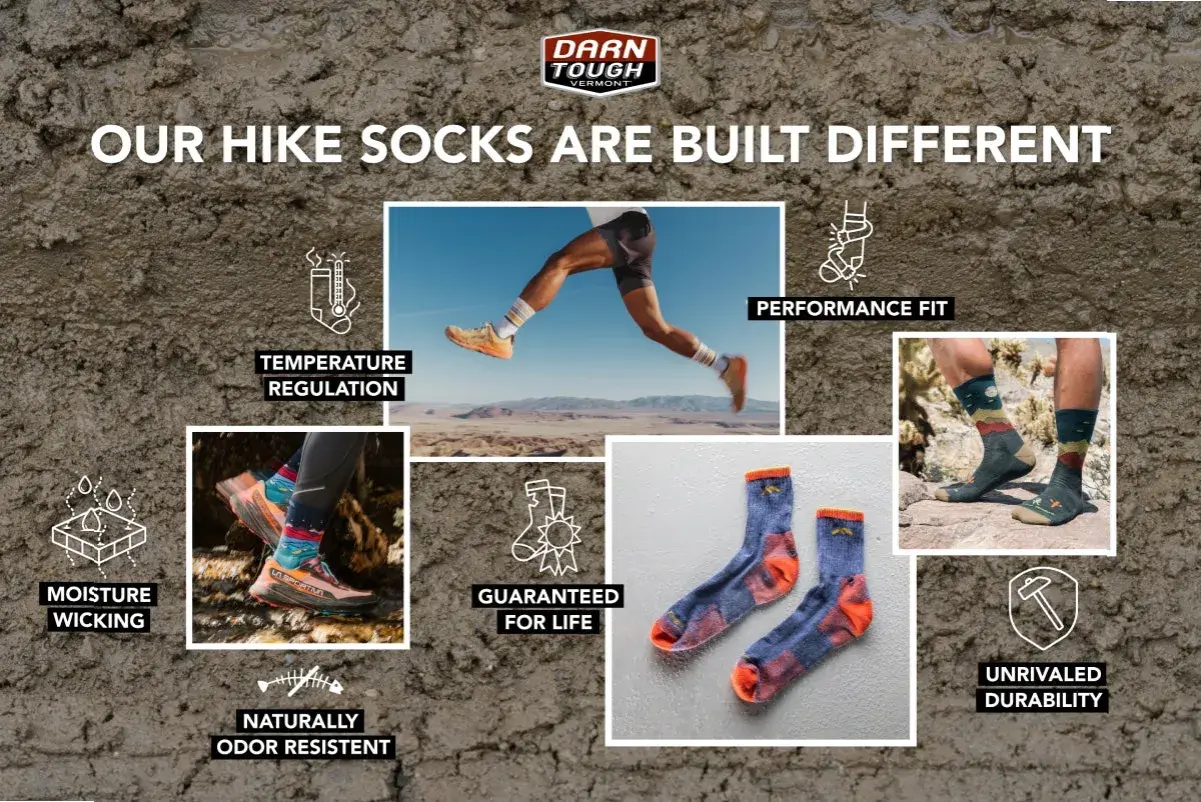
Long miles expose every weak point in hiking footwear, and socks are usually the first place that weakness shows. So, are hiking socks necessary? For most real hiking days, yes, especially once sweat, distance, or rough ground enter the picture. This article breaks down when specialized socks are worth it, when regular athletic socks are enough, and how to choose a pair that actually keeps your feet happier on trail.
The simplest answer is that trail-worthy socks matter once comfort, moisture, and distance start to add up
- Cotton is the biggest mistake because it holds sweat and stays wet against the skin.
- Merino wool or synthetic blends usually perform better because they manage moisture and friction more effectively.
- Fit matters as much as fabric; a sock that bunches or slips can cause hot spots fast.
- Light to medium cushioning works for most hikers, while thicker padding only helps in the right shoe.
- Regular athletic socks can be fine for short, easy, dry hikes if they are snug and non-cotton.
The short answer is yes, but only when the hike asks for it
My rule is simple: the harder the trail, the less I want to gamble on generic socks. Hiking socks are built to manage sweat, reduce friction, and stay stable while your feet warm up, swell a little, and keep hitting uneven ground. That matters because blisters usually come from a mix of moisture, heat, and repeated rubbing, not just bad luck.That does not mean every walk requires a technical pair. A short, easy out-and-back on a dry trail is a different problem from a full day on rocky descents with a pack on your back. The more time you spend moving, sweating, and changing footing, the more specialized socks earn their keep. Once you see that difference, the decision gets much easier.
To see why, it helps to compare what trail socks actually do differently from the pair you already wear around town.
What hiking socks do differently from ordinary socks
Hiking socks are not magic, but they are built for a different job. The best pairs focus on a few details that everyday socks often ignore.
| Feature | Why it matters on trail | What I look for |
|---|---|---|
| Moisture-wicking fabric | Moves sweat away from skin so feet feel less clammy | Merino wool or a synthetic blend, not cotton |
| Targeted cushioning | Softens impact at the heel and forefoot without adding bulk everywhere | Light or medium padding for most hikes |
| Anatomical fit | Helps prevent twisting, wrinkling, and heel slip | A snug heel pocket and enough room in the toe box |
| Seam placement | Reduces rubbing where toes and footwear meet | Flat or low-profile toe seams |
| Height | Protects skin from boot collars, brush, and grit | Quarter or crew height depending on footwear |
| Durable knit | Holds up better under repeated mileage and washing | Reinforced heel and toe zones |
That combination is why good hiking socks can feel almost boring in the best way: they stop small irritations before you notice them. The next question is when you can safely skip that upgrade and wear what you already own.
When regular socks are good enough
There are plenty of hikes where I would not overthink socks. If you are on a short, well-maintained trail, carrying little weight, and wearing shoes that already fit well, a clean synthetic athletic sock may be perfectly adequate. That is especially true in warm weather when you want breathability more than padding.
- Short day hikes under about 3 to 5 miles
- Dry trails with little abrasion
- Easy terrain with no major descents
- Snug shoes that still leave room for your toes
- Socks made from polyester, nylon, wool, or blends, not cotton
The catch is that “good enough” disappears quickly once sweat builds up or the trail turns rocky. The moment you feel a wrinkle at the heel, a hot spot on the ball of the foot, or a shoe that starts to rub, the sock is no longer neutral. It is part of the problem. That is where a real hiking pair starts to matter.
How I choose a pair that actually works on trail
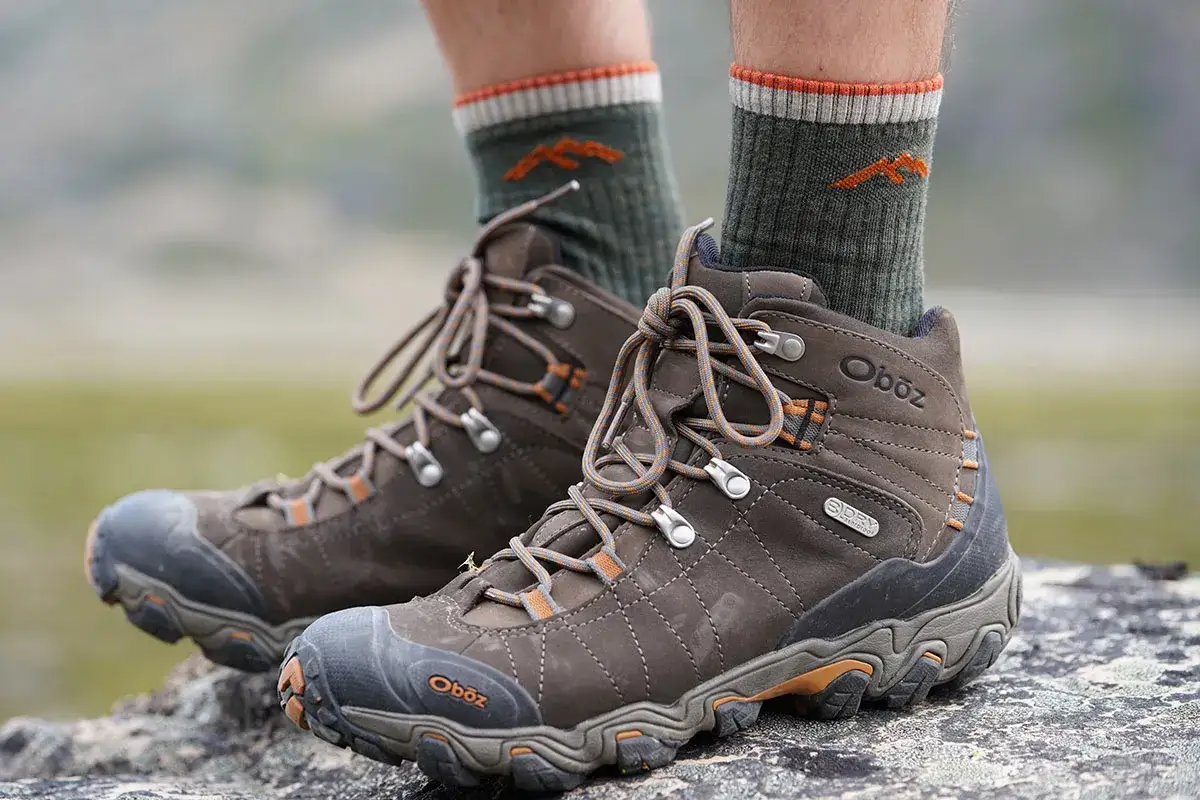
When I choose hiking socks, I look at fabric, cushioning, height, and fit in that order. The label matters less than whether the sock solves the problems your trail will create.Fabric is the biggest lever
Merino wool blends are popular because they manage moisture, regulate temperature, and resist odor better than cotton. Synthetic blends often dry faster and can be a little cheaper. For most hikers, I prefer a wool-synthetic blend or a quality synthetic pair over anything cotton-heavy.
Cushioning should match the shoe, not the marketing
Light cushioning works well for fast day hikes and warm weather. Medium cushioning is the safest all-around option for most people. Heavy cushioning only makes sense if your shoes have enough volume and you genuinely like the extra padding; otherwise it can crowd the foot and create pressure points.Height should match your footwear and terrain
Low socks can work with trail runners. Crew-height socks make more sense with boots, brushy trails, or rocky routes because they protect more of the ankle and lower leg from rubbing and debris. If the cuff of your shoe sits high, I want the sock to clear it comfortably.
Read Also: Parallel Lacing Hiking Boots - Relieve Instep Pressure Now
Fit should be snug without pressure
A good hiking sock should feel secure, not tight. If it twists, slides, or wrinkles at the heel, it can create the exact friction you were trying to avoid. I always check the heel pocket and toe box first, because that is where fit problems show up fastest.
On the U.S. market, a solid pair often costs about $12 to $35, with merino blends usually on the higher end and basic synthetic pairs lower. If you hike often, that is one of the better places to spend a little more. Next comes the part people ignore until they have already bought the wrong pair: the mistakes that cause trouble on trail.
The mistakes that cause hot spots before the trail does
Most sock problems come from avoidable choices, not bad luck. The classic mistake is cotton, because once it gets damp it stays damp. The second is buying socks that are too big or too thick for the shoe, which leaves folds and pressure points.
- Wearing cotton or cotton-heavy blends
- Choosing socks that bunch at the toes or slip at the heel
- Picking heavy cushioning for a shoe that already fits snugly
- Using brand-new socks on a long hike without a test walk first
- Assuming a liner sock will fix a bad fit
Liner socks can help on long or sweaty outings because they add a friction barrier, but they are a tool, not a cure-all. If the main sock already fits badly, the liner just gives you two layers of irritation instead of one. I usually fix the fit first and only add a liner when the conditions really justify it. Once that is clear, the right sock choice becomes easier to map to different types of hikes.
What I would pack for different kinds of hikes
Not every trail asks for the same sock. I make different choices depending on distance, climate, and how much my feet are likely to sweat.
| Hike type | Best sock choice | Why it works |
|---|---|---|
| Short, easy day hike | Clean synthetic athletic sock or light hiking sock | Enough comfort and breathability without extra bulk |
| Hot, dry trail | Lightweight merino or synthetic blend | Less bulk, better moisture control, faster comfort recovery |
| Rocky mountain route | Medium-cushion crew sock | Better protection from abrasion and downhill impact |
| Wet or cool shoulder-season hike | Merino-blend hiking sock with moderate cushion | Warmer when damp and more forgiving in changing weather |
| Multi-day backpacking trip | Two or more pairs, plus a dry backup pair | Rotating socks keeps moisture from building up day after day |
In humid places, I care more about drying speed; in dry mountain country, I care more about abrasion and fit. That is why the best sock is rarely the thickest one on the shelf, but the one that matches the trail you actually plan to walk. The last piece is less about shopping and more about habits that keep good socks working the way they should.
The quiet upgrades that save your feet on longer trail days
For longer hikes, I treat socks as part of a system: shoes, lacing, foot moisture, and the socks themselves all need to work together. If one piece is off, the others have to compensate. That is why I recommend testing new socks on a shorter outing first and changing only one variable at a time.
- Break in socks and shoes separately before a big hike.
- Carry a dry spare pair if rain, stream crossings, or heavy sweat are likely.
- Replace socks when the heel thins or the toe seam starts to bother you.
- Match sock thickness to the volume of your shoe, not just the weather.
The right pair will not make a hard trail easy, but it can stop small problems from turning into the reason you cut a hike short.